

The scientific community continues to investigate peptide therapeutics as researchers seek compounds that may support tissue repair, vascular function, and cellular recovery. Among the most extensively studied peptides in laboratory settings is BPC-157, commonly referred to as 157 peptide by researchers. This fifteen-amino-acid synthetic sequence has generated substantial interest across multiple research domains, from gastrointestinal studies to musculoskeletal investigations. As laboratory methodologies advance and analytical techniques become more sophisticated, understanding the full scope of 157 peptide research requires examining both historical findings and contemporary applications.
Chemical Structure and Molecular Characteristics
The 157 peptide represents a synthetic derivative of a naturally occurring compound found in gastric juices. Its molecular formula comprises fifteen amino acids arranged in a specific sequence that appears to confer stability under various laboratory conditions.
Stability Profile
Unlike many peptides that degrade rapidly in biological environments, 157 peptide demonstrates remarkable stability. Research indicates this compound maintains structural integrity across a wide pH range, resisting enzymatic degradation that typically breaks down similar molecules.
Key stability characteristics include:
- Resistance to gastric acid breakdown
- Minimal degradation at physiological temperatures
- Extended half-life compared to natural peptide counterparts
- Structural preservation during standard laboratory storage
This stability profile makes 157 peptide particularly suitable for laboratory research applications where consistent molecular characteristics are essential for reproducible experimental outcomes.

Mechanisms of Action in Laboratory Models
Research on 157 peptide has identified multiple pathways through which this compound appears to influence cellular processes. The mechanism of action involves several interconnected biological systems, making it a compound of interest across diverse research fields.
Angiogenesis and Vascular Function
Laboratory studies consistently demonstrate that 157 peptide influences blood vessel formation through the vascular endothelial growth factor (VEGF) pathway. In controlled research environments, this peptide appears to modulate endothelial cell behavior, potentially affecting how new capillary networks develop.
The compound's interaction with nitric oxide systems represents another critical research area. Evidence from animal models suggests 157 peptide may influence nitric oxide production, which plays fundamental roles in vascular tone and tissue perfusion.
| Pathway | Observed Effect | Research Model |
|---|---|---|
| VEGF Expression | Upregulation | In vitro cell culture |
| Nitric Oxide Production | Modulation | Rodent models |
| Endothelial Migration | Enhanced activity | Tissue culture |
| Capillary Density | Increased formation | Animal studies |
Growth Factor Modulation
Beyond vascular effects, 157 peptide research has explored how this compound interacts with various growth factor systems. Studies indicate potential influences on fibroblast growth factor (FGF) and other signaling molecules that regulate cellular proliferation and differentiation.
These growth factor interactions may explain some of the tissue-specific effects observed in laboratory settings. Different cell types appear to respond variably to 157 peptide exposure, suggesting tissue-specific receptor expression or signaling pathway activation.
Research Applications Across Tissue Types
The breadth of 157 peptide research spans multiple organ systems and tissue types. According to comprehensive research databases, over 174 indexed studies have examined this peptide across various biological contexts.
Gastrointestinal Research
Given its origin as a gastric peptide derivative, substantial research has focused on 157 peptide's effects within the digestive system. Laboratory models examining mucosal integrity, ulcer healing, and intestinal barrier function have produced noteworthy findings.
Research areas in gastrointestinal studies:
- Gastric ulcer healing protocols in animal models
- Intestinal anastomosis recovery in surgical research
- Inflammatory bowel disease modeling
- Mucosal barrier function assessment
- Esophageal tissue repair investigations
These studies typically employ controlled laboratory conditions with standardized injury models to assess healing kinetics and tissue regeneration rates.
Musculoskeletal System Investigations
Researchers have extensively explored 157 peptide applications in musculoskeletal contexts. Tendon, ligament, and muscle tissue studies constitute a significant portion of the available literature.
Tendon-to-bone healing represents one particularly well-studied area. Laboratory models examining Achilles tendon injuries, rotator cuff repairs, and ligament reconstructions have generated data on healing timelines, tissue strength, and biomechanical properties following 157 peptide administration.
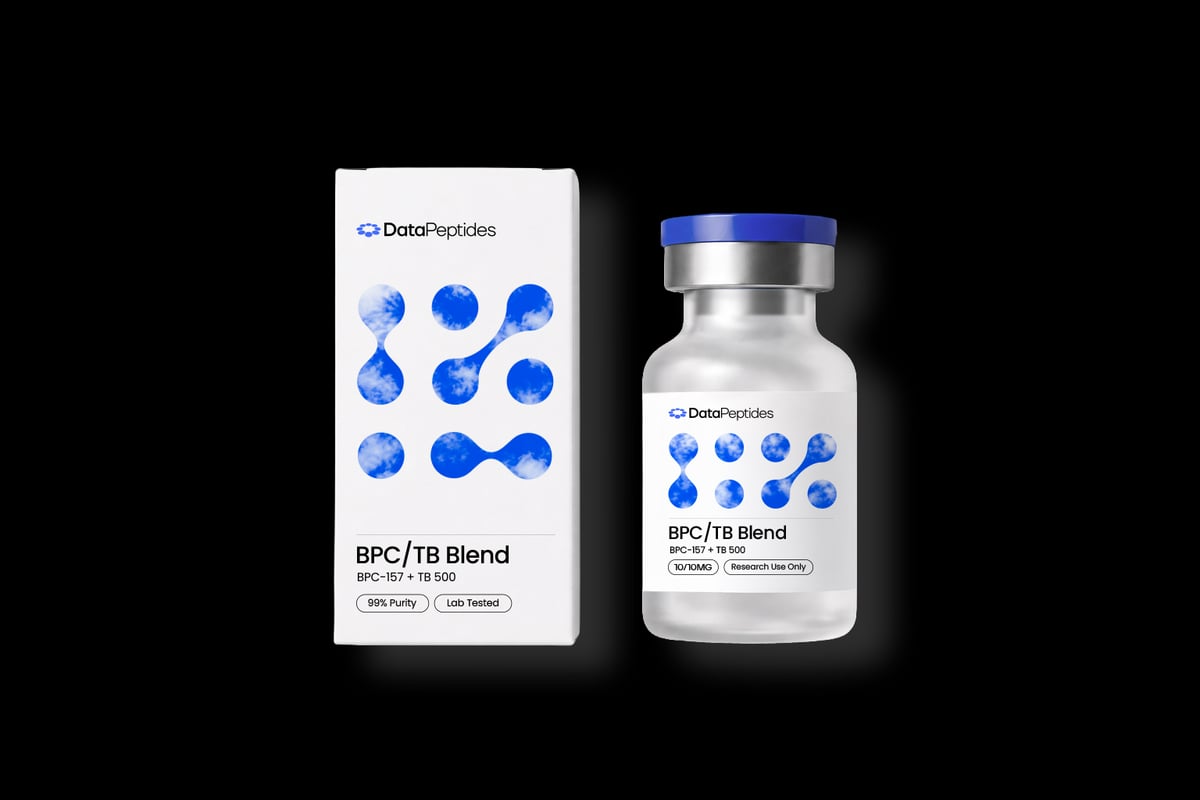
For researchers investigating advanced healing protocols, the BPC-157 / TB-500 blend demonstrates how complementary peptides can be combined in laboratory research to examine synergistic effects on tissue repair mechanisms.

Clinical Trial Landscape and Human Research
While animal models dominate the 157 peptide research landscape, human clinical investigations remain limited. The clinical trial database reveals a growing but still modest number of human studies examining this compound.
Current Trial Status
As of 2026, several investigational studies are exploring 157 peptide applications in human subjects. These trials primarily focus on safety parameters, pharmacokinetic profiles, and preliminary efficacy signals.
The regulatory environment surrounding 157 peptide has evolved considerably. Recent guidance from regulatory authorities has influenced how compounding pharmacies and research institutions approach this compound, particularly regarding human consumption versus laboratory research applications.
Evidence Quality Considerations
Researchers must carefully evaluate the evidence quality when designing experiments or interpreting existing literature. Most available data derives from animal models, with methodological variations across studies affecting result comparability.
Evidence tier breakdown:
- Tier 1 (Human RCTs): Limited availability
- Tier 2 (Human observational): Minimal published data
- Tier 3 (Animal controlled): Extensive literature base
- Tier 4 (In vitro): Substantial mechanistic studies
This distribution emphasizes the importance of appropriate model selection and cautious extrapolation when conducting 157 peptide research.
Laboratory Protocols and Research Methodologies
Implementing 157 peptide research requires careful attention to experimental design, dosing protocols, and analytical methods. Standardization across laboratories remains challenging due to protocol variations and differing research objectives.
Dosing Considerations in Research Models
Dosing strategies for 157 peptide vary significantly based on research model, administration route, and study endpoints. Animal studies typically employ weight-based calculations, with doses ranging from micrograms to milligrams per kilogram depending on the specific investigation.
Route of administration substantially affects bioavailability and tissue distribution. Researchers have examined intraperitoneal, subcutaneous, oral, and topical delivery methods, each producing distinct pharmacokinetic profiles.
| Administration Route | Typical Research Dose | Model Type | Primary Application |
|---|---|---|---|
| Intraperitoneal | 10-20 μg/kg | Rodent | Systemic effects |
| Subcutaneous | 200-500 μg | Rodent | Localized injury |
| Oral | 1-10 mg/kg | Various | GI-specific research |
| Topical | Variable concentration | Wound models | Dermal studies |
Analytical Methods and Quality Control
Modern research demands rigorous analytical validation to ensure peptide purity, identity, and potency. High-performance liquid chromatography (HPLC), mass spectrometry, and amino acid analysis represent standard techniques for characterizing 157 peptide samples.
Third-party batch testing has become increasingly important in ensuring research reproducibility. Laboratories conducting peptide research should verify certificate of analysis documentation, confirming peptide content, purity percentages, and absence of contaminating substances.
Comparative Research and Peptide Combinations
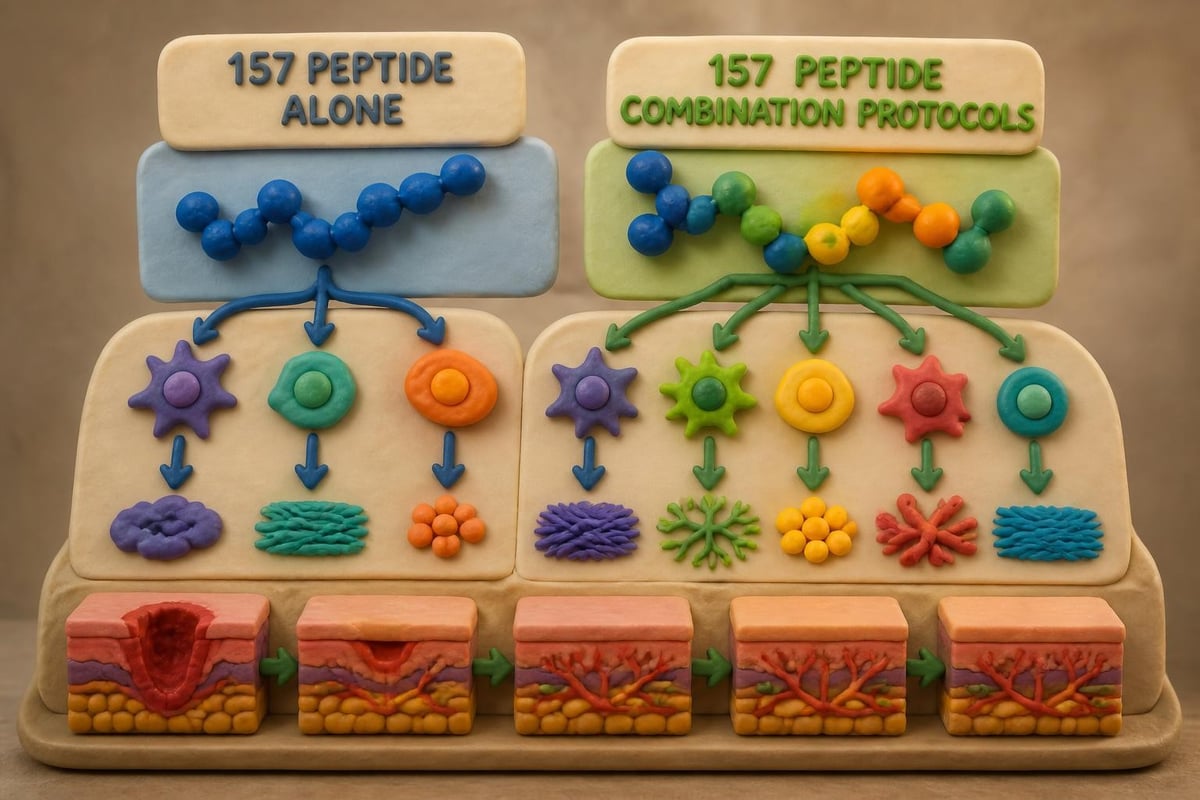
The 157 peptide research landscape increasingly includes comparative studies examining how this compound performs relative to other regenerative peptides or in combination protocols.
Standalone Versus Combination Protocols
Some researchers investigate whether combining 157 peptide with complementary compounds produces additive or synergistic effects. Common research combinations pair this peptide with thymosin beta-4 derivatives, growth hormone secretagogues, or copper-binding peptides.
These combination studies require careful experimental design to distinguish individual contributions from synergistic effects. Control groups receiving each compound separately alongside combination groups provide essential comparative data.
Benchmark Compounds in Research
When evaluating 157 peptide effectiveness, researchers often compare outcomes against established benchmark treatments or control conditions. This contextualizes findings within the broader regenerative medicine research landscape.
Studies examining detailed research activity provide valuable comparative frameworks, showing how 157 peptide performs across different injury models and experimental paradigms.
Safety Profile and Laboratory Observations
Understanding the safety characteristics of 157 peptide remains crucial for responsible research conduct. Laboratory observations across numerous animal studies have generated substantial safety data, though human safety information remains more limited.
Toxicity Studies
Preclinical toxicity assessments have examined acute and chronic exposure scenarios. These studies evaluate potential organ toxicity, hematological changes, and adverse event profiles at various dose levels.
Key safety observations from laboratory research:
- Minimal acute toxicity at research-relevant doses
- No significant hematological abnormalities in chronic studies
- Organ function preservation across multiple dose ranges
- Limited drug-drug interaction potential in co-administration studies
The generally favorable preclinical safety profile has encouraged continued research interest, though researchers emphasize the need for rigorous human safety data.
Contraindications and Research Limitations
Certain experimental conditions may produce confounding variables or safety concerns. Researchers working with cancer cell lines should note that growth factor modulation could theoretically affect tumor growth kinetics, necessitating careful experimental controls.
Pregnancy models represent another area requiring cautious interpretation, as developmental effects have not been thoroughly characterized across all relevant species.
Future Research Directions and Knowledge Gaps
Despite extensive investigation, significant knowledge gaps remain in 157 peptide research. The comprehensive research review identifies several priority areas for future investigation.
Mechanistic Understanding
While researchers have identified numerous biological pathways influenced by 157 peptide, the precise molecular mechanisms underlying many observed effects remain incompletely understood. Receptor identification, signal transduction mapping, and downstream gene expression profiling represent important research frontiers.
Advanced techniques including single-cell RNA sequencing, proteomics, and metabolomics may provide deeper mechanistic insights that explain tissue-specific effects and individual response variability.
Long-term Studies
Most existing research examines acute or subacute timeframes. Long-term administration studies exploring cumulative effects, potential adaptation, and extended safety profiles would substantially enhance the knowledge base.
Longitudinal studies tracking healing outcomes months or years post-treatment could reveal whether 157 peptide influences tissue quality, remodeling patterns, or long-term functional recovery.
Translation to Clinical Applications
Bridging the gap between promising preclinical findings and validated clinical applications remains a central challenge. Well-designed human trials with appropriate sample sizes, validated endpoints, and rigorous methodology are essential for establishing clinical relevance.
The clinical reference database provides important context for understanding current human research initiatives and identifying gaps where additional investigation is needed.
Regulatory Considerations for Research Use
The regulatory landscape surrounding 157 peptide has evolved significantly, particularly regarding distinctions between research applications and human consumption. Researchers must navigate these regulatory frameworks to ensure compliance and appropriate use.
Laboratory Research Classification
Peptides designated for laboratory research carry specific restrictions and labeling requirements. The 157 peptide, when supplied for research purposes, should be clearly labeled as not intended for human or animal consumption.
Regulatory compliance considerations:
- Proper labeling and documentation of intended use
- Institutional review board oversight for relevant studies
- Adherence to animal care and use protocols
- Compliance with local and federal research regulations
- Appropriate storage and handling procedures
Quality Standards and Sourcing
Researchers should prioritize peptide sources that provide comprehensive quality documentation. Third-party testing, certificate of analysis provision, and transparent manufacturing practices ensure research reproducibility and data validity.
US-manufactured peptides offer advantages in regulatory compliance and quality assurance, with domestic production facilities subject to stringent oversight and quality control standards.
Data Interpretation and Research Best Practices
Conducting meaningful 157 peptide research requires careful attention to experimental design, appropriate controls, and thoughtful data interpretation. The peptide database overview offers valuable context for understanding the current state of knowledge.
Experimental Controls
Robust research protocols incorporate multiple control conditions to isolate 157 peptide effects from confounding variables. Vehicle controls, sham procedures, and positive control compounds strengthen experimental validity.
Blinding procedures, when feasible, reduce bias in outcome assessment. Double-blind protocols where both researchers and outcome assessors remain unaware of treatment assignments provide the highest quality evidence.
Statistical Considerations
Appropriate sample size calculations ensure adequate statistical power to detect meaningful effects. Researchers should conduct power analyses before initiating studies to avoid underpowered experiments that may miss significant findings.
Multiple comparison corrections, appropriate statistical tests, and transparent reporting of both positive and negative results contribute to the overall quality of the research literature.
The extensive research portfolio examining 157 peptide demonstrates its continued relevance across multiple scientific disciplines, from basic mechanistic studies to translational research applications. As methodologies advance and knowledge gaps narrow, this peptide remains a valuable tool for investigating tissue repair, vascular function, and cellular recovery processes. For researchers seeking laboratory-grade peptides with verified purity and comprehensive quality documentation, Data Peptides provides US-manufactured research compounds subjected to rigorous third-party batch testing, ensuring the consistency and reliability essential for meaningful scientific investigation.