
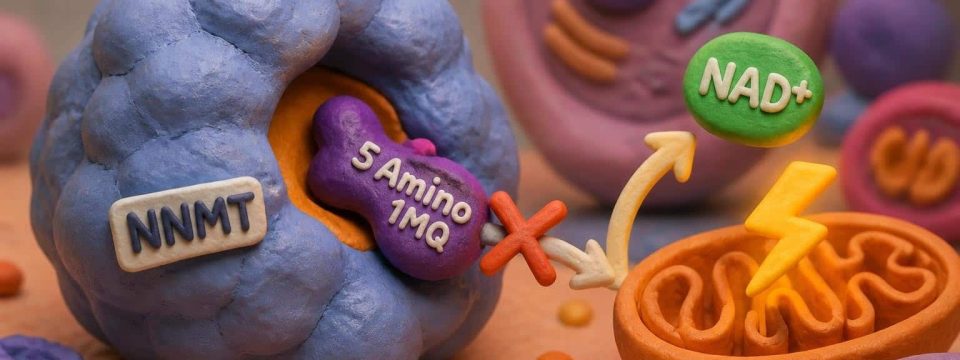
The landscape of metabolic research continues to evolve with the investigation of small molecule compounds that target specific enzymatic pathways. Among these research compounds, 5 amino 1mq has garnered attention for its ability to inhibit nicotinamide N-methyltransferase (NNMT), an enzyme increasingly recognized for its role in cellular metabolism and energy regulation. As laboratories explore novel approaches to understanding metabolic processes, this compound represents a specialized research tool with distinct mechanisms that differ from traditional peptide-based interventions. Understanding its properties, mechanisms, and current research status is essential for research scientists working in metabolic science and related fields.
Understanding 5 Amino 1MQ's Molecular Structure
The compound known as 5 amino 1mq is technically classified as a small molecule rather than a peptide, which distinguishes it from many compounds in the research landscape. Its molecular formula, C6H7N3O, reveals a compact structure that allows for specific enzymatic interactions.
Chemical Classification and Properties
Unlike traditional peptides composed of amino acid chains, 5 amino 1mq functions as a small-molecule inhibitor with a molecular weight of approximately 137.14 g/mol. This structural difference provides certain advantages in research applications:
- Enhanced stability compared to longer peptide chains
- Improved cellular permeability due to smaller molecular size
- Specific targeting of NNMT enzyme active sites
- Distinct pharmacokinetic profile from peptide-based compounds
The compound's stability at room temperature and resistance to enzymatic degradation make it particularly suitable for controlled laboratory investigations. Research protocols typically involve reconstitution in appropriate solvents, with storage conditions carefully maintained to preserve molecular integrity.
Mechanism of Action at the Cellular Level
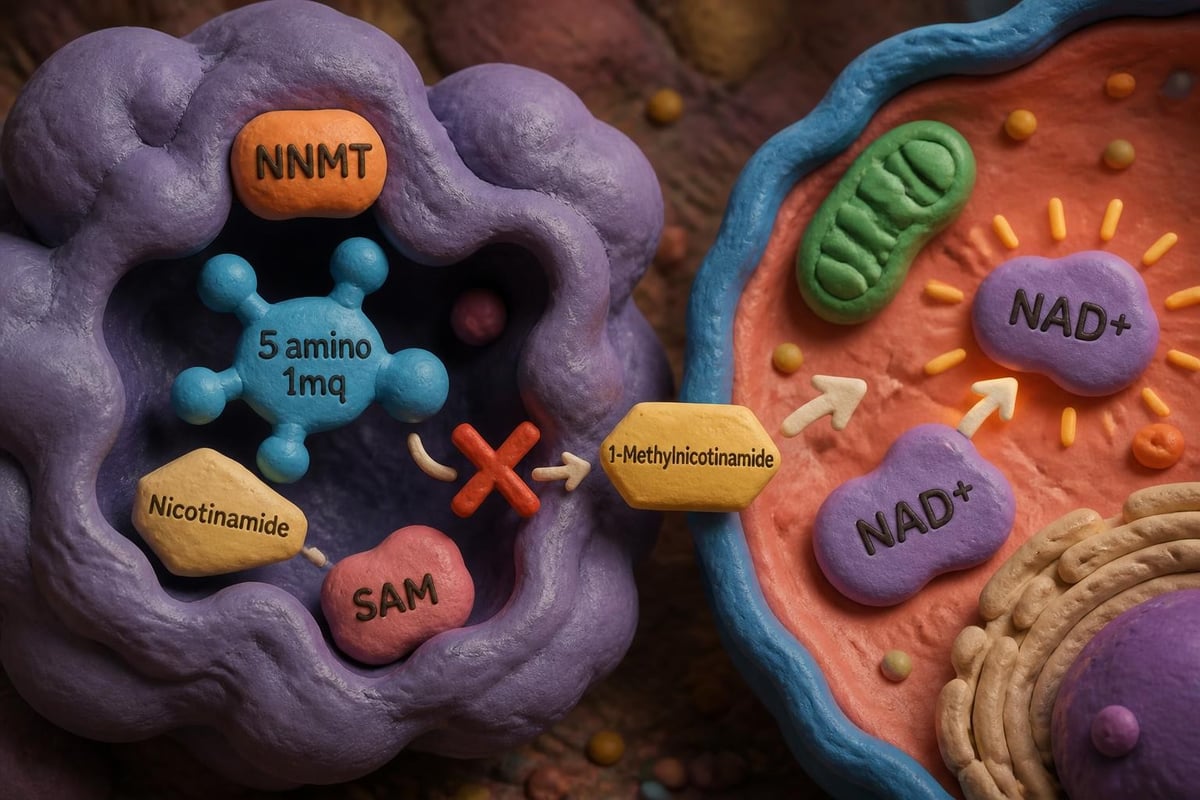
The primary mechanism through which 5 amino 1mq operates involves the competitive inhibition of NNMT, an enzyme responsible for methylating nicotinamide using S-adenosylmethionine (SAM) as a methyl donor. This process typically produces 1-methylnicotinamide (1-MNA) and consumes nicotinamide, a precursor to NAD+.
By inhibiting NNMT activity, the compound allows nicotinamide to remain available for conversion into NAD+ through salvage pathways. This preservation of NAD+ availability has significant implications for cellular energetics, as NAD+ serves as a critical cofactor in mitochondrial ATP production and numerous enzymatic reactions.
Current Research Applications and Laboratory Models
Research institutions investigating metabolic pathways have utilized 5 amino 1mq in various experimental contexts. The compound's specificity for NNMT makes it valuable for dissecting the enzyme's role in metabolic regulation.
Preclinical Investigation Protocols
Laboratory studies have primarily employed animal models and cell culture systems to evaluate how NNMT inhibition affects metabolic parameters. According to preclinical research summaries, mouse models have been the predominant experimental platform for understanding the compound's effects on energy metabolism.
| Research Model | Primary Endpoints | Typical Duration | Key Measurements |
|---|---|---|---|
| Cell Culture | NAD+ levels, mitochondrial function | 24-72 hours | Oxygen consumption, ATP production |
| Mouse Models | Body composition, metabolic rate | 4-12 weeks | Weight, fat mass, energy expenditure |
| Tissue Analysis | Gene expression, enzyme activity | Variable | NNMT expression, metabolic markers |
These experimental designs have allowed researchers to observe how sustained NNMT inhibition influences adipose tissue metabolism, hepatic function, and whole-body energy balance. Data from such studies provide insights into the enzyme's broader metabolic role beyond simple nicotinamide methylation.
Metabolic Pathway Investigations
Beyond weight-related parameters, researchers have used 5 amino 1mq to explore connections between NNMT activity and various metabolic pathways. The enzyme's expression varies significantly across tissue types, with particularly high levels in adipose tissue and liver.
Investigators have examined how NNMT inhibition affects:
- Cellular NAD+ homeostasis and sirtuin activity
- Mitochondrial biogenesis and oxidative capacity
- Lipid metabolism and adipocyte differentiation
- Insulin sensitivity and glucose handling pathways
- Energy expenditure and thermogenic gene expression
The compound's effects on NAD+ availability make it particularly relevant for studying aging-related metabolic decline and mitochondrial dysfunction. Since NAD+ levels naturally decrease with age, research tools that modulate this cofactor provide valuable experimental opportunities.
Dosing Considerations for Laboratory Research
Proper dosing protocols are essential for reproducible research outcomes when working with 5 amino 1mq. The compound's pharmacokinetic properties inform appropriate administration strategies in experimental settings.
Reconstitution and Storage Protocols
Research-grade 5 amino 1mq typically arrives as a lyophilized powder requiring reconstitution before use. Standard laboratory protocols involve:
- Solvent selection: Bacteriostatic water or appropriate buffer solutions
- Concentration preparation: Typically 1-10 mg/mL depending on experimental design
- Storage conditions: Refrigeration at 2-8°C for short-term use
- Freeze storage: -20°C or -80°C for extended preservation
- Aliquoting practices: Single-use portions to minimize freeze-thaw cycles

Research Dosing Ranges and Administration
Research protocols documented in peptide databases indicate that subcutaneous administration has been the primary route in animal studies, though other routes have been explored in cellular research contexts. Dosing considerations include:
| Parameter | Typical Range | Notes |
|---|---|---|
| Cell Culture | 1-100 μM | Concentration-dependent effects observed |
| Mouse Models | 25-100 mg/kg | Body weight-adjusted dosing |
| Frequency | Daily to twice daily | Based on half-life considerations |
| Duration | 4-12 weeks | For metabolic endpoint studies |
The compound's reported half-life of approximately 4-6 hours in rodent models influences dosing frequency decisions. Researchers must balance maintaining sufficient enzyme inhibition with practical administration schedules and minimize stress on animal subjects.
Investigational Status and Research Limitations
Despite growing interest in 5 amino 1mq, the research community must acknowledge significant limitations in current knowledge. Understanding these gaps is essential for proper experimental interpretation and future research direction.
Absence of Human Clinical Data
As of 2026, no registered human clinical trials have been completed or published for 5 amino 1mq, which classifies its use in humans as entirely investigational. This absence of human data represents a critical knowledge gap:
- Safety profile: Unknown in human subjects
- Effective dose ranges: Not established for human metabolism
- Long-term effects: Completely uncharacterized
- Individual variability: No data on response heterogeneity
- Interaction potential: Unexamined with medications or conditions
The compound remains exclusively a research tool for laboratory investigations. Data Peptides supplies laboratory-grade compounds strictly for research purposes, never for human or animal consumption outside approved experimental protocols.
Translational Research Challenges
Several factors complicate the translation of preclinical findings to potential future human applications. NNMT expression patterns differ between species, with humans showing distinct tissue distribution compared to rodent models.
Furthermore, the metabolic context in which NNMT operates involves complex regulatory networks that may respond differently across species. Researchers must carefully consider these translational limitations when designing studies and interpreting results.
Comparative Analysis With Related Research Compounds
Understanding how 5 amino 1mq fits within the broader landscape of metabolic research compounds provides valuable context for experimental design and interpretation.
Distinction From Peptide-Based Interventions
While compounds like BPC-157 and TB-500 work through peptide-receptor interactions to influence tissue repair and regeneration pathways, 5 amino 1mq operates through direct enzymatic inhibition. This mechanistic difference creates complementary rather than overlapping research applications.
| Compound Type | Mechanism | Primary Research Focus | Molecular Size |
|---|---|---|---|
| 5 Amino 1MQ | Enzyme inhibition | Metabolic regulation, NAD+ modulation | Small molecule (~137 Da) |
| Peptide compounds | Receptor activation | Tissue repair, cellular signaling | Larger (500-5000 Da) |
| NAD+ precursors | Substrate provision | Direct cofactor supplementation | Variable |
The small-molecule nature of 5 amino 1mq provides certain experimental advantages in terms of stability and cellular penetration, while peptide-based research tools offer different signaling capabilities and biological activities.
Related NNMT Research Approaches
Other research strategies for investigating NNMT function include genetic knockout models, RNA interference techniques, and alternative small-molecule inhibitors. Each approach offers distinct advantages:
- Genetic models provide complete enzyme absence but lack reversibility
- RNA interference allows temporal control but involves technical complexity
- Small-molecule inhibitors like 5 amino 1mq offer dose-dependent, reversible effects
- NNMT overexpression models examine consequences of increased enzyme activity
Researchers often combine multiple approaches to comprehensively characterize NNMT's metabolic roles and validate findings across different experimental systems.
Laboratory Safety and Handling Protocols
Proper laboratory practices are essential when working with research compounds. Institutions must implement appropriate safety measures and handling procedures.
Standard Laboratory Precautions
Research-grade compounds require careful handling to ensure both personnel safety and experimental integrity. Standard protocols include:
- Personal protective equipment: Lab coats, gloves, and eye protection
- Containment practices: Work in designated areas with appropriate ventilation
- Spill procedures: Established cleanup protocols and waste disposal
- Documentation: Detailed records of reconstitution, storage, and usage
- Training requirements: Proper instruction for all personnel handling materials
These practices align with institutional biosafety guidelines and ensure consistent, reproducible research outcomes.
Quality Control Considerations
Laboratory research demands high-purity compounds to minimize confounding variables. Third-party testing provides verification of:
- Purity levels: Typically ≥98% for research applications
- Identity confirmation: Mass spectrometry and structural verification
- Contaminant screening: Testing for residual solvents or impurities
- Batch consistency: Certificate of analysis for each production lot
Working with verified, tested materials from established suppliers ensures experimental reliability and supports reproducible science.
Future Research Directions and Unanswered Questions
The scientific community continues to identify new research questions regarding NNMT's role in metabolism and the effects of its inhibition. These knowledge gaps represent opportunities for future investigation.
Emerging Research Areas
Current understanding of 5 amino 1mq’s effects remains largely confined to preclinical models, with numerous unexplored aspects warranting further study:
- Tissue-specific effects: How NNMT inhibition differentially affects various organs
- Circadian interactions: Whether NNMT activity follows diurnal patterns
- Microbiome connections: Potential influences on gut bacterial metabolism
- Epigenetic consequences: How altered methylation affects gene expression
- Combination approaches: Synergistic effects with other metabolic interventions
Investigators continue to design experiments addressing these questions using refined methodologies and advanced analytical techniques.
Mechanistic Uncertainties
Despite established knowledge of NNMT's enzymatic function, questions remain about its broader physiological significance. Why do certain tissues express high NNMT levels? How does the enzyme's activity integrate with other methylation pathways? What evolutionary pressures shaped its current metabolic role?
Research tools like 5 amino 1mq enable scientists to probe these fundamental questions through carefully designed experiments that manipulate enzyme activity and observe resulting metabolic changes.
Regulatory and Classification Considerations
Understanding the regulatory landscape surrounding research compounds helps laboratories maintain compliance and appropriate usage standards.
Research Compound Classification
The classification of 5 amino 1mq as a research chemical rather than an approved therapeutic agent carries specific implications. Comprehensive peptide resources emphasize that the compound remains investigational, with no approved human uses.
Laboratories utilizing such compounds must:
- Maintain appropriate institutional approvals for research protocols
- Ensure compliance with animal care and use committee requirements
- Follow proper documentation and record-keeping practices
- Adhere to import/export regulations for research materials
- Implement appropriate disposal procedures for chemical waste
These regulatory frameworks protect both research integrity and public safety while enabling scientific advancement.
Intellectual Property Landscape
The research surrounding NNMT inhibitors involves various patent filings and intellectual property considerations. Institutions conducting research should be aware of existing patents that may affect future commercialization or application development, though such considerations remain distant given the current investigational status.
The investigation of 5 amino 1mq represents an active area of metabolic research with numerous unanswered questions and future opportunities. As laboratories continue exploring NNMT's role in energy metabolism and cellular function, access to high-quality research materials remains essential for advancing scientific understanding. For researchers seeking laboratory-grade compounds backed by rigorous quality control, Data Peptides provides US-manufactured, third-party tested materials exclusively for legitimate research applications, supporting the scientific community's pursuit of metabolic knowledge.