
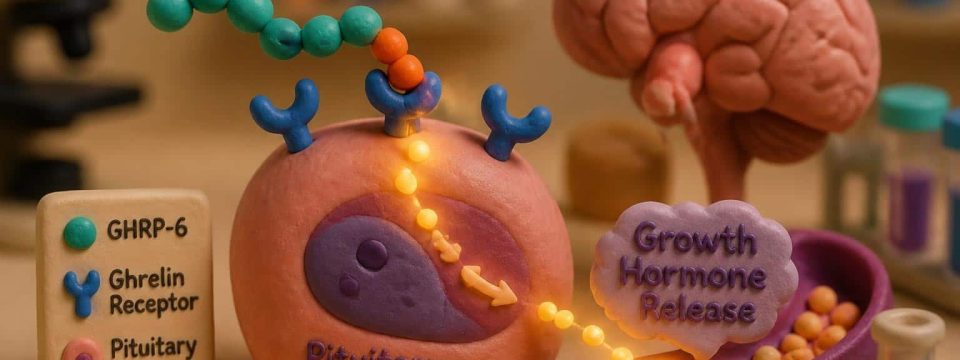
Growth hormone-releasing peptides have transformed metabolic and endocrine research over the past three decades. Among these synthetic compounds, GHRP-6 stands out as one of the earliest and most thoroughly studied hexapeptides designed to stimulate growth hormone secretion. This laboratory research peptide has generated substantial scientific interest due to its unique mechanism of action, dose-dependent effects, and potential applications across multiple research domains. Understanding the molecular structure, receptor interactions, and experimental protocols associated with GHRP-6 is essential for researchers investigating growth hormone pathways, metabolic regulation, and tissue regeneration processes.
Molecular Structure and Chemical Properties
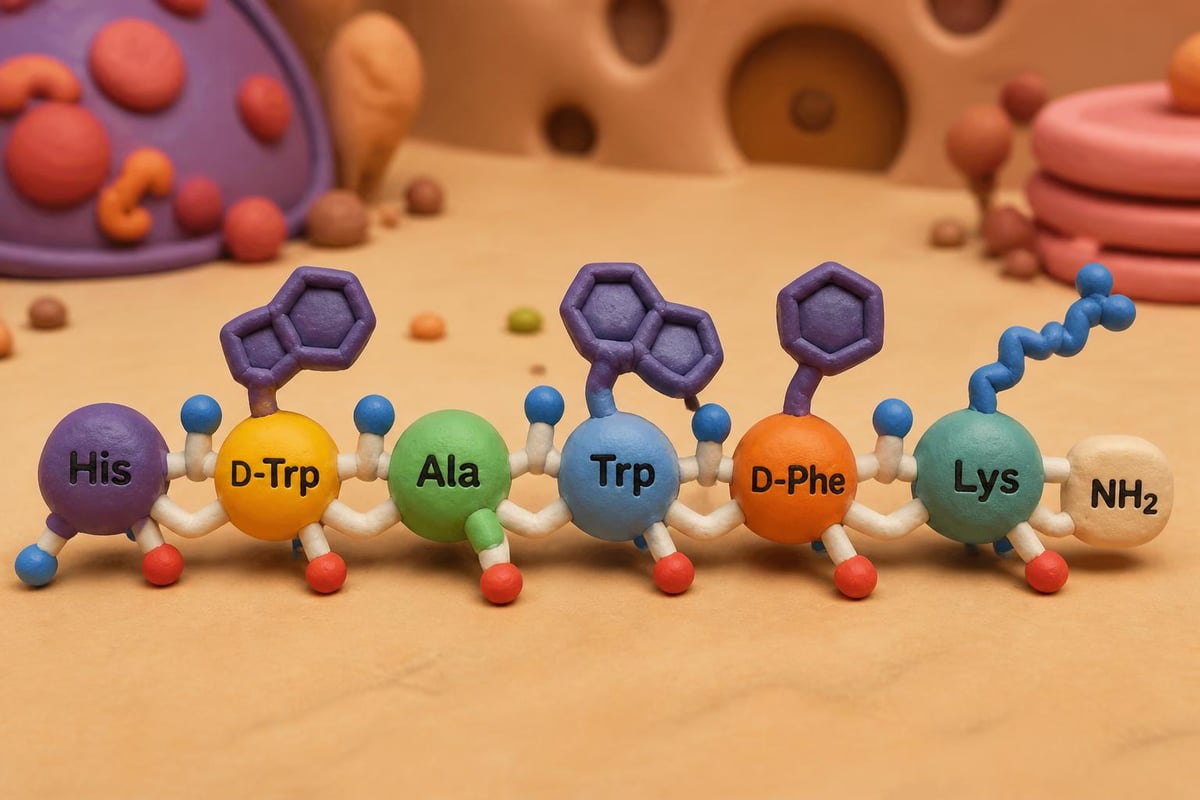
GHRP-6 is a synthetic hexapeptide with the amino acid sequence His-D-Trp-Ala-Trp-D-Phe-Lys-NH2. The presence of D-amino acids at positions two and five makes this compound resistant to enzymatic degradation, significantly extending its biological half-life compared to natural growth hormone-releasing hormone.
The molecular formula C46H56N12O6 gives GHRP-6 a molecular weight of approximately 872.45 g/mol. This compact structure allows for efficient receptor binding while maintaining stability in solution when properly stored. Chemical databases provide detailed spectroscopic and crystallographic data for researchers requiring precise molecular information.
Storage and Handling Requirements
Proper storage conditions are critical for maintaining peptide integrity:
- Lyophilized powder: Store at -20°C to -80°C in sealed containers
- Reconstituted solution: Keep refrigerated at 2-8°C for short-term use
- Avoid freeze-thaw cycles: These can denature the peptide structure
- Protect from light: UV exposure may degrade sensitive amino acid residues
When reconstituting GHRP-6, researchers typically use bacteriostatic water or sterile saline. The peptide database offers specific guidelines for achieving optimal concentrations based on experimental design.
Mechanism of Action and Receptor Interactions
GHRP-6 functions primarily as a ghrelin receptor agonist, binding to growth hormone secretagogue receptor type 1a (GHS-R1a). This receptor is expressed throughout the central nervous system, particularly in the hypothalamus and pituitary gland, as well as in peripheral tissues including cardiac muscle, adipose tissue, and the gastrointestinal tract.
Upon receptor binding, GHRP-6 triggers a cascade of intracellular signaling events. The activation of phospholipase C leads to increased intracellular calcium concentrations, which stimulates the release of growth hormone from somatotroph cells in the anterior pituitary. Unlike growth hormone-releasing hormone (GHRH), which acts through cyclic AMP pathways, GHRP-6 operates through a distinct mechanism that can produce synergistic effects when both pathways are activated simultaneously.
| Receptor Type | Primary Location | GHRP-6 Affinity | Downstream Effect |
|---|---|---|---|
| GHS-R1a | Pituitary, hypothalamus | High | GH release, appetite stimulation |
| GHS-R1b | Peripheral tissues | Low | Unknown/minimal |
| CD36 | Various tissues | Moderate | Potential metabolic effects |
Research demonstrates that GHRP-6 not only stimulates growth hormone release but also affects other hypothalamic-pituitary hormones. Studies have documented increases in prolactin and adrenocorticotropic hormone (ACTH) alongside growth hormone elevation, suggesting broader neuroendocrine effects. The comprehensive research overview details these multi-hormonal responses observed in laboratory settings.
Dose-Response Characteristics
GHRP-6 exhibits a clear dose-dependent relationship in stimulating growth hormone secretion. Lower doses (1-2 mcg/kg body weight in animal models) produce moderate growth hormone elevations, while higher doses (5-10 mcg/kg) generate more pronounced responses. However, this response curve reaches a plateau, beyond which additional dosing produces diminishing returns.
The timing of administration also influences outcomes. GHRP-6 administered during periods of low endogenous growth hormone secretion (such as between natural pulses) produces more robust responses than administration during peak secretion times. This pattern suggests that GHRP-6 works optimally within the body's natural circadian rhythm of growth hormone release.
Research Applications and Laboratory Studies
Laboratory investigations involving GHRP-6 span multiple research domains, from basic endocrinology to applied metabolic studies. The peptide's reliable growth hormone-stimulating properties make it a valuable tool for exploring growth hormone-dependent processes.
Metabolic Research Applications
GHRP-6 has been employed in studies examining:
- Lipid metabolism and body composition changes
- Glucose homeostasis and insulin sensitivity
- Energy expenditure and thermogenesis
- Appetite regulation and feeding behavior
- Bone density and skeletal remodeling
One distinctive characteristic of GHRP-6 compared to other growth hormone secretagogues is its notable appetite-stimulating effect. This orexigenic property results from ghrelin receptor activation in the hypothalamic arcuate nucleus, making GHRP-6 particularly useful for research exploring the intersection of growth hormone signaling and energy balance. The detailed guide on mechanisms explores how this dual action distinguishes GHRP-6 from later-generation secretagogues.

Tissue Regeneration Studies
Growth hormone's anabolic effects extend beyond simple growth promotion. Laboratory studies have investigated GHRP-6's potential role in tissue repair and regeneration processes. While direct tissue healing peptides like BPC-157 work through localized mechanisms involving growth factor stimulation and inflammatory modulation, GHRP-6 approaches tissue regeneration indirectly through systemic growth hormone elevation and IGF-1 upregulation.
Research examining skeletal muscle recovery, connective tissue remodeling, and wound healing has utilized GHRP-6 to elevate endogenous growth hormone levels. These studies help clarify which regenerative processes depend primarily on growth hormone signaling versus those requiring additional mechanisms.
Cardiovascular and Cardioprotective Research
Several laboratory investigations have explored GHRP-6's effects on cardiac function and protection. Ghrelin receptors are abundantly expressed in cardiac tissue, and their activation appears to influence:
- Myocardial contractility and cardiac output
- Endothelial function and vascular tone
- Cardioprotection against ischemic injury
- Inflammatory responses in cardiovascular tissue
Clinical research summaries document experiments where GHRP-6 demonstrated protective effects in models of cardiac stress, potentially mediated through both growth hormone-dependent and independent pathways.
Experimental Protocols and Dosing Considerations
Establishing appropriate experimental protocols requires careful consideration of multiple variables. GHRP-6 research typically involves subcutaneous or intravenous administration, with route selection depending on research objectives and model systems.
Common Research Protocol Parameters
| Parameter | Typical Range | Considerations |
|---|---|---|
| Dose (animal models) | 1-10 mcg/kg | Higher doses plateau in effect |
| Administration frequency | 1-3 times daily | Mimics pulsatile GH secretion |
| Duration of studies | 2-12 weeks | Longer studies assess chronic effects |
| Timing | Fasting state preferred | Enhances GH response magnitude |
Researchers often implement GHRP-6 protocols during fasting conditions or between meals to maximize growth hormone response. The presence of nutrients, particularly glucose, can blunt the growth hormone-releasing effect through feedback mechanisms involving insulin and somatostatin.
Combination Research Approaches
Many laboratory studies combine GHRP-6 with other compounds to explore synergistic or complementary effects. Common combinations include:
- GHRP-6 + GHRH analogs: Amplified growth hormone release through dual pathways
- GHRP-6 + IGF-1 measurements: Tracking downstream growth hormone effects
- GHRP-6 + metabolic assessments: Comprehensive endocrine-metabolic profiling
The scientific evidence compilation provides detailed protocols from peer-reviewed studies, offering researchers validated methodologies for various experimental designs.
Comparative Analysis with Other Growth Hormone Secretagogues
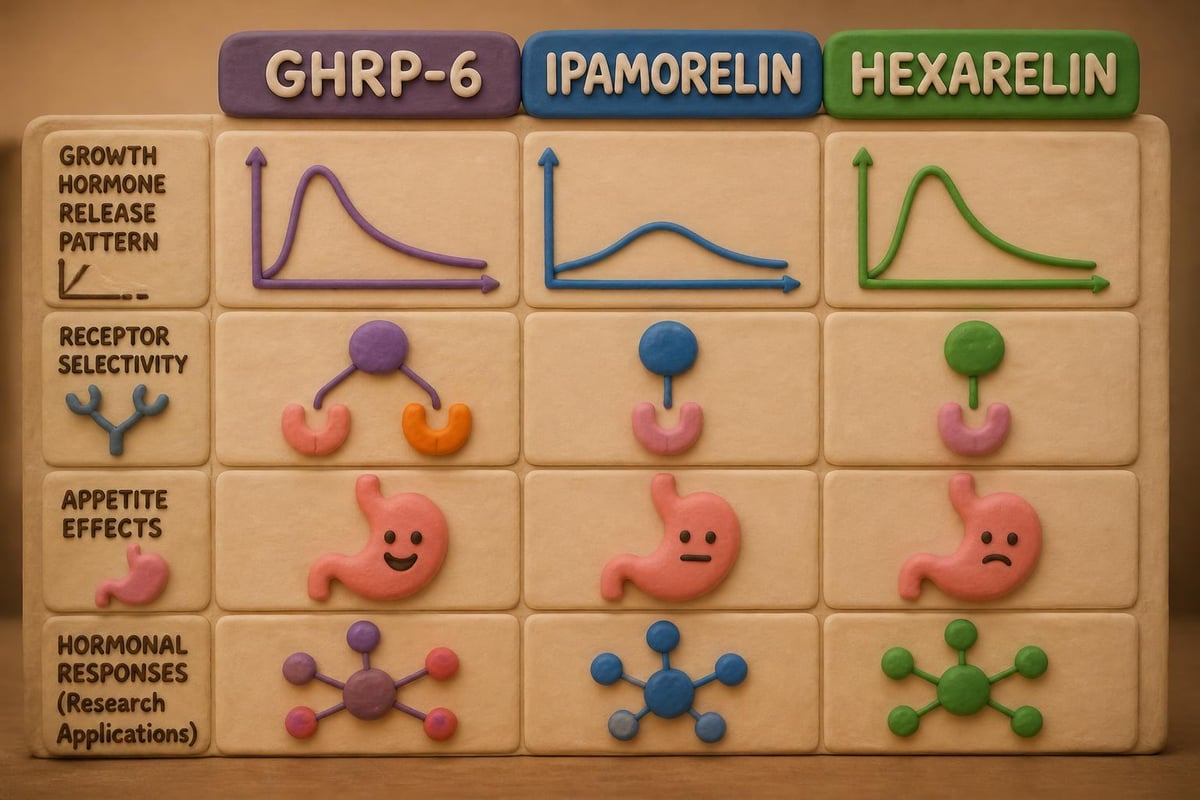
GHRP-6 represents the first generation of growth hormone-releasing peptides, but subsequent compounds have been developed with modified properties. Understanding these differences helps researchers select the most appropriate tool for specific investigations.
First vs. Second Generation Secretagogues
GHRP-6 characteristics:
- Strong appetite stimulation
- Moderate growth hormone pulse amplitude
- Affects multiple hormones (GH, prolactin, ACTH)
- Well-established safety profile in research
Ipamorelin (second generation):
- Minimal appetite effects
- Selective growth hormone release
- Reduced impact on cortisol and prolactin
- More targeted receptor selectivity
Hexarelin (related compound):
- Stronger growth hormone release than GHRP-6
- More pronounced cardiovascular effects
- Potential for receptor desensitization with chronic use
- Greater cortisol stimulation
This comparison illustrates how peptide modifications alter receptor selectivity and downstream effects. The complete research guide provides detailed comparisons across multiple secretagogues.
Safety Considerations and Observed Effects in Research
Laboratory research with GHRP-6 has documented a range of observed effects beyond growth hormone stimulation. Understanding these multifaceted responses is essential for proper experimental design and data interpretation.
Documented Research Observations
Studies have reported the following effects associated with GHRP-6 administration:
- Increased hunger and food intake: Most consistent observation across models
- Transient changes in blood glucose: Typically mild and self-limiting
- Water retention: Related to growth hormone's effects on sodium balance
- Joint and tissue sensations: Potentially related to fluid dynamics
- Sleep pattern changes: Growth hormone is involved in sleep architecture
The appetite-stimulating effect of GHRP-6 distinguishes it from many other secretagogues and must be accounted for in research designs involving metabolic or body composition endpoints. This orexigenic property results from direct ghrelin receptor activation in appetite-regulating brain regions.
Long-Term Research Considerations
Extended research protocols spanning weeks to months have revealed important patterns:
- Sustained growth hormone response: Limited tachyphylaxis compared to some analogs
- Metabolic adaptations: Changes in body composition and energy utilization
- Hormonal feedback adjustments: Potential alterations in endogenous patterns
- Receptor regulation: Maintained sensitivity with appropriate dosing intervals
The peptide research analysis examines long-term study outcomes and their implications for understanding growth hormone physiology.
Quality Control and Purity Verification
For research applications, peptide purity and authenticity are paramount. GHRP-6 should undergo rigorous quality control testing to ensure experimental validity and reproducibility.
Essential Quality Metrics
| Test Method | Purpose | Acceptable Range |
|---|---|---|
| HPLC (High-Performance Liquid Chromatography) | Purity assessment | ≥98% |
| Mass Spectrometry | Molecular weight confirmation | 872.45 ± 0.5 g/mol |
| Peptide Content | Actual peptide quantity | ≥95% of labeled amount |
| Bacterial Endotoxin | Contamination screening | <5 EU/mg |
Reputable suppliers provide certificates of analysis (COA) documenting third-party testing results. These documents should include batch-specific data for purity, identity, and contamination screening. Researchers can explore verified research peptides that meet stringent quality standards for laboratory applications.
Storage Stability Studies
Research has examined GHRP-6 stability under various conditions:
- Lyophilized powder at -20°C: Stable for 2+ years
- Reconstituted solution at 4°C: Stable for 2-4 weeks
- Room temperature exposure: Significant degradation within 24-48 hours
- Multiple freeze-thaw cycles: Each cycle reduces potency by approximately 5-10%
These stability characteristics inform proper handling protocols and help prevent experimental artifacts due to peptide degradation.
Analytical Methods and Measurement Techniques
Researchers employing GHRP-6 in laboratory studies must implement appropriate analytical methods to measure outcomes and verify peptide effects.
Growth Hormone Measurement Approaches
Several techniques assess growth hormone responses:
- Immunoassay (ELISA): Most common method for quantifying GH levels
- Chemiluminescence: Higher sensitivity for detecting subtle changes
- Mass spectrometry: Gold standard for specificity but resource-intensive
- Serial sampling: Multiple time points capture pulse dynamics
Optimal sampling protocols involve collecting baseline measurements, then serial samples at 15-30 minute intervals for 2-3 hours post-administration to capture the complete growth hormone pulse profile.
Secondary Endpoint Assessments
Beyond direct growth hormone measurement, researchers often track:
- IGF-1 levels: Reflects sustained GH effects over days
- Body composition: DEXA scanning or similar imaging
- Metabolic markers: Glucose, insulin, lipid panels
- Appetite and food intake: Quantitative feeding measurements
- Gene expression profiles: mRNA analysis of GH-responsive genes
The scientific institute resource details comprehensive endpoint assessment strategies used in published research.
Regulatory Status and Research Compliance
GHRP-6 remains an investigational compound not approved for human use outside clinical trial settings. Its legal status varies by jurisdiction, but it is consistently classified as a research chemical intended for laboratory applications only.
Research Institution Guidelines
Institutions conducting GHRP-6 research must adhere to:
- Institutional Review Board (IRB) approval: For any human-related research
- Institutional Animal Care and Use Committee (IACUC) protocols: For animal studies
- Good Laboratory Practice (GLP) standards: For regulatory submissions
- Material safety data sheet (MSDS) compliance: For safe handling
Researchers should maintain detailed records of peptide procurement, storage conditions, experimental protocols, and disposal methods. These documentation practices ensure compliance with institutional policies and regulatory requirements.
Ethical Considerations in Research
The use of growth hormone secretagogues in research raises important ethical questions about performance enhancement, anti-aging applications, and appropriate research boundaries. Responsible investigation requires:
- Clear scientific justification for GHRP-6 use
- Transparent reporting of all observed effects
- Appropriate risk-benefit analysis for any human studies
- Disclosure of funding sources and potential conflicts
The detailed research evidence includes discussions of ethical frameworks guiding responsible peptide research.
Future Research Directions and Emerging Applications
The scientific understanding of GHRP-6 continues to evolve as researchers explore novel applications and refine existing protocols. Several promising research directions have emerged in recent years.
Targeted Research Areas
Aging and longevity studies: Growth hormone's role in aging processes makes GHRP-6 relevant for investigating age-related physiological changes, though results remain preliminary and require extensive validation.
Metabolic syndrome research: The intersection of growth hormone signaling and metabolic health presents opportunities for understanding insulin resistance, dyslipidemia, and obesity through GHRP-6-based experimental models.
Neurodegenerative research: Growth hormone receptors in the central nervous system and growth hormone's neuroprotective properties have sparked interest in GHRP-6 as a research tool for exploring cognitive function and neuronal health.
Bone health investigations: Growth hormone's anabolic effects on skeletal tissue make GHRP-6 valuable for studying bone density, remodeling, and fracture healing in controlled research environments.
Technical Advances in Peptide Research
Modern research techniques enhance GHRP-6 investigation capabilities:
- Single-cell analysis: Examining growth hormone responses in individual somatotrophs
- Optogenetics: Mapping neural circuits involved in GHRP-6 receptor signaling
- Metabolomics: Comprehensive metabolic profiling of GHRP-6 effects
- Advanced imaging: Real-time visualization of receptor binding and trafficking
These methodological advances promise deeper insights into GHRP-6's mechanisms and potential applications across diverse research domains.
GHRP-6 represents a foundational tool in growth hormone research, offering reliable growth hormone stimulation through well-characterized ghrelin receptor mechanisms. Its unique appetite-stimulating properties and multi-hormonal effects distinguish it from newer secretagogues, making it valuable for specific research applications despite the availability of more selective alternatives. Whether investigating metabolic pathways, tissue regeneration processes, or neuroendocrine regulation, researchers benefit from understanding GHRP-6's molecular properties, dose-response characteristics, and experimental considerations. For laboratory investigations requiring high-purity research peptides with verified quality standards, Data Peptides provides US-manufactured, third-party tested compounds specifically designed for rigorous scientific research applications.