

Learn the critical steps for ordering peptides safely, from verifying purity and selecting suppliers to understanding synthesis methods and storage.
Research laboratory workflow for ordering peptides: supplier verification, purity testing documentation, synthesis method selection, and quality control processes
Understanding Peptide Quality Standards
Laboratory-grade peptides must meet specific purity thresholds to produce reliable research outcomes. Most research applications require peptides with a minimum purity of 95%, though certain experiments may demand 98% or higher. Purity levels directly impact experimental consistency, as contaminants can interfere with biological assays, cellular responses, and pharmacological studies.
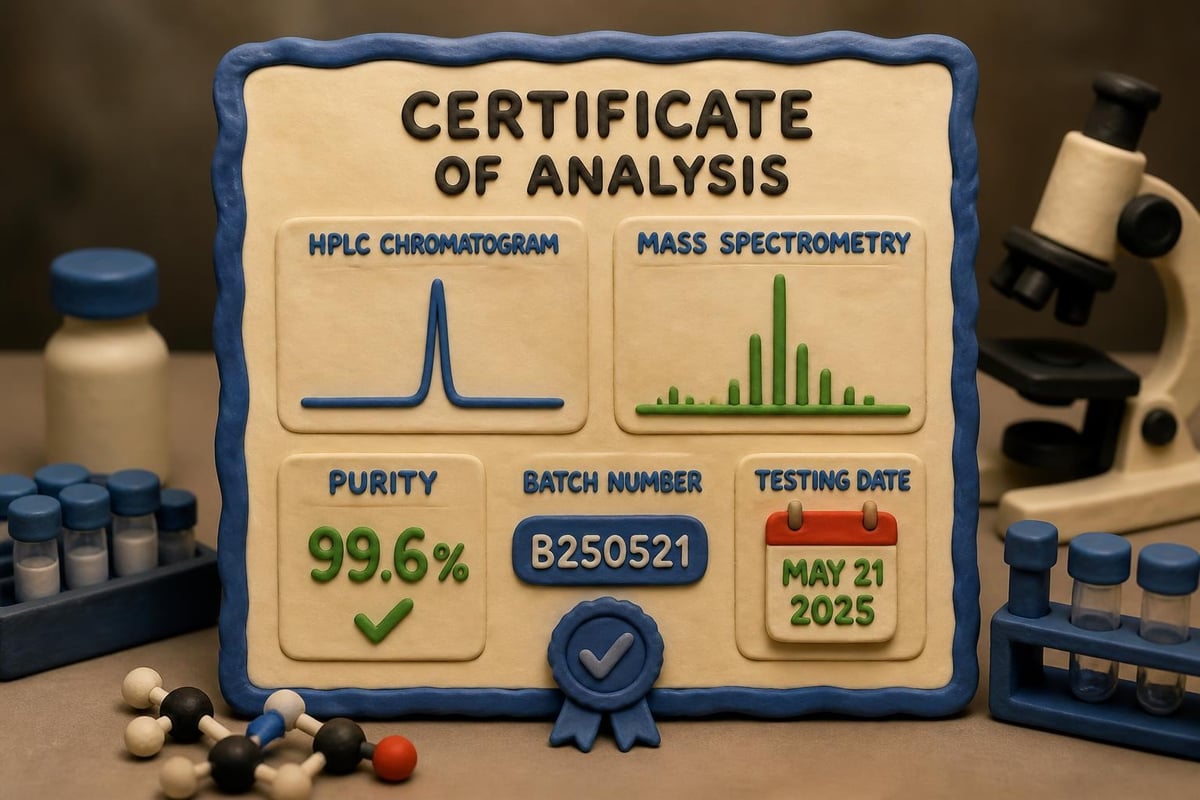
Third-party testing provides independent verification of peptide quality. Reputable suppliers provide certificates of analysis (COAs) for each batch, detailing purity percentages, molecular weight confirmation, and potential contaminants. These documents serve as essential quality control records and should be reviewed before ordering peptides.
Key Quality Indicators
When evaluating peptide specifications, researchers should examine several critical parameters:
- HPLC purity analysis showing peak integration and separation
- Mass spectrometry data confirming molecular weight
- Amino acid analysis verifying sequence accuracy
- Endotoxin testing for cell culture applications
- Sterility certification when required for biological systems
Manufacturing location also influences quality control standards. US-manufactured peptides typically follow stricter production protocols and undergo more rigorous oversight compared to international alternatives. This geographic consideration becomes particularly important when ordering peptides for sensitive research applications requiring consistent batch-to-batch performance.
Selecting the Right Peptide Supplier
The supplier selection process represents one of the most consequential decisions when ordering peptides. A reliable vendor provides not just quality products but also technical support, transparent documentation, and consistent availability. Understanding peptide synthesis methods helps researchers evaluate supplier capabilities and production standards.
Supplier Evaluation Criteria
| Criterion | What to Verify | Why It Matters |
|---|---|---|
| Manufacturing Location | US-based or international | Quality oversight and regulatory compliance |
| Testing Protocols | Third-party batch testing | Independent purity verification |
| Documentation | Complete COAs for each batch | Traceability and quality assurance |
| Technical Support | Accessibility of knowledgeable staff | Problem-solving and protocol guidance |
| Intended Use Statements | Clear research-only designation | Regulatory compliance |
Red flags when ordering peptides include suppliers who make medical claims, lack detailed purity documentation, offer suspiciously low prices, or fail to clearly state that products are for research purposes only. Safely sourcing peptides requires vigilance against vendors who prioritize marketing over quality control.
Established suppliers maintain comprehensive product catalogs with detailed specifications for each peptide. At Data Peptides, all products undergo third-party batch testing and come with complete documentation verifying purity and composition, ensuring researchers receive laboratory-grade materials suitable for rigorous scientific investigation