The research peptide landscape has evolved significantly in recent years, with peptide products becoming essential tools in laboratories studying cellular mechanisms, tissue regeneration, and metabolic pathways. As the scientific community continues to explore therapeutic potential and biological functions, understanding the quality standards, applications, and sourcing considerations for these compounds has become increasingly critical. For researchers working with these biomolecules, navigating the complex marketplace requires knowledge of manufacturing practices, testing protocols, and regulatory frameworks that ensure experimental integrity.
Understanding the Peptide Product Landscape
Peptide products represent a diverse category of short amino acid chains, each with distinct biological functions and research applications. These molecules typically range from two to fifty amino acids in length, though some functional peptides extend beyond this range. The research community has identified thousands of naturally occurring peptides, while synthetic variants continue to expand experimental possibilities.
The global peptide therapeutics market reflects growing scientific interest, with research-grade compounds serving as foundational tools for hypothesis testing and mechanistic studies. Unlike pharmaceutical-grade products intended for clinical use, laboratory peptide products serve exclusively investigational purposes, supporting work in cell culture, animal models, and biochemical assays.
Classification and Categories
Researchers categorize peptide products based on several criteria:
- Origin: Natural peptides derived from biological sources versus synthetic analogs designed in laboratories
- Function: Signaling peptides, antimicrobial peptides, hormone-mimetic peptides, and structural peptides
- Modification: Native sequences versus modified variants with enhanced stability or specificity
- Complexity: Simple linear chains versus cyclic structures or branched configurations
Understanding these classifications helps researchers select appropriate compounds for specific experimental designs. ExaminePeptides offers an evidence-based database that categorizes over 117 different peptides by mechanism, providing valuable reference material for laboratory planning.

Quality Standards for Research Peptides
The integrity of scientific research depends fundamentally on the purity and consistency of materials used in experiments. For peptide products, quality assurance encompasses multiple verification stages, from raw material sourcing through final product testing.
Manufacturing and Synthesis Standards
Modern peptide synthesis employs solid-phase peptide synthesis (SPPS) as the predominant manufacturing method. This approach builds amino acid chains sequentially on a solid support, allowing precise control over sequence accuracy. US-based manufacturers typically maintain controlled production environments that minimize contamination risks and ensure batch-to-batch consistency.
Key manufacturing considerations include:
- Raw material purity: Pharmaceutical-grade amino acids and coupling reagents
- Synthesis methodology: Automated versus manual synthesis protocols
- Purification techniques: High-performance liquid chromatography (HPLC) for impurity removal
- Lyophilization: Proper freeze-drying procedures to maintain peptide stability
Third-party testing has become the gold standard for verifying peptide product quality. Independent laboratories perform analytical testing separate from manufacturing facilities, providing unbiased assessment of purity, identity, and concentration. This verification typically includes HPLC analysis, mass spectrometry, and amino acid analysis to confirm molecular structure and composition.
Testing Protocols and Verification
| Test Type | Purpose | Acceptance Criteria |
|---|---|---|
| HPLC Purity | Quantifies primary peptide versus impurities | ≥95% for research grade |
| Mass Spectrometry | Confirms molecular weight and identity | Within 0.1% of theoretical mass |
| Amino Acid Analysis | Verifies sequence composition | Matches expected ratios |
| Endotoxin Testing | Ensures absence of bacterial contamination | <1 EU/mg for cell culture use |
Researchers should request Certificates of Analysis (COA) for every batch, as peptide products can vary between production runs. These documents provide essential quality data that inform experimental design and help troubleshoot unexpected results.
Research Applications and Mechanisms
Peptide products support research across numerous biological disciplines, from cellular signaling to tissue engineering. Understanding mechanism pathways helps researchers design appropriate experimental models and interpret results within proper physiological contexts.
Cellular and Molecular Research
At the cellular level, peptide products serve as tools for investigating receptor binding, signal transduction cascades, and gene expression regulation. Researchers use these compounds to:
- Activate or inhibit specific receptor pathways
- Map cellular response mechanisms
- Study dose-response relationships
- Investigate synergistic interactions between signaling molecules
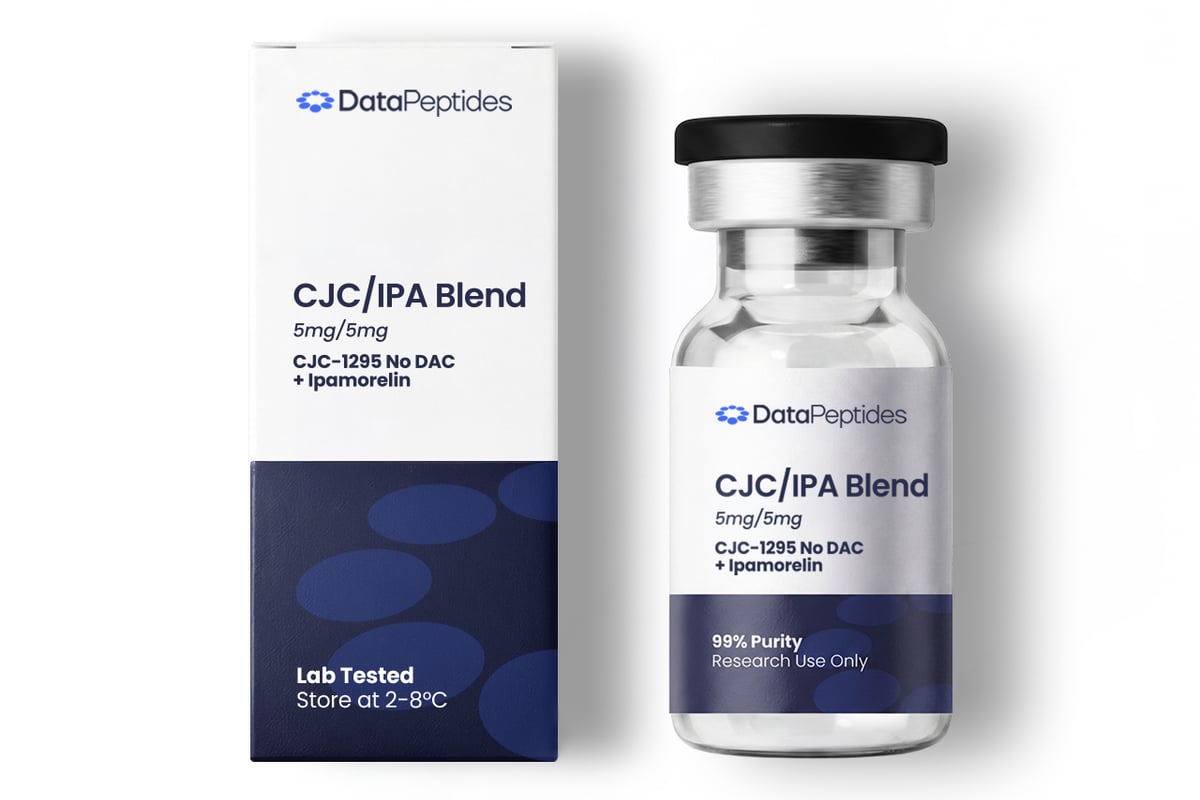
For example, growth hormone secretagogues represent a class of peptide products that stimulate hormone release through receptor activation. The CJC / IPA Blend combines compounds that work through complementary pathways, allowing researchers to study synergistic effects on growth hormone pulsatility and downstream metabolic signaling. This type of formulation demonstrates how combining peptides can reveal interaction dynamics not observable with single compounds.
Tissue Regeneration Studies
Tissue repair mechanisms constitute a major research focus utilizing peptide products. Several synthetic peptides demonstrate properties relevant to wound healing, angiogenesis, and extracellular matrix remodeling in laboratory models.
BPC-157, a synthetic pentadecapeptide derived from gastric proteins, has been extensively studied for tissue regeneration properties. Research models have examined its effects on:
- Fibroblast proliferation and migration
- Collagen synthesis and deposition
- Vascular endothelial growth factor (VEGF) expression
- Inflammatory cytokine modulation
- Tendon and ligament healing in animal models
Similarly, TB-500, a synthetic fragment of Thymosin Beta-4, supports research into actin regulation and cell migration processes. Studies have investigated its role in promoting new blood vessel formation and modulating inflammatory responses following tissue injury.

Sourcing Considerations for Laboratories
Selecting reliable sources for peptide products requires evaluating multiple factors beyond price considerations. The quality of research materials directly impacts experimental reproducibility and data integrity, making vendor selection a critical decision.
Vendor Evaluation Criteria
When assessing peptide suppliers, researchers should examine:
- Manufacturing location: Domestic production often provides better quality control and regulatory oversight
- Testing transparency: Availability of batch-specific COAs and testing methodology
- Storage and handling: Proper cold chain management and packaging protocols
- Documentation: Clear product specifications and research disclaimers
- Customer support: Technical assistance for reconstitution and storage questions
PeptiNox provides an independent verification platform for research peptide vendors, offering objective assessments that help researchers evaluate supplier reliability. This type of third-party verification adds an additional quality assurance layer beyond vendor self-reporting.
Regulatory and Compliance Frameworks
The regulatory landscape for research peptide products differs significantly from pharmaceutical compounds. In the United States, peptides sold explicitly for laboratory research fall outside FDA drug approval requirements, but suppliers must clearly label products as "not for human or animal consumption."
Responsible vendors maintain strict compliance practices including:
- Clear research-only labeling and disclaimers
- Age verification for purchases
- Prohibition of medical claims or therapeutic advice
- Adherence to chemical shipping regulations
- Proper documentation of intended research use
Recent trends have raised concerns about misuse of research peptides, particularly anti-aging peptide injections promoted on social media despite lacking FDA approval. This highlights the importance of maintaining clear boundaries between research applications and unauthorized human use.
Storage, Handling, and Stability
Proper storage and handling protocols significantly impact peptide product stability and experimental consistency. Most peptides require specific environmental conditions to maintain molecular integrity over time.
Storage Requirements by Form
| Peptide Form | Storage Temperature | Expected Stability | Special Considerations |
|---|---|---|---|
| Lyophilized (unopened) | -20°C to -80°C | 1-2 years | Protect from light and moisture |
| Reconstituted (aqueous) | 2-8°C | 7-14 days | Use sterile bacteriostatic water |
| Reconstituted (with preservative) | 2-8°C | 30 days | Benzyl alcohol extends stability |
| Aliquoted frozen | -80°C | Several months | Avoid freeze-thaw cycles |
Lyophilized peptide products generally demonstrate superior stability compared to solutions. The freeze-drying process removes water that would otherwise participate in hydrolysis reactions, significantly extending shelf life when stored properly.
Reconstitution Best Practices
When preparing peptide products for experimental use, researchers should follow standardized reconstitution protocols:
- Allow vials to reach room temperature before opening to prevent condensation
- Use appropriate solvents based on peptide solubility characteristics
- Add solvent slowly along vial walls to avoid foaming
- Gently swirl rather than vortex to promote dissolution
- Calculate concentrations accurately using stated peptide mass
PeptideDosing provides an open-source reference with detailed reconstitution calculations and syringe unit conversions, helping researchers prepare accurate working solutions for experiments.

Emerging Trends in Peptide Research
The peptide research field continues evolving rapidly, with new compounds, combination formulations, and technological advances expanding experimental possibilities. Understanding current trends helps researchers stay informed about novel tools and methodologies.
Multi-Peptide Formulations
Recent research increasingly explores synergistic effects between different peptide products. Combination formulations allow investigation of pathway interactions and potential enhanced outcomes compared to single compounds. These blends typically combine peptides with complementary mechanisms, such as pairing tissue repair peptides with anti-inflammatory compounds.
When evaluating multi-peptide formulations, researchers should consider:
- Mechanism compatibility: Whether combined pathways logically support research objectives
- Stability interactions: Whether peptides remain stable when mixed in solution
- Dose optimization: How to balance ratios for specific experimental endpoints
- Control groups: Need for individual peptide controls alongside combination treatments
Understanding each component's individual properties remains essential even when using combination products, as this knowledge informs result interpretation and mechanistic conclusions.
Artificial Intelligence in Peptide Discovery
Computational approaches are revolutionizing peptide research, with artificial intelligence frameworks for designing taste peptides demonstrating AI's potential to accelerate discovery across various applications. Machine learning algorithms can predict peptide properties, optimize sequences for specific functions, and identify novel compounds from vast theoretical libraries.
These technological advances may soon enable:
- Rapid virtual screening of peptide libraries before synthesis
- Prediction of stability and solubility characteristics
- Design of peptides with enhanced receptor specificity
- Identification of minimal active sequences for cost-effective synthesis
As AI tools become more accessible, research laboratories may increasingly integrate computational design with traditional experimental validation.
Documentation and Experimental Design
Rigorous documentation practices ensure research reproducibility and facilitate proper interpretation of peptide product studies. Detailed record-keeping becomes especially critical given batch-to-batch variability and the complexity of biological responses.
Essential Documentation Elements
Comprehensive research records for peptide experiments should include:
- Batch numbers and expiration dates for all peptide products used
- Storage conditions and duration before reconstitution
- Reconstitution solvents, concentrations, and preparation dates
- Dosing schedules and administration routes (in vitro or in vivo models)
- Environmental conditions during experiments (temperature, humidity, light exposure)
The Data Peptides blog offers resources on experimental design considerations and proper documentation practices specific to research peptide work.
Control Groups and Validation
Proper experimental design with peptide products requires thoughtful control group selection:
- Vehicle controls: Same solvent and volume without active peptide
- Baseline measurements: Pre-treatment data for comparison
- Positive controls: Known compounds producing expected responses
- Dose-response curves: Multiple concentrations to establish relationships
- Time course studies: Multiple timepoints to capture dynamic responses
These controls help distinguish peptide-specific effects from experimental artifacts or spontaneous biological variation.
Quality Assurance Beyond Initial Testing
While third-party batch testing provides crucial quality verification, researchers should implement additional quality assurance measures within their laboratories to maintain experimental integrity.
In-Laboratory Verification
Simple verification steps can confirm peptide product quality before committing to full experimental protocols:
- Visual inspection: Check for unusual discoloration or clumping in lyophilized powder
- Solubility testing: Verify expected dissolution characteristics match vendor specifications
- Pilot experiments: Run small-scale preliminary tests before large studies
- Positive control validation: Confirm known peptide effects in established assay systems
These practices help identify potential quality issues early, avoiding wasted resources on compromised materials.
Long-Term Monitoring
For peptide products stored over extended periods, periodic verification helps ensure maintained quality:
| Monitoring Practice | Frequency | Purpose |
|---|---|---|
| Temperature log review | Weekly | Verify consistent storage conditions |
| Visual inspection | Before each use | Detect degradation signs |
| Positive control assays | Quarterly | Confirm biological activity maintained |
| Reconstitution testing | Each new vial | Assess solubility consistency |
Researchers working with valuable or limited peptide products should consider aliquoting upon receipt to minimize freeze-thaw cycles and extend usable lifespan.
Interpreting Research Findings
Understanding the limitations and proper context of peptide research helps researchers draw appropriate conclusions and communicate findings accurately. Peptide products serve as research tools, not finished therapeutic interventions, requiring careful interpretation within this framework.
Translational Considerations
Results from cell culture and animal models using peptide products may not directly translate to human applications due to:
- Species-specific receptor differences and signaling pathways
- Pharmacokinetic variations affecting peptide stability and distribution
- Simplified experimental models versus complex physiological systems
- Dose scaling challenges from research models to potential clinical scenarios
Resources like MD PEP serve as neutral references for understanding peptide research evidence, legal status, and pathways to licensed care, helping researchers contextualize their work within the broader landscape.
Publishing and Communication
When publishing research involving peptide products, transparency about materials and methods ensures reproducibility:
- Specify exact peptide sequences and any modifications
- Include supplier information and batch numbers
- Detail storage, reconstitution, and handling procedures
- Report purity data from COAs
- Acknowledge research-only status of materials
PeptideInsight offers evidence-based information drawn from peer-reviewed research, providing models for proper scientific communication about peptide studies.
Safety and Handling Protocols
Although peptide products are intended solely for laboratory research, proper safety protocols protect researchers and maintain laboratory compliance with institutional biosafety requirements.
Laboratory Safety Measures
Standard precautions for handling research peptides include:
- Use of appropriate personal protective equipment (gloves, lab coat, eye protection)
- Work in properly ventilated areas or chemical hoods when preparing solutions
- Prevention of aerosol generation during reconstitution
- Proper disposal of contaminated materials according to institutional protocols
- Maintenance of material safety data sheets (MSDS) for reference
Some peptide products may require additional precautions based on biological activity or modification chemistry. Researchers should consult safety resources and institutional biosafety committees when working with novel compounds.
Waste Disposal Considerations
Proper disposal of unused peptide products and contaminated materials prevents environmental contamination and ensures regulatory compliance:
- Inactivate biological activity through chemical or thermal treatment when appropriate
- Separate peptide waste from general laboratory trash
- Follow institutional chemical waste disposal protocols
- Document disposal of controlled or regulated compounds
- Consider environmental impact of peptides with antimicrobial or hormone-like activity
ProPeptideGuide provides sourced editorial references on peptide handling, covering mechanisms and safety considerations verified through published research.
Economic and Practical Considerations
Budget constraints and practical limitations often influence peptide product selection and experimental design. Understanding cost factors helps researchers maximize available resources while maintaining quality standards.
Cost Factors in Peptide Research
Several variables affect peptide product pricing:
- Sequence length: Longer peptides require more synthesis steps, increasing costs
- Purity grade: Higher purity specifications demand additional purification
- Synthesis scale: Larger quantities may offer per-unit cost advantages
- Modification complexity: Non-standard amino acids or chemical modifications add expense
- Testing requirements: Comprehensive analytical testing contributes to final price
Researchers should balance cost considerations against quality requirements, recognizing that compromised purity or identity verification can invalidate entire experimental series, ultimately costing more than premium materials.
Ordering Strategies
Strategic purchasing approaches can optimize peptide research budgets:
- Order sufficient quantities to complete planned experiments plus replication
- Consider stability timelines when determining order volumes
- Evaluate bulk pricing for frequently used compounds
- Coordinate orders among research groups studying related questions
- Maintain relationships with reliable suppliers for consistent quality
For laboratories conducting ongoing peptide research, establishing standard protocols around specific, well-characterized compounds can reduce variability and improve reproducibility across multiple studies.
Supplier Transparency and Communication
Open communication between researchers and peptide suppliers facilitates better experimental outcomes and helps identify potential issues before they compromise research.
Questions to Ask Suppliers
Before purchasing peptide products, researchers should inquire about:
- Manufacturing location and facility certifications
- Specific analytical methods used for purity testing
- Typical timeline from synthesis to delivery
- Storage conditions maintained during shipping
- Technical support availability for reconstitution questions
- Return or replacement policies for quality issues
Reputable suppliers welcome these questions and provide detailed, transparent answers that demonstrate commitment to research quality. Hesitancy to share manufacturing and testing information may indicate quality concerns.
Building Supplier Relationships
Long-term relationships with reliable peptide suppliers offer several advantages:
- Consistency in product quality across multiple orders
- Priority access during supply constraints
- Technical consultation for experimental design
- Custom synthesis options for specialized research needs
- Documentation support for grant applications and publications
Researchers should view peptide suppliers as partners in the research process, maintaining professional communication and providing feedback about product performance.
The landscape of peptide products continues expanding as research uncovers new biological functions and potential applications across diverse scientific disciplines. Success in peptide research depends fundamentally on sourcing high-quality materials from transparent suppliers, implementing rigorous handling protocols, and maintaining comprehensive documentation throughout experimental processes. For researchers seeking laboratory-grade compounds with verified purity and US-based manufacturing, Data Peptides provides third-party tested products designed exclusively for scientific investigation, supporting the advancement of peptide research with consistent quality standards.