

TA1 peptide, also known as Thymosin Alpha-1, represents a significant area of interest in immunological research due to its demonstrated capacity to modulate immune system responses. Originally isolated from thymic tissue, this 28-amino acid peptide has been extensively studied for its role in enhancing T-cell maturation, supporting dendritic cell activation, and influencing adaptive immune regulation. As research continues to expand our understanding of immune modulation at the molecular level, TA1 peptide stands out for its well-characterized mechanisms and diverse applications in laboratory investigations. Understanding the structural properties, functional pathways, and research contexts for this peptide provides essential knowledge for scientists exploring immune system dynamics.
Structural Characteristics and Molecular Identity
TA1 peptide consists of a precisely sequenced chain of 28 amino acids with a molecular weight of approximately 3,108 daltons. The peptide's primary structure includes specific residues that contribute to its biological activity and stability profile.
The amino acid sequence follows a distinct pattern that enables interaction with cellular receptors and signaling molecules involved in immune regulation. Research has identified that certain regions within the sequence are particularly critical for receptor binding and downstream activation events.
Chemical Properties and Stability
Understanding the chemical behavior of TA1 peptide is essential for laboratory applications:
- Molecular formula: C129H215N33O55
- Solubility profile: Highly soluble in water and phosphate-buffered saline
- pH stability: Maintains structural integrity across physiological pH ranges
- Storage requirements: Typically stored at -20°C or below to preserve peptide integrity
The peptide demonstrates relatively good stability compared to longer polypeptide chains, though proper handling protocols remain critical for maintaining biological activity during experimental procedures.
| Property | Specification | Research Relevance |
|---|---|---|
| Sequence Length | 28 amino acids | Optimal for receptor binding |
| Molecular Weight | ~3,108 Da | Facilitates cellular uptake |
| Isoelectric Point | ~4.2 | Affects formulation strategies |
| Half-life (serum) | 2-3 hours | Impacts dosing protocols |

Mechanisms of Immune Modulation
The immunomodulatory properties of Thymosin Alpha-1 operate through multiple interconnected pathways that influence both innate and adaptive immune responses. TA1 peptide exerts its effects primarily through activation of Toll-like receptors (TLRs), particularly TLR2 and TLR9, which serve as pattern recognition receptors in immune cells.
Toll-Like Receptor Activation
When TA1 peptide binds to Toll-like receptors on dendritic cells and macrophages, it initiates a signaling cascade that promotes the maturation and activation of these antigen-presenting cells. This interaction triggers the production of cytokines and chemokines that coordinate immune cell recruitment and activation.
The peptide's engagement with TLR pathways leads to enhanced expression of major histocompatibility complex (MHC) molecules, which are essential for presenting antigens to T cells and initiating adaptive immune responses. Detailed molecular mechanisms of Thymosin Alpha-1 reveal how this receptor activation translates into measurable changes in immune cell behavior.
T-Cell Differentiation and Maturation
TA1 peptide plays a particularly significant role in promoting the differentiation of immature T cells into functional lymphocytes. The peptide influences the expression of surface markers associated with T-cell maturation and enhances the production of interleukin-2 (IL-2), a critical cytokine for T-cell proliferation and survival.
Research demonstrates that TA1 peptide can:
- Enhance CD4+ T helper cell development
- Promote CD8+ cytotoxic T-cell maturation
- Support regulatory T-cell function
- Influence T-helper cell polarization toward Th1 responses
- Modulate T-cell receptor signaling pathways
These effects collectively contribute to a more robust and balanced adaptive immune response in experimental models.
Research Applications in Immunology
Laboratory investigations utilizing TA1 peptide span numerous areas of immunological research. Scientists employ this peptide to study fundamental immune processes, evaluate therapeutic hypotheses, and develop novel experimental protocols.
Viral Immunity Studies
TA1 peptide has been extensively used in research exploring antiviral immune responses. Studies examining hepatitis B and hepatitis C viral models have incorporated this peptide to investigate mechanisms of viral clearance and immune memory formation. The clinical applications of Thymosin Alpha-1 in various research contexts highlight its utility in understanding host-pathogen interactions.
Experimental protocols often combine TA1 peptide with viral antigens to assess how immune enhancement affects viral load reduction and antibody production in controlled laboratory settings.
Cancer Immunology Research
Another significant application area involves cancer immunology investigations. Researchers utilize TA1 peptide to study how immune system enhancement might influence tumor-associated immune responses. The peptide's capacity to promote T-cell activation and dendritic cell maturation makes it valuable for exploring immune surveillance mechanisms.
Laboratory models examining tumor microenvironments frequently incorporate TA1 peptide to evaluate changes in immune cell infiltration, cytokine profiles, and tumor growth dynamics.

Dosing Protocols and Experimental Design
Establishing appropriate dosing protocols represents a critical consideration for any TA1 peptide research application. Experimental designs must account for factors including model system characteristics, intended research outcomes, and duration of investigation.
Standard Research Protocols
Common laboratory protocols typically employ dosing ranges between 1.6 mg and 6.4 mg per administration, though specific applications may require adjustment based on experimental parameters. Dosing protocols and practical considerations for Thymosin Alpha-1 provide detailed frameworks for various research contexts.
Frequency of administration varies depending on research objectives:
- Acute studies: Single-dose or short-term protocols over 3-7 days
- Subacute investigations: Twice-weekly administration for 2-4 weeks
- Chronic models: Weekly or biweekly dosing extending 8-12 weeks or longer
Route of administration also influences experimental outcomes, with subcutaneous injection being the most common method employed in laboratory research.
Combination Study Designs
Many research protocols combine TA1 peptide with other experimental compounds to investigate synergistic effects or pathway interactions. These combination approaches allow scientists to dissect complex immunological mechanisms and identify potential therapeutic targets.
| Study Type | TA1 Peptide Dose | Administration Frequency | Typical Duration |
|---|---|---|---|
| Immune Response Profiling | 1.6-3.2 mg | 2x weekly | 2-4 weeks |
| Viral Challenge Models | 3.2-6.4 mg | 3x weekly | 4-8 weeks |
| Tumor Immunology | 1.6-6.4 mg | 2x weekly | 6-12 weeks |
| Vaccine Adjuvant Studies | 1.6-3.2 mg | Per vaccination | Single or series |
Comparative Analysis with Related Peptides
TA1 peptide belongs to the broader thymosin family of peptides, which includes multiple related compounds with varying immunological properties. Understanding how TA1 compares to these related molecules helps researchers select the most appropriate tool for specific investigations.
Thymosin Beta-4 vs TA1 Peptide
While both derive from thymic tissue, Thymosin Beta-4 (TB-500) and TA1 peptide exhibit distinct mechanisms and research applications. TB-500 primarily influences tissue repair, angiogenesis, and cellular migration pathways, whereas TA1 peptide focuses specifically on immune cell modulation and T-cell maturation.
Researchers investigating immune function specifically will find TA1 peptide more directly relevant to their experimental objectives, while tissue repair studies may benefit from TB-500 or combination approaches.
Synergistic Peptide Combinations
Some research protocols explore combinations of immune-modulating and tissue-repair peptides to achieve comprehensive experimental outcomes. The integration of peptides with complementary mechanisms can provide insights into how immune enhancement and regenerative processes interact.
For scientists requiring both immune modulation and tissue repair support in their models, exploring formulations that combine multiple peptide mechanisms may prove valuable for comprehensive research objectives.
Quality Considerations for Research Applications
The reliability of experimental results depends fundamentally on peptide quality and purity. TA1 peptide used in research applications should meet stringent quality standards to ensure reproducibility and validity of findings.
Purity and Testing Requirements
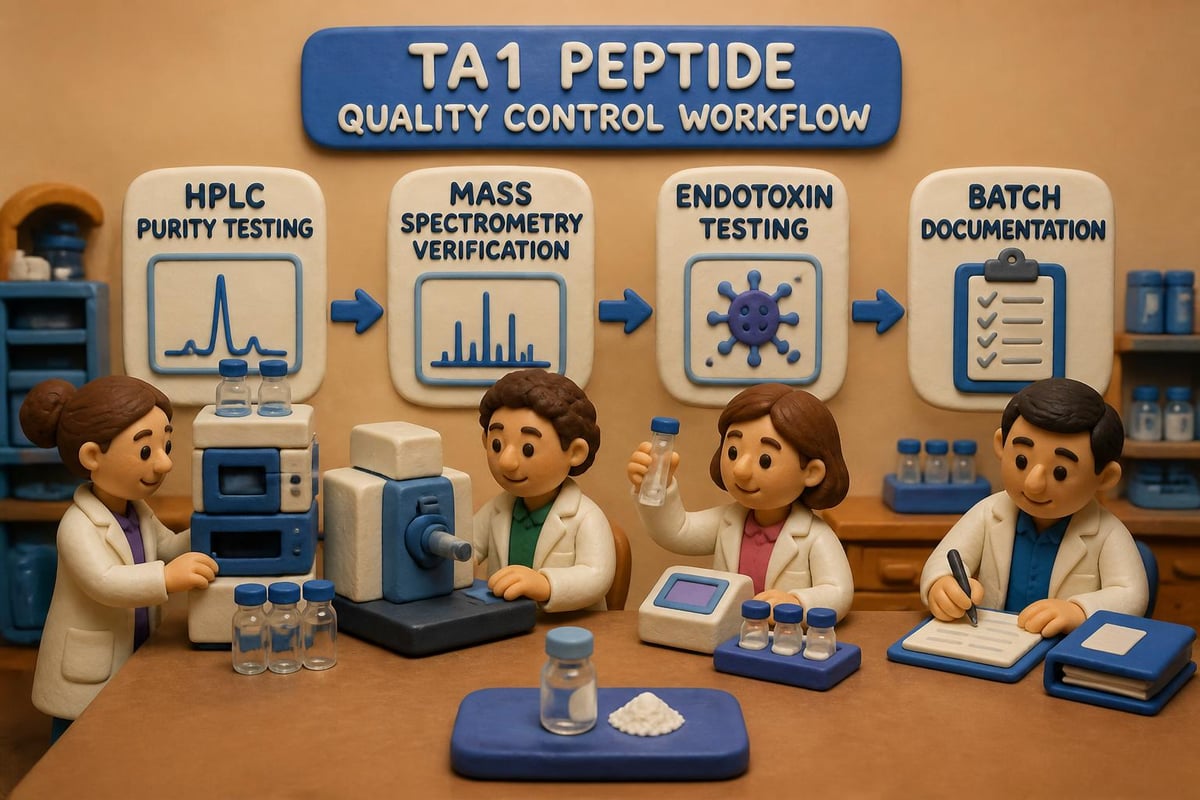
High-quality research-grade TA1 peptide typically exhibits purity levels exceeding 98% as determined by high-performance liquid chromatography (HPLC). Third-party batch testing provides independent verification of:
- Peptide identity through mass spectrometry
- Purity percentage via HPLC analysis
- Endotoxin levels to prevent experimental confounds
- Proper storage and handling to maintain stability
These quality control measures ensure that experimental results reflect true biological effects rather than artifacts from impurities or degradation products.
US Manufacturing Standards
Peptides manufactured in facilities adhering to US quality standards benefit from regulatory oversight and established good manufacturing practices. These standards encompass raw material sourcing, production processes, quality testing, and documentation protocols that collectively support research reproducibility.
For scientists conducting critical experiments or seeking to publish findings, utilizing peptides from verified US manufacturers with comprehensive testing documentation provides essential quality assurance. US-manufactured research peptides that undergo rigorous third-party batch testing offer the reliability necessary for high-quality scientific investigation.
Experimental Readouts and Biomarkers
Assessing TA1 peptide effects in laboratory research requires appropriate selection of experimental readouts and biomarkers. The choice of measurement endpoints should align with research objectives and the specific mechanisms under investigation.
Cellular and Molecular Markers
Common biomarkers used to evaluate TA1 peptide activity include:
- T-cell surface markers: CD3, CD4, CD8, CD25, CD69 expression levels
- Cytokine production: IL-2, IFN-γ, TNF-α, IL-10 quantification
- Dendritic cell maturation: CD80, CD86, MHC class II expression
- Proliferation assays: CFSE dilution, BrdU incorporation, Ki-67 staining
- Functional assays: Cytotoxicity measurements, antibody production, viral clearance
The technical analysis of Thymosin Alpha-1’s immunomodulation provides comprehensive frameworks for selecting and interpreting these biomarkers in various experimental contexts.
Time-Course Considerations
Immune responses to TA1 peptide follow temporal patterns that influence optimal measurement timepoints. Early responses (hours to days) typically involve activation markers and immediate cytokine production, while later timepoints (weeks) capture effects on T-cell differentiation, memory formation, and sustained immune changes.
Well-designed experiments incorporate multiple timepoints to capture the full dynamic range of peptide effects and distinguish acute activation from sustained immune modulation.
Safety Profile and Experimental Observations
TA1 peptide exhibits a generally favorable safety profile in laboratory research models, with most investigations reporting minimal adverse effects at standard research doses. Understanding the safety characteristics helps researchers design appropriate protocols and interpret experimental outcomes.
Observed Effects in Research Models
Research literature documents that TA1 peptide administration in experimental models typically produces:
- Minimal local injection site reactions
- Low incidence of systemic effects at standard doses
- No significant alterations in routine blood chemistry parameters
- Absence of major organ toxicity in chronic administration studies
- Good tolerance across various model systems and species
These observations support the peptide's utility for both short-term and extended experimental protocols without significant confounding effects from toxicity or adverse reactions.
Contraindications and Considerations
While TA1 peptide demonstrates good tolerance, certain experimental contexts warrant additional consideration. Models involving autoimmune conditions require careful protocol design, as immune enhancement could theoretically influence disease progression in specific scenarios.
Researchers should also account for potential interactions when combining TA1 peptide with immunosuppressive agents or other compounds that modulate immune function, as these combinations may produce unexpected results.
Historical Development and Research Evolution
The history and development of Thymosin Alpha-1 traces back to the 1970s when researchers first isolated thymic hormones and identified their role in immune system maturation. Initial investigations focused on understanding how the thymus gland influences T-cell development and overall immune competence.
Early research established that TA1 peptide represents the active component responsible for many of the thymus gland's immunological effects. This discovery sparked decades of investigation into the peptide's mechanisms, applications, and potential therapeutic relevance.
Regulatory Status and Global Adoption
TA1 peptide has achieved regulatory approval for specific medical applications in over 30 countries, though it remains an investigational compound in the United States. This international adoption reflects the substantial research foundation supporting its biological activity and safety profile.
The peptide's regulatory status in various jurisdictions influences how researchers access and utilize it for laboratory investigations, with some regions having more established frameworks for research applications.
Current Research Frontiers
Contemporary investigations involving TA1 peptide continue to expand our understanding of immune modulation and explore novel applications. Recent research directions include combination strategies with checkpoint inhibitors, investigations into age-related immune decline, and studies examining peptide modifications that might enhance stability or activity.
Emerging Applications
Scientists are exploring TA1 peptide in several cutting-edge research areas:
- Vaccine development: As an adjuvant to enhance immune responses to novel antigens
- Stem cell research: Investigating effects on immune cell differentiation from progenitors
- Systems immunology: Incorporating TA1 into comprehensive immune profiling studies
- Precision medicine models: Evaluating peptide effects across diverse genetic backgrounds
These emerging applications demonstrate the peptide's continued relevance for advancing immunological understanding and developing new experimental approaches.
Technical Innovations
Advances in analytical techniques have enabled more sophisticated investigations of TA1 peptide mechanisms. High-dimensional flow cytometry, single-cell RNA sequencing, and multiplex cytokine analysis provide unprecedented resolution for characterizing immune responses to peptide administration.
| Analytical Method | Information Provided | Application to TA1 Research |
|---|---|---|
| Flow Cytometry | Surface marker expression on immune cells | T-cell phenotyping and activation status |
| ELISA/Multiplex | Cytokine and chemokine quantification | Immune response profiling |
| RNA Sequencing | Gene expression patterns | Pathway activation and cell state changes |
| Mass Cytometry | High-parameter single-cell analysis | Comprehensive immune cell characterization |
| Functional Assays | Cellular behavior and activity | Direct assessment of immune function |
Practical Laboratory Protocols
Implementing TA1 peptide research requires attention to practical laboratory considerations that influence experimental success. Proper reconstitution, storage, and handling procedures ensure peptide stability and biological activity throughout investigations.
Reconstitution and Storage
Standard protocols for preparing TA1 peptide solutions involve:
- Allowing lyophilized peptide to reach room temperature before opening
- Reconstituting with sterile water or appropriate buffer to desired concentration
- Gentle mixing to avoid foam formation and peptide degradation
- Aliquoting into single-use portions to minimize freeze-thaw cycles
- Storing reconstituted solutions at -20°C or -80°C for extended stability
Working solutions should be prepared fresh when possible, though properly stored aliquots can maintain activity for several weeks under appropriate conditions.
Administration Techniques
For in vivo research models, subcutaneous injection remains the most common administration route. Proper injection technique includes:
- Using appropriate needle gauge (typically 25-27G) for model size
- Injecting slowly to minimize tissue damage and improve absorption
- Rotating injection sites to prevent local reactions with repeated dosing
- Recording exact injection locations and any observed local effects
Alternative routes such as intraperitoneal or intravenous administration may be employed for specific research questions, though these require protocol adjustment to account for altered pharmacokinetics.
Documentation and Reproducibility
Scientific rigor demands comprehensive documentation of TA1 peptide research protocols to enable reproducibility and meaningful interpretation of results. Researchers should maintain detailed records of peptide source, lot numbers, testing documentation, and exact experimental conditions.
Essential Documentation Elements
Complete research documentation should include:
- Peptide specifications: Manufacturer, lot number, purity analysis, testing certificates
- Reconstitution details: Solvent used, final concentration, preparation date
- Storage conditions: Temperature, duration, freeze-thaw history
- Administration records: Dose, route, frequency, timing relative to other experimental interventions
- Quality controls: Verification testing, stability assessments, reference standards
This documentation supports both immediate experimental needs and future efforts to validate or extend findings. The comprehensive overview of Thymosin Alpha-1 provides additional context for understanding how documentation standards support research quality.
Organizations such as Data Peptides provide third-party batch testing documentation that researchers can incorporate into their experimental records, ensuring traceability and quality verification for published work.
TA1 peptide represents a well-characterized and versatile research tool for investigating immune modulation, T-cell maturation, and adaptive immune responses across diverse experimental contexts. From its molecular mechanisms involving Toll-like receptor activation to practical considerations in experimental design, this peptide offers researchers reliable and reproducible approaches to studying complex immunological phenomena. For scientists seeking high-quality, US-manufactured research peptides with comprehensive third-party testing documentation, Data Peptides provides laboratory-grade compounds designed specifically for rigorous scientific investigation. All products are batch-tested for purity and intended solely for laboratory research applications, supporting the reproducibility and quality standards essential for advancing immunological knowledge.