
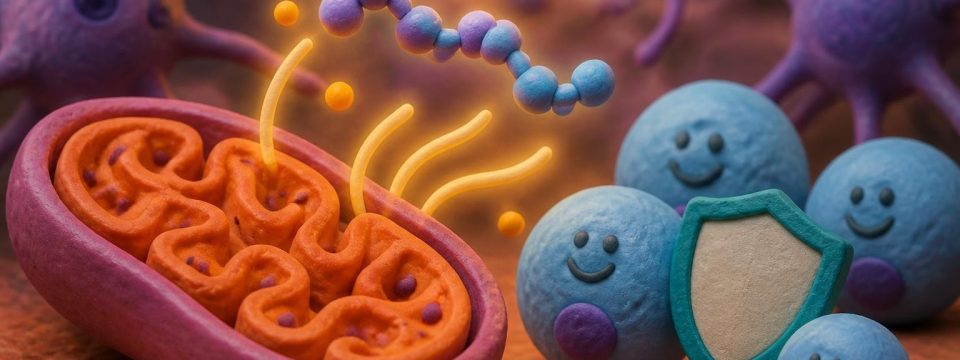
The discovery of mitochondrial-derived peptides opened new frontiers in cellular biology and longevity research. Among these molecules, humanin peptide stands out as one of the first identified and most extensively studied compounds originating from the mitochondrial genome. This 24-amino acid peptide has captured scientific attention for its remarkable cytoprotective properties and potential role in age-related cellular decline. Researchers continue to investigate how this small but powerful molecule influences multiple biological pathways, from neurological protection to metabolic regulation.
Discovery and Molecular Characteristics
Humanin peptide was first identified in 2001 by Japanese researchers screening for factors that protected neurons from Alzheimer's disease-related toxicity. The team discovered this unique peptide encoded within the mitochondrial 16S ribosomal RNA gene, challenging conventional understanding of mitochondrial function. Unlike typical mitochondrial proteins involved in energy production, humanin appeared to serve as a signaling molecule with far-reaching effects beyond the organelle itself.
The peptide consists of 24 amino acids with a molecular weight of approximately 2.7 kDa. Its small size allows it to cross cellular membranes and interact with various receptor systems throughout the body. Several naturally occurring variants of humanin peptide exist, including forms with single amino acid substitutions that may alter potency or stability. Comprehensive information on humanin’s molecular characteristics reveals that these structural details play crucial roles in its biological activity.
Endogenous Production and Expression
The human body naturally produces humanin peptide in multiple tissues, with particularly high expression observed in:
- Testicular tissue
- Vascular endothelial cells
- Cardiac muscle
- Skeletal muscle
- Brain regions including the hippocampus
Expression levels appear to decline with advancing age, leading researchers to hypothesize that diminished humanin production may contribute to age-related cellular dysfunction. This age-dependent decrease has been documented across multiple tissue types and correlates with reduced mitochondrial function in older populations.
Mechanisms of Action and Cellular Pathways
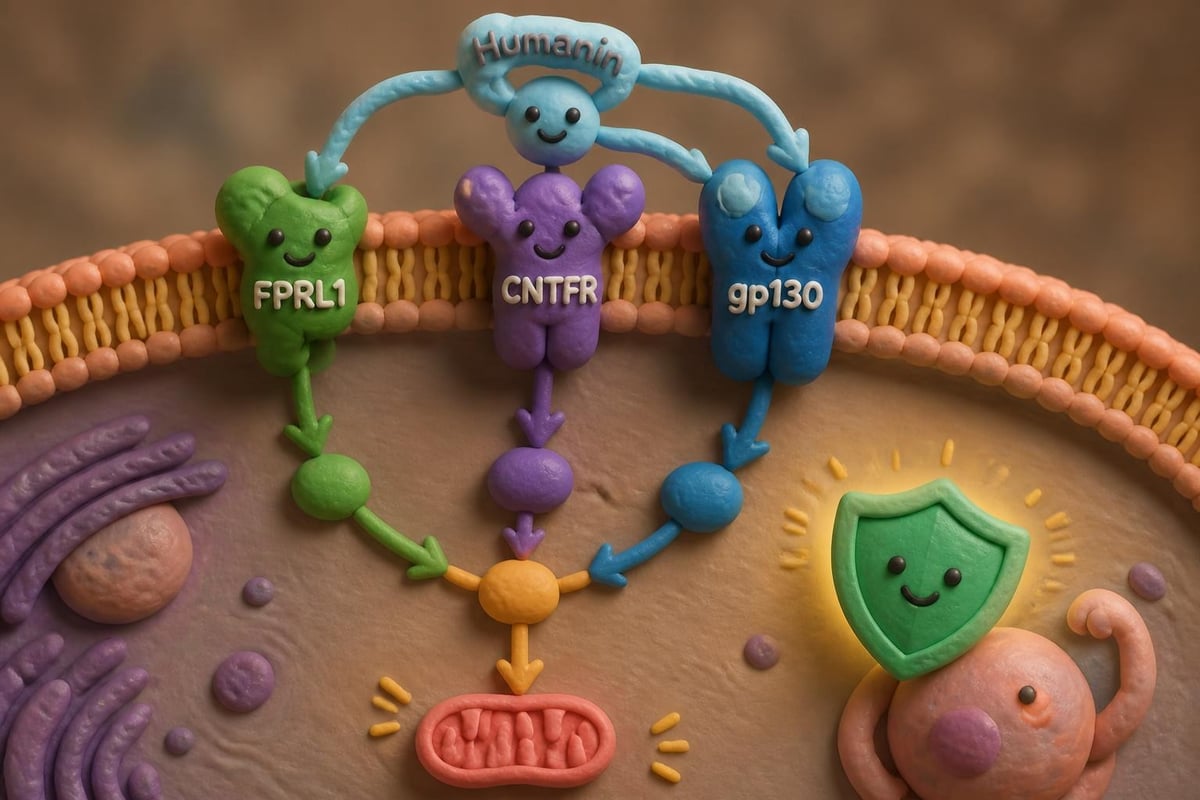
Humanin peptide exerts its effects through multiple receptor systems and intracellular signaling pathways. The primary mechanism involves binding to a trimeric receptor complex consisting of ciliary neurotrophic factor receptor (CNTFR), gp130, and WSX-1. This binding triggers downstream signaling cascades that activate several crucial cellular protection pathways.
Research demonstrates that humanin activates ERK1/2, AKT, and STAT3 signaling pathways, which collectively contribute to its cytoprotective effects. Each pathway serves distinct but complementary functions in maintaining cellular health and resilience.
Key Signaling Mechanisms
| Pathway | Primary Function | Observed Effects |
|---|---|---|
| ERK1/2 | Cell proliferation and differentiation | Enhanced cellular survival signals |
| AKT/PI3K | Metabolic regulation and apoptosis prevention | Reduced programmed cell death |
| STAT3 | Gene transcription and inflammation modulation | Anti-inflammatory responses |
| JAK2 | Growth factor signaling | Cellular growth and repair |
Beyond these primary pathways, humanin peptide interacts with the formyl peptide receptor-like 1 (FPRL1), particularly relevant for immune cell function and inflammatory responses. This receptor binding initiates separate signaling cascades that contribute to the peptide's diverse biological effects.
The peptide also demonstrates direct mitochondrial effects, protecting these organelles from oxidative stress and maintaining membrane integrity. This dual action, both inside and outside mitochondria, positions humanin as a unique mediator between mitochondrial health and whole-cell function.
Neuroprotective Research and Cognitive Studies
The initial discovery of humanin peptide stemmed from investigations into Alzheimer's disease, and neurological research remains a central focus. Laboratory studies have demonstrated protective effects against multiple forms of neurotoxicity, including amyloid-beta aggregation, oxidative stress, and excitotoxicity. These findings suggest potential applications in various neurodegenerative conditions beyond Alzheimer's disease.
Animal models have shown that humanin administration can reduce neuronal cell death following ischemic events and protect against age-related cognitive decline. The hippocampus, a brain region critical for memory formation and particularly vulnerable to aging, shows notable responsiveness to humanin treatment in experimental settings.
Key neuroprotective mechanisms include:
- Reduction of amyloid-beta toxicity
- Prevention of tau protein hyperphosphorylation
- Mitochondrial membrane stabilization in neurons
- Enhanced neuronal survival under stress conditions
- Improved synaptic function and plasticity
Current research on humanin’s neuroprotective mechanisms continues to expand our understanding of how this peptide might influence cognitive health and neurological resilience across the lifespan.

Metabolic Regulation and Insulin Sensitivity
Beyond neurological applications, humanin peptide has emerged as a significant factor in metabolic health and insulin signaling. Research indicates that this mitochondrial-derived peptide influences glucose metabolism, insulin sensitivity, and lipid handling through multiple mechanisms. These metabolic effects position humanin as a potential therapeutic target for conditions characterized by metabolic dysfunction.
Studies in both animal models and cell culture systems demonstrate that humanin can enhance insulin sensitivity by modulating insulin receptor substrate (IRS) phosphorylation and improving glucose uptake in peripheral tissues. The peptide appears to counteract insulin resistance mechanisms, particularly those associated with aging and metabolic syndrome.
Metabolic Impact Areas
- Glucose Homeostasis: Enhanced cellular glucose uptake and utilization
- Lipid Metabolism: Improved fatty acid oxidation and reduced lipid accumulation
- Energy Balance: Optimization of ATP production and mitochondrial efficiency
- Insulin Signaling: Restoration of insulin pathway function in resistant states
The intersection between humanin and metabolic health extends to its interactions with other regulatory peptides and hormones. Research suggests crosstalk between humanin signaling and growth hormone pathways, creating a complex network of metabolic regulation. For researchers exploring comprehensive recovery and metabolic optimization, studying peptide combinations such as those found in specialized research formulations can provide insights into synergistic mechanisms.
Cardiovascular and Vascular Effects
The cardiovascular system represents another area of active humanin peptide research. Vascular endothelial cells naturally express high levels of this peptide, suggesting a physiological role in maintaining vascular health. Laboratory investigations have revealed several cardioprotective mechanisms that may contribute to overall cardiovascular resilience.
Cardiovascular research highlights:
- Protection of cardiac myocytes from ischemia-reperfusion injury
- Reduction of oxidative stress in vascular tissues
- Enhancement of endothelial function and nitric oxide production
- Attenuation of atherosclerotic plaque formation in experimental models
- Improved cardiac function following stress or injury
Animal studies using models of heart attack have demonstrated that humanin administration can reduce infarct size and preserve cardiac function. The peptide appears to activate protective pathways that limit damage during periods of reduced blood flow and subsequent reperfusion.
| Cardiovascular Parameter | Observed Response | Proposed Mechanism |
|---|---|---|
| Myocyte survival | Increased | Anti-apoptotic signaling |
| Oxidative damage | Decreased | Enhanced antioxidant defenses |
| Endothelial function | Improved | eNOS activation |
| Inflammation | Reduced | STAT3 pathway modulation |
Anti-Inflammatory and Immune Modulation
Inflammation serves as a common thread connecting many age-related conditions, and humanin peptide demonstrates notable anti-inflammatory properties across multiple experimental systems. The peptide's interaction with FPRL1 receptors on immune cells contributes to its immunomodulatory effects, influencing both innate and adaptive immune responses.
Research indicates that humanin can suppress pro-inflammatory cytokine production, including tumor necrosis factor-alpha (TNF-α) and interleukin-6 (IL-6). This cytokine modulation occurs through effects on nuclear factor-kappa B (NF-κB) signaling, a master regulator of inflammatory gene expression.
The anti-inflammatory effects extend to various tissue types and disease models. Studies examining inflammatory conditions affecting the gut, joints, and neural tissues have reported beneficial responses to humanin treatment. Detailed research activity on humanin continues to map out these anti-inflammatory mechanisms and their potential therapeutic applications.
Research Applications and Laboratory Considerations
For research institutions and laboratories investigating mitochondrial biology, cellular aging, or cytoprotective mechanisms, humanin peptide offers a valuable experimental tool. The peptide's multiple mechanisms of action make it suitable for diverse research protocols examining cellular stress responses, metabolic regulation, and organ-specific protection.
Laboratory Protocol Considerations
Storage and Handling:
- Lyophilized powder storage at -20°C or below
- Reconstituted solutions require refrigeration
- Avoid repeated freeze-thaw cycles
- Light protection recommended for extended storage
Experimental Design Factors:
- Dose-response relationships vary by cell type and experimental endpoint
- Timing of administration relative to stressor impacts outcomes
- Species-specific variations in receptor expression affect responses
- Combination with other research compounds may produce synergistic effects
Researchers should consult comprehensive peptide safety and dosing information when designing experimental protocols. Proper controls, batch testing, and rigorous documentation ensure reproducible results and meaningful data interpretation.
Current Research Landscape and Future Directions
The scientific community continues to expand the knowledge base surrounding humanin peptide through diverse research approaches. While the majority of data comes from cell culture and animal models, the findings consistently point toward multiple protective mechanisms that operate across different tissues and stress conditions.
Detailed bibliographic resources on humanin research compile hundreds of studies examining various aspects of this peptide's biology. The research landscape includes investigations into:
- Age-related decline in endogenous humanin levels
- Synthetic analogs with enhanced potency or stability
- Tissue-specific effects and expression patterns
- Interaction with other mitochondrial-derived peptides
- Potential biomarker applications for metabolic health
Recent research has identified several humanin analogs with modified amino acid sequences that demonstrate increased potency compared to the native peptide. These synthetic variants, such as HNG (humanin with a glycine substitution), provide researchers with tools to dissect structure-function relationships and optimize biological activity.
Research Frontiers
The intersection of humanin biology with other emerging research areas creates exciting possibilities for future investigation. Studies examining the peptide's role in circadian rhythm regulation, stem cell maintenance, and reproductive health represent newer frontiers in the field.
Mitochondrial dysfunction plays a central role in numerous age-related conditions, positioning humanin and related peptides as potential therapeutic targets. Clinical perspectives on humanin highlight the gap between promising preclinical data and human therapeutic applications, emphasizing the need for continued research.
Quality and Purity Considerations for Research
When conducting studies with humanin peptide, the quality and purity of research materials directly impact experimental outcomes and data reliability. Third-party batch testing verifies peptide identity, purity percentage, and absence of contamination, providing researchers with confidence in their experimental compounds.
High-performance liquid chromatography (HPLC) and mass spectrometry represent standard analytical methods for characterizing peptide purity and confirming molecular weight. Certificates of analysis (COA) documenting these test results should accompany research-grade peptides, allowing researchers to verify batch quality before beginning experiments.
Quality indicators for research peptides:
- Purity levels typically ≥98% by HPLC
- Confirmed molecular weight by mass spectrometry
- Endotoxin testing for cell culture applications
- Sterility testing when applicable
- Proper storage conditions throughout distribution chain
Researchers can access frequently asked questions about peptide quality to better understand testing standards and quality assurance processes. Maintaining rigorous quality standards throughout the research pipeline ensures that experimental results reflect true biological effects rather than artifacts of impure or degraded compounds.
Experimental Context and Regulatory Status
Humanin peptide remains a research compound without FDA approval for therapeutic use in humans. All current applications exist within laboratory research contexts, where scientists investigate mechanisms, pathways, and potential biological effects. Comprehensive regulatory and safety information emphasizes that humanin is not evaluated or approved for clinical treatment of any medical condition.
The regulatory landscape for research peptides requires clear distinction between laboratory investigation and therapeutic application. Research-grade peptides serve as tools for advancing scientific understanding, exploring biological mechanisms, and developing hypotheses for future study. This research context shapes how institutions acquire, handle, and utilize these compounds in experimental settings.
Laboratory research with humanin contributes to broader scientific goals of understanding mitochondrial signaling, cellular aging, and stress response mechanisms. The accumulated knowledge from these investigations may eventually inform therapeutic development, but significant gaps remain between laboratory findings and validated medical treatments.
Researchers should maintain awareness of institutional review requirements, proper documentation practices, and ethical guidelines governing research peptide use. Resources available through research institutions provide additional context for navigating the regulatory landscape and maintaining compliance with research standards.
Humanin peptide represents a fascinating area of ongoing research with implications spanning neurobiology, metabolic health, and cellular aging. The compound's unique origins in the mitochondrial genome and diverse biological effects continue to drive scientific investigation across multiple disciplines. For laboratories seeking high-quality, third-party tested research peptides to support their investigations, Data Peptides provides US-manufactured, laboratory-grade compounds with complete batch testing documentation for research applications.