
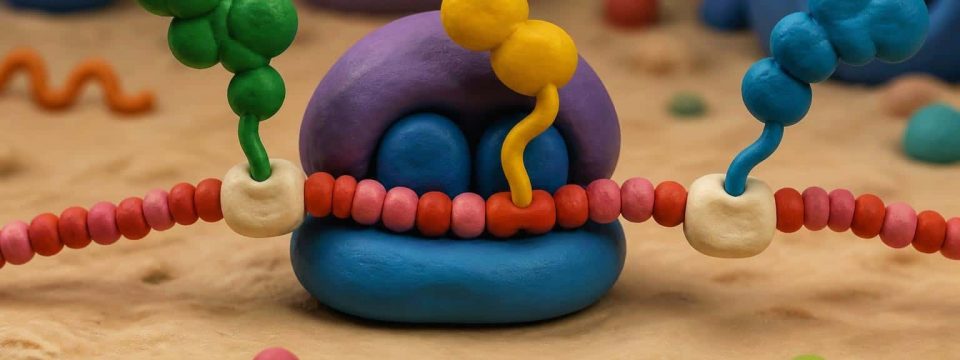
The 2a peptide represents a fascinating molecular mechanism that has transformed how researchers approach gene expression and protein production in laboratory settings. These short amino acid sequences, typically ranging from 18 to 22 residues in length, possess the unique ability to induce ribosomal skipping during translation, effectively allowing multiple proteins to be expressed from a single open reading frame. Originally discovered in viruses, the 2a peptide has become an indispensable tool in molecular biology research, enabling scientists to coordinate the expression of multiple proteins while maintaining stoichiometric ratios and simplifying experimental design.
Understanding the Molecular Mechanism of 2A Peptides
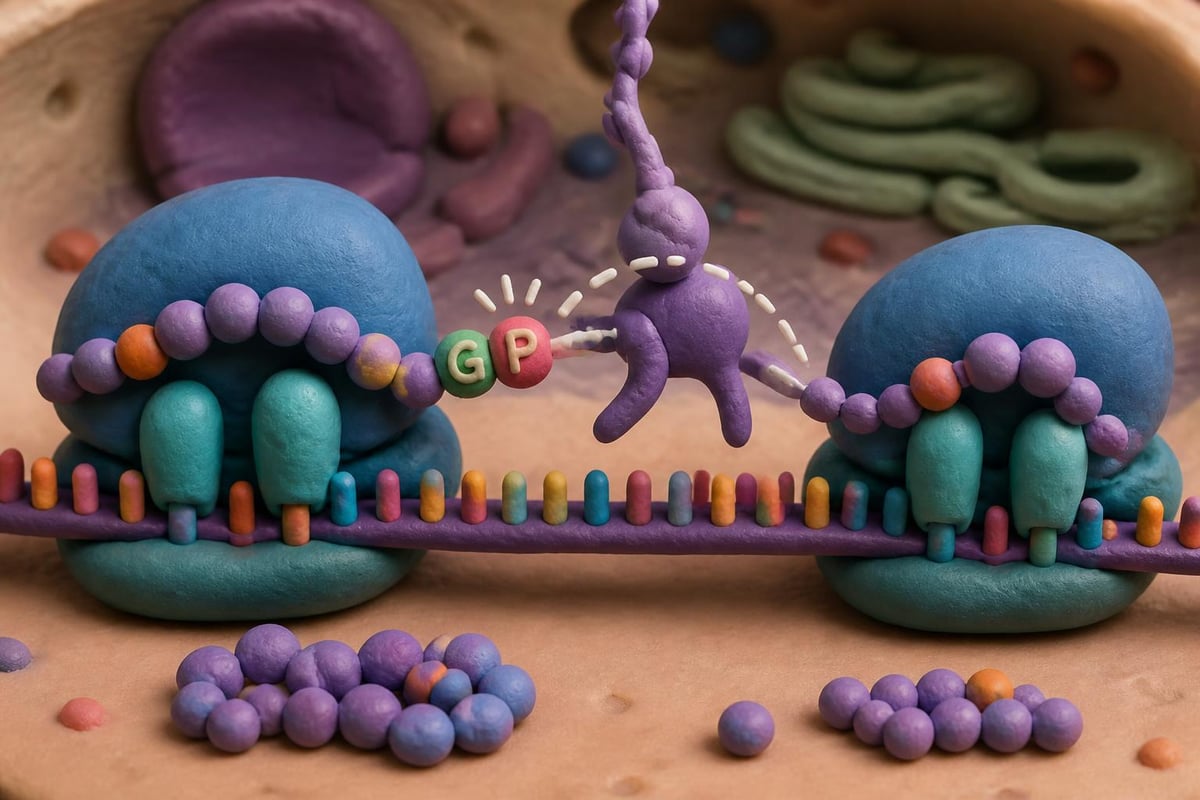
The 2a peptide functions through a process known as ribosomal skipping or translational recoding. During normal protein synthesis, the ribosome moves along messenger RNA and forms peptide bonds between successive amino acids. However, when the ribosome encounters a 2a peptide sequence, something remarkable occurs. Instead of forming a peptide bond between the glycine and proline residues at the C-terminus of the 2a peptide, the ribosome continues translation without creating this bond, effectively "skipping" the formation and releasing the upstream protein.
This mechanism differs fundamentally from traditional proteolytic cleavage. The separation happens co-translationally rather than post-translationally, meaning the proteins are never actually joined by a peptide bond. Research has systematically identified and characterized these sequences, expanding our understanding of their diversity and prevalence across eukaryotic and viral systems.
Key Structural Features
The 2a peptide contains several conserved motifs that are critical for its function:
- D-V-E-X-N-P-G-P consensus sequence at the C-terminus
- Glycine-proline junction where skipping occurs
- Upstream proline-rich regions that influence efficiency
- Highly conserved C-terminal residues essential for activity
Different 2a peptide variants exhibit varying levels of efficiency. The most commonly used sequences in research include P2A (porcine teschovirus-1), T2A (thosea asigna virus), E2A (equine rhinitis A virus), and F2A (foot-and-mouth disease virus). Each variant demonstrates distinct cleavage efficiencies, typically ranging from 70% to 99%, with F2A generally showing the highest efficiency in most experimental systems.
Applications in Laboratory Research and Gene Expression
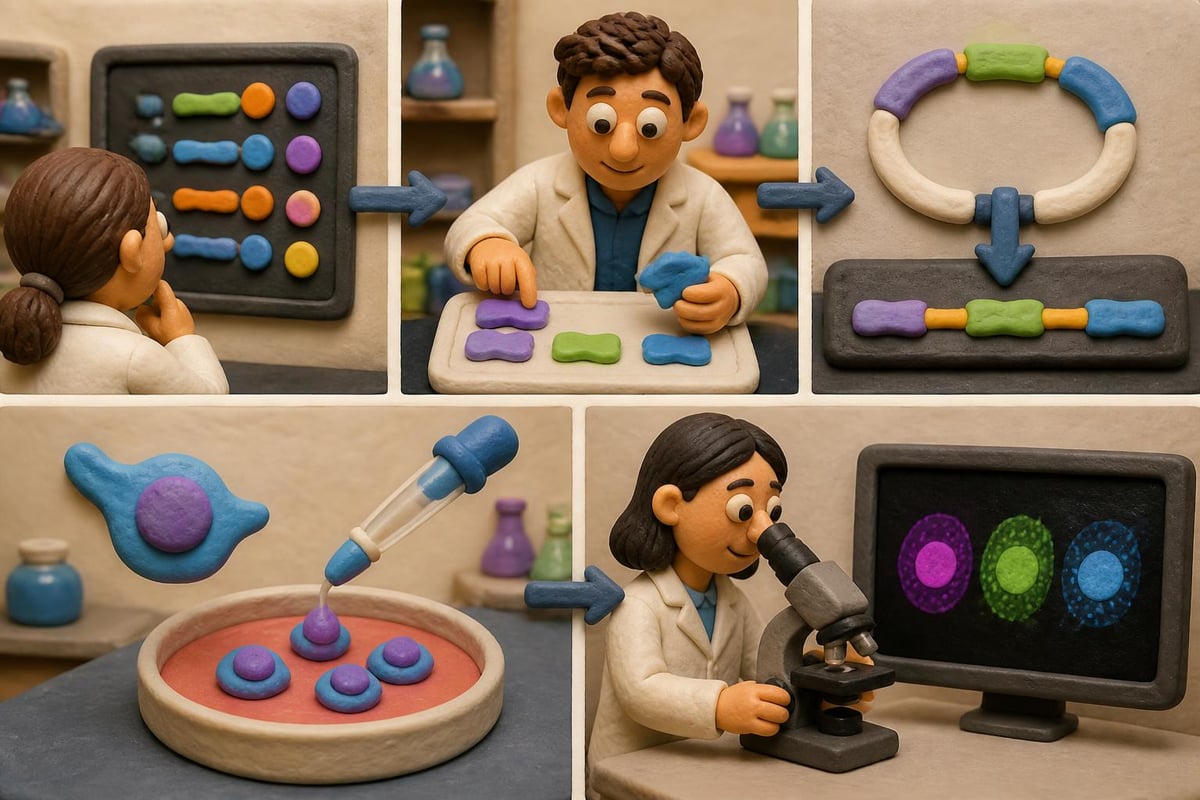
The 2a peptide has revolutionized how researchers design experiments requiring coordinated expression of multiple proteins. Traditional approaches necessitated using multiple promoters, complex cloning strategies, or viral co-infection methods. The 2a peptide simplifies this process dramatically by allowing researchers to link multiple coding sequences in tandem while ensuring their expression as separate polypeptides.
Common Research Applications
Researchers utilize 2a peptide sequences across numerous experimental paradigms:
- Reporter gene co-expression for tracking transfection efficiency
- Antibody production requiring heavy and light chain coordination
- Cell reprogramming involving multiple transcription factors
- Gene therapy vectors with therapeutic and selection markers
- Synthetic biology circuits requiring precise stoichiometry
The ability to maintain stoichiometric ratios between expressed proteins represents a significant advantage. When proteins are linked by a 2a peptide sequence, they are transcribed from a single mRNA molecule, ensuring equimolar expression regardless of cellular conditions or promoter strength variations.
| 2A Peptide Type | Source Organism | Sequence Length | Typical Efficiency |
|---|---|---|---|
| F2A | Foot-and-mouth disease virus | 22 amino acids | 95-99% |
| E2A | Equine rhinitis A virus | 19 amino acids | 90-95% |
| P2A | Porcine teschovirus-1 | 20 amino acids | 85-95% |
| T2A | Thosea asigna virus | 18 amino acids | 70-90% |
For laboratories working with peptide-based research applications, understanding these molecular tools becomes essential for designing effective experimental protocols.
Design Considerations for 2A Peptide Implementation
Successfully implementing 2a peptide sequences requires careful attention to several critical factors. The choice of which 2a peptide variant to use depends on the specific experimental system, desired cleavage efficiency, and downstream protein requirements.
Researchers must consider that following ribosomal skipping, the upstream protein retains the 2a peptide sequence (minus the final proline), while the downstream protein begins with a proline residue. These additional amino acids can potentially affect protein function, localization, or stability. In most cases, these modifications are well-tolerated, but sensitive proteins may require additional optimization.
Optimization Strategies
- Select appropriate 2A variant based on required efficiency
- Position sensitive proteins downstream to avoid C-terminal additions
- Include GSG linkers for enhanced flexibility
- Test multiple orientations when linking protein pairs
- Verify functional activity of separated products
The context surrounding the 2a peptide also influences its performance. Codon usage, secondary RNA structures, and flanking amino acid sequences can all impact cleavage efficiency. As detailed in comprehensive overviews of 2A peptides, these variables necessitate empirical testing for optimal results in different cellular environments.
Variations and Modified 2A Sequences
Beyond the canonical 2a peptide sequences, researchers have developed numerous variants and modifications to address specific experimental challenges. Some applications require even higher cleavage efficiency, while others benefit from partial cleavage to maintain protein-protein interactions while allowing independent functionality.
Tandem 2a peptide arrangements allow expression of three or more proteins from a single transcript. By linking multiple coding sequences with different 2a peptide variants, researchers can create polycistronic expression systems rivaling those found naturally in prokaryotes. This approach has proven particularly valuable in cell reprogramming studies requiring simultaneous expression of four or more transcription factors.
Modified sequences incorporating protease cleavage sites alongside 2a peptides provide additional control over protein separation timing. These hybrid systems enable conditional or regulated protein processing, expanding the experimental possibilities beyond what either mechanism could achieve independently.
Engineering Enhanced Variants
Recent research efforts have focused on engineering 2a peptide variants with improved characteristics:
- Enhanced cleavage efficiency approaching 100%
- Reduced sequence length to minimize protein modifications
- Temperature-sensitive variants for conditional applications
- Cell-type-specific optimization for mammalian versus insect systems
The study of signal sequences mediating translational recoding has revealed novel mechanisms related to 2a peptide function, potentially opening new avenues for engineering improved variants.
Analytical Methods for Verifying 2A Peptide Function
Confirming successful 2a peptide-mediated separation requires multiple complementary analytical approaches. Western blotting using antibodies against each protein component represents the gold standard for verification. Researchers should observe distinct bands corresponding to each separated protein at their expected molecular weights, plus the small mass increase from retained 2a peptide residues.
Immunofluorescence microscopy provides spatial information about protein localization following separation. Since properly functioning 2a peptides should produce independent proteins, each component should localize according to its intrinsic targeting signals rather than being constrained by fusion protein artifacts.
| Analytical Method | Information Provided | Key Considerations |
|---|---|---|
| Western Blot | Protein size and expression level | Requires specific antibodies for each protein |
| Mass Spectrometry | Exact molecular weight confirmation | Can identify retained 2A residues |
| Immunofluorescence | Subcellular localization patterns | Validates independent protein function |
| Flow Cytometry | Population-level expression analysis | Useful for reporter co-expression studies |
| Functional Assays | Biological activity verification | Ultimate proof of successful separation |
Mass spectrometry offers the highest precision for confirming the exact cleavage site and identifying any retained 2a peptide residues. This technique becomes particularly valuable when optimizing new 2a peptide variants or working with proteins where small modifications might affect function. Specialized antibodies for detecting 2A peptides can also facilitate verification in various experimental formats.
Comparing 2A Peptides with Alternative Strategies
While 2a peptide sequences offer substantial advantages for multi-gene expression, researchers should understand how they compare to alternative approaches. Internal ribosome entry sites (IRES) represent another popular strategy for polycistronic expression in eukaryotic systems. IRES elements are longer sequences (typically 500-600 nucleotides) that recruit ribosomes internally within an mRNA molecule.
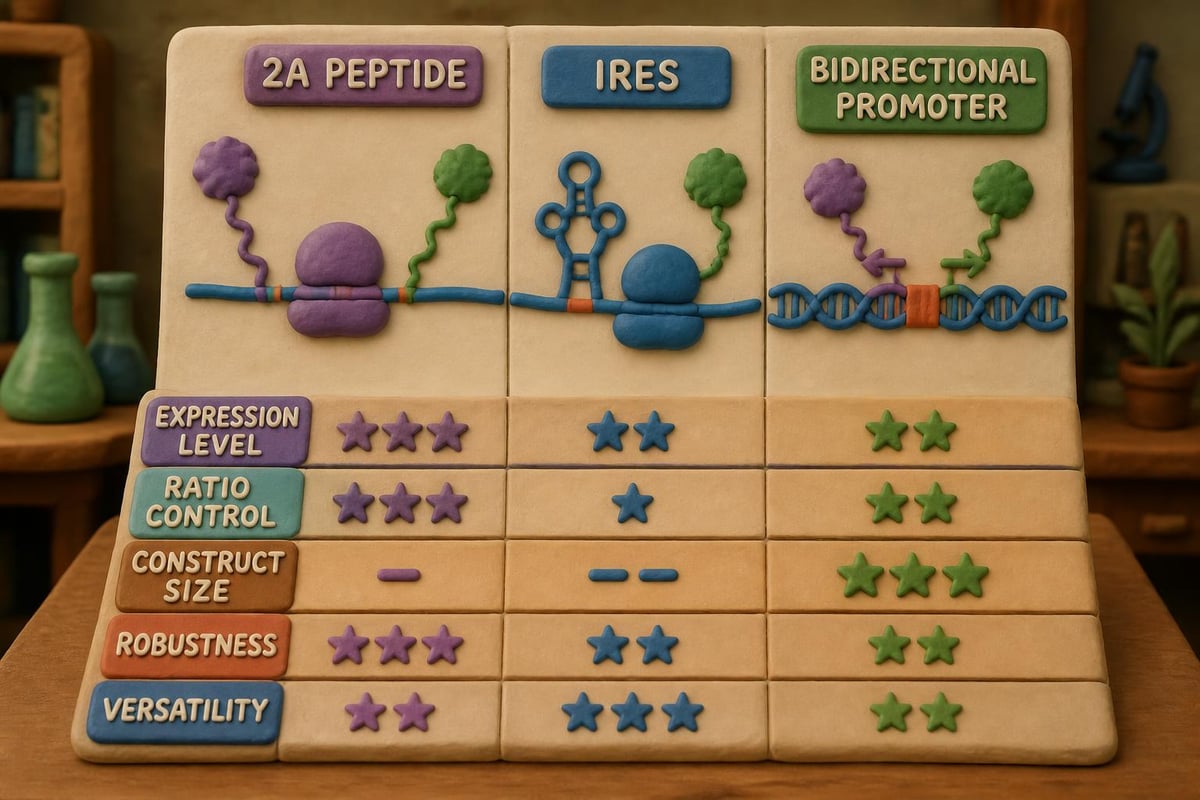
The primary advantage of 2a peptides over IRES sequences is their compact size and more predictable stoichiometry. IRES-driven expression of downstream genes often occurs at significantly lower levels than upstream genes, making equimolar expression difficult. The 2a peptide approach maintains consistent ratios because all proteins originate from the same transcript.
Bidirectional promoters offer yet another alternative, driving expression of genes in opposite orientations from a single regulatory element. This strategy works well for two-gene systems but becomes increasingly complex with additional genes. The 2a peptide scales more readily to three, four, or more proteins while maintaining simplicity.
Practical Comparison
Different expression strategies suit different experimental needs:
- 2A peptides: Best for equimolar expression, compact designs, 2-4 genes
- IRES elements: Useful when differential expression is desired, established in some vectors
- Separate promoters: Maximum control over individual gene expression, large constructs
- Bidirectional promoters: Efficient for paired genes, limited scalability
For research involving peptide blends and combination therapies, understanding these expression strategies becomes critical for producing consistent protein ratios in experimental models.
Advanced Applications in Contemporary Research
The versatility of the 2a peptide continues to enable cutting-edge research across multiple disciplines. In immunology, researchers employ 2a peptides to co-express chimeric antigen receptors (CARs) with reporter proteins or safety switches, advancing cell-based therapy development. The stoichiometric expression ensures every engineered cell carries both the therapeutic function and the safety mechanism.
Synthetic biology has embraced 2a peptides for constructing genetic circuits requiring multiple components. Metabolic engineering projects use linked enzyme expression to optimize pathway flux, while biosensor designs coordinate detector and reporter proteins. The predictable behavior of 2a peptides simplifies circuit modeling and reduces experimental variables.
Neuroscience applications leverage 2a peptides for optogenetic and chemogenetic tool delivery. Linking actuators like channelrhodopsin with fluorescent markers allows researchers to identify which neurons have been successfully modified. This approach has accelerated circuit mapping studies and enabled more precise manipulation of neural activity patterns.
Emerging Research Directions
Several promising areas continue to expand 2a peptide applications:
- Gene therapy vectors requiring therapeutic gene and selection marker co-expression
- CRISPR systems linking Cas9 with guide RNA expression from single promoters
- Organoid models requiring coordinated differentiation factor expression
- Agricultural biotechnology for multi-trait transgenic crop development
- Biomanufacturing optimizing recombinant protein production systems
The flexibility inherent in 2a peptide systems continues to inspire novel applications. As researchers develop increasingly complex experimental models, the need for reliable multi-gene expression tools becomes more critical. The 2a peptide mechanism, refined through millions of years of viral evolution, provides an elegant solution to this fundamental challenge.
Technical Considerations for Laboratory Implementation
Successfully incorporating 2a peptide sequences into experimental designs requires attention to several technical details. Vector construction represents the first critical step. Researchers must ensure proper reading frame maintenance across the entire polycistronic unit, as frame shifts will prevent correct protein production downstream of the error.
Codon optimization deserves careful consideration, particularly when working with 2a peptide sequences themselves. While the amino acid sequence must remain constant for proper function, adjusting codon usage to match the expression system can improve overall translation efficiency. Some commercial gene synthesis services offer pre-optimized 2a peptide sequences for common model organisms.
Expression levels may vary between upstream and downstream proteins despite stoichiometric transcription. This variation typically results from differential protein stability rather than expression differences. Researchers should verify that both proteins accumulate to adequate levels for their intended application, potentially incorporating stabilization sequences if necessary.
Practical Implementation Tips
- Maintain consistent reading frames throughout construct assembly
- Include appropriate restriction sites for future modifications
- Consider protein stability when positioning genes relative to 2A sequence
- Test constructs in relevant cell types before large-scale experiments
- Archive verified clones for reproducible future experiments
When designing experiments involving research-grade peptides, understanding these molecular tools helps researchers develop more sophisticated experimental approaches. The principles governing 2a peptide function parallel other aspects of peptide research, emphasizing the importance of sequence-specific effects and stoichiometric relationships.
Troubleshooting Common 2A Peptide Issues
Even well-designed 2a peptide constructs occasionally present challenges. Incomplete cleavage represents the most common issue, manifesting as partial fusion protein detection alongside separated products. This problem can stem from suboptimal 2a peptide variant selection, unfavorable sequence context, or cell-type-specific translation machinery differences.
If incomplete cleavage occurs, researchers have several optimization options. Switching to a higher-efficiency 2a peptide variant like F2A often resolves the issue. Adding flexible linker sequences (such as GSG repeats) flanking the 2a peptide can improve accessibility to the ribosome. Testing the construct in different cell lines may reveal system-specific compatibility issues.
Low expression of downstream proteins sometimes occurs despite efficient 2a peptide cleavage. This phenomenon typically indicates protein instability rather than expression problems. Adding N-terminal stabilization sequences or checking that the initial proline doesn't disrupt critical functional domains can address this issue.
Unexpected localization patterns may arise if retained 2a peptide residues interfere with targeting signals. Moving sensitive proteins to the upstream position eliminates C-terminal 2a peptide additions, potentially resolving localization defects. Alternatively, engineering targeting signals to tolerate small C-terminal extensions provides another solution.
Diagnostic Workflow
When troubleshooting 2a peptide expression issues:
- Verify construct sequence through complete plasmid sequencing
- Test protein expression individually before linking with 2A
- Assess cleavage efficiency via Western blot with appropriate antibodies
- Evaluate protein function through relevant activity assays
- Optimize cell culture conditions for expression system requirements
Understanding broader peptide research methodologies helps contextualize 2a peptide applications within the larger framework of peptide science. The troubleshooting approaches used for 2a peptides often parallel those employed in other peptide-based research systems.
Regulatory and Safety Considerations
For researchers utilizing 2a peptide sequences in gene therapy or translational research contexts, regulatory considerations become paramount. While 2a peptides themselves pose minimal safety concerns as short peptide sequences of viral origin, their use in therapeutic contexts requires thorough characterization and validation.
Regulatory agencies typically require demonstration that 2a peptide-mediated protein separation occurs with consistent efficiency and that the retained amino acid residues do not adversely affect protein function or immunogenicity. Comprehensive analytical characterization using methods described earlier becomes essential for regulatory submissions.
Intellectual property considerations also merit attention. Various 2a peptide applications and optimized sequences are covered by patents in different jurisdictions. Researchers planning commercial applications should conduct appropriate freedom-to-operate analyses and secure necessary licenses.
The safety profile of proteins modified by retained 2a peptide residues requires evaluation in therapeutic contexts. While most applications show no adverse effects from these small additions, proteins intended for human use demand rigorous preclinical testing. Immunogenicity assessments should specifically address whether 2a peptide-derived sequences create neo-epitopes that could trigger unwanted immune responses.
Future Directions and Emerging Technologies
The 2a peptide field continues evolving as researchers discover new variants and applications. Computational approaches now facilitate identification of novel 2a peptide sequences from viral genomes, potentially uncovering variants with superior properties for specific applications. Machine learning models trained on known 2a peptide sequences may enable rational design of synthetic variants optimized for particular cellular environments.
Integration with newer technologies promises to expand 2a peptide utility further. CRISPR-based genome editing benefits from 2a peptide-linked delivery of multiple components. Base editing and prime editing systems employ 2a peptides to coordinate expression of catalytic and targeting domains. These applications demonstrate how foundational tools like 2a peptides enable increasingly sophisticated genetic manipulation strategies.
Temporal control over 2a peptide function represents an emerging research frontier. Light-inducible or small-molecule-regulated 2a peptides could enable conditional protein separation, adding another layer of experimental control. Such systems would combine the stoichiometric advantages of 2a peptides with the temporal precision of inducible systems.
The 2a peptide stands as a prime example of how understanding fundamental molecular mechanisms enables powerful research tools. These short sequences, evolved by viruses to manipulate host cell machinery, now serve researchers across countless applications requiring coordinated multi-gene expression. From basic cell biology to advanced therapeutic development, 2a peptides continue demonstrating their versatility and reliability. When your research requires high-quality, rigorously tested peptides for laboratory applications, Data Peptides provides US-manufactured, third-party verified compounds designed exclusively for research use, supporting the advancement of peptide science with consistent quality and comprehensive documentation.