
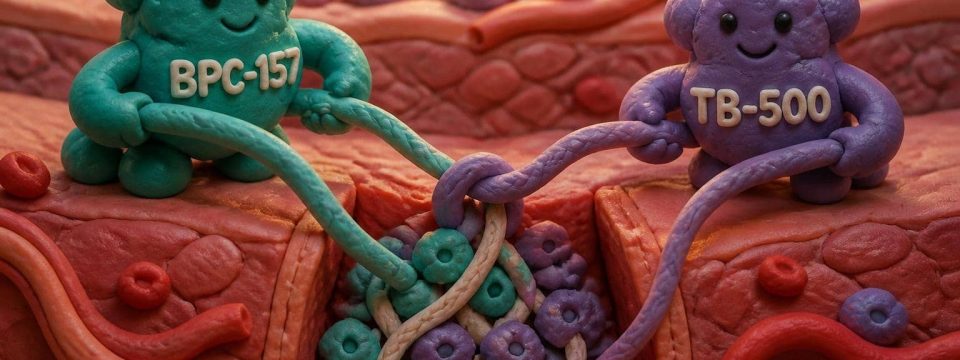
Researchers investigating tissue repair mechanisms have increasingly examined the potential benefits of combining specific peptides to enhance recovery outcomes. Among the most studied combinations is bpc 157 with tb 500, a pairing that has garnered significant attention in the scientific community for its complementary mechanisms of action. This combination brings together two distinct peptides, each with unique properties that may work synergistically to support various aspects of tissue regeneration and cellular repair. Understanding how these peptides function individually and in tandem provides valuable insights for laboratory research focused on healing mechanisms, inflammatory modulation, and structural tissue recovery.
Understanding the Individual Components
BPC-157: Body Protection Compound
BPC-157 represents a synthetic pentadecapeptide derived from a protective gastric protein. This fifteen-amino-acid sequence has been the subject of numerous preclinical investigations examining its role in tissue repair across multiple systems. The compound demonstrates several notable properties in laboratory settings.
Research indicates that BPC-157 may influence angiogenesis, the formation of new blood vessels that supply nutrients and oxygen to healing tissues. This mechanism appears particularly relevant in models examining tendon, ligament, and muscle recovery. Additionally, studies suggest the peptide may modulate inflammatory responses through various pathways, potentially creating a more favorable environment for tissue regeneration.
The compound’s effects on growth factor expression have been documented in multiple research models, with evidence suggesting it may upregulate factors involved in cellular proliferation and differentiation. These mechanisms position BPC-157 as a versatile tool for investigating healing processes across diverse tissue types.
TB-500: Thymosin Beta-4 Fragment
TB-500 consists of a synthetic version of Thymosin Beta-4, a naturally occurring peptide present in nearly all animal and human cells. This forty-three-amino-acid sequence plays fundamental roles in cellular organization and migration, making it a compound of interest for regenerative research.
One of TB-500's primary mechanisms involves actin regulation. Actin, a protein critical for cellular structure and movement, becomes particularly important during tissue repair when cells must migrate to injury sites and reorganize into functional structures. TB-500 appears to facilitate this process by binding to actin and promoting cellular motility.
Research models have also examined TB-500's potential effects on new blood vessel formation, similar to BPC-157 but through distinct pathways. The peptide may influence endothelial cell migration and differentiation, processes essential for establishing vascular networks in healing tissues. Furthermore, TB-500 has been studied for its possible anti-inflammatory properties and its role in preventing fibrosis, the excessive formation of scar tissue that can impair functional recovery.
The Rationale for Combining BPC 157 with TB 500
Synergistic Mechanisms
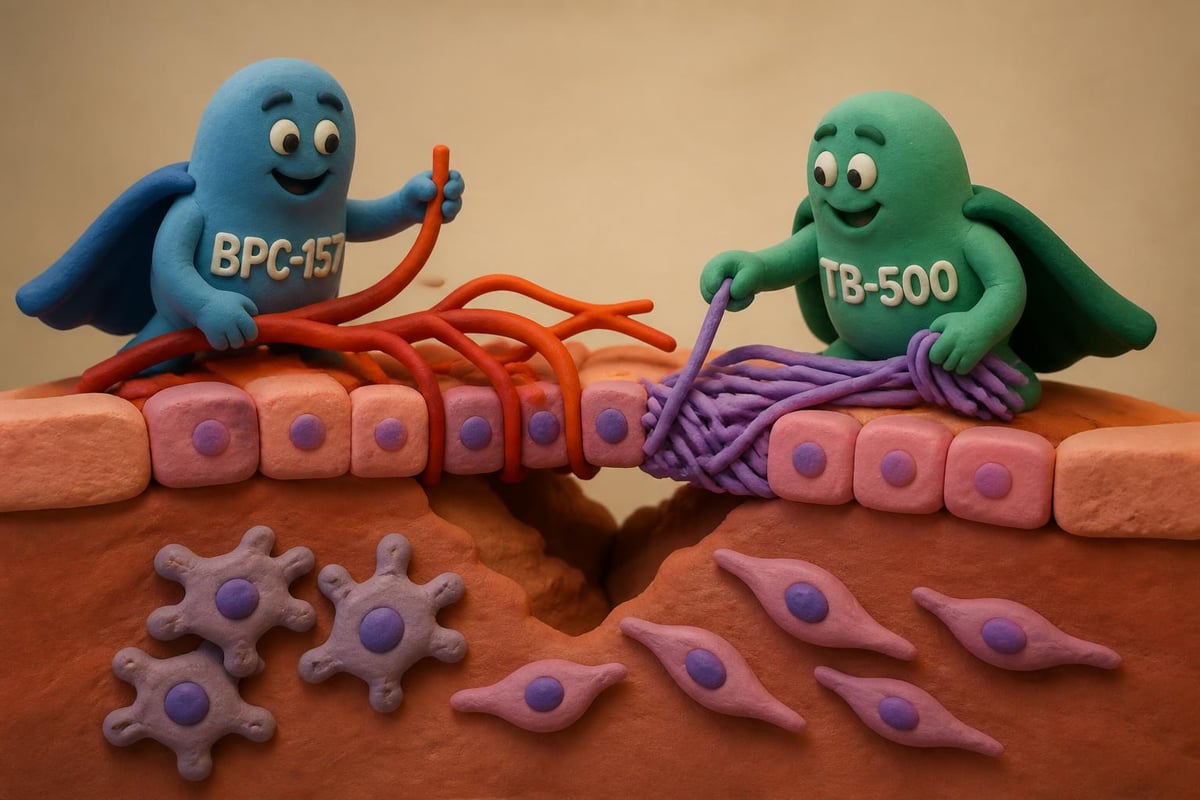
The decision to use bpc 157 with tb 500 in research protocols stems from the observation that these peptides operate through complementary rather than redundant mechanisms. While both compounds may influence angiogenesis and inflammation, they achieve these effects through different molecular pathways.
Comparative research on these peptides suggests that BPC-157 primarily works through growth factor modulation and direct cellular signaling, while TB-500's effects are more closely tied to structural protein regulation and cellular organization. This distinction means that combining them may address multiple aspects of the healing cascade simultaneously.
Key theoretical advantages of the combination include:
- Enhanced vascular development: Both peptides may promote angiogenesis through distinct pathways, potentially creating more robust and functional blood vessel networks
- Comprehensive inflammatory modulation: Different anti-inflammatory mechanisms may provide broader control over immune responses during tissue repair
- Improved cellular organization: TB-500's effects on actin combined with BPC-157's growth factor stimulation may optimize both cellular migration and proliferation
- Broader tissue applicability: The combination may prove effective across diverse tissue types including connective tissue, muscle, and epithelial structures
Research Applications and Models
Laboratory investigations utilizing bpc 157 with tb 500 have explored various injury models and tissue types. Tendon and ligament research represents one prominent area, as these structures demonstrate limited natural healing capacity and often develop functional deficits following injury.
Muscle tissue recovery has also been examined in models assessing both acute trauma and chronic degenerative conditions. The combination's potential to address both structural repair and functional restoration makes it particularly relevant for skeletal muscle research. Researchers at institutions studying peptide bioregulators have investigated these compounds in sports injury contexts, examining their effects on recovery timelines and tissue quality post-injury.
| Research Area | BPC-157 Focus | TB-500 Focus | Combined Potential |
|---|---|---|---|
| Tendon Repair | Collagen synthesis, inflammation | Cell migration, flexibility | Accelerated healing with improved tissue quality |
| Muscle Recovery | Growth factor expression | Actin organization | Enhanced regeneration and reduced scarring |
| Vascular Development | Angiogenic signaling | Endothelial migration | Robust blood vessel networks |
| Inflammatory Control | Cytokine modulation | Immune response regulation | Comprehensive inflammation management |
Dosing Considerations in Research Protocols
Individual Peptide Dosing
Research protocols examining bpc 157 with tb 500 must carefully consider dosing parameters for each compound. BPC-157 studies have utilized a wide range of doses depending on the model system, route of administration, and specific research objectives. Preclinical investigations have explored doses from 1 micrograms per kilogram to several milligrams per kilogram in various animal models.
TB-500 research has similarly employed diverse dosing strategies. The peptide's longer half-life compared to some other therapeutic peptides influences administration frequency in experimental protocols. Research models have examined both loading phases with higher initial doses and maintenance phases with reduced frequency.
Combined Protocol Design
When designing studies that utilize both peptides simultaneously, researchers must account for potential interactions and optimal timing. Some protocols administer the peptides concurrently, while others explore staggered approaches where one compound is introduced before the other to potentially prime cellular responses.
Important protocol considerations include:
- Route of administration: Subcutaneous, intraperitoneal, or local injection directly to injury sites
- Frequency: Daily administration versus intermittent dosing schedules
- Duration: Acute treatment periods versus extended recovery protocols
- Ratio considerations: Equal dosing versus weighted approaches favoring one compound
Research groups exploring peptide combinations often start with established single-peptide protocols and adjust based on observed outcomes. The specific research question, tissue type under investigation, and injury model all influence optimal protocol design.

Stability, Reconstitution, and Storage
Handling Laboratory-Grade Peptides
Proper handling of research peptides ensures data integrity and reproducible results. Both BPC-157 and TB-500 arrive in lyophilized (freeze-dried) form when sourced from quality suppliers. This formulation provides superior stability during storage and shipping compared to liquid preparations.
Reconstitution requires bacteriostatic water or sterile water, depending on protocol requirements and storage duration. Bacteriostatic water contains benzyl alcohol as a preservative, extending the shelf life of reconstituted solutions when refrigerated. The reconstitution process should occur under aseptic conditions to prevent contamination.
Storage Parameters
Lyophilized peptides generally maintain stability when stored at temperatures between 2-8°C (refrigerated) for short to medium-term storage, or at -20°C for long-term preservation. Once reconstituted, peptide solutions require refrigeration at 2-8°C and should be used within the timeframe appropriate for the specific formulation.
For researchers working with bpc 157 with tb 500, maintaining separate vials until immediately before administration may prove optimal, as this approach prevents premature interaction and ensures each compound remains at peak stability. Some protocols, however, may call for pre-mixed solutions, in which case stability testing becomes essential to verify that both peptides remain viable throughout the study period.
Quality Considerations for Research Applications
Purity and Testing Standards
The reliability of research outcomes depends fundamentally on peptide quality. Laboratory-grade peptides should undergo rigorous testing to verify identity, purity, and potency. Third-party batch testing provides independent verification of these critical parameters.
High-performance liquid chromatography (HPLC) serves as the gold standard for assessing peptide purity, with research-grade materials typically demonstrating purity levels above 98%. Mass spectrometry confirms molecular weight and identity, ensuring that the compound matches its expected structure. These analytical methods detect potential contaminants, degradation products, or synthesis errors that could compromise research validity.
When sourcing peptides for studies examining bpc 157 with tb 500, researchers should verify that suppliers provide certificates of analysis (COAs) for each batch. These documents should include specific purity percentages, testing methodologies, and batch identification numbers for traceability.
Manufacturing Standards
The manufacturing environment significantly impacts final product quality. US-based manufacturing facilities operating under strict quality control protocols offer advantages in consistency and regulatory compliance. Good Manufacturing Practice (GMP) facilities maintain controlled environments that minimize contamination risks and ensure batch-to-batch consistency.
For researchers requiring dependable peptide sources, Data Peptides offers laboratory-grade materials manufactured domestically with third-party batch testing. This combination of US manufacturing and independent quality verification supports research requiring the highest standards of peptide purity and consistency.
Mechanisms of Action: Deeper Dive
Cellular Signaling Pathways
Understanding how bpc 157 with tb 500 influences cellular behavior requires examining the molecular pathways each peptide affects. BPC-157 appears to interact with multiple growth factor systems, including vascular endothelial growth factor (VEGF) and fibroblast growth factor (FGF) pathways. These interactions may stimulate cellular proliferation, differentiation, and migration essential for tissue reconstruction.
The peptide also demonstrates potential effects on nitric oxide pathways, which play crucial roles in vascular function and blood flow regulation. Enhanced nitric oxide availability may contribute to improved nutrient delivery and waste removal from healing tissues.
TB-500's primary mechanism centers on its interaction with actin, but research suggests additional pathways may be involved. The peptide appears to influence the expression of various genes associated with cellular migration, extracellular matrix remodeling, and inflammatory regulation. These genomic effects may explain some of the compound's broader biological activities beyond simple actin binding.
Inflammatory Modulation
Both peptides demonstrate anti-inflammatory properties in preclinical models, though through distinct mechanisms. BPC-157 may influence cytokine profiles, potentially reducing pro-inflammatory signals while maintaining or enhancing anti-inflammatory mediators. This selective modulation could create an optimal inflammatory environment that supports healing without excessive tissue damage.
TB-500's anti-inflammatory effects may relate partly to its influence on immune cell behavior. The peptide appears to affect macrophage polarization, potentially shifting these critical immune cells toward phenotypes associated with tissue repair rather than inflammatory amplification.
| Mechanism | BPC-157 | TB-500 | Combined Effect |
|---|---|---|---|
| Angiogenesis | VEGF upregulation, direct signaling | Endothelial migration, tube formation | Accelerated, robust vascularization |
| Inflammation | Cytokine modulation, NF-κB pathway | Macrophage polarization | Multi-pathway inflammatory control |
| Cell Migration | Indirect through growth factors | Direct actin regulation | Enhanced cellular recruitment |
| Matrix Remodeling | Collagen synthesis stimulation | MMP regulation, fiber organization | Improved tissue architecture |
Research Comparisons and Evidence
Comparative Studies
Direct comparisons between BPC-157 and TB-500 have been conducted in various model systems, providing insights into their relative strengths and optimal applications. These studies generally indicate that neither peptide demonstrates universal superiority; rather, their effectiveness varies depending on tissue type, injury mechanism, and specific outcome measures.
For tendon injuries, some research suggests BPC-157 may demonstrate particular efficacy in promoting collagen organization and tensile strength recovery. TB-500, alternatively, may show advantages in reducing adhesion formation and maintaining tissue flexibility. The combination of bpc 157 with tb 500 theoretically addresses both concerns simultaneously.
Muscle injury models have yielded similar findings, with BPC-157 potentially excelling in stimulating satellite cell activation and fiber regeneration, while TB-500 may prove more effective in reducing fibrosis and maintaining muscle architecture. Comparative analyses highlight these complementary profiles as justification for combination approaches.
Evidence Levels and Research Gaps
The evidence base for both peptides consists primarily of preclinical animal studies and in vitro cellular research. While these investigations provide valuable mechanistic insights and proof-of-concept data, significant gaps remain in the scientific literature.
Large-scale, controlled studies examining bpc 157 with tb 500 specifically as a combination remain limited. Most research has investigated the compounds individually, leaving questions about optimal ratios, timing sequences, and potential synergistic effects incompletely answered. Research indices tracking studies on the combination reveal this knowledge gap while highlighting the studies that do exist.
Additionally, long-term outcome data remains sparse. Most preclinical investigations follow subjects for weeks to months, leaving questions about sustained benefits, optimal treatment duration, and potential long-term effects unexplored. These gaps represent important areas for future research development.

Practical Laboratory Applications
Designing Controlled Experiments
Researchers incorporating bpc 157 with tb 500 into experimental protocols should implement robust controls to isolate peptide effects from other variables. Standard experimental design principles include:
- Vehicle-only controls: Groups receiving the reconstitution solution without active peptides
- Single-peptide groups: Separate cohorts receiving only BPC-157 or only TB-500 to assess individual contributions
- Combination groups: Subjects receiving both peptides to evaluate synergistic effects
- Untreated controls: Groups with induced injuries but no intervention to establish baseline recovery
Sample size calculations should account for expected effect sizes based on preliminary data or published research. Adequate statistical power ensures that meaningful differences can be detected while minimizing false-positive findings.
Measurement and Assessment
Outcome measures vary depending on research objectives but typically include both functional and structural assessments. Tissue samples may undergo histological analysis to evaluate collagen organization, cell density, vascular development, and inflammatory cell presence. Immunohistochemistry can identify specific proteins and growth factors, providing mechanistic insights.
Common assessment approaches include:
- Biomechanical testing: Load-to-failure tests, elastic modulus measurements, and stress-strain analysis for connective tissues
- Functional assessments: Range of motion, force production capacity, and endurance metrics
- Molecular analysis: Gene expression profiling, protein quantification, and signaling pathway activation status
- Imaging studies: Ultrasound, micro-CT, or MRI to assess structural integrity and healing progression
Standardized protocols and blinded assessment help ensure objective data collection and minimize experimental bias.
Formulation Options and Considerations
Individual Vials Versus Pre-Mixed Solutions
Researchers face choices regarding whether to maintain bpc 157 with tb 500 in separate vials or utilize pre-mixed formulations. Individual vials offer maximum flexibility, allowing dose ratio adjustments and independent stability monitoring. This approach suits investigative studies exploring optimal combinations or comparing different ratios.
Pre-mixed formulations provide convenience and ensure consistent ratios across administrations. For studies using established protocols with fixed combinations, pre-mixed solutions may reduce preparation time and potential handling errors. However, researchers must verify that both peptides remain stable when combined in solution over the storage period.
Considerations for Different Research Models
The choice between individual and combined formulations may also depend on the animal model and administration route. Small rodent models with limited injection volumes may benefit from combined solutions that deliver both compounds in a single administration. Larger animal models or those using local injection sites may accommodate multiple injections more readily.
Detailed guidance on peptide comparisons often addresses practical administration considerations that influence formulation decisions. Researchers should consider their specific model requirements, protocol demands, and analytical objectives when making these choices.
Safety Profiles in Research Settings
Preclinical Safety Data
Preclinical investigations have examined the safety profiles of both BPC-157 and TB-500 across various dose ranges and administration routes. Generally, both peptides have demonstrated favorable safety profiles in animal models, with minimal adverse effects reported at doses well above those used in typical research protocols.
BPC-157 studies have explored doses spanning several orders of magnitude without identifying clear toxic dose limits in many models. The peptide's origin as a fragment of a naturally occurring gastric protein may contribute to this safety profile. Similarly, TB-500's basis in endogenous Thymosin Beta-4 suggests inherent biocompatibility.
When combining peptides, researchers must consider potential interaction effects that might not be apparent from single-compound safety data. While bpc 157 with tb 500 has not been associated with significant adverse interactions in available research, comprehensive safety assessments should remain part of any experimental protocol.
Research Ethics and Compliance
All research involving peptide compounds must adhere to appropriate institutional and regulatory guidelines. Animal research requires approval from Institutional Animal Care and Use Committees (IACUC), with protocols demonstrating humane treatment, appropriate pain management, and scientifically justified experimental designs.
Documentation standards include maintaining detailed records of peptide sources, batch numbers, reconstitution procedures, and administration protocols. These records support research reproducibility and regulatory compliance while facilitating publication of findings.
Future Research Directions
Unexplored Applications
While much research on bpc 157 with tb 500 has focused on musculoskeletal applications, other tissue systems warrant investigation. The peptides' mechanisms suggest potential relevance for neurological research, cardiovascular studies, and wound healing models beyond structural tissues.
Neurological research represents a particularly intriguing frontier, as both peptides demonstrate properties potentially relevant to neural repair. BPC-157's effects on growth factor expression and TB-500's influence on cellular organization could theoretically support neuroplasticity and axonal regeneration, though substantial research would be needed to validate these hypotheses.
Optimization Studies
Significant opportunities exist for research optimizing the combination of these peptides. Questions requiring investigation include:
- Optimal dose ratios: Does a 1:1 ratio provide maximum benefit, or do certain applications favor weighted combinations?
- Sequential versus concurrent administration: Would administering one peptide before the other enhance outcomes compared to simultaneous delivery?
- Timing relative to injury: How do treatment initiation points (immediate versus delayed) influence efficacy?
- Treatment duration: What constitutes optimal treatment length for various injury types and severities?
Comparative research frameworks provide methodological approaches for addressing these questions through systematic experimental design. Well-controlled studies examining these variables would significantly advance the field's understanding of optimal peptide combination strategies.
Mechanistic Deep Dives
Despite existing research, many mechanistic questions remain incompletely answered. The precise molecular targets of BPC-157, for instance, have not been fully elucidated. While effects on various pathways have been documented, the peptide's primary receptor or binding partners remain subjects of ongoing investigation.
Similarly, TB-500's effects beyond actin binding deserve further exploration. The peptide's influence on gene expression suggests additional molecular interactions that could reveal new therapeutic targets or applications. Advanced techniques including proteomics, transcriptomics, and metabolomics could provide deeper insights into how these peptides alter cellular function at molecular levels.
The combination of bpc 157 with tb 500 represents a scientifically grounded approach to investigating tissue repair mechanisms through complementary peptide pathways. As research continues to examine these compounds both individually and in combination, laboratories require access to high-purity, reliably manufactured materials to ensure valid and reproducible results. For investigators seeking laboratory-grade research peptides manufactured to the highest standards, Data Peptides provides US-manufactured, third-party tested compounds designed specifically for rigorous scientific investigation.