
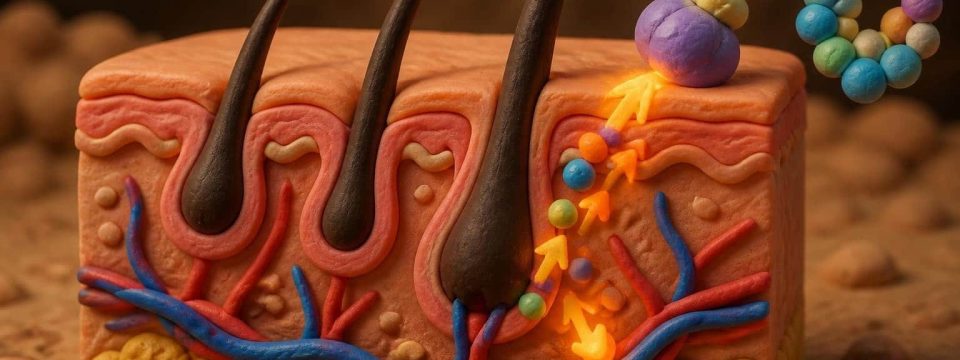
The intersection of peptide research and dermatological applications continues to expand as investigators examine compounds traditionally studied for tissue repair in new contexts. BPC-157, a synthetic peptide comprising fifteen amino acids derived from a protective gastric protein, has attracted attention for its regenerative properties across multiple tissue types. While most research has focused on musculoskeletal healing and gastrointestinal protection, emerging questions about bpc 157 hair growth have prompted researchers to examine whether its tissue repair mechanisms might extend to follicular regeneration. This article explores the scientific rationale behind these investigations, examining the peptide's known mechanisms and their potential relevance to hair follicle biology.
Understanding BPC-157's Biological Mechanisms
BPC-157 operates through multiple signaling pathways that collectively support tissue regeneration and repair. The peptide has demonstrated capacity to modulate growth factor expression, influence angiogenesis, and regulate inflammatory responses across various tissue types.
Growth Factor Modulation
Research indicates that BPC-157 influences several growth factors critical to cellular proliferation and differentiation. The peptide appears to upregulate vascular endothelial growth factor (VEGF), which plays essential roles in blood vessel formation and nutrient delivery to regenerating tissues. Studies examining musculoskeletal soft tissue healing have documented these angiogenic properties in tendon and ligament repair models.
Key growth factors potentially influenced by BPC-157:
- Vascular endothelial growth factor (VEGF)
- Fibroblast growth factor (FGF)
- Epidermal growth factor (EGF)
- Transforming growth factor-beta (TGF-β)
The modulation of these signaling molecules represents a fundamental mechanism through which BPC-157 may support tissue regeneration across different organ systems.

Angiogenesis and Microcirculation
One of the most consistently documented properties of BPC-157 involves its ability to promote new blood vessel formation. This angiogenic capacity supports tissue healing by ensuring adequate oxygen and nutrient delivery to cells undergoing repair and regeneration.
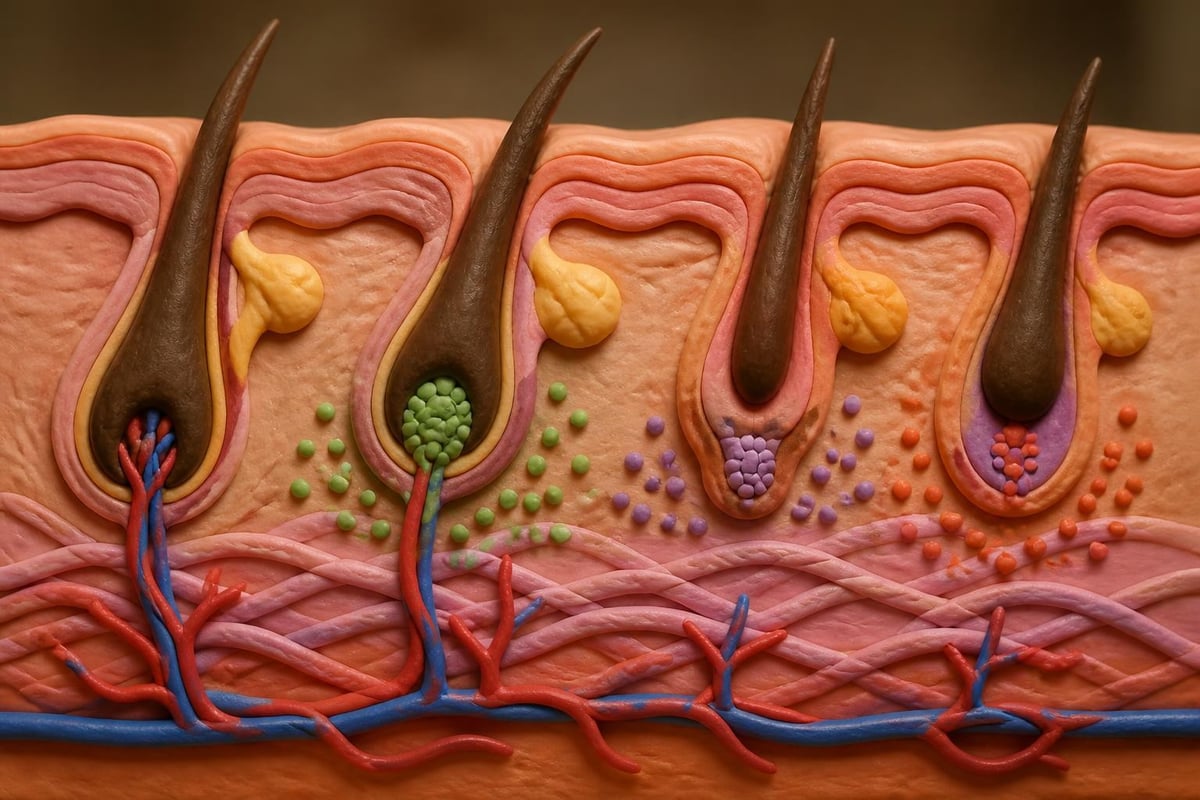
In the context of hair follicles, dermal papilla cells require robust microcirculation to sustain the metabolically demanding process of hair shaft production. The follicular unit maintains a complex vascular network that supplies keratinocytes during active growth phases. Disrupted blood flow to follicles represents one factor contributing to miniaturization and eventual hair loss in various conditions.
| Vascular Function | Role in Tissue Health | Relevance to Follicles |
|---|---|---|
| Nutrient delivery | Provides amino acids, glucose, lipids | Supplies keratin synthesis substrates |
| Oxygen transport | Enables aerobic metabolism | Supports high metabolic activity |
| Waste removal | Clears metabolic byproducts | Maintains optimal cellular environment |
| Signaling molecule distribution | Delivers hormones, growth factors | Regulates follicle cycling |
Hair Follicle Biology and Regeneration Requirements
Hair follicles represent one of the few mammalian structures capable of complete regeneration throughout the lifespan. Understanding follicular biology provides context for evaluating how peptides like BPC-157 might influence hair growth dynamics.
The Hair Growth Cycle
Follicles progress through distinct phases: anagen (active growth), catagen (regression), telogen (rest), and exogen (shedding). The duration and robustness of the anagen phase primarily determines hair length and density. Various factors can prematurely shift follicles from anagen to catagen, resulting in progressively shorter growth phases and follicular miniaturization.
During anagen, matrix cells in the follicle bulb undergo rapid proliferation, differentiating into the multiple cell types that comprise the hair shaft. This process requires:
- Sustained cellular proliferation signals
- Adequate nutrient and oxygen supply
- Appropriate extracellular matrix scaffolding
- Balanced inflammatory signaling
- Protection from oxidative stress
Each of these requirements aligns with documented or proposed mechanisms of BPC-157 activity.
Stem Cell Activation and Differentiation
Hair follicle stem cells residing in the bulge region represent a critical population for initiating new growth cycles. These cells must receive appropriate activation signals to proliferate, migrate downward, and regenerate the lower follicle structures during each anagen phase.
Research on BPC-157 has demonstrated effects on stem cell populations in other contexts, including neural and mesenchymal stem cells. While direct evidence for hair follicle stem cell activation remains limited, the peptide's influence on cellular signaling pathways suggests potential relevance to follicular stem cell biology.
Examining the BPC 157 Hair Growth Hypothesis
The scientific rationale for investigating bpc 157 hair growth potential rests on several interconnected mechanisms observed in other tissue systems.
Tissue Regeneration Parallels
BPC-157 has shown regenerative capacity across multiple tissue types, including:
- Musculoskeletal tissues: Tendons, ligaments, muscles
- Gastrointestinal structures: Mucosal lining, intestinal tissue
- Vascular systems: Blood vessel formation and repair
- Neural tissues: Nerve regeneration and protection
Hair follicles share several characteristics with these systems, particularly high cellular turnover rates and dependence on vascular support. The peptide's demonstrated ability to accelerate healing in skin wounds suggests potential relevance to structures embedded within dermal tissue.

Anti-Inflammatory Properties
Chronic low-grade inflammation has been implicated in various forms of hair loss, including androgenetic alopecia and alopecia areata. Inflammatory cytokines can disrupt follicle cycling, trigger premature catagen entry, and damage follicular structures.
BPC-157 exhibits anti-inflammatory effects through multiple mechanisms:
- Modulation of cytokine expression profiles
- Reduction of oxidative stress markers
- Stabilization of cellular membranes
- Protection against inflammatory mediator damage
These properties suggest potential value in conditions where inflammation contributes to follicular dysfunction, though direct studies examining bpc 157 hair growth in inflammatory alopecia models remain limited.
Current Research Landscape and Evidence Gaps
As of 2026, the scientific literature on BPC 157 hair growth remains sparse compared to the extensive research on musculoskeletal and gastrointestinal applications. Most evidence supporting potential follicular effects derives from extrapolation of mechanisms demonstrated in other tissue systems.
Available Preclinical Data
Laboratory investigations have established several properties of BPC-157 relevant to hair biology:
| Property | Evidence Level | Potential Hair Relevance |
|---|---|---|
| Angiogenesis promotion | Strong | Follicle vascularization |
| Growth factor modulation | Moderate | Follicle cycling signals |
| Wound healing acceleration | Strong | Scalp tissue repair |
| Collagen synthesis support | Moderate | Follicle structural integrity |
| Stem cell activation | Preliminary | Bulge stem cell stimulation |
The BPC-157 research peptide has been extensively studied for tissue repair mechanisms that may translate to follicular regeneration, though dedicated hair growth studies remain limited.
Methodological Considerations for Future Research
Rigorous investigation of bpc 157 hair growth effects would require specific experimental designs:
- In vitro follicle culture: Isolated human follicles treated with various BPC-157 concentrations
- Animal models: Standardized hair growth assessment in appropriate species
- Molecular pathway analysis: Identification of activated signaling cascades in follicular cells
- Dose-response characterization: Determination of optimal concentrations for follicular effects
- Temporal dynamics: Assessment of effects across different follicle cycle phases
These approaches would help establish whether mechanisms observed in other tissues extend to hair follicle biology.
Proposed Mechanisms for Follicular Effects
Based on known BPC-157 properties, researchers have proposed several pathways through which the peptide might influence hair growth.
Direct Follicular Stimulation
BPC-157 might directly interact with cells in the follicular unit, particularly:
- Dermal papilla cells: Specialized fibroblasts that regulate follicle cycling
- Matrix keratinocytes: Rapidly dividing cells that form the hair shaft
- Outer root sheath cells: Provide structural support and signaling
- Melanocytes: Produce pigment within the hair bulb
Direct stimulation could occur through growth factor receptor activation or modulation of intracellular signaling cascades that control proliferation and differentiation.
Microenvironment Enhancement
Rather than directly stimulating follicular cells, BPC-157 might improve the surrounding tissue environment:
- Enhanced microcirculation delivering nutrients more efficiently
- Reduced inflammatory signaling from perifollicular immune cells
- Improved extracellular matrix quality providing better structural support
- Increased local growth factor concentrations from nearby dermal fibroblasts
This indirect mechanism would create more favorable conditions for follicles to maintain robust anagen phases.
Integration with Other Regenerative Peptides
Researchers investigating tissue regeneration often examine combinations of peptides with complementary mechanisms. BPC-157 frequently appears in formulations alongside other compounds that support healing and recovery.
Synergistic Compound Considerations
Several peptides share overlapping yet distinct mechanisms with BPC-157:
- TB-500 (Thymosin Beta-4): Promotes cell migration and actin upregulation
- GHK-Cu: Copper-binding peptide supporting collagen synthesis and remodeling
- KPV: Anti-inflammatory tripeptide derived from alpha-MSH
The potential for synergistic effects when combining these compounds has led to development of multi-component formulations. For comprehensive tissue support, researchers often explore how different peptides might work together to address multiple aspects of regeneration simultaneously.
When investigating bpc 157 hair growth alongside other regenerative peptides, researchers can examine whether complementary mechanisms produce enhanced effects compared to single compounds.
Laboratory Research Applications and Protocols
For research institutions and laboratories investigating peptide effects on follicular biology, proper experimental design and controls remain essential.
Cell Culture Models
Human dermal papilla cells and follicle organ culture systems provide controlled environments for examining peptide effects:
- Establish baseline growth parameters under standard culture conditions
- Introduce peptide at defined concentrations with appropriate vehicles
- Monitor proliferation markers, gene expression changes, and morphological shifts
- Compare treated samples against vehicle-only controls
- Validate findings across multiple cell lines or follicle donors
These approaches allow precise mechanistic investigation while controlling for variables present in whole-organism studies.
Molecular Endpoint Assessment
Comprehensive analysis should examine multiple indicators of follicular activity:
Proliferation markers:
- Ki-67 expression in matrix cells
- Cell cycle progression analysis
- DNA synthesis quantification
Differentiation indicators:
- Keratin gene expression profiles
- Hair shaft structural protein production
- Melanogenesis pathway activation
Signaling pathway activation:
- Phosphorylation status of key kinases
- Transcription factor nuclear translocation
- Growth factor receptor engagement
This multi-level analysis provides detailed insight into how peptides influence follicular cellular processes.
Dosing Considerations for Research Applications
Determining appropriate concentrations for laboratory investigations requires careful consideration of peptide properties and experimental objectives.
Concentration Range Selection
Published studies on BPC-157 in various tissue systems have employed concentrations ranging from nanomolar to micromolar levels. For follicular research, investigators typically begin with:
- Low range: 0.1-1.0 μg/mL for initial screening
- Medium range: 1.0-10 μg/mL for detailed mechanistic studies
- High range: 10-100 μg/mL for maximum effect characterization
Dose-response curves help identify optimal concentrations for specific endpoints while revealing potential threshold effects or saturation points.
Temporal Dynamics
Hair follicle responses occur across different timescales:
| Timeframe | Expected Responses | Measurement Approaches |
|---|---|---|
| Hours | Immediate signaling activation | Phospho-protein analysis, pathway reporters |
| Days | Gene expression changes | qPCR, RNA sequencing |
| Weeks | Proliferation and growth | Follicle length, cell counts |
| Months | Complete cycle effects | Full anagen phase assessment |
Matching experimental duration to expected biological responses ensures appropriate endpoint detection.
Safety Profile and Research Considerations
BPC-157 has demonstrated favorable safety characteristics in numerous preclinical studies, with minimal adverse effects reported across various tissue applications. This profile makes it suitable for extensive laboratory investigation.
Documented Safety Parameters
Research examining BPC-157 across multiple models has generally found:
- Low toxicity profiles across wide dose ranges
- Minimal off-target effects in molecular studies
- Good stability under physiological conditions
- Absence of significant adverse reactions in tissue culture
These properties facilitate research protocols that require sustained peptide exposure or higher concentrations for mechanistic studies.
Research-Specific Quality Considerations
Laboratory investigations require peptides meeting rigorous purity standards. Research-grade materials should include:
- Third-party verification: Independent analysis confirming identity and purity
- Batch testing documentation: Certificates of analysis for each production lot
- Appropriate storage: Lyophilized powder requiring specific temperature conditions
- Reconstitution protocols: Clear guidance on vehicle selection and concentration preparation
- Stability data: Information on shelf life and degradation timelines
These quality parameters ensure experimental reproducibility and reliable interpretation of results. Researchers investigating bpc 157 hair growth mechanisms should source peptides from suppliers providing comprehensive quality documentation and US-manufactured materials that meet laboratory-grade standards.
Future Research Directions
The investigation of bpc 157 hair growth represents an emerging area with numerous unexplored questions and potential research avenues.
Mechanistic Investigations
Key questions requiring systematic investigation include:
- Which specific signaling pathways mediate BPC-157 effects on follicular cells?
- Do effects vary across different follicle cycle phases?
- What receptor interactions initiate cellular responses?
- How do concentration and exposure duration influence outcomes?
- Are effects consistent across different follicle types (terminal vs. vellus)?
Addressing these questions would establish a comprehensive mechanistic framework for understanding peptide-follicle interactions.
Clinical Translation Pathways
Moving from laboratory findings to potential applications requires:
- Validation of effects in relevant preclinical models
- Determination of optimal delivery methods for scalp tissue
- Assessment of systemic versus topical administration approaches
- Investigation of combination therapies with established treatments
- Evaluation of effects across different hair loss etiologies
Each step involves distinct experimental challenges and regulatory considerations specific to dermatological applications.
Comparative Peptide Studies
Systematic comparison of different regenerative peptides could identify:
- Compounds with specific advantages for follicular stimulation
- Synergistic combinations producing enhanced effects
- Optimal sequencing of different peptides across follicle cycles
- Peptide-specific mechanisms most relevant to hair biology
This comparative approach would help researchers select appropriate compounds for specific investigational objectives.
Experimental Design Recommendations
Researchers planning studies on bpc 157 hair growth should incorporate several key design elements to maximize experimental rigor and data quality.
Control Group Selection
Appropriate controls ensure reliable interpretation:
- Vehicle controls: Identical treatment excluding active peptide
- Positive controls: Established growth-promoting compounds for comparison
- Untreated controls: Assessment of baseline follicle behavior
- Time-matched controls: Accounting for temporal variations in follicle activity
Multiple control conditions help isolate peptide-specific effects from experimental artifacts.
Statistical Considerations
Adequate statistical power requires:
- Sufficient sample sizes based on expected effect magnitudes
- Multiple independent replicates across different cell preparations or follicle donors
- Appropriate statistical tests for experimental design and data types
- Correction for multiple comparisons when examining numerous endpoints
- Inclusion of variability measures in all reported results
Rigorous statistical approaches strengthen conclusions and support reproducibility.
Peptide Stability and Handling in Research Settings
Proper peptide handling ensures consistent experimental conditions and reliable results across studies.
Storage and Preparation
Laboratory protocols should specify:
- Lyophilized storage: Temperature requirements (typically -20°C or below)
- Reconstitution procedures: Vehicle selection, concentration preparation
- Aliquot management: Single-use portions preventing freeze-thaw cycles
- Working solution stability: Time limits for reconstituted peptide use
- Freeze-thaw data: Effects of temperature cycling on peptide activity
These parameters should be established for each specific peptide and experimental context.
Quality Monitoring
Ongoing quality assessment during experimental series includes:
- Periodic re-testing of stock solutions
- Comparison of results across different peptide batches
- Inclusion of quality control samples in each experimental run
- Documentation of storage conditions and handling procedures
- Investigation of unexpected result variations
Systematic quality monitoring maintains experimental consistency and identifies potential issues affecting reproducibility.
Research exploring BPC 157 hair growth mechanisms represents an emerging frontier in peptide science, building on established regenerative properties documented in other tissue systems. While direct evidence remains limited, the peptide's influence on angiogenesis, growth factor expression, and tissue repair provides scientific rationale for systematic investigation of follicular effects. For laboratories pursuing rigorous studies in this area, Data Peptides provides US-manufactured, third-party tested research peptides that meet the quality standards essential for reproducible experimental work and reliable mechanistic investigations.