
Understanding bpc 157 how to take requires knowledge of proper reconstitution techniques, accurate dosing calculations, and appropriate administration methods. BPC-157, a synthetic fifteen-amino acid peptide derived from body protection compound research, has gained attention in laboratory settings for its tissue regeneration properties. Researchers working with this peptide must follow precise protocols to maintain stability, ensure accurate dosing, and conduct meaningful studies. This comprehensive guide walks through the essential steps for preparing and administering BPC-157 in research environments, covering everything from initial reconstitution to injection techniques and timing considerations.
Reconstitution Fundamentals for BPC-157
Proper reconstitution forms the foundation of effective BPC-157 research protocols. The peptide typically arrives as a lyophilized (freeze-dried) powder that requires mixing with bacteriostatic water before administration.
Gathering Required Materials
Before beginning the reconstitution process, researchers should assemble all necessary supplies to maintain sterility and precision. Essential items include:
- Bacteriostatic water (0.9% benzyl alcohol)
- Insulin syringes (typically 1mL with 0.01mL markings)
- Alcohol swabs for sterilization
- BPC-157 vial (commonly 5mg or 10mg)
- Clean workspace with adequate lighting
The choice of reconstitution solution significantly impacts peptide stability. Bacteriostatic water remains the preferred option for BPC-157 due to its antimicrobial properties, which extend the usable life of the reconstituted solution when stored properly.
Step-by-Step Reconstitution Process
Begin by removing the plastic caps from both the bacteriostatic water vial and the BPC-157 vial, then thoroughly clean both rubber stoppers with alcohol swabs. Allow the alcohol to air dry completely before proceeding.
Draw the desired amount of bacteriostatic water into an insulin syringe. For a 5mg BPC-157 vial, most researchers use 2mL to 2.5mL of bacteriostatic water, creating a concentration that simplifies dosing calculations.
| Vial Size | Bacteriostatic Water | Resulting Concentration |
|---|---|---|
| 5mg | 2mL | 2,500mcg/mL (250mcg per 0.1mL) |
| 5mg | 2.5mL | 2,000mcg/mL (200mcg per 0.1mL) |
| 10mg | 2mL | 5,000mcg/mL (500mcg per 0.1mL) |
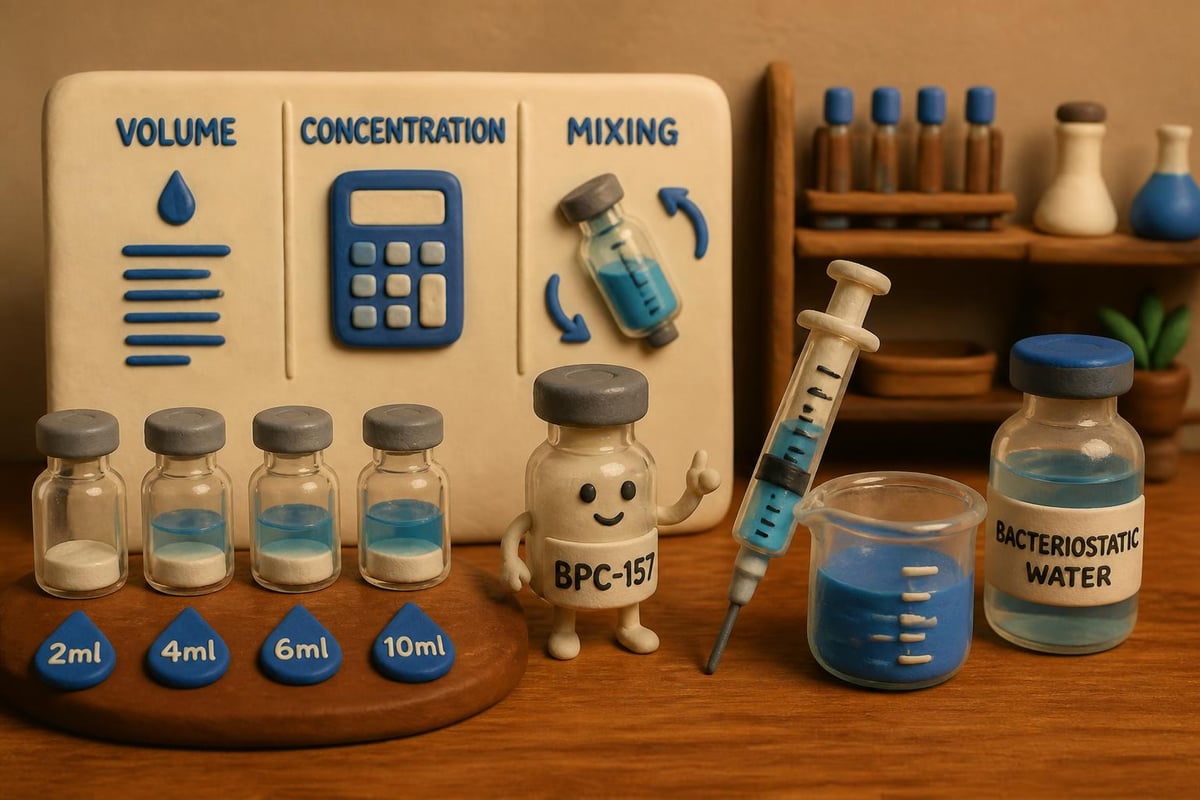
Inject the bacteriostatic water slowly down the inside wall of the BPC-157 vial rather than directly onto the powder. This gentle approach prevents peptide degradation from excessive agitation. Once all water is added, gently swirl the vial in circular motions until the powder completely dissolves. Never shake vigorously, as this can damage the peptide structure.
The reconstituted solution should appear clear and colorless. Any cloudiness, discoloration, or particulate matter indicates contamination or degradation, and the vial should not be used for research purposes.
Dosing Protocols and Calculations
Understanding bpc 157 how to take requires mastery of dosing calculations based on research objectives and desired concentration levels. Research protocols typically employ dosages ranging from 200mcg to 1,000mcg, with 250mcg to 500mcg representing the most common range for tissue repair studies.
Standard Dosing Guidelines
Research dosing protocols typically follow body weight-based calculations or fixed dosing schedules depending on study design. Common approaches include:
Body Weight-Based Dosing:
- Standard range: 2.5mcg to 6.25mcg per kilogram
- For a 180-pound (81.6kg) subject model: 204mcg to 510mcg per administration
- Conservative approach: Start at lower end and adjust based on research outcomes
Fixed Dosing Schedules:
- Low dose: 200mcg to 300mcg per administration
- Moderate dose: 400mcg to 500mcg per administration
- High dose: 750mcg to 1,000mcg per administration
Practical Dosing Calculations
When working with a 5mg vial reconstituted with 2mL bacteriostatic water (2,500mcg/mL concentration), calculate injection volumes as follows:
For a 250mcg dose: 250mcg ÷ 2,500mcg/mL = 0.1mL (10 units on insulin syringe)
For a 500mcg dose: 500mcg ÷ 2,500mcg/mL = 0.2mL (20 units on insulin syringe)
For a 750mcg dose: 750mcg ÷ 2,500mcg/mL = 0.3mL (30 units on insulin syringe)
Detailed dosing calculators can help researchers verify their calculations and maintain consistent protocols across multiple study phases.
Administration Routes and Injection Techniques
The route of administration significantly influences BPC-157's bioavailability and localized effects. Researchers primarily employ subcutaneous and intramuscular injection methods, each offering distinct advantages for specific research applications.
Subcutaneous Administration
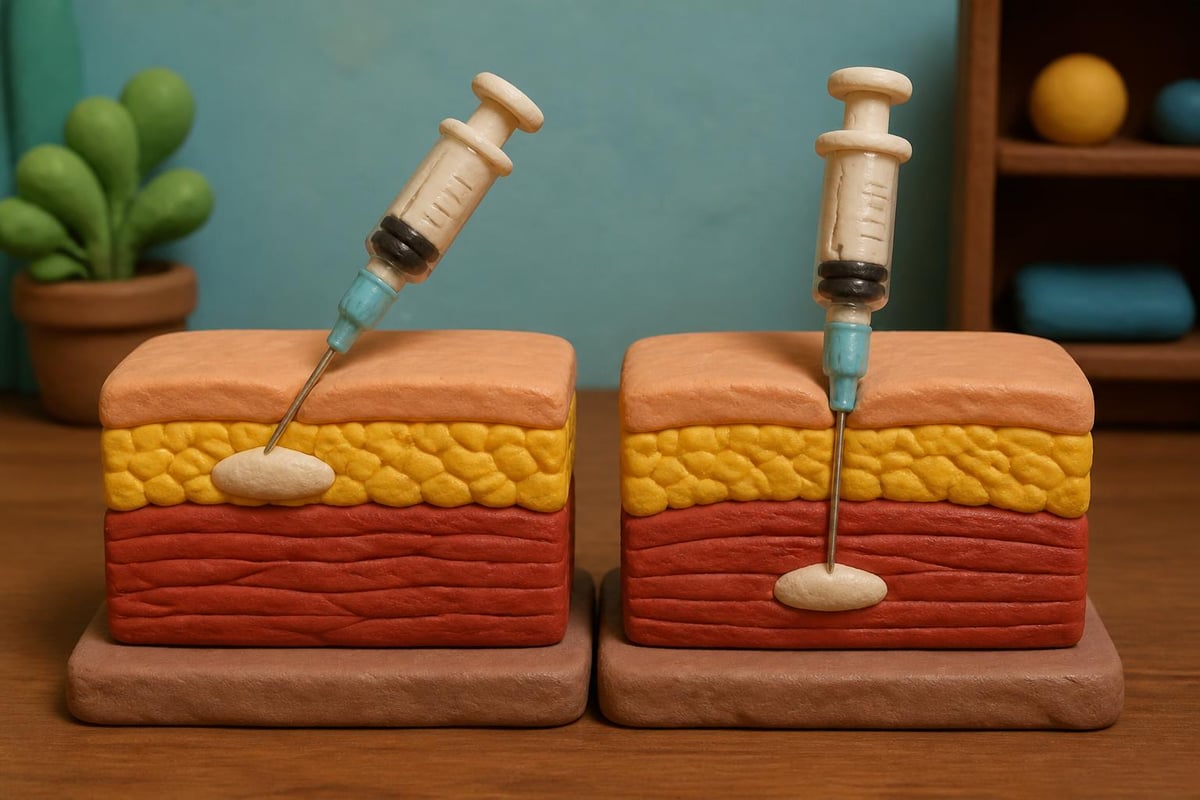
Subcutaneous (SC) injection delivers BPC-157 into the fatty tissue layer beneath the skin, providing systemic distribution with gradual absorption. This method suits general tissue repair research and systemic inflammatory studies.
Optimal injection sites for subcutaneous administration:
- Abdominal area (two inches from navel)
- Upper thigh regions
- Upper arm (posterior triceps area)
- Hip/buttocks region
Technique considerations include pinching the skin to create a small fold, inserting the needle at a 45-degree angle, and injecting slowly over 5-10 seconds. Rotating injection sites prevents tissue irritation and maintains consistent absorption rates across research trials.
Intramuscular Administration
Intramuscular (IM) injection places BPC-157 directly into muscle tissue, enabling faster absorption and potentially higher localized concentrations. This approach benefits research focused on specific muscle groups or deeper tissue structures.
Common intramuscular injection sites:
- Deltoid (shoulder muscle)
- Vastus lateralis (outer thigh)
- Gluteus medius (upper hip)
- Ventrogluteal (hip area)
For intramuscular administration, insert the needle at a 90-degree angle, aspirate slightly to confirm no blood vessel penetration, then inject the solution steadily. Proper injection technique minimizes discomfort and ensures accurate delivery to the target tissue.
Local vs. Systemic Administration Strategies
Research suggests BPC-157 demonstrates both local and systemic effects regardless of injection site. However, some researchers prefer administering injections near the area of study interest for potentially enhanced localized concentrations.
| Administration Strategy | Advantages | Research Applications |
|---|---|---|
| Near injury site | Higher local concentration | Tendon, ligament, muscle repair studies |
| Distant subcutaneous | Consistent systemic levels | GI tract, neurological research |
| Intramuscular | Faster absorption | Acute injury models |
| Rotating sites | Prevents tissue irritation | Long-term studies |
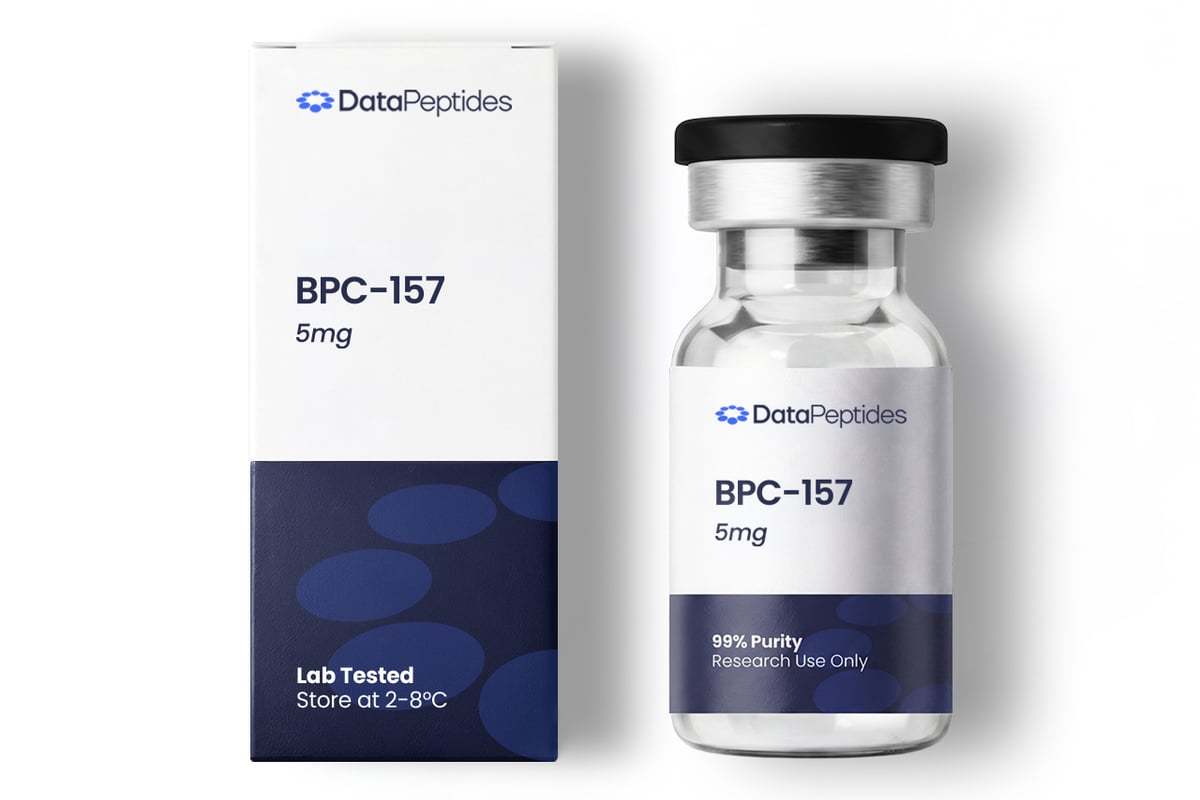
Data Peptides offers high-purity BPC-157 manufactured in the United States with third-party batch testing, ensuring researchers work with consistent, reliable compounds for their laboratory investigations.
Timing and Frequency Considerations
Determining when and how often to administer BPC-157 impacts research consistency and outcome measurement. Most protocols employ once-daily or twice-daily administration schedules based on the peptide's half-life and research objectives.
Daily Administration Schedules
Once-Daily Protocol:
- Typical timing: Morning administration upon waking
- Dosage range: 400mcg to 1,000mcg per injection
- Best for: Convenience, compliance in long-term studies
- Duration: 4 to 8 weeks typical research cycle
Twice-Daily Protocol:
- Timing: Morning and evening (12 hours apart)
- Dosage per injection: 200mcg to 500mcg
- Total daily amount: 400mcg to 1,000mcg combined
- Best for: Maintaining stable peptide levels, acute injury models
Research protocols documented in scientific literature show flexibility in timing, with some studies administering doses immediately post-injury while others maintain consistent daily schedules regardless of injury timing.
Cycle Length and Rest Periods
BPC-157 research cycles typically span 4 to 12 weeks depending on study design:
- Short cycle (4-6 weeks): Acute injury healing studies
- Standard cycle (6-8 weeks): General tissue repair research
- Extended cycle (8-12 weeks): Chronic condition models or complex tissue regeneration
Many researchers incorporate rest periods between cycles, though the necessity remains under investigation. Conservative approaches include equal-length rest periods (8-week cycle followed by 8-week rest) while other protocols employ continuous administration for specific research objectives.
Relationship to Meals and Other Compounds
Unlike some peptides requiring strict fasting windows, BPC-157 demonstrates stability across various administration conditions. Researchers may administer doses with or without food present, though consistency within individual studies maintains methodological rigor.
When combining BPC-157 with other research peptides, timing considerations include:
- With TB-500: Can be administered simultaneously or separately
- With growth hormone secretagogues: Typically separated by several hours
- With other healing peptides: Coordinate timing based on individual compound requirements
Comprehensive peptide research guides provide additional context for multi-compound protocols and interaction considerations.
Storage and Stability Requirements
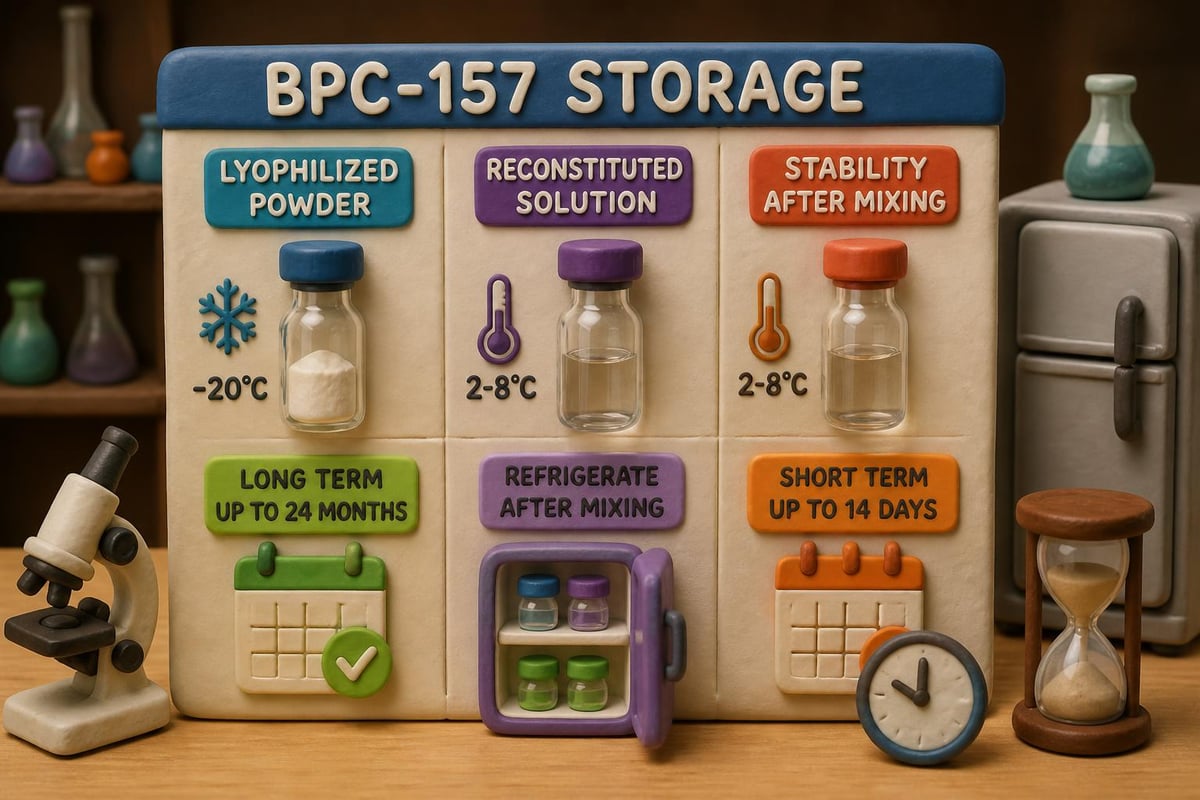
Proper storage practices preserve BPC-157's structural integrity and research efficacy throughout the study period. Both lyophilized powder and reconstituted solution require specific temperature conditions.
Pre-Reconstitution Storage
Lyophilized BPC-157 powder demonstrates excellent stability when stored correctly:
- Short-term storage: Room temperature (up to 3 months)
- Long-term storage: Refrigerator at 2-8°C (up to 2 years)
- Extended preservation: Freezer at -20°C (up to 3+ years)
Keep vials in their original packaging away from direct light and moisture. Exposure to humidity can compromise the lyophilized powder even before reconstitution.
Post-Reconstitution Storage
Once mixed with bacteriostatic water, BPC-157 requires refrigeration to maintain stability:
| Storage Method | Temperature | Maximum Duration |
|---|---|---|
| Refrigerator | 2-8°C | 30-60 days |
| Freezer | -20°C | 90-180 days |
| Room temp | 20-25°C | 24-48 hours max |
Always return the vial to refrigeration immediately after drawing each dose. Minimize temperature fluctuations by keeping the peptide in the main refrigerator compartment rather than the door, where temperature varies with opening and closing.
Handling Best Practices
Maintaining sterility prevents contamination and extends usable life:
- Clean vial stoppers with alcohol swabs before each use
- Use new, sterile syringes for every dose drawn
- Never touch needle tips or allow contact with non-sterile surfaces
- Dispose of used syringes properly according to research facility protocols
- Inspect solution before each use for clarity and consistency
Safety Considerations and Research Standards
Understanding bpc 157 how to take includes recognition of safety protocols and research-appropriate usage. Current research literature emphasizes proper handling procedures and documentation standards for laboratory investigations.
Research-Grade Quality Standards
Laboratory-grade BPC-157 should meet specific purity and testing requirements:
- Minimum purity: 98% or higher via HPLC analysis
- Third-party testing: Independent batch verification
- Certificate of analysis: Documentation of purity, composition, and testing methods
- Manufacturing standards: GMP-compliant facilities with quality controls
Researchers should verify product quality through certificate of analysis documentation before initiating protocols. Data Peptides provides comprehensive third-party testing results for all research peptides, ensuring consistency across laboratory studies.
Documentation and Protocol Management
Maintaining detailed records supports reproducible research and accurate data interpretation:
- Reconstitution logs: Date, time, volumes used, resulting concentration
- Administration records: Dose amounts, injection sites, timing
- Storage conditions: Temperature readings, handling notes
- Observations: Any visual changes, adverse reactions in models
- Batch tracking: Vial identification numbers, expiration dates
Standardized documentation enables comparison across study phases and facilitates peer review of research methodologies.
Common Errors to Avoid
Several technical mistakes can compromise research validity:
- Incorrect calculations: Always verify dose math before administration
- Contamination: Maintain strict sterile technique throughout handling
- Improper storage: Never leave reconstituted peptide at room temperature
- Inconsistent timing: Maintain regular administration schedules within studies
- Expired product: Check dates before use and discard outdated vials
Detailed administration guides provide troubleshooting resources for common protocol challenges encountered in research settings.
Advanced Protocol Considerations
Experienced researchers often refine their BPC-157 protocols based on specific study requirements and emerging research findings. These advanced considerations optimize experimental design for targeted research objectives.
Site-Specific Administration Strategies
While systemic administration provides general tissue support, some research protocols employ targeted injection approaches:
Tendon and Ligament Research:
- Direct peri-tendinous injection near affected structure
- Dosage: 200mcg to 500mcg at injury site
- Frequency: Once daily for acute studies
- Duration: 4 to 8 weeks typical observation period
Gastrointestinal Studies:
- Subcutaneous abdominal administration
- Dosage: 400mcg to 800mcg daily
- Rationale: Systemic circulation reaches GI tissue effectively
- Timing: Consistent daily schedule regardless of feeding
Neurological Research:
- Various administration routes under investigation
- Often combined with other neuroprotective compounds
- Requires specialized protocol design for CNS penetration studies
Combination Protocols
BPC-157 frequently appears in multi-peptide research protocols investigating synergistic effects:
BPC-157 + TB-500 combinations:
- Enhanced tissue repair mechanisms
- Complementary inflammation modulation pathways
- Typical ratio: Equal doses or 1:2 BPC-157 to TB-500
- Combined formulations simplify administration in research settings
Timing strategies for combinations:
- Simultaneous injection: Mixed in same syringe or separate immediate injections
- Staggered approach: Different times of day for each compound
- Cycling protocols: Alternating compounds in sequential study phases
Oral and Alternative Routes
While injection represents the primary administration method in research, alternative routes continue under investigation:
- Oral administration: Requires significantly higher doses due to digestive breakdown
- Typical oral dosing: 500mcg to 1,000mcg or higher
- Sublingual approaches: Under investigation for improved bioavailability
- Topical applications: Limited research on transdermal delivery
Current evidence suggests injectable routes provide more consistent bioavailability and predictable dosing compared to oral alternatives, making them preferred for controlled research protocols.
Monitoring and Adjusting Research Protocols
Effective research methodology includes systematic observation and protocol refinement based on emerging data. Establishing clear measurement criteria enables objective assessment of BPC-157's effects in laboratory models.
Establishing Baseline Measurements
Before initiating BPC-157 administration, researchers should document comprehensive baseline data:
- Tissue condition assessments: Visual inspection, imaging, functional testing
- Inflammatory markers: Relevant biomarkers for study focus
- Performance metrics: Range of motion, strength measurements, activity levels
- Control comparisons: Parallel groups without peptide administration
Standardized measurement intervals (weekly, bi-weekly) throughout the study period track progression and identify optimal dosing strategies for specific research applications.
Dose Optimization Strategies
Individual study models may respond differently to various BPC-157 doses. Systematic titration approaches identify effective ranges:
Conservative escalation:
- Start at 200mcg daily for first week
- Increase to 350mcg daily if no adverse observations
- Advance to 500mcg daily for standard protocol
- Further increases only if research objectives require
Response-based adjustments:
- Monitor target tissue parameters at regular intervals
- Increase dose if insufficient response after 2-3 weeks
- Decrease if unexpected observations occur
- Maintain successful dose through remainder of cycle
Long-Term Research Considerations
Extended research protocols spanning multiple months require additional planning:
- Periodic blood work: Comprehensive panels at cycle milestones
- Tissue imaging: Regular assessment of structural changes
- Tolerance monitoring: Track any adaptation or diminished response
- Supply management: Ensure consistent batch availability throughout study
Researchers should source all peptides from consistent suppliers to minimize variability across study phases. Expert analysis and protocol reviews provide additional insights for designing robust long-term research studies.
Mastering bpc 157 how to take involves understanding reconstitution techniques, accurate dose calculations, proper injection methods, and appropriate storage protocols for laboratory research applications. These fundamental skills ensure consistent, reliable research outcomes while maintaining peptide stability and study integrity. When you're ready to source laboratory-grade BPC-157 for your research, Data Peptides provides US-manufactured, third-party tested peptides with full documentation, ensuring your studies begin with the highest quality compounds available for scientific investigation.