

Snake venom has fascinated scientists for centuries, transforming from a feared toxin into a treasure trove of bioactive compounds with profound research potential. At the heart of this transformation lies the snake venom peptide, a diverse class of molecules that exhibit remarkable specificity and potency in biological systems. These peptides represent some of nature's most refined chemical tools, evolved over millions of years to interact with precise molecular targets in prey species. Today, researchers across pharmacology, biochemistry, and drug discovery laboratories investigate these compounds to unlock new therapeutic strategies and deepen our understanding of cellular mechanisms. As the field advances, the study of venom-derived peptides continues to reveal insights that bridge toxicology, molecular biology, and translational medicine.
Understanding Snake Venom Peptide Structure and Classification
Snake venom peptides comprise a heterogeneous group of molecules, typically ranging from 5 to 100 amino acids in length. These bioactive compounds are characterized by their compact structures, often stabilized by multiple disulfide bonds that confer exceptional resistance to proteolytic degradation and thermal denaturation.
The structural diversity of these peptides directly correlates with their functional variety. Research into the chemical composition of snake venom has revealed distinct peptide families, each with unique three-dimensional configurations and pharmacological properties. Understanding these structural features is essential for researchers who utilize snake venom peptide compounds in laboratory settings.
Major Peptide Families in Venom
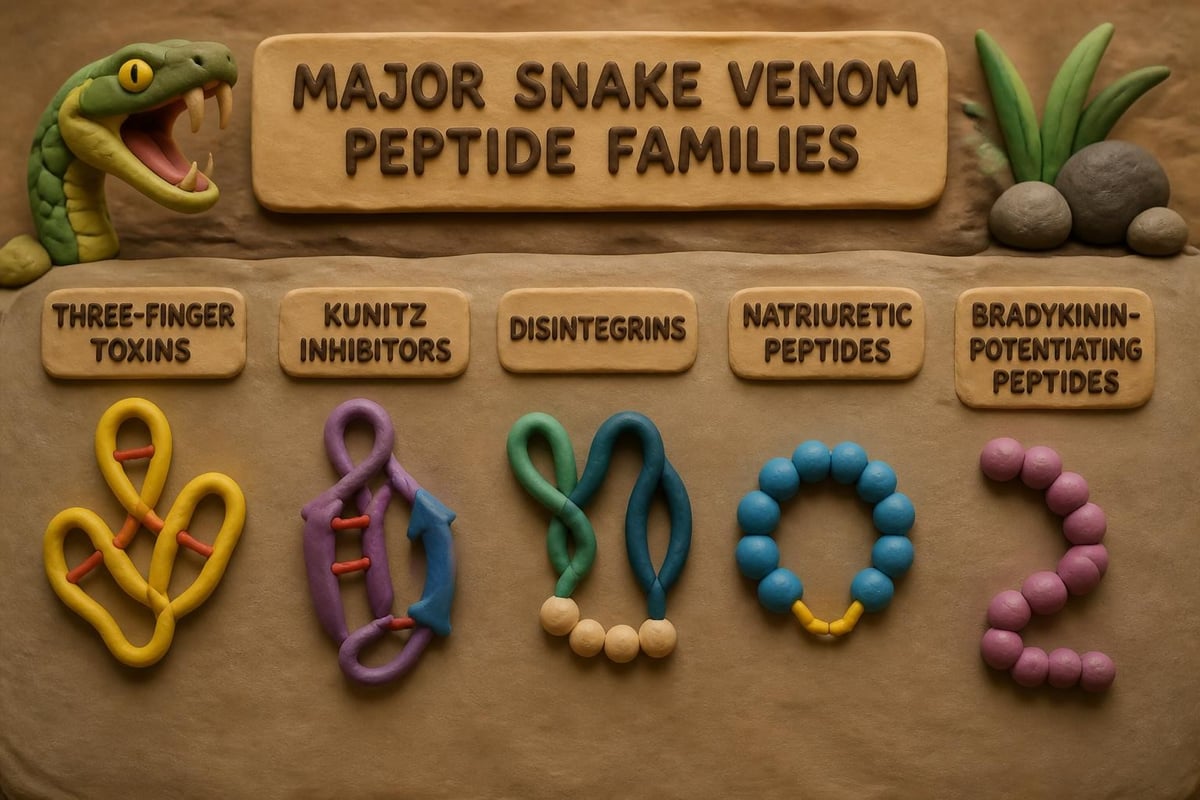
Several well-characterized families dominate the snake venom peptide landscape:
- Three-finger toxins (3FTx): Non-enzymatic peptides with 60-74 amino acids, featuring three β-stranded loops extending from a central core
- Kunitz-type inhibitors: Serine protease inhibitors containing approximately 60 amino acids with conserved disulfide patterns
- Disintegrins: RGD-containing peptides that interfere with integrin-mediated cell adhesion
- Natriuretic peptides: Compounds that influence cardiovascular and renal function through specific receptor interactions
- Bradykinin-potentiating peptides (BPPs): Short sequences that modulate the kallikrein-kinin system
Each family exhibits distinct structural motifs that determine target specificity and biological activity. The compact, constrained architecture of these molecules makes them particularly valuable for researchers studying protein-protein interactions and receptor pharmacology.
Disulfide Bond Patterns and Stability
The hallmark of most snake venom peptides is their intricate disulfide connectivity. These covalent bonds between cysteine residues create molecular scaffolds that resist enzymatic breakdown and maintain structural integrity across diverse pH and temperature conditions.
| Peptide Family | Number of Cysteines | Typical Disulfide Bonds | Structural Stability |
|---|---|---|---|
| Three-finger toxins | 8-10 | 4-5 bonds | High thermal resistance |
| Kunitz inhibitors | 6 | 3 bonds | Protease resistant |
| Disintegrins | 8-14 | 4-7 bonds | Exceptionally stable |
| Natriuretic peptides | 2 | 1 bond | Moderate stability |
This structural robustness makes snake venom peptide molecules particularly suitable for laboratory applications where compound stability is paramount. Researchers working with these peptides benefit from their resistance to degradation during storage, handling, and experimental procedures.
Mechanisms of Action in Biological Systems
The pharmacological activity of snake venom peptides stems from their ability to interact with high specificity and affinity with cellular targets. These interactions have been refined through evolutionary pressures, resulting in molecules that function as nature's precision instruments for modulating physiological processes.
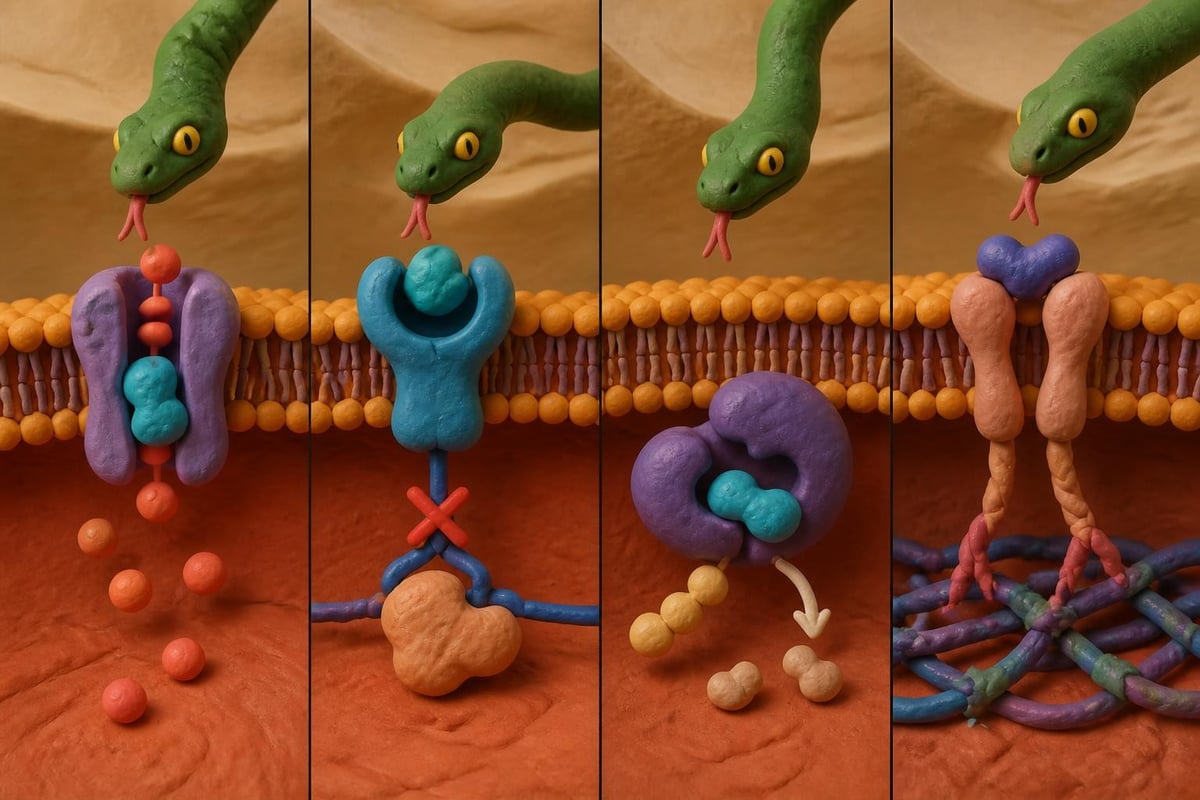
Snake venom peptide compounds typically exert their effects through several distinct mechanisms. Receptor antagonism represents one major mode of action, where peptides block ion channels or cell-surface receptors. Others function as enzyme inhibitors, preventing proteolytic or coagulation cascades from proceeding normally.
Ion Channel Modulation
Many venom peptides demonstrate remarkable selectivity for specific ion channel subtypes. These molecules can distinguish between closely related channel variants, making them invaluable tools for electrophysiology research.
Voltage-gated sodium channels, potassium channels, and calcium channels all serve as targets for different peptide classes. The snake venom peptide that targets a specific channel subtype provides researchers with molecular probes to dissect channel function, localization, and pathophysiological roles.
Receptor-Ligand Interactions
Beyond ion channels, numerous peptides interact with G-protein coupled receptors, enzyme-linked receptors, and other membrane-bound proteins. Studies on snake venom peptides as molecular tools have demonstrated their utility in mapping receptor pharmacology and validating therapeutic targets.
The binding kinetics of these interactions often reveal slow dissociation rates, creating prolonged biological effects. This characteristic distinguishes venom-derived compounds from many synthetic ligands and contributes to their research value.
Research Applications Across Scientific Disciplines
The unique properties of snake venom peptides have established them as essential reagents across multiple research domains. Their specificity, potency, and stability make them particularly valuable in laboratories focused on neuroscience, cardiovascular biology, and drug discovery.
Neuropharmacology and Ion Channel Research
Neuroscience laboratories extensively employ venom peptides to characterize neuronal excitability and synaptic transmission. These compounds serve as selective blockers that help researchers isolate individual channel contributions to complex electrical signals.
For example, specific peptides allow differentiation between sodium channel isoforms Nav1.1 through Nav1.9, each with distinct tissue distributions and functional roles. This level of discrimination proves impossible with most synthetic channel blockers.
- Voltage-clamp experiments use peptide toxins to subtract specific current components
- Behavioral studies employ peptides to validate channel involvement in pain, seizures, or motor control
- Patch-clamp recordings leverage peptide selectivity to identify channel subtypes in native tissues
The precision offered by these natural compounds has accelerated understanding of channelopathies and neurological disorders.
Cardiovascular and Hemostasis Studies
Snake venom peptides that affect blood pressure, coagulation, and platelet function provide critical tools for cardiovascular research. Bradykinin-potentiating peptides isolated from venom have contributed significantly to hypertension research and antihypertensive drug development.
Disintegrins that block platelet aggregation help researchers understand thrombosis mechanisms and test antiplatelet strategies. These peptides offer advantages over conventional anticoagulants due to their targeted mechanisms and reversible effects.
Drug Discovery and Pharmacological Validation
Pharmaceutical research teams utilize snake venom peptide libraries to identify novel therapeutic leads. The evolutionary optimization of these molecules provides starting points for rational drug design that might take years to discover through conventional screening.
| Research Application | Peptide Type Used | Key Advantage |
|---|---|---|
| Pain pathway mapping | Nav channel blockers | Subtype selectivity |
| Anticoagulant development | Factor inhibitors | Specific cascade targeting |
| Cancer cell migration | Disintegrins | Integrin specificity |
| Hypertension models | ACE modulators | Physiological relevance |
The structural templates provided by venom peptides inspire peptidomimetic compounds and small molecule drugs that retain target specificity while improving pharmaceutical properties like bioavailability and half-life.
Isolation, Purification, and Analytical Characterization
Working with snake venom peptides requires sophisticated biochemical techniques to ensure purity, identity, and activity. Modern laboratories employ multi-stage purification protocols combined with advanced analytical methods to characterize these complex molecules.
Extraction and Initial Fractionation
The process begins with crude venom collection, followed by size-exclusion chromatography or ion-exchange separation to fractionate the complex mixture. This initial step separates peptides from larger proteins and enzymatic components.
Reversed-phase high-performance liquid chromatography (RP-HPLC) then provides higher resolution separation. The hydrophobic nature of many venom peptides, conferred by their disulfide-rich structures, makes them amenable to C18 column separation with acetonitrile gradients.
Advanced Analytical Techniques
Contemporary venom peptide research relies heavily on mass spectrometry for both identification and quality control. Novel analytical methods using capillary electrophoresis-mass spectrometry have enhanced the ability to profile complex venom compositions and verify peptide identity.
Sequencing traditionally employed Edman degradation, but modern approaches utilize tandem mass spectrometry (MS/MS) for rapid amino acid sequence determination. This technique fragments peptides in a controlled manner, generating sequence tags that can be matched against databases or used for de novo sequencing.
- Extract crude venom and perform buffer exchange to remove salts
- Fractionate by size using gel filtration chromatography
- Separate by charge with ion-exchange columns if needed
- Purify individual peptides via RP-HPLC with optimized gradients
- Confirm identity using MALDI-TOF or ESI mass spectrometry
- Validate sequence through MS/MS fragmentation analysis
- Assess purity with analytical HPLC and multiple detection wavelengths
These multi-step protocols ensure that researchers obtain well-characterized snake venom peptide samples suitable for rigorous experimental work.
Structural Analysis and Three-Dimensional Modeling
Understanding the precise three-dimensional structure of venom peptides is crucial for mechanistic studies and rational modification. The fascinating world of venom peptide structures encompasses diverse folds and binding interfaces that determine function.
Nuclear magnetic resonance (NMR) spectroscopy represents the gold standard for solution-structure determination of peptides in this size range. The technique provides atomic-resolution information about disulfide connectivity, secondary structure elements, and molecular dynamics.
Disulfide Bond Assignment
Determining the correct disulfide pairing is essential because different connectivities can produce entirely different folds from the same amino acid sequence. Partial reduction followed by alkylation and mass spectrometry helps identify which cysteines form pairs.
Enzymatic digestion combined with MS/MS analysis of disulfide-linked peptide fragments provides definitive connectivity assignments. These experiments often reveal non-sequential pairing patterns that create unique structural frameworks.
Functional Epitope Mapping
Once the structure is known, researchers can identify the functional surfaces responsible for target binding. Alanine-scanning mutagenesis systematically replaces each residue to assess its contribution to activity.
This approach has revealed that snake venom peptide binding sites often comprise discontinuous residues brought together by the disulfide framework. Understanding these structure-activity relationships enables rational design of analogs with enhanced properties.
Comparative Venomics and Peptide Diversity
The composition of venom varies dramatically across snake species, even among closely related taxa. Quantitative profiling of venom transcriptomes and proteomes has revealed that diet, habitat, and evolutionary history all influence peptide expression patterns.
Elapid venoms tend to be dominated by neurotoxic peptides, particularly three-finger toxins that target nicotinic acetylcholine receptors and voltage-gated ion channels. Viper venoms contain more diverse peptide profiles, including disintegrins, C-type lectin-like proteins, and bradykinin-potentiating peptides.
Geographic and Ontogenetic Variation
Venom composition can shift within a single species based on geographic location, a phenomenon attributed to local adaptation to different prey species. Additionally, juvenile snakes often produce venom with different peptide ratios compared to adults.
This variation presents both challenges and opportunities for researchers. While it complicates standardization, it also provides natural peptide libraries with subtle structural differences that can inform structure-activity studies.
Evolutionary Optimization
The diversity of snake venom peptides reflects millions of years of molecular evolution under strong selective pressure. Peptides that more effectively immobilize prey or deter predators provide fitness advantages, leading to sequence refinement and functional specialization.
Understanding this evolutionary context helps researchers appreciate why these molecules exhibit such remarkable target selectivity and potency. The natural optimization process has solved molecular recognition problems that synthetic chemistry continues to grapple with.
Quality Control and Batch Testing Considerations
For laboratories conducting reproducible research with snake venom peptides, quality control represents a critical concern. Peptide purity, correct folding, and biological activity must be verified to ensure experimental validity.
Third-party batch testing provides independent verification of peptide specifications. Mass spectrometry confirms molecular weight and sequence identity, while analytical HPLC quantifies purity levels. For research-grade materials, purity exceeding 95% is typically required.
Stability and Storage Requirements
Proper storage conditions maintain peptide integrity over extended periods. Most snake venom peptides remain stable when lyophilized and stored at -20°C or below. The disulfide bonds that stabilize these molecules also protect them from degradation.
However, reconstituted peptides require more careful handling. Aqueous solutions should be prepared fresh when possible, or stored in small aliquots to avoid repeated freeze-thaw cycles. Buffered solutions at physiological pH often provide better stability than unbuffered water.
Activity Verification
Chemical purity does not guarantee biological activity. Misfolded peptides or incorrect disulfide connectivity can produce inactive material with the correct molecular weight. Functional assays specific to each peptide's mechanism verify that the compound retains its biological properties.
Researchers working with peptides like Melanotan-2, which activates melanocortin receptors, understand the importance of validated, properly folded peptides for consistent experimental outcomes. The same principles apply to venom-derived research peptides, where structural integrity determines function.
Therapeutic Development from Venom Templates
The journey from snake venom peptide to approved therapeutic agent demonstrates the translational potential of these natural compounds. Several medications in clinical use originated from venom components, validating the drug discovery approach.
Captopril, the first angiotensin-converting enzyme (ACE) inhibitor approved for hypertension treatment, was designed based on bradykinin-potentiating peptides from Bothrops jararaca venom. This landmark achievement established the paradigm for venom-based drug development.
Peptide Drug Optimization
Native venom peptides rarely possess ideal pharmaceutical properties. Their peptidic nature makes them susceptible to digestive proteases when administered orally, and their size can limit tissue penetration. Medicinal chemistry addresses these limitations through strategic modifications.
- N-terminal or C-terminal modifications to resist exopeptidase degradation
- Incorporation of non-natural amino acids to enhance metabolic stability
- Cyclization strategies to reduce conformational flexibility and improve potency
- PEGylation or lipidation to extend plasma half-life
- Retro-inverso sequences to maintain binding while improving protease resistance
These approaches transform venom peptide templates into viable drug candidates while preserving the key structural features responsible for target selectivity.
Current Clinical Pipeline
Multiple venom-derived peptide therapeutics are currently in various stages of clinical development. Agents targeting pain pathways, cardiovascular disorders, and cancer represent active research areas where snake venom peptide structures provide starting points.
Ziconotide, derived from cone snail venom rather than snake venom, demonstrates the broader applicability of venom peptide drug development strategies. Its successful development for intractable pain has encouraged pharmaceutical investment in similar natural product-inspired approaches.
Synthetic Production and Recombinant Expression
Modern snake venom peptide research rarely depends on venom extraction for compound supply. Chemical synthesis and recombinant expression provide scalable, reproducible sources of research materials.
Solid-Phase Peptide Synthesis
For peptides under approximately 50 amino acids, solid-phase peptide synthesis (SPPS) offers an efficient production route. This automated process sequentially couples protected amino acids to a growing chain anchored to a resin support.
The challenge with venom peptides lies in achieving correct disulfide bond formation. Multiple cysteine residues can form numerous isomers, only one of which represents the bioactive conformation. Directed disulfide formation using orthogonal protecting groups helps control this process.
Recombinant Expression Systems
Longer peptides or those required in large quantities may be produced through recombinant DNA technology. Expression in bacterial, yeast, or mammalian systems can yield properly folded peptides, though optimization is often required.
Fusion protein strategies improve expression and facilitate purification. The snake venom peptide sequence is fused to a solubility-enhancing partner protein, then cleaved post-purification to release the native peptide. This approach has successfully produced challenging venom peptides at research scale.
Safety Considerations in Laboratory Settings
Working with bioactive snake venom peptides requires appropriate safety protocols. While these compounds are intended solely for laboratory research and not for human or animal consumption, their potent biological activities demand respect and careful handling.
Institutional biosafety committees typically classify venom peptides based on their mechanisms and potency. Peptides affecting cardiovascular function, neurotransmission, or coagulation receive particular scrutiny. Appropriate containment measures, personal protective equipment, and emergency response plans should be established before beginning experiments.
Handling Protocols
Standard laboratory practices for working with biologically active peptides include:
- Conduct all manipulations in designated areas with restricted access
- Wear appropriate PPE including gloves and eye protection
- Use engineering controls such as chemical fume hoods when weighing powders
- Clearly label all containers with compound identity and hazard information
- Implement spill response procedures specific to the peptide being used
- Maintain detailed records of peptide usage, storage, and disposal
- Ensure personnel are trained on the specific hazards of each compound
These precautions protect laboratory personnel while maintaining research integrity. Even peptides with relatively low acute toxicity deserve careful handling due to their designed bioactivity.
Emerging Technologies in Venom Peptide Research
The field continues to evolve with new technologies that enhance our ability to discover, characterize, and apply snake venom peptides. High-throughput venomics combines transcriptomics, proteomics, and mass spectrometry to comprehensively profile venom composition.
CRISPR-based genome editing now allows researchers to modify venom gland cell lines, potentially enabling production of specific peptides without maintaining live snakes. This biotechnological approach could democratize access to rare venom components.
Computational Approaches
Machine learning algorithms now predict peptide structures and activities from sequence data alone. These tools accelerate the identification of promising research candidates within large venom databases. Computational analysis of cysteine-rich venom peptides has revealed structure-function principles applicable across diverse peptide families.
Molecular dynamics simulations provide insights into peptide-target interactions at atomic resolution. These computational experiments complement structural biology data and guide rational peptide engineering efforts.
Microfluidic Screening Platforms
Miniaturized assay systems enable high-throughput screening of venom peptide libraries against panels of targets. These platforms consume minimal peptide quantities while generating rich pharmacological data.
Integration with automated synthesis platforms creates discovery pipelines where peptides are designed computationally, synthesized, and screened without human intervention. This industrialization of venom peptide research accelerates the path from sequence to function.
Integration with Modern Peptide Research
Snake venom peptides represent just one category within the broader peptide research landscape. Research-grade peptide suppliers provide diverse compound libraries that enable investigations spanning metabolism, cellular signaling, and tissue repair.
The methodologies developed for venom peptide characterization-from analytical chemistry to structure-activity analysis-apply across peptide research disciplines. Researchers studying synthetic peptides benefit from the rigorous validation standards established in venomics.
Cross-pollination between venom research and other peptide domains continues to generate insights. Stability-enhancing modifications identified in therapeutic venom peptide development inform the design of metabolic and signaling peptides. Conversely, delivery systems developed for synthetic peptides enable new applications of venom-derived compounds.
Snake venom peptides represent a convergence of evolutionary refinement and modern research technology, offering unparalleled tools for investigating biological mechanisms and developing therapeutic strategies. Their structural diversity, target specificity, and robust stability make them invaluable assets across neuroscience, cardiovascular research, and drug discovery laboratories. For researchers seeking to explore these remarkable compounds or other laboratory-grade peptide products, Data Peptides provides US-manufactured, third-party tested research peptides designed exclusively for scientific investigation, ensuring the quality and purity necessary for reproducible experimental outcomes.