

FGL peptide represents a synthetic derivative designed to mimic specific functional domains of the neural cell adhesion molecule (NCAM). This biomimetic approach has positioned FGL peptide as a valuable research tool for studying neuroplasticity, synaptic function, and cellular signaling mechanisms. Researchers investigating neuroprotection, cognitive enhancement, and cellular communication pathways have increasingly turned to this compound to explore its interactions with NCAM receptors and downstream effects on neuronal health. As the peptide research field expands, understanding the structural characteristics and biological implications of FGL peptide becomes essential for laboratories conducting neuroscience studies.
Understanding FGL Peptide Structure and Function
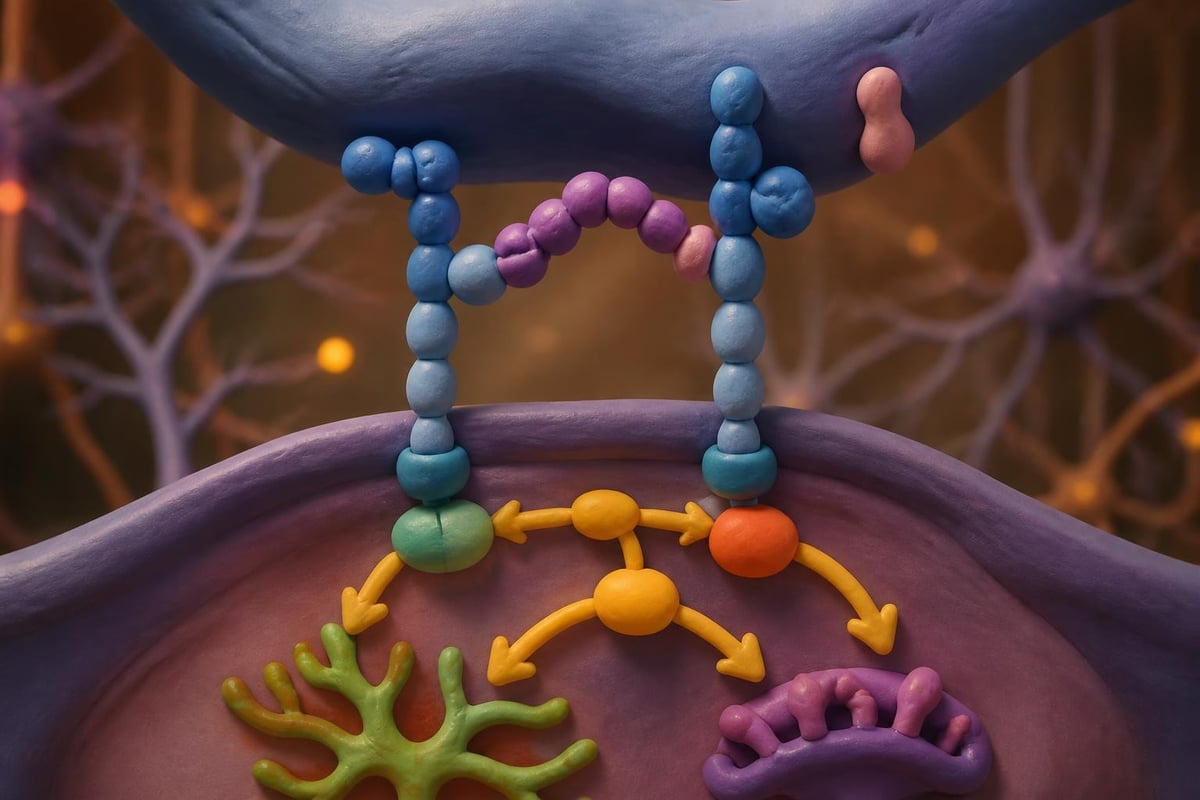
The designation "FGL" refers to the peptide's mimicry of the fibroblast growth factor receptor-like domain found within NCAM. This neural cell adhesion molecule plays critical roles in cellular recognition, migration, and synaptic plasticity throughout the nervous system. By replicating specific amino acid sequences from NCAM, FGL peptide can interact with receptors in ways that influence cellular behavior without requiring the full protein structure.
Molecular Characteristics
FGL peptide consists of a carefully designed amino acid sequence that targets the second fibronectin type III module of NCAM. This strategic design allows the peptide to bind to NCAM receptors and initiate signaling cascades similar to those triggered by natural NCAM interactions. The compact structure offers several advantages for research applications:
- Enhanced stability compared to full-length proteins
- Improved bioavailability in experimental models
- Precise targeting of specific NCAM-mediated pathways
- Reduced complexity in mechanistic studies
The peptide's ability to cross biological barriers makes it particularly valuable for neurological research where access to neural tissue presents significant challenges. Research has demonstrated that FGL peptide can engage NCAM receptors and stimulate intracellular signaling pathways involved in neurite outgrowth, synaptic function, and cellular survival mechanisms.
Receptor Binding and Signal Transduction
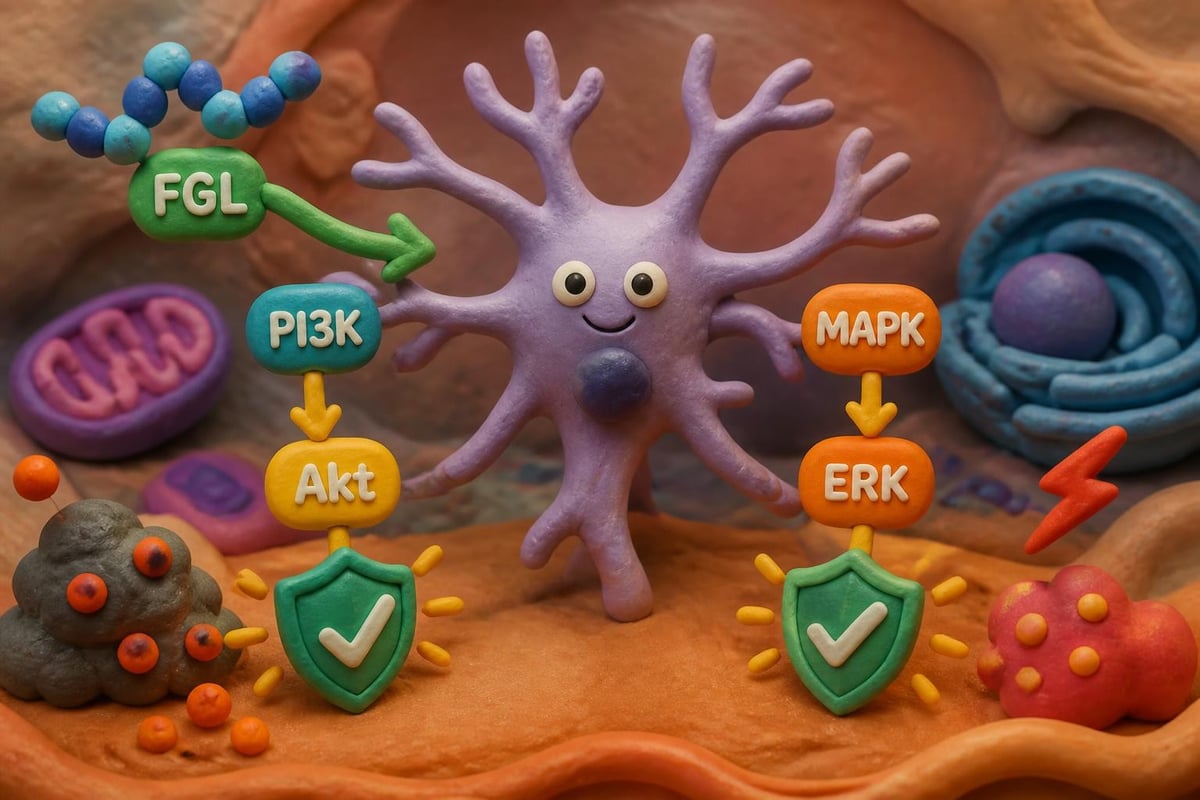
When FGL peptide binds to NCAM receptors, it initiates a series of molecular events that influence cellular behavior. According to research from the Peptide Association, the primary mechanism involves activation of the fibroblast growth factor receptor (FGFR), which then triggers downstream signaling through pathways including PI3K/Akt and MAPK/ERK. These pathways regulate critical processes such as cell survival, differentiation, and synaptic plasticity.
The specificity of FGL peptide for NCAM-mediated pathways distinguishes it from other neuropeptides. While many compounds broadly affect neuronal function, FGL peptide targets a defined molecular mechanism, allowing researchers to isolate and study particular aspects of neural cell adhesion and communication.
Research Applications in Neuroscience
FGL peptide has emerged as a valuable tool across multiple neuroscience research domains. Its ability to modulate NCAM signaling provides investigators with opportunities to examine neuroplasticity, cognitive function, and neuroprotective mechanisms in controlled laboratory settings.
Neuroplasticity and Synaptic Function
One primary research focus involves FGL peptide's effects on neuroplasticity, the brain's capacity to reorganize neural connections in response to experience or injury. Studies utilizing this peptide have explored how NCAM-mediated signaling contributes to:
- Synaptic strengthening through enhanced long-term potentiation mechanisms
- Neurite outgrowth supporting neural network development and repair
- Dendritic spine formation influencing synaptic density and connectivity
- Receptor trafficking affecting neurotransmitter signaling efficiency
Research protocols examining learning and memory consolidation frequently incorporate FGL peptide to determine whether NCAM pathway activation influences cognitive task performance. These investigations have yielded insights into the molecular underpinnings of memory formation and the potential role of cell adhesion molecules in information processing.
Cognitive Function Research
Laboratories studying cognitive processes have utilized FGL peptide to investigate the relationship between NCAM signaling and various aspects of mental function. The Clinical Peptide Organization documents research examining spatial memory, pattern recognition, and executive function in experimental models exposed to FGL peptide under controlled conditions.
| Research Domain | Proposed Mechanism | Experimental Focus |
|---|---|---|
| Memory Consolidation | Enhanced synaptic plasticity | Long-term potentiation studies |
| Spatial Learning | Hippocampal NCAM activation | Navigation task performance |
| Attention Processes | Prefrontal cortex signaling | Attentional set-shifting paradigms |
| Pattern Recognition | Cortical network reorganization | Discrimination learning protocols |
The peptide's targeted action on NCAM pathways enables researchers to separate adhesion molecule effects from other neurochemical influences, providing clearer mechanistic insights than broader interventions might allow.
Neuroprotective Research Considerations
Beyond plasticity and cognition, FGL peptide has attracted attention for its potential neuroprotective properties. Research exploring cellular stress responses, oxidative damage, and neuronal survival has incorporated this peptide to understand how NCAM signaling might influence cell fate under adverse conditions.
Cellular Stress and Survival Pathways
When neural cells encounter stressors such as oxidative damage, excitotoxicity, or metabolic disruption, survival pathways determine whether cells recover or undergo programmed death. FGL peptide research has examined whether NCAM activation through this synthetic derivative can shift the balance toward cellular survival through several mechanisms:
- Activation of anti-apoptotic signaling cascades
- Enhancement of mitochondrial function and energy metabolism
- Reduction of oxidative stress markers in challenged cells
- Modulation of inflammatory signaling pathways
Studies documented by Peptadex indicate that FGL peptide may influence these protective mechanisms through its effects on downstream signaling molecules including Akt and ERK, both of which play roles in cell survival decisions.
Experimental Models of Neural Injury
Research protocols examining neural injury often incorporate FGL peptide to determine whether NCAM pathway activation can mitigate damage or support recovery processes. These investigations typically utilize in vitro models of cellular stress or tissue culture systems that simulate injury conditions.
The peptide's relatively small size and stability make it suitable for various experimental designs, from cellular assays to more complex tissue preparations. Researchers can precisely control dosing, timing, and environmental factors to isolate FGL peptide's effects from confounding variables.
Laboratory Research Protocols and Considerations
Conducting research with FGL peptide requires careful attention to experimental design, handling procedures, and analytical methods. Laboratories must establish protocols that ensure reproducibility while accounting for the peptide's biochemical properties and storage requirements.
Dosing and Administration Strategies
Research utilizing FGL peptide employs various dosing strategies depending on the experimental model and research questions. The Peptutor Network notes that dosing considerations include molecular concentration, timing of administration relative to experimental interventions, and route of delivery in tissue culture or other experimental systems.
Key dosing variables researchers typically consider:
- Peptide concentration ranges based on receptor binding affinities
- Duration of exposure needed to activate target pathways
- Frequency of administration in longitudinal studies
- Solvent systems for optimal peptide stability and bioavailability
Standardized protocols help ensure that results can be compared across studies and laboratories. Researchers often conduct preliminary dose-response experiments to identify optimal concentrations for their specific experimental conditions before proceeding with full investigations.
Analytical Methods and Outcome Measures
Evaluating FGL peptide effects requires appropriate analytical techniques matched to research objectives. Common approaches include:
| Analytical Method | Application | Information Provided |
|---|---|---|
| Western Blotting | Signaling pathway activation | Phosphorylation status of key proteins |
| Immunofluorescence | Cellular localization | Receptor distribution and activation |
| Electrophysiology | Synaptic function | Long-term potentiation and transmission |
| Behavioral Assays | Functional outcomes | Cognitive performance metrics |
| Cell Viability Assays | Neuroprotection | Survival rates under stress conditions |
Selecting appropriate outcome measures ensures that experimental designs can detect meaningful changes in the biological processes under investigation. Multi-method approaches often provide the most comprehensive understanding of FGL peptide's effects across molecular, cellular, and functional levels.
Quality Considerations for Research Applications
The validity of research findings depends critically on peptide quality and purity. Investigators must source research materials from suppliers who provide comprehensive quality documentation and maintain manufacturing standards appropriate for scientific investigation.
Purity and Authentication Requirements
Laboratory-grade peptides require rigorous quality control to ensure experimental reliability. Third-party batch testing provides independent verification of peptide identity, purity, and composition. Researchers should examine certificates of analysis that document:
- Mass spectrometry confirmation of molecular weight and structure
- High-performance liquid chromatography (HPLC) analysis showing purity percentages
- Amino acid analysis verifying sequence composition
- Endotoxin testing ensuring absence of bacterial contaminants
These quality measures protect research integrity by minimizing variability introduced by impure or degraded peptide samples. Laboratories conducting studies for publication or grant-funded projects particularly benefit from documented quality assurance that can be referenced in materials and methods sections.
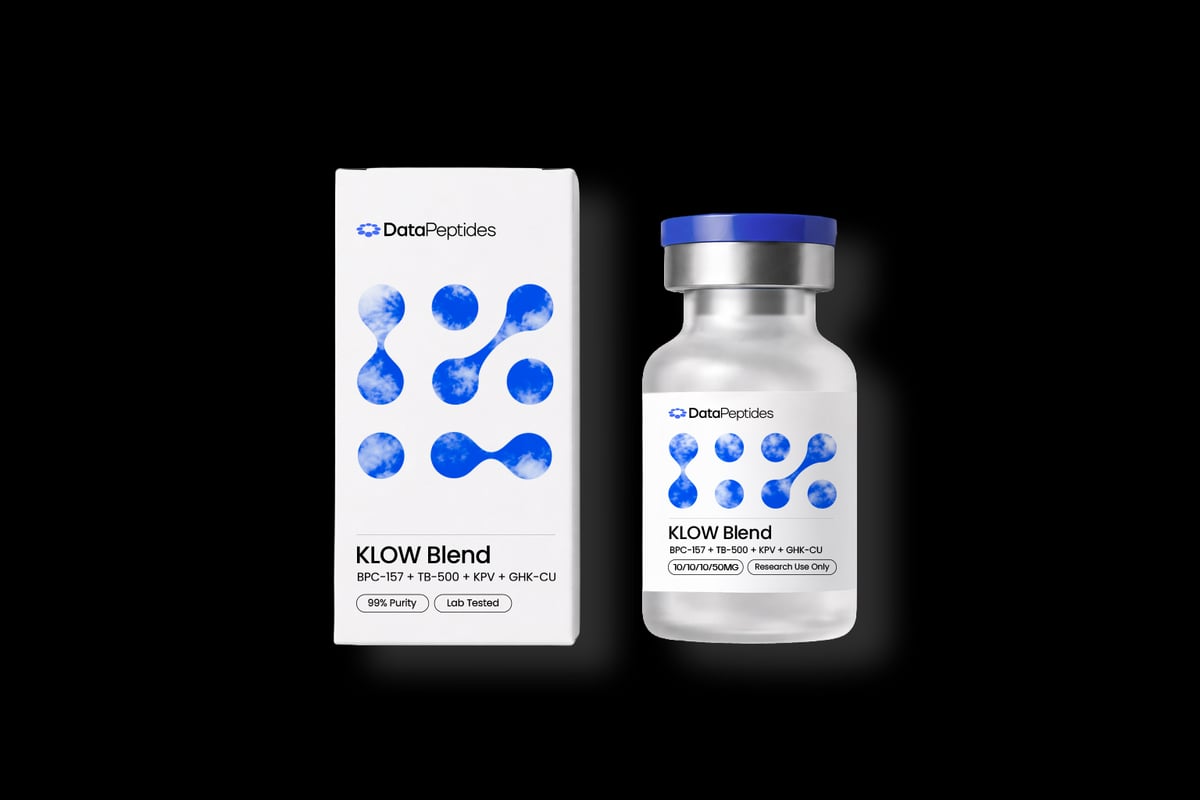
For researchers seeking complementary peptides that support tissue repair and regeneration research, compounds like the KLOW Blend offer combinations designed to promote healing through multiple mechanisms, including inflammation modulation and collagen synthesis. Such formulations demonstrate how peptide research has expanded to include synergistic combinations targeting complex biological processes.

Storage and Handling Protocols
Proper storage maintains peptide stability and ensures consistent experimental results across research timelines. FGL peptide, like other synthetic peptides, requires specific environmental conditions to preserve structural integrity:
- Temperature control with storage at appropriate ranges to prevent degradation
- Reconstitution procedures using suitable solvents and sterile techniques
- Aliquoting strategies to minimize freeze-thaw cycles that compromise stability
- Light protection when photosensitivity could affect peptide structure
- Documentation systems tracking lot numbers, reconstitution dates, and usage
Laboratories benefit from developing standard operating procedures that all personnel follow consistently. This standardization reduces variability and improves reproducibility across experiments and research teams.
Emerging Research Directions
Current FGL peptide research continues to expand into new domains as investigators discover additional applications for NCAM pathway modulation. Recent studies have explored intersections with other signaling systems, potential synergies with complementary compounds, and applications beyond traditional neuroscience contexts.
Cross-System Interactions
Understanding how NCAM signaling interfaces with other cellular communication networks represents an active research frontier. Investigators are examining whether FGL peptide effects interact with:
- Growth factor signaling cascades beyond FGFR
- Neurotransmitter receptor systems influencing synaptic transmission
- Immune signaling pathways relevant to neuroinflammation
- Metabolic regulation networks affecting cellular energy balance
These interdisciplinary investigations may reveal broader biological roles for NCAM-mediated processes and identify new research applications for FGL peptide as a tool for studying these interactions.
Combination Research Strategies
Some research protocols now incorporate FGL peptide alongside other research compounds to examine potential synergistic or antagonistic effects. These combination approaches can reveal whether NCAM pathway activation enhances, diminishes, or independently contributes to outcomes when other biological systems are simultaneously targeted.
Such studies require careful experimental design to distinguish individual compound effects from interaction effects. Factorial designs, dose-response matrices, and sequential administration protocols help researchers parse these complex relationships.
Technical Challenges and Methodological Refinements
Despite its utility, FGL peptide research faces several technical challenges that investigators continue to address through methodological innovations. Understanding these limitations helps researchers design more robust experiments and interpret findings appropriately.
Delivery and Bioavailability Considerations
Ensuring that FGL peptide reaches target tissues at effective concentrations presents ongoing challenges, particularly in complex experimental systems. Researchers have developed various strategies to enhance delivery:
- Carrier systems that protect peptides from degradation
- Modified peptide structures with enhanced stability
- Targeted delivery approaches concentrating peptides in specific tissue compartments
- Time-release formulations providing sustained exposure
Each approach involves tradeoffs between complexity, cost, and experimental control. Researchers must balance these factors against their specific research objectives and available resources.
Specificity and Off-Target Effects
While FGL peptide targets NCAM pathways with relative specificity, researchers must remain attentive to potential off-target interactions that could confound interpretation. Control conditions, receptor blocking experiments, and pathway-specific inhibitors help confirm that observed effects result from intended NCAM activation rather than unintended interactions.
Comprehensive experimental designs incorporating multiple control conditions strengthen conclusions about mechanism specificity and causal relationships between FGL peptide administration and measured outcomes.
Regulatory and Safety Considerations for Laboratory Use
Research institutions utilizing FGL peptide must adhere to appropriate safety protocols and regulatory frameworks governing laboratory research practices. These guidelines protect personnel, ensure ethical research conduct, and maintain compliance with institutional and governmental requirements.
Laboratory Safety Protocols
Standard laboratory safety practices apply to FGL peptide research, including:
- Personal protective equipment appropriate for peptide handling
- Proper disposal procedures for peptide-containing materials
- Documentation of material safety data and handling procedures
- Training requirements for personnel working with research peptides
- Spill response protocols and contamination control measures
Institutional review boards and safety committees often require documentation demonstrating that researchers understand proper handling procedures before approving projects involving research peptides.
Research Compliance Requirements
Peptides designated for laboratory research purposes require adherence to specific regulatory frameworks. Materials should clearly indicate their status as research-only compounds not intended for human or animal consumption. For those seeking additional information about compliance and product standards, resources like third-party testing documentation provide transparency regarding quality verification processes.
Researchers should familiarize themselves with institutional policies, funding agency requirements, and applicable regulations governing their specific research activities. Proper documentation and protocol adherence protect both research integrity and institutional standing.
Future Perspectives in FGL Peptide Research
The trajectory of FGL peptide research suggests continued expansion into new application areas as scientists deepen their understanding of NCAM biology and develop more sophisticated experimental tools. Emerging technologies in peptide design, delivery systems, and analytical methods will likely enable investigations previously constrained by technical limitations.
Advanced Analytical Approaches
Next-generation research techniques promise to reveal finer details of FGL peptide mechanisms and effects. Advanced imaging methods, single-cell analysis platforms, and high-throughput screening approaches allow researchers to examine peptide effects with unprecedented resolution and scale.
These technological advances may uncover subtle effects or rare cellular responses that conventional methods miss, potentially revealing new aspects of NCAM pathway function and regulation.
Translational Research Pathways
While FGL peptide remains a laboratory research tool, findings from basic science investigations may inform future translational efforts. Understanding the fundamental biology of NCAM signaling and its modulation through synthetic peptides could eventually contribute to therapeutic development targeting neurological conditions characterized by impaired neuroplasticity or excessive neuronal loss.
Bridging the gap between laboratory research and clinical application requires extensive additional investigation, but foundational research with compounds like FGL peptide establishes the scientific knowledge base that makes such translation possible.
FGL peptide continues to serve as a valuable tool for investigating NCAM-mediated signaling, neuroplasticity mechanisms, and neuroprotective pathways in laboratory settings. Its targeted action on specific molecular pathways enables precise mechanistic studies that advance our understanding of neural function and cellular communication. For researchers requiring laboratory-grade peptides backed by rigorous quality control, Data Peptides provides US-manufactured research compounds with third-party batch testing verification, supporting the highest standards of scientific investigation while maintaining strict adherence to research-only applications.