

Medical peptides represent a rapidly expanding frontier in biomedical research, offering scientists unprecedented opportunities to investigate cellular mechanisms, regenerative processes, and metabolic regulation. These short chains of amino acids, typically containing between 2 and 50 amino acid residues, serve as crucial signaling molecules within biological systems. As laboratory tools, medical peptides enable researchers to explore everything from tissue repair pathways to hormonal regulation, providing insights that may eventually translate into therapeutic applications. The precision with which these molecules interact with specific cellular receptors makes them invaluable for controlled experimental work.
Understanding Medical Peptides at the Molecular Level
Medical peptides function as biological messengers that communicate instructions between cells, tissues, and organ systems. Unlike proteins, which contain hundreds or thousands of amino acids, peptides are smaller and more targeted in their activity.
The structural simplicity of medical peptides belies their sophisticated mechanisms of action. Each peptide sequence determines its three-dimensional shape, which in turn dictates how it binds to specific receptors on cell surfaces. This lock-and-key interaction triggers cascading biochemical events inside cells, influencing gene expression, enzyme activity, and cellular behavior.
Synthetic vs. Natural Peptides in Research
Researchers work with both naturally occurring peptides and synthetic analogs designed to optimize specific properties:
- Naturally derived peptides maintain the exact sequences found in biological organisms
- Synthetic analogs feature modified amino acid sequences for enhanced stability or receptor selectivity
- Hybrid constructs combine natural sequences with chemical modifications to resist enzymatic degradation
- Cyclized peptides form ring structures that improve bioavailability and target binding
The development of computational frameworks for peptide design has accelerated the creation of novel sequences with predetermined characteristics. This computational approach allows researchers to predict peptide behavior before synthesis, saving time and resources in laboratory settings.

Categories of Medical Peptides in Laboratory Research
Medical peptides are classified based on their primary biological functions and the pathways they influence. Understanding these categories helps researchers select appropriate compounds for specific experimental objectives.
| Peptide Category | Primary Function | Key Research Applications |
|---|---|---|
| Growth Factor Mimetics | Cellular proliferation and differentiation | Tissue engineering, regenerative models |
| Metabolic Regulators | Energy balance and glucose homeostasis | Obesity research, metabolic pathway studies |
| Neuropeptides | Neural signaling and behavior | Neuroscience, cognitive function research |
| Antimicrobial Peptides | Pathogen defense mechanisms | Antibiotic resistance studies, immunology |
| Collagen Stimulators | Extracellular matrix synthesis | Wound healing models, aging research |
Receptor-Specific Peptides
Modern peptide research increasingly focuses on compounds that activate multiple receptor types simultaneously. Medical peptides that engage several pathways can produce synergistic effects that single-target molecules cannot achieve. This multi-receptor approach mimics the complexity of natural physiological processes more accurately than traditional single-target compounds.
Scientists investigate these multi-agonist peptides to understand how integrated signaling networks regulate complex biological outcomes. The experimental data generated from such studies contributes to our fundamental knowledge of cellular communication systems.
Research Applications of Medical Peptides
The versatility of medical peptides makes them essential tools across multiple research disciplines. Their applications span from basic cellular biology to complex tissue regeneration studies.
Regenerative Medicine Research
Medical peptides play a central role in investigating tissue repair mechanisms. Researchers use these compounds to study how cells respond to injury signals, initiate healing cascades, and coordinate the reconstruction of damaged tissues.
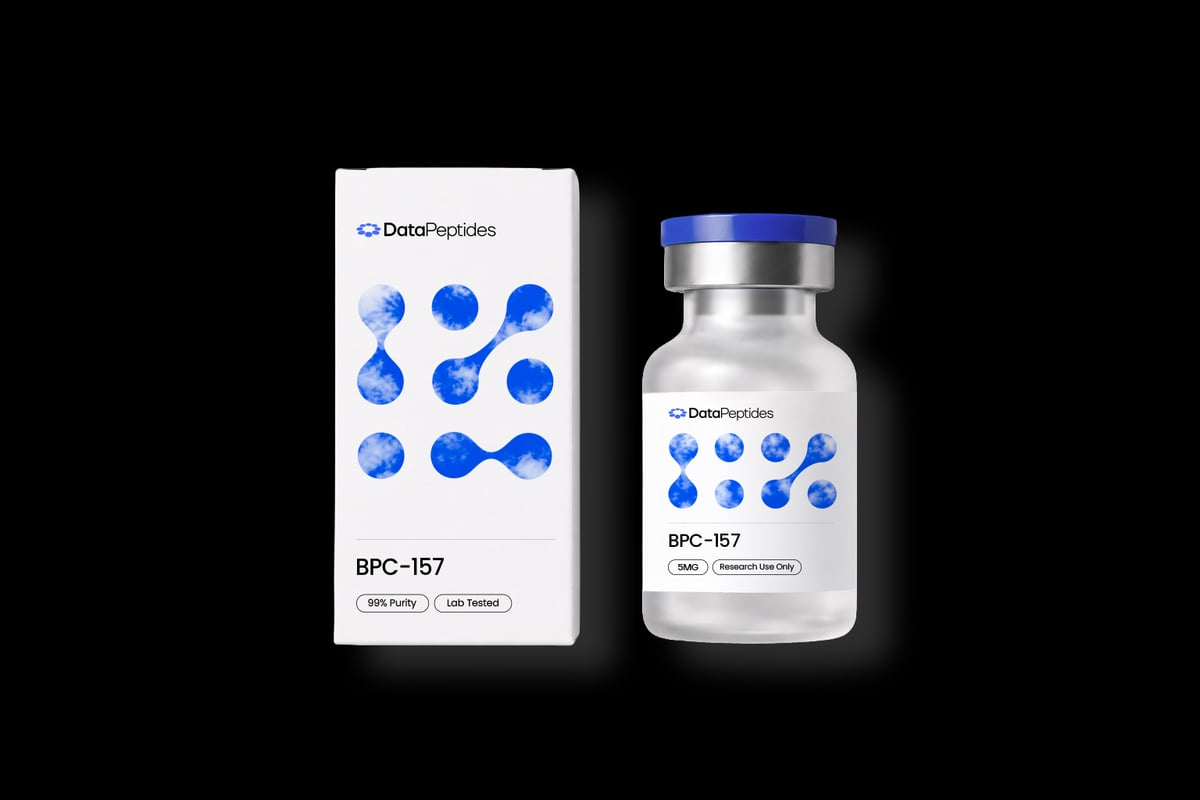
Peptides like BPC-157 have become widely utilized in laboratory models examining gastrointestinal tract healing, musculoskeletal tissue repair, and vascular regeneration. The BPC-157 peptide activates growth factor pathways and modulates inflammatory responses, making it particularly valuable for controlled studies of tissue restoration mechanisms. By manipulating peptide concentrations and exposure timing in experimental settings, scientists can dissect the individual components of complex healing processes.
Studies examining peptide combinations reveal potentially synergistic interactions. When researchers pair compounds with complementary mechanisms, they observe effects that exceed the sum of individual peptide activities. This synergistic principle guides experimental design in regenerative research protocols.
Metabolic Pathway Investigation
Medical peptides that influence metabolic processes enable detailed investigation of energy regulation, nutrient partitioning, and hormonal signaling. These research applications have expanded significantly as scientists seek to understand the intricate relationships between different metabolic hormones.
Incretin-based peptides, including GLP-1 and GIP receptor agonists, dominate this research space. These compounds help researchers map out how different tissues coordinate glucose disposal, fat metabolism, and appetite regulation. The precision of peptide-based tools allows for targeted manipulation of specific receptor subtypes without broadly disrupting metabolic homeostasis.
Recent laboratory investigations explore triple-agonist peptides that simultaneously activate GLP-1, GIP, and glucagon receptors. This multi-pronged approach provides unique insights into how the body balances anabolic and catabolic processes under various physiological conditions.
Quality Standards and Purity Requirements
Rigorous quality control defines legitimate peptide research. The reliability of experimental results depends entirely on the purity and consistency of research compounds.
Manufacturing and Testing Protocols
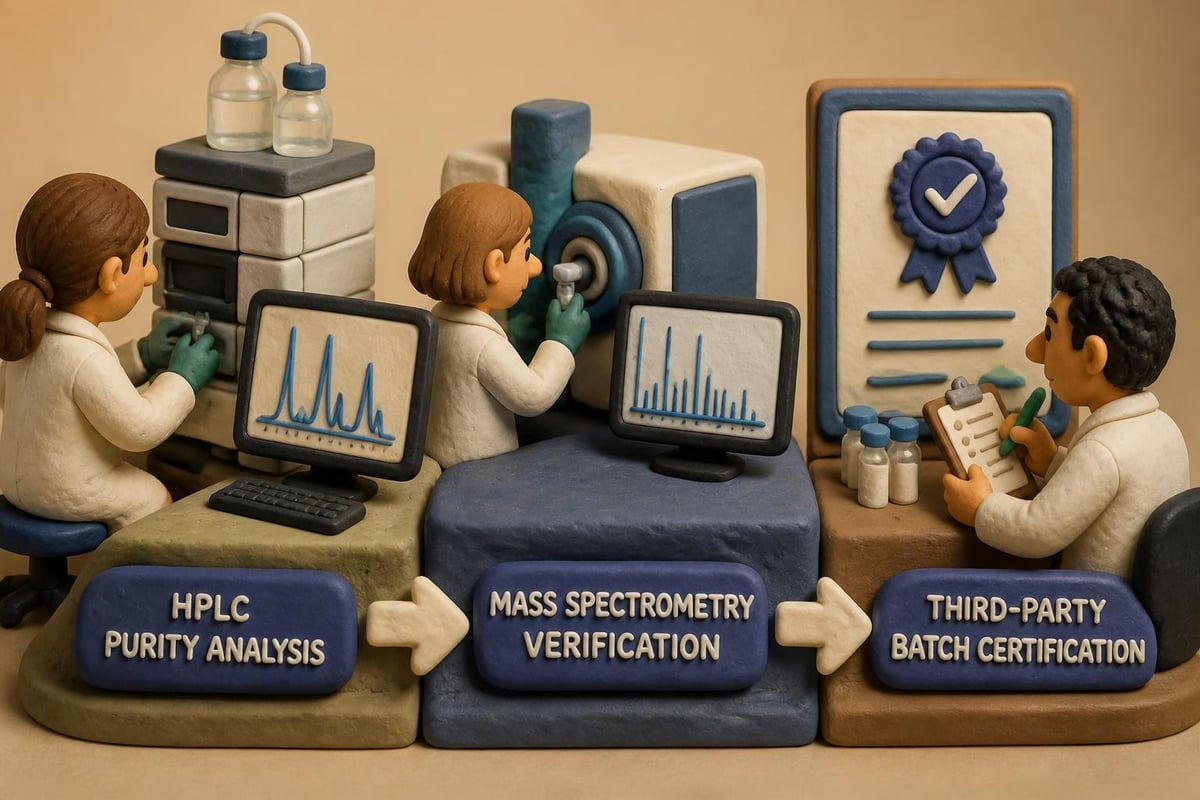
High-quality medical peptides undergo extensive quality verification through multiple analytical techniques:
- High-Performance Liquid Chromatography (HPLC) quantifies peptide purity and identifies contaminating substances
- Mass Spectrometry confirms molecular weight and structural integrity
- Amino Acid Analysis verifies correct sequence composition
- Sterility Testing ensures absence of microbial contamination
- Endotoxin Assessment measures bacterial toxin levels
Third-party batch testing provides independent verification of manufacturer claims. This external validation gives researchers confidence that their experimental variables are controlled and that observed effects genuinely reflect peptide activity rather than contaminant interference.
US-manufactured peptides that meet current Good Manufacturing Practice (cGMP) guidelines offer additional assurance of consistent quality. Researchers should review certificates of analysis for each batch and verify testing methodologies before incorporating new peptide lots into ongoing studies.
Emerging Research Directions
The field of medical peptides research continues expanding into novel territories as analytical capabilities improve and computational tools become more sophisticated.
Cyclic Peptides and Enhanced Stability
Linear peptides face rapid enzymatic degradation in biological systems, limiting their experimental utility in some research models. Cyclic peptides address this limitation by forming ring structures that resist proteolytic cleavage while maintaining biological activity.
Research into cyclic peptide scaffolds examines how structural constraints affect receptor binding and selectivity. The zero-shot design frameworks for cyclic peptides represent a significant advance, enabling researchers to generate target-specific sequences without extensive trial-and-error synthesis.
Peptide Combinations and Blended Formulations
Scientists increasingly investigate peptide combinations that address multiple pathways simultaneously. These blended approaches more accurately reflect the complexity of natural biological responses than single-compound studies.
Research protocols examining peptide blends must carefully control for potential interactions, competitive binding, and temporal sequencing effects. When designed properly, combination studies reveal how different signaling pathways integrate to produce coordinated cellular responses.
Computational Tools and Database Resources
Modern peptide research leverages extensive computational infrastructure that accelerates discovery and optimization processes. Database platforms aggregate information about peptide sequences, biological activities, and structural properties.
Peptipedia, a comprehensive peptide database, integrates multiple information sources to support drug design and biotechnology applications. Researchers access this platform to identify candidate sequences, predict biological activities, and design experimental protocols based on existing knowledge.
Machine learning approaches transform how scientists classify and predict peptide functions. The ACP-ESM framework demonstrates how protein language models can accurately identify anticancer peptides, showcasing the potential of artificial intelligence in peptide research. Similar computational tools help predict antimicrobial activity, receptor binding affinity, and pharmacokinetic properties.
Functional Peptide Prediction
Identifying which peptides will exhibit desired biological activities remains challenging despite computational advances. The pLMFPPred tool integrates embeddings from pre-trained protein language models with specialized learning techniques to predict functional peptides more accurately than traditional methods.
These computational approaches reduce the experimental burden by prioritizing the most promising candidate sequences for laboratory synthesis and testing. As training datasets expand and algorithms improve, prediction accuracy continues increasing.
Safety Considerations in Research Settings
Medical peptides designed for laboratory research require strict handling protocols and clear boundaries regarding their intended use. Researchers must understand that compounds designated for in vitro or animal model studies differ fundamentally from pharmaceutical-grade materials approved for clinical applications.
Research-Grade Specifications
Laboratory-grade peptides serve specific investigational purposes:
- Investigation of cellular mechanisms and signaling pathways
- Development of experimental models for biological processes
- Screening studies to identify promising therapeutic targets
- Educational demonstrations of biochemical principles
These compounds are explicitly manufactured and labeled for research applications only. They are not intended for human consumption, veterinary use, or any application outside controlled laboratory environments. Researchers should consult frequently asked questions to clarify appropriate usage parameters and handling requirements.
Proper storage, reconstitution, and disposal procedures ensure both researcher safety and experimental validity. Peptides typically require refrigerated or frozen storage, with specific temperature ranges documented in product specifications.
Documentation and Experimental Design
Rigorous documentation practices separate publishable research from anecdotal observations. Medical peptides research demands careful attention to experimental variables and reproducible methodologies.
| Documentation Element | Required Details | Purpose |
|---|---|---|
| Peptide Batch Information | Lot number, purity percentage, testing date | Ensures reproducibility and quality tracking |
| Storage Conditions | Temperature, duration, reconstitution method | Controls for degradation variables |
| Dosing Protocols | Concentration, volume, timing, frequency | Enables replication and comparison |
| Control Groups | Vehicle controls, positive controls, baseline measurements | Validates observed effects |
| Analytical Methods | Measurement techniques, equipment specifications | Supports data interpretation |
Detailed protocols allow other researchers to replicate experimental conditions and verify findings. This reproducibility forms the foundation of scientific validity.
Designing Multi-Peptide Studies
When investigating peptide combinations, researchers must account for potential interactions that could alter individual compound activities. Sequential dosing studies, dose-response matrices, and temporal analysis help characterize these interactions.
Control groups become especially critical in combination studies. Researchers need to test each peptide individually at multiple concentrations, all possible pairwise combinations, and the complete mixture to fully understand how components interact.
Current Trends in Medical Peptides Research
The medical peptides research landscape evolves rapidly as new compounds enter investigation and analytical techniques improve. Several notable trends characterize current research directions.
Anti-aging peptide research has attracted significant attention, though researchers emphasize the distinction between legitimate laboratory investigation and unproven cosmetic applications. Scientific studies examine how specific peptides influence cellular senescence markers, telomere maintenance, and oxidative stress responses under controlled conditions.
The integration of peptides into topical formulations represents another active research area. Peptide serums for skincare applications incorporate collagen-stimulating sequences to investigate dermal matrix remodeling and barrier function enhancement. Laboratory studies examine penetration kinetics, cellular uptake mechanisms, and dose-response relationships in skin tissue models.
Copper Peptides in Dermatological Research
Copper-binding peptides have emerged as particularly interesting research tools for investigating skin regeneration and remodeling processes. Copper peptides in skincare research examines how metal-peptide complexes influence collagen synthesis, elastin production, and wound healing in dermal tissue cultures.
The GHK-Cu peptide activates specific genetic pathways involved in tissue remodeling and antioxidant defense. Research protocols investigate optimal copper ratios, delivery mechanisms, and potential interactions with other bioactive compounds. These studies contribute to fundamental understanding of how trace metals participate in biological signaling when complexed with specific peptide sequences.
Regulatory Landscape and Research Compliance
Medical peptides research operates within defined regulatory frameworks that distinguish legitimate scientific investigation from prohibited activities. Understanding these boundaries protects both researchers and their institutions.
Research-grade peptides fall under different regulatory oversight than pharmaceutical products. Suppliers of laboratory-grade materials must clearly designate their products as intended solely for research purposes, include appropriate labeling, and maintain documentation demonstrating the non-clinical nature of their offerings.
Researchers bear responsibility for using these compounds only in appropriate laboratory settings, maintaining proper records, and ensuring that study designs comply with institutional review protocols. Animal studies require approval from Institutional Animal Care and Use Committees (IACUC), while human tissue studies need appropriate ethical oversight.
The distinction between research investigation and therapeutic application remains absolute. Medical peptides designated for laboratory use are not evaluated by regulatory agencies for safety or efficacy in clinical contexts. This separation ensures clarity about the developmental stage and appropriate applications of research compounds.
Advancements in Peptide Synthesis Technology
Manufacturing capabilities for medical peptides have improved dramatically over recent decades, enabling researchers to access increasingly complex sequences with higher purity levels.
Solid-phase peptide synthesis (SPPS) remains the dominant production method for research-grade peptides. This technique builds peptide chains one amino acid at a time on solid support beads, allowing precise control over sequence composition. Modern automated synthesizers can produce peptides up to 50 amino acids in length with high fidelity.
Purification technologies, particularly preparative HPLC systems, separate target peptides from truncated sequences, deletion variants, and synthesis byproducts. Multiple purification passes achieve the >98% purity levels that demanding research applications require.
Quality assurance extends beyond initial synthesis and purification. Stability testing under various storage conditions helps establish shelf life parameters and optimal handling procedures. Researchers benefit from this comprehensive characterization when designing long-term experimental protocols.
Peptide Research Resource Platforms
Scientists conducting medical peptides research increasingly rely on centralized platforms that provide compounds, protocols, and technical support. These resources streamline the research process and promote standardization across laboratories.
Specialized suppliers maintain comprehensive product portfolios covering multiple research categories, from metabolic peptides to regenerative compounds. Consolidated sourcing ensures batch-to-batch consistency and simplifies procurement logistics for multi-peptide studies.
Technical resources, including reconstitution guides, storage recommendations, and experimental protocols, help researchers optimize their methodologies. Access to certificates of analysis for each batch enables verification of compound identity and purity before initiating experiments.
Educational content through research blogs keeps scientists informed about emerging peptides, novel applications, and methodological advances. This knowledge-sharing accelerates the overall pace of discovery by reducing duplication of effort and highlighting promising research directions.
Medical peptides continue transforming biomedical research by providing precise tools for investigating cellular mechanisms, metabolic pathways, and regenerative processes. The combination of improved synthesis technology, computational design tools, and rigorous quality standards enables researchers to pursue increasingly sophisticated experimental questions. Whether investigating tissue repair mechanisms, metabolic regulation, or cellular signaling networks, scientists require access to high-purity, well-characterized compounds that meet exacting laboratory standards. Data Peptides supplies US-manufactured, third-party tested research peptides specifically designed for laboratory investigation, supporting the scientific community's pursuit of fundamental biological knowledge.