Mechano Growth Factor, commonly referred to as mgf peptide, represents a splice variant of insulin-like growth factor 1 (IGF-1) that has garnered significant attention in peptide research communities. This naturally occurring peptide plays a critical role in muscle tissue repair and regeneration, particularly following mechanical stress or damage. As researchers continue to investigate the mechanisms underlying muscle growth and recovery, understanding the biochemical properties and potential applications of mgf peptide has become increasingly important for laboratory studies focused on muscle physiology and cellular repair processes.
Understanding the Biochemical Structure of MGF Peptide
MGF peptide emerges from alternative splicing of the IGF-1 gene, specifically producing the IGF-1Ec isoform. This molecular variation distinguishes it from other IGF-1 variants through its unique C-terminal peptide sequence. The splice variant contains 49 additional base pairs compared to the systemic IGF-1 form, resulting in a different functional domain that influences how the peptide interacts with muscle tissue.
The structural differences between mgf peptide and conventional IGF-1 are not merely academic. These variations directly impact the peptide's biological activity and its capacity to influence muscle satellite cells. Research indicates that the unique E domain of MGF binds differently to receptors compared to other IGF-1 variants, potentially explaining its specialized role in tissue repair.
Molecular Mechanisms and Cellular Interactions
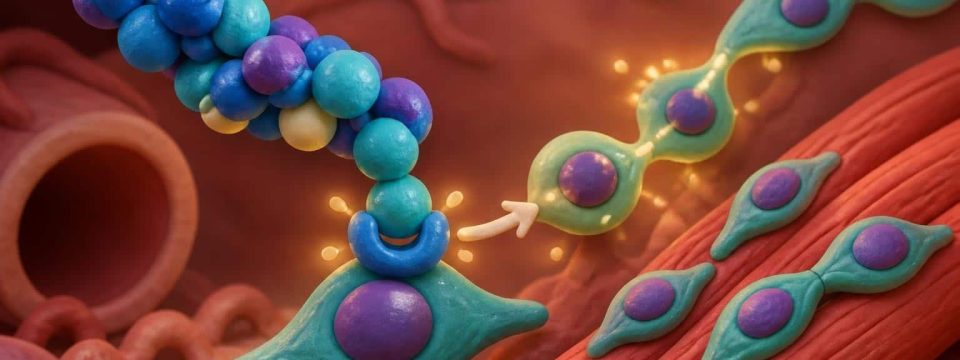
When examining MGF’s structure and function, researchers have identified several key pathways through which this peptide operates. The primary mechanism involves activation of muscle satellite cells, which are dormant cells residing between the basal lamina and sarcolemma of muscle fibers. Upon activation, these cells proliferate and differentiate into new muscle tissue.

The peptide's interaction with the IGF-1 receptor initiates a cascade of intracellular signaling events. These pathways include:
- PI3K/Akt pathway activation for protein synthesis and cell survival
- MAPK/ERK signaling to promote cell proliferation
- mTOR upregulation supporting muscle protein synthesis
- Anti-apoptotic mechanisms protecting cells from programmed death
MGF Peptide Expression Following Mechanical Stress
One of the most studied aspects of mgf peptide involves its expression profile after muscle damage or mechanical loading. Research demonstrates that MGF expression increases rapidly following exercise-induced muscle damage, appearing within hours of mechanical stress. This temporal pattern suggests the peptide functions as an immediate-response mechanism for initiating muscle repair.
The expression of mgf peptide appears localized to the damaged tissue area, unlike systemic IGF-1 which circulates throughout the body. This localized activity potentially provides more targeted repair effects, concentrating regenerative signals precisely where tissue damage has occurred. Laboratory studies tracking MGF expression have documented peak levels occurring between 2-4 hours post-exercise, with levels remaining elevated for approximately 24-48 hours.
Comparison with Other Growth Factors
| Growth Factor | Onset Time | Duration | Primary Action | Target Cells |
|---|---|---|---|---|
| MGF Peptide | 2-4 hours | 24-48 hours | Satellite cell activation | Muscle satellite cells |
| Systemic IGF-1 | 24-72 hours | Days to weeks | General growth promotion | Multiple tissue types |
| FGF | 4-8 hours | 48-72 hours | Proliferation support | Fibroblasts, satellite cells |
| HGF | 12-24 hours | 3-5 days | Migration and proliferation | Satellite cells, endothelial cells |
This comparison highlights how mgf peptide occupies a unique temporal niche in the muscle repair sequence. Its rapid onset and relatively brief duration suggest it functions as an initiating signal rather than a sustained growth promoter.
PEGylated MGF: Extended Half-Life Variants
Standard mgf peptide has a relatively short half-life in biological systems, typically measured in minutes. This rapid degradation has led researchers to develop PEGylated versions, where polyethylene glycol molecules are attached to the peptide structure. The PEG-MGF variant demonstrates significantly extended circulation time, potentially lasting hours instead of minutes.
The PEGylation process increases molecular weight and reduces renal clearance, fundamentally altering the peptide's pharmacokinetic profile. However, this modification also impacts how the peptide interacts with receptors and cellular machinery. Research examining PEG-MGF effectiveness remains limited, with most studies relying on extrapolation from native MGF data rather than direct PEG-MGF investigation.
Key considerations for PEG-MGF research include:
- Altered receptor binding affinity due to steric hindrance
- Different biodistribution patterns compared to native MGF
- Potential accumulation in tissues with extended dosing
- Modified clearance pathways requiring different safety assessments
- Variable biological activity depending on PEGylation degree
Current Research Evidence and Clinical Applications
The landscape of mgf peptide research reveals an interesting paradox: substantial mechanistic understanding derived from cell culture and animal models, but minimal human clinical trial data. Clinical trial analysis indicates that most human studies remain in early phases or have yet to commence, leaving significant gaps in our understanding of how laboratory findings translate to human physiology.

Preclinical research has documented several potential areas of interest:
- Muscle wasting conditions: Laboratory models suggest MGF may counteract atrophy
- Age-related sarcopenia: Animal studies show promise for maintaining muscle mass
- Recovery from injury: Tissue culture work indicates accelerated repair mechanisms
- Performance research: Mechanistic studies explore hypertrophic responses
Despite these promising laboratory results, researchers emphasize the substantial difference between controlled laboratory conditions and complex human physiology. The mechanisms observed in isolated muscle cells or rodent models may not directly translate to human applications without comprehensive clinical validation.
Safety Profile and Regulatory Status
Understanding the safety considerations for MGF remains critical for research design. Currently, mgf peptide lacks approval from regulatory agencies for human use, existing exclusively as a research compound. This regulatory status reflects the limited safety data available from controlled human trials.
Laboratory research protocols must account for several unknowns:
- Long-term effects on muscle tissue architecture
- Potential impacts on non-muscle IGF-1 receptor-expressing tissues
- Interaction effects with endogenous growth factor systems
- Dose-response relationships in complex biological systems
- Individual variability in response and metabolism
Dosing Considerations for Laboratory Research
Research protocols involving mgf peptide typically employ dosing strategies based on animal studies and theoretical calculations. The standard dosing approaches vary considerably depending on research objectives, model systems, and whether native MGF or PEG-MGF is under investigation.
For native MGF in laboratory settings, researchers commonly explore ranges between 200-400 mcg per administration, though this varies significantly across different research designs. The short half-life necessitates more frequent administration schedules in sustained research protocols. PEG-MGF protocols typically reduce administration frequency due to extended circulation time, with some research designs employing administration schedules of 2-3 times weekly rather than daily.
| Protocol Type | Typical Dose Range | Administration Frequency | Study Duration |
|---|---|---|---|
| Short-term native MGF | 200-400 mcg | Daily or twice daily | 2-4 weeks |
| Extended native MGF | 100-300 mcg | Daily | 4-8 weeks |
| PEG-MGF standard | 200-1000 mcg | 2-3x weekly | 4-6 weeks |
| PEG-MGF extended | 500-1500 mcg | Weekly | 8-12 weeks |
These parameters reflect common research approaches rather than established optimal dosing, as comprehensive dose-response studies in human subjects remain unavailable.
Synergistic Research with Other Peptides
Laboratory investigations frequently examine mgf peptide in combination with other research compounds to explore potential synergistic effects. The theoretical rationale suggests that combining peptides with complementary mechanisms might produce enhanced effects compared to single-compound approaches. For instance, researchers have investigated combinations with compounds supporting different phases of the muscle repair and growth cycle.
One area of research interest involves pairing MGF with peptides that support broader tissue repair mechanisms. While MGF specifically targets satellite cell activation, other peptides like BPC-157 work through different pathways involving growth factor synthesis and inflammatory modulation, potentially addressing multiple aspects of tissue recovery simultaneously.
The scientific rationale for combination approaches includes:
- Sequential activation of different repair phases
- Complementary pathway engagement for comprehensive response
- Extended temporal coverage throughout recovery periods
- Multi-tissue support beyond skeletal muscle alone

Research protocols examining combinations must carefully control for individual compound effects, requiring sophisticated experimental designs that isolate contributions from each component while also measuring potential interactive effects.
Practical Considerations for Laboratory Handling
Working with mgf peptide in research settings requires attention to proper handling, storage, and reconstitution procedures to maintain peptide stability and integrity. These compounds are typically supplied as lyophilized powders requiring reconstitution with bacteriostatic water or other appropriate solvents before use.
Storage and Stability Guidelines
Lyophilized powder storage:
- Maintain at -20°C or colder for long-term preservation
- Protect from light exposure using amber vials or foil wrapping
- Minimize freeze-thaw cycles to prevent degradation
- Use desiccants to control moisture exposure
Reconstituted solution storage:
- Refrigerate at 2-8°C for short-term use (up to 14 days)
- Freeze at -20°C for extended storage (up to 90 days)
- Avoid repeated freezing and thawing of working solutions
- Monitor for precipitation or clarity changes indicating degradation
Proper handling procedures significantly impact research reproducibility. Temperature excursions, exposure to light, and contamination can all compromise peptide integrity, leading to inconsistent results across experimental replicates.
MGF Peptide in Muscle Physiology Research
The role of mgf peptide in muscle physiology extends beyond simple growth promotion. Detailed research guides outline how this peptide participates in complex regulatory networks governing muscle homeostasis, adaptation to mechanical stress, and age-related changes in muscle function.
Satellite cells, the primary target of MGF activity, exist in a quiescent state under normal conditions. These cells represent approximately 2-7% of myonuclei in adult muscle tissue, residing in a specialized niche that maintains their stem-like properties. When activated by signals including mgf peptide, these cells exit quiescence, proliferate, and either self-renew or differentiate into myoblasts that fuse with existing muscle fibers or form new fibers.
The activation process involves several distinct phases:
- Initial signal reception through receptor binding and pathway activation
- Cell cycle re-entry as quiescent cells begin proliferating
- Proliferative expansion increasing the satellite cell pool
- Differentiation commitment as cells transition toward myogenic lineage
- Fusion and integration incorporating new nuclei into muscle fibers
Research examining MGF mechanisms has revealed that the peptide influences multiple steps in this sequence, not merely initiating the process but potentially modulating progression through various stages.
Analytical Methods for MGF Research
Investigating mgf peptide effects requires sophisticated analytical approaches to measure relevant outcomes. Research methodologies span from molecular techniques examining gene expression and protein synthesis to functional assessments evaluating muscle performance and morphology.
Common analytical approaches include:
- Western blotting for detecting MGF protein expression levels
- qRT-PCR measuring mRNA transcripts of MGF and related factors
- Immunohistochemistry localizing MGF expression in tissue sections
- Satellite cell counting quantifying activated vs. quiescent cells
- Muscle fiber analysis assessing size, type distribution, and nuclei number
- Functional testing evaluating strength, endurance, or contractile properties
These techniques require careful protocol optimization and appropriate controls to generate reliable data. Research quality depends heavily on methodological rigor, particularly given the subtle effects often observed with growth factor interventions.
Distinguishing Research Claims from Evidence
The peptide research community has witnessed considerable discussion about mgf peptide, not all of which reflects the current evidence base. Distinguishing between mechanistic possibilities demonstrated in controlled laboratory settings and clinically validated effects remains essential for accurate scientific communication.
Several common claims require careful contextualization:
Claim: MGF dramatically increases muscle mass in weeks
Evidence status: Animal studies show modest effects; human data insufficient
Claim: PEG-MGF is superior to native MGF for all applications
Evidence status: Longer half-life confirmed; comparative effectiveness studies lacking
Claim: MGF selectively targets damaged muscle without systemic effects
Evidence status: Localized expression observed; systemic distribution data limited
Claim: Combining MGF with other peptides produces exponential benefits
Evidence status: Theoretical synergy plausible; controlled combination studies rare
Researchers must navigate between the promising mechanistic data and the reality that comprehensive research evidence for many applications remains in early stages. This requires honest acknowledgment of what is known, what appears likely based on mechanism, and what remains speculative pending additional investigation.
Future Directions in MGF Research
The trajectory of mgf peptide research points toward several promising avenues requiring further investigation. Advanced molecular biology techniques, improved animal models, and eventually well-designed human trials will clarify the peptide's potential applications and limitations.
Emerging research areas include:
- Age-related muscle loss: Investigating whether MGF can mitigate sarcopenia
- Metabolic interactions: Exploring connections between muscle repair and metabolic health
- Combination protocols: Systematically evaluating synergies with other compounds
- Delivery optimization: Developing targeted delivery methods for enhanced localization
- Biomarker development: Identifying reliable indicators of MGF activity and response
These research directions require substantial investment in carefully controlled studies that can definitively answer questions about safety, efficacy, optimal dosing, and appropriate applications. The peptide research community continues working toward these goals, though significant work remains before definitive conclusions can be drawn for many potential applications.
For laboratories seeking information on research peptides and related compounds, resources like the Data Peptides FAQ section provide additional context on quality standards, testing procedures, and proper research applications.
Quality Considerations for Research-Grade Peptides
The reliability of research findings depends critically on the quality and purity of compounds used in experimental protocols. When working with mgf peptide, ensuring that materials meet appropriate specifications for laboratory research becomes paramount for generating reproducible, interpretable results.
Research-grade peptides should meet several quality benchmarks:
- Purity verification through third-party testing, typically >98% for research applications
- Identity confirmation via mass spectrometry or similar analytical methods
- Sterility assurance for applications requiring aseptic handling
- Accurate concentration verified through quantitative analysis
- Proper documentation including certificates of analysis and batch records
These quality parameters ensure that observed effects genuinely reflect the peptide's biological activity rather than contaminants, degradation products, or incorrect concentrations. Researchers should prioritize suppliers who provide comprehensive testing documentation and maintain consistent manufacturing standards across batches.
MGF peptide represents a fascinating area of ongoing research with significant implications for understanding muscle repair, satellite cell biology, and tissue regeneration mechanisms. While substantial mechanistic insights have emerged from laboratory investigations, researchers must recognize the distinction between preliminary findings and clinically validated applications. For laboratories seeking high-quality research compounds with verified purity and consistent specifications, Data Peptides provides laboratory-grade, US-manufactured peptides with third-party batch testing to support rigorous scientific investigation.