

Identifying the best peptide for fat loss requires understanding multiple mechanisms of action, clinical research profiles, and specific metabolic pathways. Peptides influence adipose tissue reduction through diverse routes, including incretin receptor activation, growth hormone secretion modulation, and mitochondrial energy metabolism enhancement. The research landscape in 2026 includes established compounds with substantial clinical evidence alongside emerging candidates demonstrating novel mechanisms. Laboratory researchers investigating fat loss pathways must consider compound specificity, published study outcomes, and methodological rigor when selecting peptides for experimental protocols.
Understanding Peptide Mechanisms for Adipose Tissue Reduction
Peptides targeting fat loss operate through distinct biochemical pathways that influence energy expenditure, nutrient partitioning, and adipocyte metabolism. The most studied mechanisms include incretin receptor agonism, growth hormone pathway modulation, and direct metabolic signaling.
Incretin Receptor Agonists and Metabolic Control
GLP-1 (glucagon-like peptide-1) receptor agonists represent the most clinically validated category for adipose tissue reduction. These compounds mimic natural incretin hormones that regulate glucose homeostasis and appetite signaling. Semaglutide and tirzepatide have demonstrated substantial fat mass reduction in controlled trials, with mechanisms extending beyond simple appetite suppression to include enhanced insulin sensitivity and altered energy partitioning.
Triple agonist peptides like Retatrutide expand on dual-agonist technology by simultaneously activating GLP-1, GIP (glucose-dependent insulinotropic polypeptide), and glucagon receptors. This multi-receptor approach shows enhanced efficacy in preclinical models compared to single-pathway compounds. Research published in 2025 demonstrated that triple receptor activation produces synergistic effects on hepatic glucose output, peripheral insulin sensitivity, and thermogenic brown adipose tissue activation.
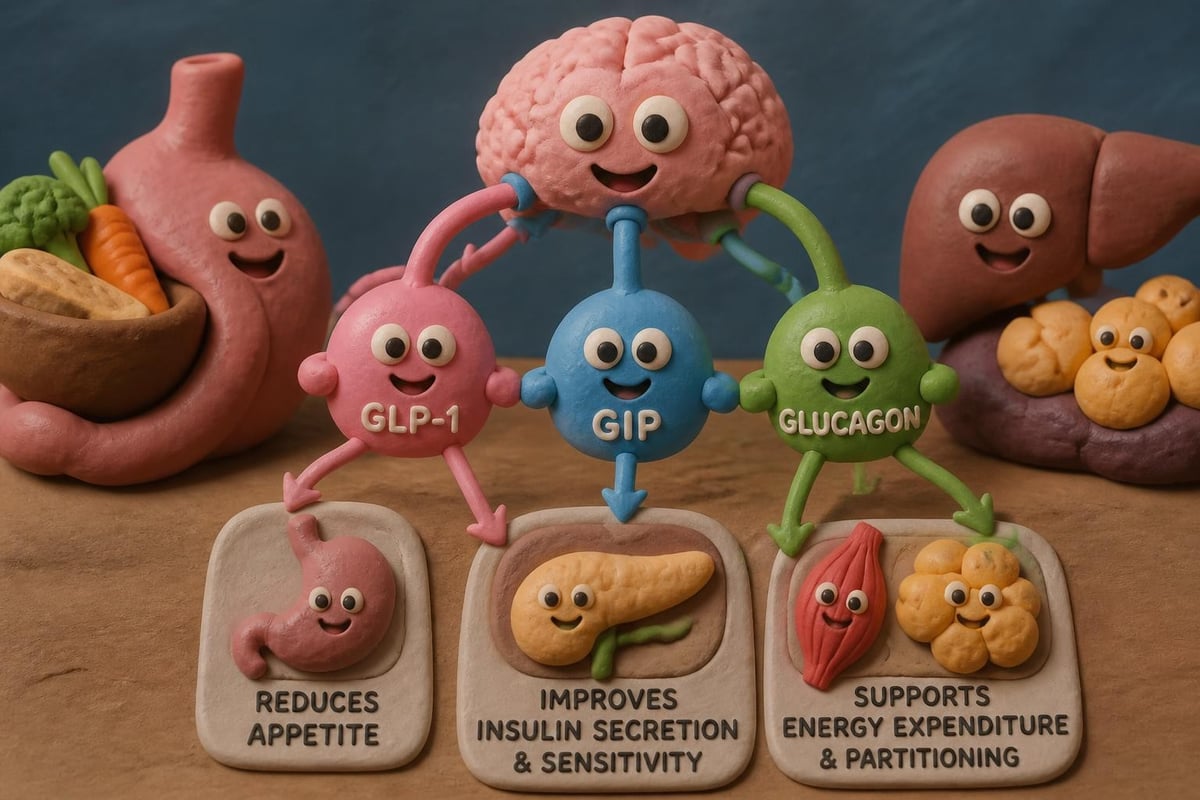
The pharmacokinetic profiles of incretin agonists vary significantly. Longer half-lives enable once-weekly administration protocols, while shorter-acting variants provide more precise experimental control over receptor activation timing. Researchers must balance convenience against temporal resolution when designing study protocols.
Growth Hormone Secretagogue Pathways
Growth hormone releasing peptides influence body composition through indirect mechanisms. Compounds like CJC-1295 and ipamorelin stimulate endogenous growth hormone pulses without introducing exogenous GH. This approach maintains physiological feedback loops while enhancing lipolytic signaling.
Key mechanisms include:
- Enhanced hormone-sensitive lipase activity in adipocytes
- Increased resting metabolic rate through lean tissue preservation
- Improved insulin-like growth factor 1 (IGF-1) production
- Modulation of ghrelin signaling pathways
The CJC/IPA blend combines complementary secretagogue mechanisms. CJC-1295 (without DAC modification) extends growth hormone releasing hormone (GHRH) signaling, while ipamorelin selectively activates ghrelin receptors without elevating cortisol or prolactin. This combination produces more sustained GH elevation compared to single-compound protocols, as documented in comparative pharmacodynamic studies.
| Peptide Category | Primary Mechanism | Fat Loss Pathway | Clinical Evidence Level |
|---|---|---|---|
| GLP-1 Agonists | Incretin receptor activation | Appetite regulation, energy partitioning | High (multiple Phase 3 trials) |
| Dual Agonists | GLP-1/GIP activation | Enhanced insulin sensitivity, thermogenesis | High (FDA approved compounds) |
| Triple Agonists | GLP-1/GIP/glucagon activation | Multi-pathway metabolic optimization | Moderate (Phase 2/3 trials) |
| GH Secretagogues | Pulsatile GH release | Lipolysis, lean mass preservation | Moderate (limited controlled trials) |
| Mitochondrial Peptides | Cellular energy optimization | Metabolic efficiency, fat oxidation | Low to Moderate (emerging research) |
Evaluating Clinical Evidence and Research Profiles
The strength of evidence supporting peptide efficacy varies considerably across compound classes. Comprehensive evaluations of peptides studied for fat loss rank compounds by clinical trial quality, mechanistic specificity, and reproducibility of outcomes.
Quantifying Fat Mass Reduction Outcomes
Published trials measure adipose tissue changes through multiple methodologies, including dual-energy X-ray absorptiometry (DEXA), magnetic resonance imaging (MRI), and bioelectrical impedance analysis. The most rigorous studies report changes in total fat mass, visceral adipose tissue volume, and subcutaneous fat distribution separately.
Benchmark outcomes from 2024-2026 trials:
- Retatrutide (triple agonist): 24% average body weight reduction over 48 weeks, with approximately 70% attributable to fat mass loss
- Tirzepatide (dual agonist): 15-20% body weight reduction, 65-70% from adipose tissue
- Semaglutide (GLP-1 agonist): 12-15% body weight reduction, 60-65% from fat mass
- CJC-1295/Ipamorelin combination: 3-7% body weight reduction with lean mass preservation in smaller trials
The differential between total weight loss and fat-specific reduction reveals important compositional effects. Growth hormone secretagogues demonstrate superior lean tissue preservation ratios, while incretin agonists produce greater absolute fat mass reduction. Researchers selecting compounds must align these profiles with experimental objectives.
Safety Profiles and Tolerance Considerations
Laboratory research protocols must account for compound-specific tolerance patterns documented in clinical studies. Common observations across peptide classes include:
- Incretin agonists: Gastrointestinal effects (nausea, delayed gastric emptying) particularly during dose escalation phases
- GH secretagogues: Transient water retention, potential effects on glucose metabolism at higher doses
- Mitochondrial peptides: Generally well-tolerated with minimal reported adverse effects in published trials
Detailed comparisons of peptide safety profiles published in early 2026 highlight the importance of dose titration protocols and monitoring parameters specific to each compound class.

Emerging Peptide Categories and Novel Mechanisms
Beyond established incretin and secretagogue compounds, several emerging peptide categories demonstrate unique mechanisms relevant to adipose tissue metabolism.
Mitochondrial-Derived Peptides
MOTS-c represents a novel class of mitochondrially encoded peptides that influence whole-body metabolism through multiple pathways. Unlike peptides targeting specific receptors, MOTS-c appears to enhance metabolic flexibility by improving cellular energy substrate utilization.
Research published in late 2025 demonstrated that MOTS-c administration enhances skeletal muscle glucose uptake and promotes a shift toward fatty acid oxidation in both hepatic and adipose tissues. The compound activates AMPK (AMP-activated protein kinase) signaling independent of traditional hormone receptors, suggesting a fundamentally different mechanism compared to incretin or secretagogue pathways.
This metabolic peptide shows particular promise for addressing age-related metabolic decline, with studies indicating preserved insulin sensitivity and improved mitochondrial function markers. While absolute fat mass reduction appears modest compared to incretin agonists, the favorable effects on metabolic health parameters position mitochondrial peptides as valuable research tools for studying energy metabolism.
Synthetic Melanocortin Receptor Modulators
Melanocortin receptor systems influence both pigmentation and metabolic regulation through overlapping pathways. While primarily studied for other applications, melanocortin-4 receptor (MC4R) agonism produces documented effects on energy expenditure and appetite regulation. The evidence-based analysis of peptides for metabolic research notes that selective MC4R agonists demonstrate fat loss potential through central nervous system appetite centers and peripheral metabolic effects.
Comparative Analysis of Leading Research Compounds
Selecting the best peptide for fat loss research depends on specific experimental parameters, including study duration, desired mechanisms, and outcome measures.
| Compound | Mechanism Class | Typical Research Dose Range | Study Duration for Observable Effects | Primary Advantages | Research Considerations |
|---|---|---|---|---|---|
| Retatrutide | Triple agonist (GLP-1/GIP/GCGR) | 0.5-12 mg weekly | 12-48 weeks | Highest magnitude fat loss, multi-pathway effects | Limited long-term data, dose-dependent GI effects |
| Tirzepatide | Dual agonist (GLP-1/GIP) | 2.5-15 mg weekly | 12-40 weeks | Strong clinical validation, FDA approved | Cost considerations, injection site reactions |
| CJC-1295/Ipamorelin | GH secretagogues | 200-500 mcg each, 2-3x weekly | 8-24 weeks | Lean mass preservation, physiological GH patterns | Smaller effect size, limited large trials |
| MOTS-c | Mitochondrial peptide | 5-15 mg 2-3x weekly | 12-24 weeks | Metabolic flexibility enhancement, minimal side effects | Emerging research profile, modest fat loss magnitude |
For researchers requiring maximal fat mass reduction with robust clinical validation, incretin-based compounds provide the strongest evidence base. The detailed rankings of peptides by clinical evidence strength consistently place triple and dual agonists at the top of efficacy hierarchies.
Conversely, studies focusing on body recomposition rather than pure weight loss may benefit from growth hormone secretagogue protocols that preserve or enhance lean tissue while reducing adipose mass. This approach aligns with fitness and performance-oriented research objectives where muscle preservation represents a critical endpoint. Resources like The Father Forge emphasize the importance of maintaining lean muscle mass during fat loss phases for optimal metabolic health and functional capacity.
Stacking Protocols and Synergistic Combinations
Advanced research protocols often investigate peptide combinations that target complementary pathways. The rationale involves addressing fat loss through multiple mechanisms simultaneously while potentially reducing individual compound doses.
Complementary Mechanism Stacking
Common research combinations include:
- Incretin agonist + GH secretagogue: Addresses appetite/energy partitioning through incretin pathways while preserving lean tissue via growth hormone effects
- Metabolic peptide + incretin agonist: Combines cellular energy optimization with receptor-mediated appetite regulation
- Multiple secretagogues: Stimulates GH release through distinct receptor pathways (GHRH vs. ghrelin)
The comprehensive guide to peptide stacking strategies published in 2026 emphasizes that combination protocols require careful consideration of overlapping effects and potential interactions. For instance, combining multiple compounds affecting glucose metabolism necessitates enhanced monitoring of glycemic parameters.

Timing considerations become particularly important in stacking protocols. Growth hormone secretagogues typically show optimal effects when administered during fasting states or before sleep to align with natural GH pulse patterns. Incretin agonists may be timed relative to feeding windows depending on experimental design.
Tissue Repair and Recovery Considerations
Some research protocols combine fat loss peptides with compounds supporting tissue integrity during caloric restriction phases. While not directly lipolytic, peptides like BPC-157 have been studied for their potential effects on tissue repair, inflammation modulation, and recovery enhancement. This becomes relevant in studies examining body composition changes during concurrent training interventions where tissue stress may occur.
Dosing Protocols and Administration Considerations
Research protocols must establish appropriate dosing schedules based on pharmacokinetic profiles and published study parameters. The best peptide for fat loss research may vary depending on whether daily, alternate-day, or weekly administration fits experimental constraints.
Dose Escalation Strategies
Most clinical trials employ gradual dose escalation protocols, particularly for incretin-based compounds. Standard approaches include:
- Week 1-4: Initiation dose (typically 25% of target maintenance dose)
- Week 5-8: Intermediate dose (50% of target)
- Week 9-12: Target maintenance dose
- Week 13+: Sustained maintenance or further titration based on response
This gradual approach minimizes acute tolerance issues while allowing physiological adaptation. The honest assessment of peptide dosing and outcomes emphasizes that rushing dose escalation frequently results in discontinuation due to side effects rather than improved efficacy.
Growth hormone secretagogues typically follow different patterns, with many protocols employing consistent dosing from initiation due to better acute tolerance profiles. Pulse dosing (2-3 times weekly) versus daily administration represents another variable researchers must consider based on mechanism and desired GH elevation patterns.
Reconstitution and Stability Parameters
Laboratory-grade peptides require proper reconstitution with bacteriostatic water and adherence to storage protocols. Most research-grade peptides remain stable for 30-60 days when refrigerated at 2-8°C after reconstitution. Pre-reconstituted peptides stored as lyophilized powder maintain stability for extended periods when kept at -20°C or below.
Critical handling parameters:
- Use sterile bacteriostatic water for reconstitution
- Avoid vigorous shaking; gentle swirling ensures proper dissolution
- Store reconstituted solutions refrigerated and protected from light
- Document reconstitution dates and maintain cold chain integrity
- Verify concentration calculations before preparing research protocols
Data Peptides supplies laboratory-grade research peptides manufactured in the United States, with each batch undergoing third-party purity testing to ensure consistent quality for research applications.
Experimental Design Considerations for Fat Loss Research
Rigorous peptide research requires careful attention to study design elements that influence outcome validity and reproducibility.
Body Composition Assessment Methods
Measurement technique selection impacts result precision:
- DEXA scanning: Gold standard for research, provides regional fat distribution and lean mass quantification
- MRI/CT imaging: Superior for visceral adipose tissue quantification
- Bioelectrical impedance: Convenient but less precise, acceptable for trend monitoring
- Skinfold calipers: Operator-dependent, limited to subcutaneous fat assessment
- Hydrostatic weighing: Accurate total body composition but lacks regional data
Studies examining the best peptide for fat loss should employ consistent measurement methodologies across all time points. The comparative analysis of fat loss measurement techniques published in 2025 demonstrates that measurement method selection can alter apparent effect magnitudes by 15-25% for the same underlying body composition change.
Controlling Confounding Variables
Fat loss research outcomes reflect multiple influences beyond peptide pharmacology. Experimental designs must account for:
- Dietary intake: Controlled feeding studies versus free-living dietary patterns
- Physical activity levels: Standardized exercise protocols or monitoring of spontaneous activity
- Sleep quality and duration: Documented effects on metabolic hormone profiles
- Baseline metabolic health status: Insulin sensitivity, thyroid function, cortisol patterns
- Concurrent medications or supplements: Potential interactions affecting outcomes
Sophisticated research protocols incorporate these variables through standardization, randomization, or statistical adjustment. Studies failing to control major confounders produce results with limited generalizability to other experimental contexts.
Regulatory Status and Research-Grade Access
The regulatory landscape for peptides in 2026 includes both FDA-approved therapeutics and research-grade compounds intended solely for laboratory investigation. Understanding these distinctions ensures appropriate compound selection and use.
FDA-Approved Peptide Therapeutics
Several incretin-based peptides have received FDA approval for metabolic indications, establishing strong safety and efficacy profiles through Phase 3 clinical trials. Semaglutide, tirzepatide, and liraglutide represent approved compounds with extensive clinical data supporting their mechanisms and outcomes.
These approved therapeutics provide benchmark standards against which emerging compounds are compared. Research protocols investigating novel peptides often include approved compounds as positive controls to contextualize experimental results.
Research-Grade Peptides and Laboratory Applications
Peptides lacking FDA approval for therapeutic use remain available as research-grade compounds for laboratory investigation. These materials carry specific use restrictions limiting them to in vitro studies, animal research models, or other non-clinical applications.
Organizations like Data Peptides specialize in supplying research-grade peptides manufactured to laboratory standards with batch-specific purity documentation. All research peptides are intended solely for laboratory use and are not approved for human or animal consumption outside approved research protocols.
Future Directions in Peptide Fat Loss Research
The peptide research landscape continues evolving with novel compounds entering early-stage development and existing peptides being studied through new mechanistic lenses.
Oral Delivery Systems
Most current peptide research employs subcutaneous injection due to the poor oral bioavailability of unmodified peptides. Emerging encapsulation technologies and chemical modifications aim to enable oral peptide delivery. Semaglutide formulations with oral bioavailability have reached market approval, demonstrating proof-of-concept for this delivery route.
Future research may explore oral formulations of additional peptide classes, potentially improving experimental convenience and translational potential. However, oral delivery systems introduce additional pharmacokinetic complexity requiring validation through comparative bioavailability studies.
Tissue-Selective Compounds
Current incretin agonists produce systemic effects throughout tissues expressing target receptors. Next-generation compounds may incorporate tissue-selective properties that concentrate effects in adipose tissue while minimizing actions in other systems. This approach could potentially enhance the therapeutic window by improving efficacy-to-side-effect ratios.
Preliminary research on receptor subtype-selective compounds and tissue-targeted delivery conjugates suggests this represents a viable development pathway. Studies published in early 2026, including advanced frameworks for predicting peptide tissue distribution, provide computational tools supporting rational design of tissue-selective peptides.
Personalized Peptide Selection
Metabolic heterogeneity means individuals respond differently to identical peptide interventions. Future research directions include identifying biomarkers predicting differential response to specific compounds. Baseline insulin sensitivity, adipose tissue distribution patterns, genetic polymorphisms in target receptors, and microbiome composition all represent potential stratification variables.
Personalized approaches could optimize peptide selection by matching compound mechanisms to individual metabolic profiles. This precision medicine framework remains largely aspirational in 2026 but represents an active area of investigation with significant potential to improve experimental outcomes.
Selecting the best peptide for fat loss requires balancing multiple factors including mechanism of action, clinical evidence strength, experimental objectives, and practical protocol considerations. The research landscape in 2026 offers numerous validated options ranging from highly effective incretin agonists to emerging mitochondrial peptides with novel mechanisms. For researchers seeking laboratory-grade compounds manufactured to exacting quality standards, Data Peptides provides US-manufactured, third-party tested research peptides specifically formulated for laboratory applications. Each batch undergoes rigorous purity verification to ensure consistent quality for experimental protocols investigating metabolic pathways and body composition mechanisms.