

5-Amino-1MQ is a selective small-molecule inhibitor of nicotinamide N-methyltransferase (NNMT) that produces reproducible metabolic improvements in diet-induced obese (DIO) rodent models, including reduced adiposity, improved insulin sensitivity, and better liver histology. These findings come entirely from preclinical work, and none of it constitutes evidence of safety or efficacy in humans.
TL;DR:
- In DIO mice, 20 mg/kg given subcutaneously three times daily caused progressive weight loss over 11 days without reducing food intake.
- Mouse tissue concentrations peak about 1 hour after subcutaneous dosing and decline over 4 to 8 hours, so one late sample may miss target engagement.
- Oral exposure is poor in mice but higher in rats, so researchers should establish pharmacokinetics for each species instead of transferring dose schedules.
- Researchers should measure 1 MNA and NAD+ in plasma and target tissues, then pair those biomarkers with glucose testing and liver histology.
- Combining NNMT inhibition with calorie reduction produced the strongest normalization of whole body adiposity among reported groups, alongside shifts in cecal bacteria.
Table of Contents
- How 5-Amino-1MQ Inhibition Affects Cellular Metabolism
- Preclinical Evidence: In Vitro Assays, DIO Mouse Outcomes, and Microbiome Shifts
- Pharmacokinetics and Route of Administration in Rodent Studies
- Assays and Biomarkers for Measuring Target Engagement
- Common Misconceptions in 5-Amino-1MQ Reporting
- Sourcing Research-Grade 5-Amino-1MQ for Reproducible Studies
- Research Priorities for 5-Amino-1MQ Going Forward
- Why Researchers Choose Data Peptides for NNMT Inhibitor Studies
- FAQ
- Sources
How 5-Amino-1MQ Inhibition Affects Cellular Metabolism
NNMT catalyzes the methylation of nicotinamide into 1-methylnicotinamide (1-MNA), a reaction that consumes a methyl group from S-adenosylmethionine and draws down the cellular nicotinamide pool that would otherwise feed NAD+ synthesis. When 5-Amino-1MQ blocks this reaction, intracellular 1-MNA drops and more nicotinamide stays available for NAD+ regeneration, a relationship documented in adipocyte models of NNMT’s role in obesity and type 2 diabetes.
Rising NAD+ availability has downstream consequences for enzymes that depend on it as a cofactor, particularly the sirtuin family. Research connects NNMT inhibition to this chain of events:
- NNMT methylates nicotinamide into 1-MNA, depleting the substrate pool for NAD+ synthesis.
- Inhibiting NNMT lowers 1-MNA and raises intracellular NAD+ availability.
- Higher NAD+ turnover is linked to SIRT1 activity, an enzyme implicated in regulating lipid storage and inflammatory signaling.
- In adipocytes, this sequence correlates with suppressed lipogenesis, offering a mechanistic bridge between target engagement and the metabolic endpoints seen in whole-animal studies.
For background on NAD+ biology and where human evidence currently stands, a useful outside primer is this overview of NAD+ and NMN research, which is helpful context when interpreting rodent NAD+ data against what is actually established in people.
Preclinical Evidence: In Vitro Assays, DIO Mouse Outcomes, and Microbiome Shifts
Cell-based work consistently shows the expected direction of effect before researchers move to whole-animal studies. In adipocyte cultures, 5-Amino-1MQ produces dose-dependent reductions in intracellular 1-MNA alongside increased NAD+ and suppressed lipogenesis, with EC50/IC50 values reported in the primary literature on NNMT’s role in metabolic disease.
In vivo work in DIO mice extends these in vitro signals into measurable whole-body outcomes:
- Dose-dependent reductions in body weight and fat mass without a corresponding drop in food intake, pointing to a metabolic rather than appetite-driven mechanism.
- Improved oral glucose tolerance test (OGTT) results and insulin sensitivity across treated cohorts.
- Reduced liver steatosis and inflammation, reflected in improved NAFLD Activity Score (NAS) components on histology.
One of the clearest numerical signals comes from a proof-of-concept study in which 20 mg/kg administered subcutaneously three times daily produced progressive weight loss over an 11-day treatment window, without a change in food intake, a result reported in the study on selective NNMT inhibitors reversing diet-induced obesity. That separation between weight loss and food intake is the detail researchers most often cite as support for a metabolic mechanism rather than appetite suppression.
A separate line of work looked at NNMT inhibition combined with dietary change rather than inhibition alone. Pairing an NNMT inhibitor with a reduced-calorie diet in DIO mice produced distinct cecal microbiome shifts, including increased Lactobacillus and decreased Erysipelatoclostridium, that correlated with adiposity changes beyond what diet switching alone achieved. The combined intervention produced the most pronounced normalization of whole-body adiposity across the reported groups, suggesting NNMT inhibition may act synergistically with lifestyle-style interventions in these models rather than as a standalone replacement for them.
Across these three evidence streams, researchers get a reasonably complete picture of target engagement (1-MNA, NAD+), functional outcome (weight, glucose handling, liver histology), and a downstream ecological correlate (microbiome composition).
Pharmacokinetics and Route of Administration in Rodent Studies
Study design decisions around 5-Amino-1MQ hinge heavily on species-specific pharmacokinetics. After subcutaneous dosing in mice, tissue concentrations peak early, with the highest exposures in epididymal white adipose tissue and muscle observed around 1 hour post-dose and declining by 4 to 8 hours, based on PK and tissue distribution data from NNMT inhibition studies in DIO mice. Tissue:plasma ratios tend to increase over this window, which points to slower efflux from adipose and muscle relative to plasma clearance.
Species differences matter just as much as timing:
- Mice generally show poor oral bioavailability for 5-Amino-1MQ, which is why most published efficacy studies in mice rely on subcutaneous or other parenteral dosing.
- Rats appear to tolerate oral dosing with higher systemic exposure, though this is a qualitative distinction rather than a precise cross-species conversion.
- Because target engagement (1-MNA suppression) peaks early and tissue exposure persists longer than plasma levels suggest, a single terminal sample risks underrepresenting the actual pharmacodynamic window.
Pro Tip: Sample at both ~1 hour and 4 to 8 hours post-dose in mouse SC protocols to capture peak target engagement and the subsequent clearance trend, rather than relying on one terminal timepoint.
Assays and Biomarkers for Measuring Target Engagement
Demonstrating that 5-Amino-1MQ is doing what the mechanism predicts requires a consistent assay panel rather than any single readout. Researchers typically combine the following:
- LC-MS/MS quantification of 1-MNA and NAD+ in plasma and target tissues to confirm direct target engagement at the NNMT substrate and product level.
- Glucose tolerance testing or insulin clamps to capture the downstream metabolic phenotype rather than relying on body weight alone.
- Liver histology with NAS scoring to document steatosis and inflammation changes consistent with the hepatic endpoints reported in DIO mouse studies.
- Timed sample collection relative to dosing, informed by the early peak and slower tissue clearance pattern described above, to avoid missing transient PD effects.
- Lot-tracked reagents and internal controls across cohorts, since assay drift between batches can obscure small but real treatment effects in chronic dosing studies.
Common Misconceptions in 5-Amino-1MQ Reporting
A few recurring errors show up when this research gets summarized outside the primary literature:
- Mouse efficacy data do not translate directly to expected human outcomes; the gap between species is a translational question, not a rounding error.
- Parenteral dosing in mouse studies reflects poor oral bioavailability in that species, not an arbitrary protocol choice.
- 5-Amino-1MQ is best described as an NNMT research probe and preclinical candidate, not as a finished or approved therapeutic.
Sourcing Research-Grade 5-Amino-1MQ for Reproducible Studies
Reproducibility starts with reagent documentation, not just protocol design. Before running a study, researchers should request:
- A Certificate of Analysis (COA) specific to the batch or lot being used, not a generic product sheet.
- Purity data reported by batch, ideally with the analytical method disclosed.
- Endotoxin testing results, particularly for any in vivo application.
- Stability data covering storage conditions and expected shelf life.
Our 5-Amino-1MQ resource page includes technical notes and COA access for researchers who want this documentation tied to a specific lot. We recommend archiving the COA alongside experimental metadata, including lot number, so that any later reanalysis can be traced back to the exact material used.
Research Priorities for 5-Amino-1MQ Going Forward
The most valuable next step is not another DIO efficacy study. It is formal cross-species PK bridging paired with proper toxicology, since route and species differences currently limit how confidently anyone can extrapolate dosing. Receptor-occupancy and target-engagement studies across chronic dosing windows would clarify durability and safety margins. Standardized LC-MS methods and open PK/PD datasets would let independent labs actually compare results instead of reconciling incompatible protocols.
— Data Peptides
Why Researchers Choose Data Peptides for NNMT Inhibitor Studies
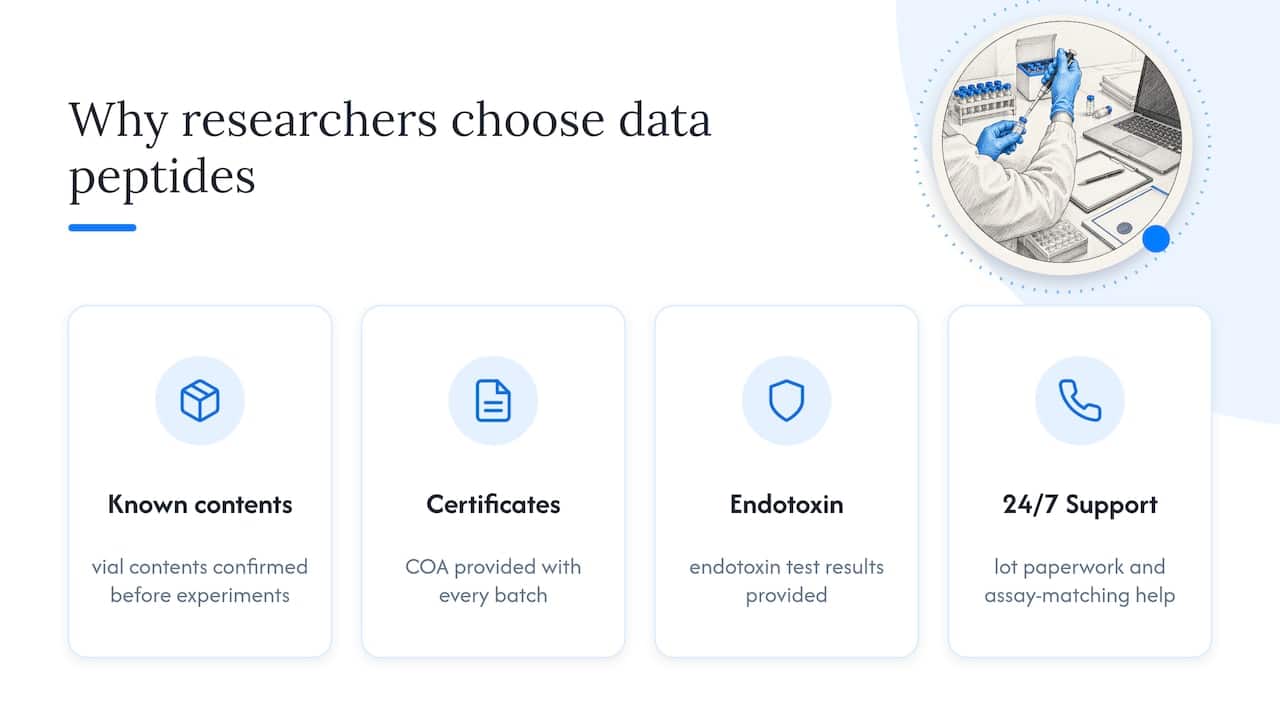
Reproducible results depend on knowing exactly what is in the vial, and that is the procurement checkpoint we built around. Every batch we sell carries documentation of testing, including Certificates of Analysis and endotoxin results, so the documentation question above is answered before the material ships, not after a study runs into trouble. Our research-grade peptides, including materials relevant to NNMT and metabolic research, are available through our shop, and our support team is available 24/7 if you need lot-specific paperwork or help matching assay-grade material to your protocol.
This article is general information, not a substitute for advice from a qualified doctor. Consult a qualified healthcare professional about your own circumstances before acting on anything here.
FAQ
How often should you take 5-Amino-1MQ in research protocols?
Published mouse studies most often used repeated subcutaneous dosing, such as three-times-daily administration over an 11-day window in one proof-of-concept study. Dosing frequency in any protocol should be set by the study’s own PK sampling, not copied directly from another species or route.
Is 5-Amino-1MQ FDA approved?
5-Amino-1MQ is not an FDA-approved drug and is studied exclusively in preclinical, laboratory settings. All published efficacy data come from in vitro and rodent models, not from human clinical trials.
How long does 5-Amino-1MQ stay in the body in mouse studies?
Tissue concentrations in mice peak around 1 hour after subcutaneous dosing and decline over the next 4 to 8 hours, with tissue:plasma ratios in adipose and muscle increasing over time, suggesting slower clearance from those tissues than from plasma, according to PK data from DIO mouse studies.
How bioavailable is 5-Amino-1MQ?
Oral bioavailability appears poor in mice, which is why most mouse efficacy studies rely on subcutaneous dosing rather than oral administration. Rats reportedly tolerate oral dosing with higher systemic exposure, though researchers should run species-specific PK cohorts rather than assuming this translates directly across species.
Sources
- Nicotinamide N‐methyltransferase inhibition mitigates obesity‐related metabolic dysfunction
- Roles of Nicotinamide N‑Methyltransferase in Obesity and Type 2 Diabetes – PMC
- Reduced calorie diet combined with NNMT inhibition establishes a distinct microbiome in DIO mice | Scientific Reports