

Research peptides have become a focal point in laboratory studies examining muscle growth, recovery, and performance enhancement mechanisms. As scientists investigate the molecular pathways that govern anabolic processes, certain peptides have emerged as particularly valuable research tools. Understanding the best peptides for bodybuilding research requires examining their specific mechanisms, documented effects in controlled studies, and applications in performance science investigations.
Understanding Peptide Categories in Bodybuilding Research
Research peptides fall into distinct categories based on their molecular targets and physiological mechanisms. The most extensively studied groups include growth hormone secretagogues, which stimulate endogenous GH production, and direct growth factors that interact with specific cellular receptors.
Growth hormone-releasing peptides represent one of the largest research categories. These compounds work by binding to ghrelin receptors and stimulating the pituitary gland to increase natural growth hormone output. Unlike synthetic growth hormone, these peptides maintain the body's natural pulsatile release patterns, making them valuable for studying physiological GH dynamics.
Growth Hormone Secretagogues
The growth hormone secretagogue peptides category includes several well-documented compounds:
- Ipamorelin: Selective ghrelin receptor agonist with minimal impact on cortisol or prolactin
- CJC-1295: Modified GHRH analog available with or without Drug Affinity Complex
- Hexarelin: Potent GH secretagogue with additional cardiac and metabolic research applications
- GHRP-2 and GHRP-6: First-generation growth hormone-releasing peptides with dose-dependent effects
These peptides function through complementary pathways. While some directly stimulate somatotroph cells in the anterior pituitary, others work by suppressing somatostatin, the hormone that inhibits GH release. This dual-action mechanism makes peptide combinations particularly interesting for research protocols.

Performance and Recovery Research Peptides
Beyond growth hormone modulation, several peptides have demonstrated significant value in studying tissue repair and recovery mechanisms. These compounds interact with different cellular pathways to promote healing and regeneration.
BPC-157 has become one of the most extensively researched peptides for tissue repair studies. This synthetic pentadecapeptide demonstrates remarkable stability and has been investigated for its effects on tendon, muscle, and ligament healing in laboratory models. Research suggests it influences angiogenesis, collagen synthesis, and inflammatory modulation.
TB-500, a synthetic version of Thymosin Beta-4, represents another critical recovery research tool. Studies have examined its role in:
- Promoting cellular migration to injury sites
- Upregulating actin protein for structural repair
- Supporting new blood vessel formation
- Reducing fibrosis in damaged tissue
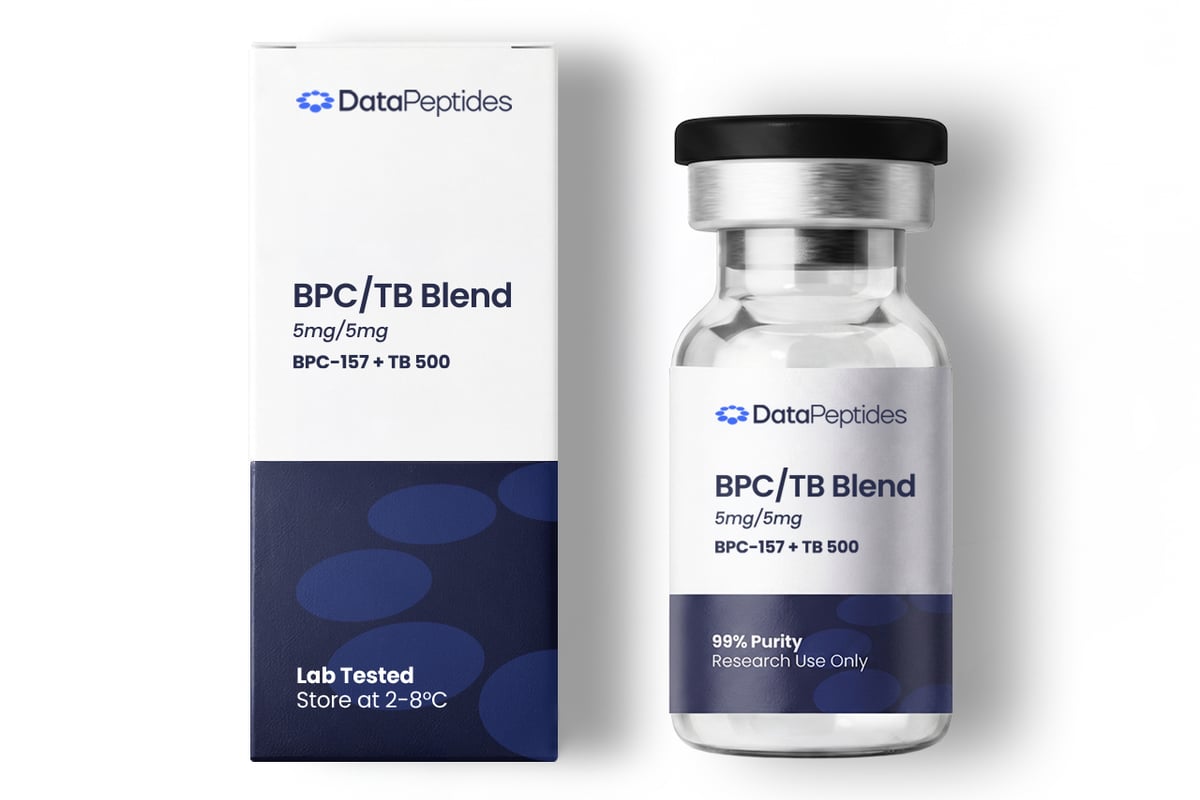
The combination of recovery-focused peptides has generated substantial research interest. Laboratory studies combining BPC-157 and TB-500 have explored synergistic effects on accelerated healing timelines and improved tissue quality post-recovery.
For researchers investigating comprehensive recovery protocols, specialized formulations that combine multiple peptides can provide valuable insights into multi-pathway healing mechanisms. These research-grade combinations allow scientists to study how different molecular signals interact during the regeneration process.
Metabolic and Body Composition Peptides
Several peptides demonstrate unique mechanisms for studying fat metabolism and body composition changes. These compounds offer researchers tools to investigate the molecular basis of metabolic optimization.
| Peptide | Primary Mechanism | Research Focus |
|---|---|---|
| AOD-9604 | Modified GH fragment targeting lipolysis | Fat oxidation without IGF-1 elevation |
| Tesamorelin | GHRH analog | Visceral adipose tissue reduction |
| CJC-1295 + Ipamorelin | Dual GH stimulation | Lean mass retention during caloric restriction |
| MOTS-c | Mitochondrial-derived peptide | Metabolic efficiency and glucose regulation |
The specificity of these peptides allows researchers to isolate particular metabolic pathways. For instance, AOD-9604 provides insights into fat metabolism without the confounding variables of increased IGF-1 levels, making it valuable for controlled metabolic studies.
Selecting Peptides for Specific Research Objectives
Choosing the best peptides for bodybuilding research depends entirely on the experimental parameters and study objectives. Different peptides serve distinct research purposes and should be selected based on the specific physiological systems being investigated.
Muscle Hypertrophy Research
When studying anabolic mechanisms and muscle protein synthesis, researchers typically focus on peptides that elevate growth hormone and IGF-1 levels. The scientific evidence for muscle growth peptides reveals several promising candidates:
Ipamorelin stands out for its selectivity and minimal side effect profile in research models. Unlike earlier GHRPs, it doesn't significantly elevate cortisol or prolactin, allowing researchers to study GH-mediated anabolism without hormonal confounds.
CJC-1295 without DAC provides pulsatile GH release that mimics natural secretion patterns. When combined with Ipamorelin, studies have documented synergistic effects on IGF-1 elevation lasting several hours post-administration.
MGF (Mechano Growth Factor) represents a splice variant of IGF-1 that's released in response to mechanical stress. Research examining its role in satellite cell activation and muscle fiber repair has generated significant interest in exercise physiology laboratories.

Recovery and Injury Research
Laboratory investigations into accelerated healing and tissue regeneration utilize a different peptide subset. These compounds help researchers understand the molecular mechanisms underlying repair processes.
The stability and broad-spectrum effects of BPC-157 make it particularly valuable for studying gastric protection, tendon healing, and muscle regeneration simultaneously. Research protocols often examine its interaction with growth factor pathways and angiogenic signaling.
Thymosin Beta-4 (TB-500) provides insights into actin regulation during healing. Studies have documented its effects on reducing inflammation markers while simultaneously promoting constructive tissue remodeling rather than simple scar formation.
Dosing Protocols and Administration in Research
Research protocols for peptides vary significantly based on compound characteristics, study duration, and measured endpoints. Understanding proper reconstitution, storage, and administration parameters ensures data validity and reproducibility.
Reconstitution and Storage Standards
Most research peptides arrive in lyophilized form requiring reconstitution with bacteriostatic water. Standard laboratory procedures include:
- Calculating precise peptide concentrations based on vial contents
- Using sterile technique during all handling procedures
- Storing reconstituted peptides at 2-8°C (36-46°F)
- Protecting light-sensitive compounds from UV exposure
- Dating all reconstituted materials for stability tracking
The half-life of each peptide determines optimal administration frequency in research protocols. Short-acting peptides like Ipamorelin may require multiple daily administrations, while modified compounds like CJC-1295 with DAC can maintain elevated levels for extended periods.
Research Administration Frequencies
Different peptide categories require distinct administration schedules to maintain stable levels in research models:
| Peptide Type | Typical Half-Life | Research Frequency |
|---|---|---|
| Ipamorelin | ~2 hours | 2-3x daily |
| CJC-1295 (no DAC) | ~30 minutes | 1-3x daily |
| CJC-1295 (with DAC) | ~8 days | 1-2x weekly |
| BPC-157 | ~4 hours | 1-2x daily |
| TB-500 | ~10 days | 2x weekly |
Combining Peptides in Research Protocols
Many bodybuilding research studies examine peptide combinations to understand synergistic mechanisms. Evidence-based stacking protocols reveal how different compounds can complement each other's actions.
The most documented combination pairs growth hormone secretagogues with recovery peptides. For example, researchers might combine CJC-1295 and Ipamorelin for GH elevation while simultaneously administering BPC-157 to study its effects on training-induced microtrauma.
Synergistic Mechanisms
When peptides are combined strategically, they can activate multiple pathways simultaneously:
- GH secretagogues + IGF-1 analogs: Studying both central and peripheral anabolic signaling
- Recovery peptides + GH elevation: Examining how systemic anabolic state affects local healing
- Metabolic peptides + performance compounds: Investigating body recomposition mechanisms
The timing of administration becomes critical in combination protocols. Some researchers administer GH secretagogues pre-workout to study their interaction with exercise-induced GH pulses, while others focus on nocturnal administration to examine sleep-related recovery processes.
Quality Considerations for Research Peptides
The reliability of research outcomes depends fundamentally on peptide purity and authenticity. Laboratory-grade peptide standards require rigorous quality control measures.
Third-party testing serves as the cornerstone of peptide verification. Reputable suppliers provide:
- HPLC (High-Performance Liquid Chromatography) analysis confirming purity percentages
- Mass spectrometry verification of molecular weight and structure
- Bacterial endotoxin testing ensuring sterility standards
- Batch-specific documentation for research traceability
US-manufactured peptides typically undergo more stringent quality oversight compared to international sources. Domestic production facilities must comply with FDA regulations for laboratory research compounds, providing additional quality assurance.
Identifying Quality Suppliers
Researchers should evaluate potential peptide suppliers based on specific criteria:
- Transparent testing documentation available for each batch
- Clear labeling indicating "for research purposes only"
- Proper storage and shipping procedures (temperature-controlled)
- Responsive technical support for reconstitution questions
- Consistent supply chain for longitudinal studies
The best peptides for bodybuilding research come from suppliers who understand scientific requirements and maintain documentation standards compatible with institutional research protocols.
Measuring Research Outcomes and Endpoints
Rigorous bodybuilding peptide research requires clearly defined outcome measures. Different study objectives necessitate distinct assessment methods and measurement frequencies.
Anabolic Research Markers
Studies examining muscle-building effects typically measure:
- Serum IGF-1 levels: Baseline, peak, and sustained elevation
- Body composition changes: DEXA scanning for lean mass and fat mass
- Muscle protein synthesis rates: Stable isotope tracer methods
- Satellite cell activation: Immunohistochemical analysis
- Gene expression profiles: mRNA analysis of anabolic genes
Recovery-focused research employs different endpoints. Tendon healing studies might use ultrasound imaging to assess collagen organization, while muscle recovery research could measure creatine kinase levels and functional strength testing.
Study Duration Considerations
The timeline for observable effects varies significantly among peptide categories:
| Research Objective | Minimum Study Duration | Optimal Duration |
|---|---|---|
| GH/IGF-1 elevation | 2-4 weeks | 8-12 weeks |
| Body composition changes | 4-6 weeks | 12-16 weeks |
| Tissue healing | 2-3 weeks | 6-8 weeks |
| Performance metrics | 4-6 weeks | 12-16 weeks |
Safety Profiles in Laboratory Research
Understanding the safety characteristics of research peptides ensures proper laboratory protocols and risk mitigation strategies. While these compounds are intended solely for research applications, documented safety profiles inform study design.
Most peptides demonstrate favorable safety profiles in controlled research settings. Growth hormone secretagogues typically produce minimal adverse effects when administered within established research parameters. The most commonly documented observations include temporary injection site reactions and transient increases in hunger or lethargy.
BPC-157 has demonstrated remarkable safety across numerous animal studies, with research documenting minimal toxicity even at doses significantly exceeding typical research parameters. Its gastric-protective properties may actually provide beneficial effects in certain research models.
Recovery peptides like TB-500 similarly show benign profiles in laboratory investigations. The compound's natural presence in mammalian systems (as Thymosin Beta-4) suggests inherent biocompatibility, though research applications should still follow established protocols.
Contraindications and Considerations
Certain research scenarios require additional precautions:
- Studies involving cancer cell lines should exercise caution with growth-promoting peptides
- Cardiovascular research may require monitoring when using peptides affecting blood flow
- Metabolic studies should account for peptides' effects on glucose and insulin sensitivity
- Long-term investigations need protocols for monitoring potential desensitization
The comprehensive guides on peptide safety emphasize the importance of established research protocols and institutional oversight for all studies involving bioactive compounds.
Emerging Peptides in Performance Research
The landscape of bodybuilding peptide research continues evolving as new compounds enter investigation. Several emerging peptides show promise for future research applications.
Follistatin peptides, which antagonize myostatin signaling, represent an exciting research frontier. By blocking the primary negative regulator of muscle growth, these compounds offer insights into the upper limits of muscle hypertrophy in mammalian systems.
MOTS-c, a mitochondrial-derived peptide, has generated interest for its effects on metabolic efficiency and exercise adaptation. Research suggests it may influence glucose uptake and fat oxidation through AMPK pathway activation, making it valuable for studying metabolic flexibility.
Epitalon research focuses on telomerase activation and cellular aging markers. While its applications extend beyond bodybuilding, studies examining recovery capacity and training adaptation in aging models find it particularly relevant.
Future Research Directions
The next generation of peptide research protocols will likely focus on:
- Tissue-specific delivery mechanisms to enhance targeted effects
- Combination protocols optimizing multiple complementary pathways
- Genetic factors influencing individual peptide responsiveness
- Long-term adaptation and desensitization mechanisms
- Interaction effects with nutritional and training variables
Regulatory and Ethical Considerations
Research peptides occupy a specific regulatory category distinct from approved pharmaceuticals. Understanding these distinctions ensures appropriate laboratory use and institutional compliance.
The FDA has not approved most research peptides for human use, and they remain classified as investigational compounds. Reputable suppliers clearly label products "for research purposes only" and explicitly state they are not intended for human consumption.
Laboratory research protocols should include:
- Institutional review board approval for any studies involving human subjects
- IACUC oversight for animal research applications
- Proper documentation of all compound sources and testing verification
- Secure storage following institutional guidelines for research chemicals
- Waste disposal protocols compliant with local regulations
The best peptides for bodybuilding research come with transparent documentation supporting their laboratory-use designation. Researchers should verify that suppliers maintain appropriate licenses and follow manufacturing standards consistent with research-grade compounds.
Practical Applications in Bodybuilding Science
Laboratory research on peptides continues informing our understanding of muscle physiology, recovery mechanisms, and performance adaptation. Studies examining these compounds provide valuable insights into fundamental biological processes.
Research investigating growth hormone secretagogues has revealed the importance of pulsatile GH release patterns for maintaining receptor sensitivity. These findings have implications for understanding natural hormone optimization and circadian rhythm effects on anabolism.
Studies on recovery peptides like BPC-157 and TB-500 have advanced our knowledge of angiogenesis, collagen synthesis regulation, and inflammatory modulation during tissue repair. This research extends beyond bodybuilding to inform regenerative medicine approaches.
Research Translation
While peptides remain research compounds, the scientific knowledge gained from laboratory studies contributes to:
- Understanding optimal training stimulus and recovery ratios
- Identifying nutritional factors that support endogenous peptide production
- Developing recovery protocols based on tissue repair mechanisms
- Recognizing individual variation in anabolic responsiveness
The gap between research findings and practical application requires careful interpretation. Laboratory conditions differ substantially from real-world scenarios, and findings from animal models don't always translate directly to human physiology.
Analytical Methods and Research Standards
Proper peptide research requires standardized analytical methods to ensure reproducibility and validity. Laboratory protocols must account for multiple variables that can influence outcomes.
Sample Collection and Analysis
Research studies measuring peptide effects typically employ:
- Fasted blood draws to establish consistent baseline conditions
- Timed sample collection relative to peptide administration
- Multiple measurement points to capture peak and sustained effects
- Appropriate storage conditions for sample integrity
- Validated assay methods with documented sensitivity and specificity
The complexity of measuring certain endpoints requires specialized equipment. IGF-1 analysis typically uses chemiluminescent immunoassays, while body composition assessment may employ DEXA scanning, hydrostatic weighing, or bioelectrical impedance analysis.
Statistical Considerations
Rigorous peptide research incorporates proper statistical design:
- Adequate sample sizes based on power calculations
- Appropriate control groups for comparison
- Blinding procedures to minimize bias
- Statistical tests matching data distribution characteristics
- Correction for multiple comparisons when examining numerous endpoints
The scientific evaluation of peptides requires distinguishing statistically significant findings from practically meaningful effects. Small changes that reach statistical significance may not represent biologically relevant improvements.
Documentation and Record-Keeping
Comprehensive documentation forms the foundation of quality peptide research. Detailed records ensure reproducibility and support data interpretation when studies conclude.
Essential documentation includes:
- Peptide source verification: Supplier information, batch numbers, purity certificates
- Reconstitution logs: Date, diluent volume, final concentrations
- Storage records: Temperature monitoring, light exposure, storage duration
- Administration protocols: Timing, dosage, administration route
- Outcome measurements: Raw data, analysis methods, statistical results
Digital laboratory notebooks and cloud-based data management systems help researchers maintain organized records accessible for long-term reference. These systems support compliance with institutional requirements and facilitate collaboration among research teams.
Research peptides offer valuable tools for investigating the molecular mechanisms underlying muscle growth, recovery, and performance enhancement. From growth hormone secretagogues to tissue repair compounds, the best peptides for bodybuilding research continue advancing our understanding of human physiology and athletic adaptation. For researchers seeking laboratory-grade compounds backed by rigorous quality control, Data Peptides provides US-manufactured research peptides with third-party batch testing and comprehensive documentation supporting institutional research protocols.