

Testosterone optimization has become a critical focus in metabolic and hormonal research, with peptides emerging as sophisticated tools for supporting natural hormone production. Unlike exogenous testosterone replacement, the best peptides to increase testosterone work by stimulating the body's own endocrine pathways, particularly the hypothalamic-pituitary-gonadal (HPG) axis. These research compounds offer a fundamentally different approach to hormonal optimization, triggering upstream signals that encourage natural testosterone synthesis rather than bypassing the body's regulatory mechanisms entirely.
Understanding How Peptides Influence Testosterone Production
The best peptides to increase testosterone operate through precise signaling cascades that activate the body's natural hormone production systems. The HPG axis functions as a three-tier regulatory network where the hypothalamus releases gonadotropin-releasing hormone (GnRH), which signals the pituitary gland to secrete luteinizing hormone (LH) and follicle-stimulating hormone (FSH). These gonadotropins then stimulate Leydig cells in the testes to produce testosterone.
Research peptides that target different points in this cascade offer varying mechanisms of action. Some mimic naturally occurring hormones like GnRH or LH, while others enhance growth hormone pathways that create a more favorable environment for testosterone production. Understanding these distinct mechanisms is essential for researchers investigating hormonal optimization protocols.
The Hypothalamic-Pituitary-Gonadal Axis
This endocrine feedback loop maintains testosterone homeostasis through constant monitoring and adjustment. When testosterone levels drop, the hypothalamus detects this change and increases GnRH secretion. Conversely, elevated testosterone levels suppress GnRH production through negative feedback.
Peptides that stimulate the hypothalamic-pituitary-gonadal axis work within this natural regulatory framework rather than overwhelming it. This approach preserves the body's ability to self-regulate hormone levels while providing targeted support at specific points in the cascade.

Kisspeptin-10: The Upstream Regulator
Kisspeptin-10 stands among the best peptides to increase testosterone due to its position at the top of the hormonal cascade. This naturally occurring peptide binds to the kisspeptin receptor (GPR54) in the hypothalamus, triggering a robust release of GnRH. By acting at this upstream location, kisspeptin-10 initiates a complete natural hormonal sequence.
Research has demonstrated that kisspeptin-10 can produce rapid and substantial increases in LH levels within minutes of administration, followed by corresponding testosterone elevation. The peptide's 10-amino acid structure makes it highly specific for its receptor, minimizing off-target effects while maximizing signal strength.
Mechanism and Research Applications
Key characteristics of kisspeptin-10 include:
- Rapid onset: GnRH secretion begins within 5-10 minutes
- Pulsatile release: Mimics natural hormone secretion patterns
- Dose-dependent response: Higher concentrations produce proportionally greater GnRH output
- Preserved feedback loops: Maintains natural regulatory mechanisms
Studies investigating kisspeptin analogs have shown that repeated administration can restore natural testosterone production patterns in models with suppressed HPG axis function. This makes the compound particularly valuable for research into recovery protocols following hormonal suppression.
Gonadorelin: Synthetic GnRH Analog
Gonadorelin represents a synthetic version of naturally occurring GnRH, making it one of the most direct approaches among the best peptides to increase testosterone. This 10-amino acid peptide binds to GnRH receptors on pituitary gonadotroph cells, stimulating the release of both LH and FSH in physiological ratios.
The peptide's structure closely mirrors endogenous GnRH, allowing it to interact with natural receptors without modification. However, synthetic gonadorelin offers researchers greater control over dosing schedules and purity compared to extracting the natural hormone.
| Characteristic | Gonadorelin | Natural GnRH |
|---|---|---|
| Half-life | 2-4 minutes | 2-4 minutes |
| Receptor affinity | High | High |
| Pulsatility requirement | Yes | Yes |
| LH/FSH stimulation | Both | Both |
Pulsatile Administration Protocols
Research indicates that gonadorelin must be administered in a pulsatile fashion to mimic natural GnRH secretion patterns. Continuous exposure leads to receptor desensitization and paradoxical suppression of gonadotropin release, the opposite of the intended effect.
Pulsatile protocols typically involve administration every 90-120 minutes to match the natural hypothalamic pulse frequency. This scheduling complexity makes gonadorelin more demanding for research applications but allows for precise control over HPG axis stimulation.
CJC-1295 and Growth Hormone Pathways
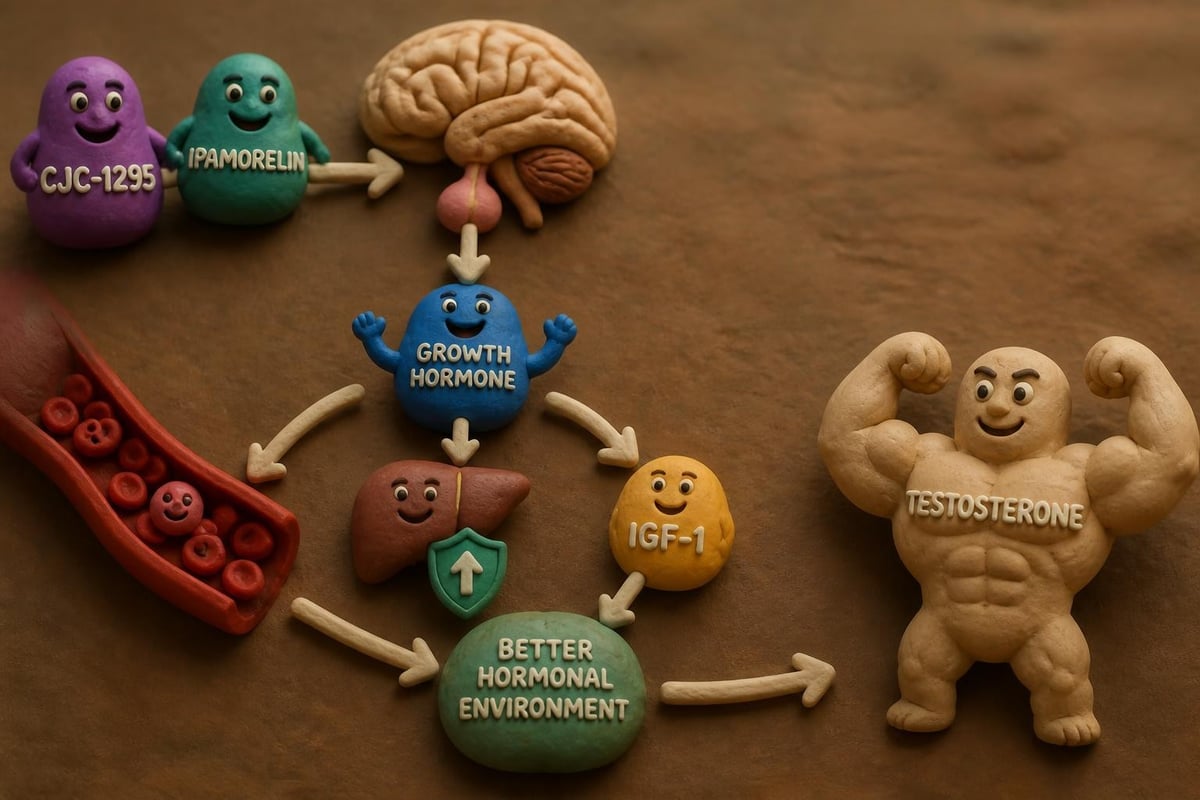
While not directly classified among peptides that increase testosterone through gonadotropin pathways, CJC-1295 deserves consideration for its indirect hormonal effects. This growth hormone-releasing hormone (GHRH) analog stimulates pituitary somatotrophs to increase growth hormone (GH) secretion, which subsequently influences the broader hormonal environment.
The connection between GH and testosterone is multifaceted. Elevated GH levels improve insulin-like growth factor 1 (IGF-1) production, enhance protein synthesis, and create metabolic conditions that support optimal steroidogenesis. Research has shown that GH deficiency often correlates with reduced testosterone levels, while GH optimization may support testosterone production.
The CJC-1295 and Ipamorelin Combination
The synergistic pairing of CJC-1295 with ipamorelin, a growth hormone secretagogue receptor (GHSR) agonist, creates a dual-pathway approach to GH elevation. CJC-1295 amplifies GH release amplitude, while ipamorelin increases pulse frequency. For researchers investigating hormonal optimization, the CJC / IPA Blend offers a well-balanced approach to supporting the growth hormone axis. This combination has been studied extensively in research models examining metabolic function and hormonal balance.
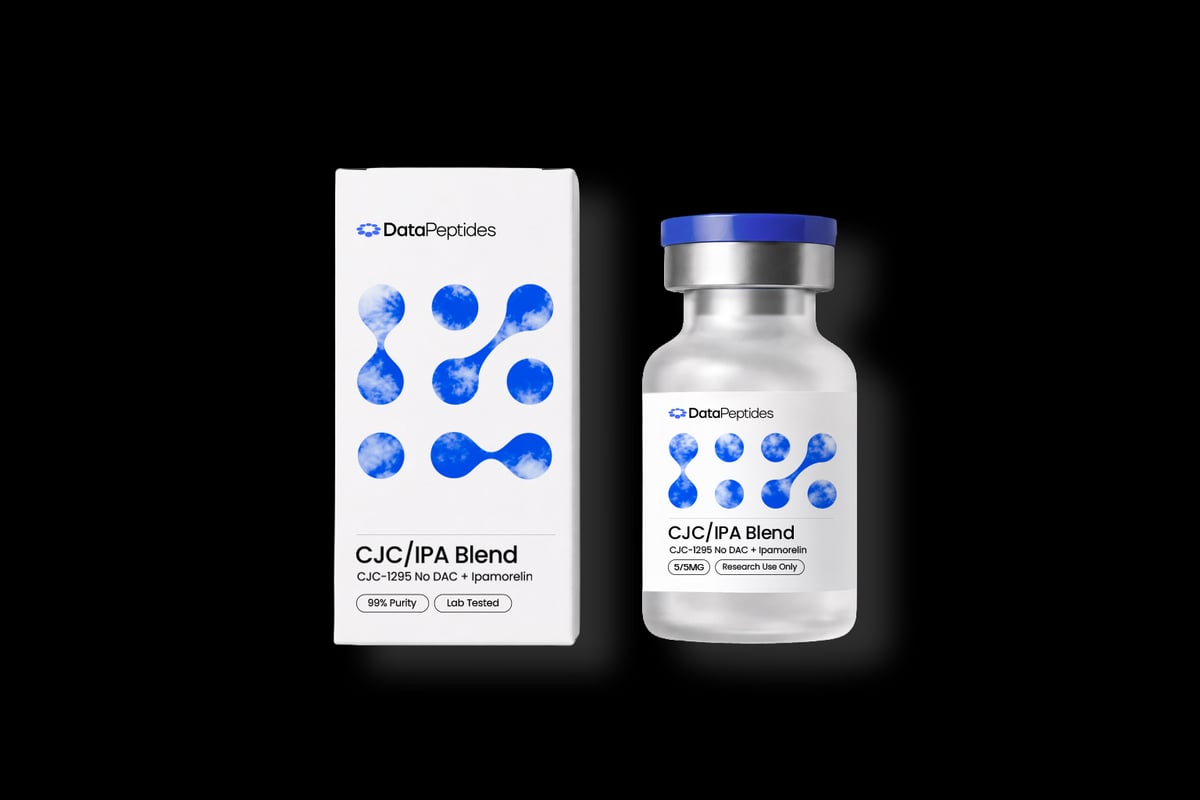
Benefits of the CJC-1295/Ipamorelin combination:
- Enhanced GH pulse amplitude and frequency
- Minimal impact on cortisol or prolactin
- Preserved natural GH pulsatility patterns
- Potential support for favorable hormonal environment
- Complementary mechanisms of action
Human Chorionic Gonadotropin (hCG) as an LH Analog
Human chorionic gonadotropin occupies a unique position among the best peptides to increase testosterone due to its direct action on testicular Leydig cells. This glycoprotein hormone shares substantial structural similarity with LH and binds to the same receptors, triggering immediate testosterone production without requiring upstream hypothalamic or pituitary signaling.
The peptide's 237-amino acid structure and glycosylation pattern give it a significantly longer half-life than native LH (approximately 24-36 hours compared to 20 minutes). This extended duration allows for less frequent administration while maintaining consistent receptor stimulation.
Clinical and Research Applications
Research models frequently employ hCG to prevent testicular atrophy during periods of HPG axis suppression. By maintaining Leydig cell function through direct stimulation, hCG preserves the capacity for natural testosterone production even when upstream signals are diminished.
However, the peptide's mechanism bypasses natural regulatory feedback, which presents both advantages and limitations for research applications. Unlike compounds that work through hypothalamic or pituitary stimulation, hCG provides direct testicular activation regardless of upstream hormone levels.
Sermorelin and GHRH Pathways
Sermorelin, the 29-amino acid fragment of growth hormone-releasing hormone, represents another indirect approach to supporting testosterone through metabolic optimization. Like CJC-1295, sermorelin stimulates natural GH secretion, but with a shorter half-life that more closely mimics endogenous GHRH pulsatility.
The peptide's influence on testosterone stems from its ability to optimize the hormonal milieu. Growth hormone elevation improves body composition, reduces adipose tissue (which contains aromatase that converts testosterone to estrogen), and enhances overall metabolic efficiency. These systemic improvements create conditions more favorable for testosterone production and utilization.
Comparative Analysis of GH-Pathway Peptides
| Peptide | Primary Action | Half-Life | Testosterone Mechanism |
|---|---|---|---|
| Sermorelin | GHRH agonist | 10-20 min | Indirect via GH/IGF-1 |
| CJC-1295 | GHRH analog | 6-8 days | Indirect via GH/IGF-1 |
| Ipamorelin | GHSR agonist | 2 hours | Indirect via GH elevation |
| MK-677 | GHSR agonist | 24 hours | Indirect via GH elevation |
Research comparing these peptides and their mechanisms reveals distinct advantages for different experimental protocols. Shorter-acting compounds like sermorelin allow for precise pulsatile dosing, while longer-acting analogs provide sustained elevation with less frequent administration.
Tesamorelin: Targeted GHRH Analog
Tesamorelin represents a synthetic GHRH analog specifically designed for research applications requiring selective GH stimulation. This 44-amino acid peptide includes modifications that enhance receptor binding affinity while maintaining specificity for GHRH receptors.
The compound's effects on testosterone occur through similar indirect pathways as other GH-stimulating peptides, but with potentially enhanced potency due to its optimized structure. Research has particularly focused on tesamorelin's ability to reduce visceral adipose tissue, which plays a significant role in hormonal metabolism.
Visceral Fat and Hormonal Balance
Excess visceral adiposity negatively impacts testosterone through multiple mechanisms. Adipose tissue expresses aromatase enzyme, which converts testosterone to estradiol. Additionally, visceral fat promotes inflammatory cytokine production that can suppress HPG axis function.
Peptides like tesamorelin that reduce visceral fat may support testosterone optimization by minimizing these conversion and inflammatory pathways. This represents a metabolic approach to hormonal balance rather than direct endocrine stimulation.
IGF-1 and Downstream Signaling
While insulin-like growth factor 1 (IGF-1) is technically produced by the liver in response to GH rather than being an administered peptide, its role in the hormonal cascade merits discussion. IGF-1 mediates many of GH's anabolic effects and contributes to the overall metabolic environment that influences testosterone production.
Research into IGF-1 pathways has revealed bidirectional relationships between IGF-1 and testosterone. Both hormones support protein synthesis, muscle maintenance, and metabolic function. Optimizing one often creates conditions favorable for the other.
The IGF-1 and testosterone relationship involves:
- Shared anabolic signaling pathways
- Synergistic effects on muscle protein synthesis
- Complementary metabolic improvements
- Mutual support for maintaining lean tissue mass
- Overlapping influences on bone density
Comparative Effectiveness and Research Considerations
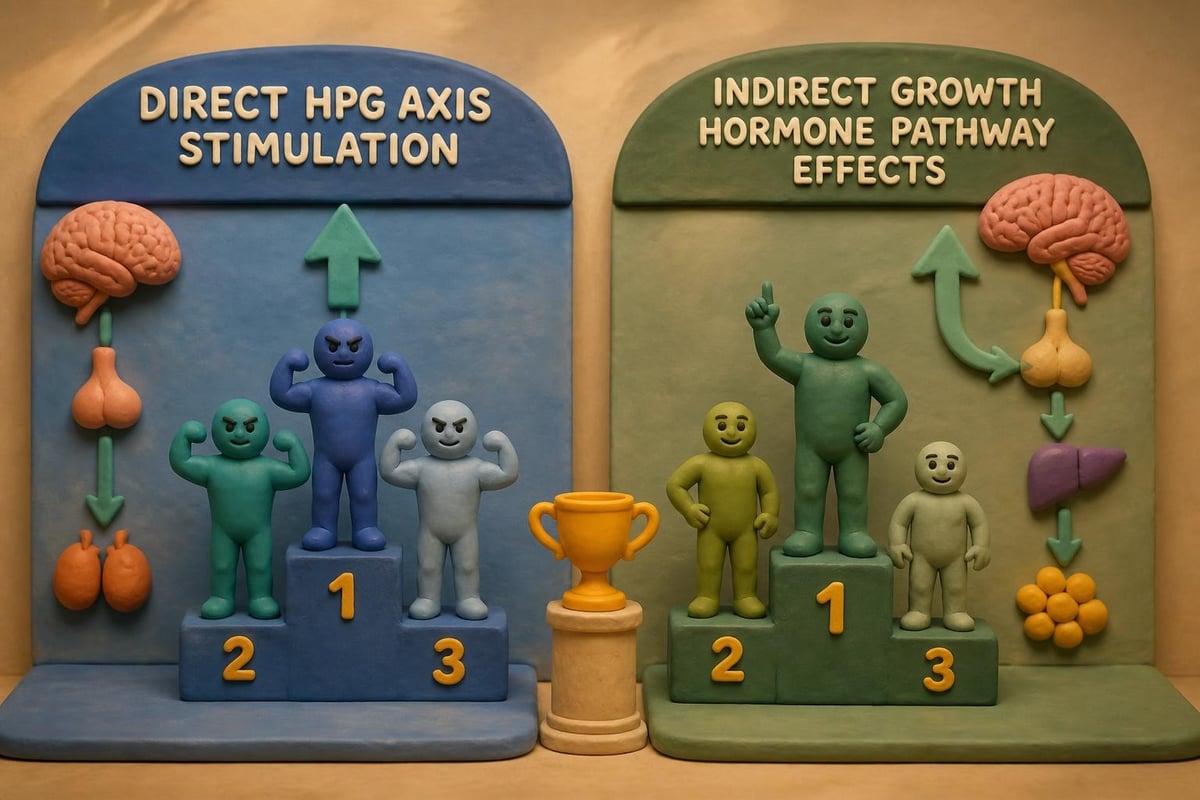
Determining the single best peptide to increase testosterone requires defining specific research objectives and experimental parameters. Peptides that directly stimulate gonadotropin release (kisspeptin-10, gonadorelin, hCG) produce more immediate and pronounced testosterone elevation but require careful attention to dosing patterns and feedback regulation.
Conversely, peptides working through GH pathways (CJC-1295, sermorelin, ipamorelin) offer broader metabolic benefits but produce more modest indirect effects on testosterone. The comparison between these approaches highlights the importance of matching peptide selection to research goals.
Evidence-Based Ranking
Research literature provides varying assessments of peptide effectiveness based on study design, dosing protocols, and measurement methods. A comprehensive ranking typically considers both magnitude of testosterone increase and sustainability of effects.
Top-tier peptides for direct testosterone stimulation:
- Kisspeptin-10: Most upstream HPG axis activation
- Gonadorelin: Direct GnRH replacement
- hCG: Immediate Leydig cell stimulation
Secondary peptides for hormonal environment optimization:
- CJC-1295 + Ipamorelin: Synergistic GH elevation
- Sermorelin: Physiological GHRH pulsatility
- Tesamorelin: Enhanced GHRH analog
Peptide Combinations and Synergistic Protocols
Advanced research protocols often investigate combinations of peptides working through complementary mechanisms. Pairing a GnRH analog with GH-stimulating peptides may provide both direct testosterone elevation and metabolic optimization that supports sustained hormone production.
The rationale behind combination approaches stems from the multifactorial nature of testosterone optimization. While direct HPG axis stimulation produces immediate increases, creating favorable metabolic conditions through GH pathways may enhance the magnitude and sustainability of testosterone elevation.
Protocol Design Considerations
Researchers designing combination protocols must account for:
- Timing of administration to avoid interference between pathways
- Dose adjustments when using multiple compounds
- Monitoring of multiple hormone levels beyond just testosterone
- Potential for additive effects requiring dose reduction
- Duration of protocols and washout periods
Studies examining peptide combinations for testosterone optimization demonstrate that strategic pairing can produce superior results compared to single-peptide approaches in certain experimental models.
Dosing Patterns and Administration Protocols
The best peptides to increase testosterone require specific administration patterns to maximize effectiveness while minimizing receptor desensitization. Compounds mimicking naturally pulsatile hormones (gonadorelin, sermorelin) must be dosed in patterns that replicate physiological rhythms.
Pulsatile dosing requirements:
- Gonadorelin: Every 90-120 minutes for optimal LH release
- Sermorelin: 1-3 times daily, typically before sleep
- Kisspeptin-10: Single or split doses depending on protocol duration
- CJC-1295: Weekly dosing due to extended half-life
Research has shown that continuous exposure to GnRH analogs paradoxically suppresses gonadotropin release through receptor downregulation. This phenomenon, known as desensitization, underscores the importance of matching dosing schedules to natural hormone pulsatility.
Subcutaneous vs. Intravenous Administration
Most research peptides demonstrate adequate bioavailability through subcutaneous injection, though absorption rates and pharmacokinetics vary by compound. Peptides with very short half-lives may benefit from intravenous administration in research settings where precise timing is critical.
The choice between administration routes affects both the magnitude and timing of hormonal responses. Researchers must consider these pharmacokinetic differences when designing experimental protocols and interpreting results.
Age-Related Considerations in Peptide Research
Testosterone production naturally declines with age, primarily due to reduced Leydig cell function and diminished HPG axis responsiveness. The best peptides to increase testosterone may show different effectiveness profiles depending on the age of research models.
Younger models typically respond more robustly to upstream stimulation (kisspeptin, gonadorelin) because their Leydig cells retain full responsiveness to LH signals. Older models may demonstrate blunted responses to gonadotropin stimulation, potentially requiring direct Leydig cell activation through hCG.
| Age Category | HPG Axis Responsiveness | Leydig Cell Function | Optimal Peptide Approach |
|---|---|---|---|
| Young adult | High | Optimal | Upstream stimulation |
| Middle age | Moderate | Good | Mixed protocols |
| Advanced age | Reduced | Declining | Direct stimulation |
| Very advanced | Significantly reduced | Impaired | hCG + metabolic support |
Research comparing age-specific peptide responses reveals that combination approaches addressing both direct stimulation and metabolic optimization may prove most effective in aged models.
Safety Profiles and Research Monitoring
Laboratory research with the best peptides to increase testosterone requires comprehensive monitoring of multiple hormone levels and physiological parameters. While these compounds work through natural pathways rather than exogenous hormone replacement, they still influence delicate endocrine balance.
Essential monitoring parameters include:
- Total and free testosterone levels
- Luteinizing hormone (LH)
- Follicle-stimulating hormone (FSH)
- Estradiol (to assess aromatization)
- Sex hormone-binding globulin (SHBG)
- Complete metabolic panel
- Lipid profile
Researchers must also remain vigilant for signs of excessive stimulation, including overly elevated testosterone levels that trigger negative feedback suppression or conversion to estrogen through aromatase activity.
Peptide Purity and Quality Control
For research applications, peptide purity directly impacts both effectiveness and safety profiles. Third-party batch testing ensures that compounds contain the specified sequence without contamination or degradation products that could interfere with results or introduce confounding variables.
Data Peptides provides laboratory-grade research peptides manufactured in the United States with comprehensive third-party testing documentation. All products are intended solely for laboratory research applications, not for human or animal consumption.
Ipamorelin's Specific Role in Hormonal Research
While ipamorelin does not directly increase testosterone through gonadotropin pathways, its effects on growth hormone secretion warrant specific discussion. This selective GHSR agonist stimulates GH release with minimal impact on cortisol or prolactin, making it particularly useful for research focused on isolated GH elevation.
The peptide's relationship to testosterone is primarily indirect, operating through the metabolic and anabolic environment created by elevated GH and IGF-1. Research models using ipamorelin have shown improvements in body composition that may secondarily support testosterone production.
Ipamorelin characteristics relevant to testosterone research:
- Highly selective for GH secretion
- Minimal elevation of cortisol (unlike some GHSR agonists)
- Short half-life allowing for multiple daily dosing
- Synergistic with GHRH analogs like CJC-1295
- Creates favorable metabolic environment without direct hormonal stimulation
Peptide Research vs. Traditional Testosterone Interventions
The fundamental distinction between peptides and direct testosterone administration lies in their approach to hormonal optimization. Traditional testosterone replacement bypasses natural production entirely, while the best peptides to increase testosterone stimulate endogenous synthesis through various mechanisms.
This difference carries significant implications for research applications. Peptide-based approaches preserve the HPG axis's regulatory capacity and maintain natural feedback loops. Researchers can investigate how supporting natural production differs from exogenous replacement in terms of receptor sensitivity, metabolic effects, and long-term sustainability.
Preservation of Natural Production Capacity
One critical advantage of peptide research over exogenous testosterone is the maintenance of endogenous production capacity. When external testosterone is administered, negative feedback suppresses the HPG axis, leading to testicular atrophy and cessation of natural hormone synthesis.
Peptides that stimulate natural pathways avoid this suppression by working within the body's regulatory framework. This preservation of function has important implications for research into sustainable hormonal optimization approaches and recovery protocols.
Research Applications and Future Directions
Current research into the best peptides to increase testosterone spans multiple domains, from basic endocrinology to metabolic optimization and age-related hormonal decline. Ongoing studies investigate optimal dosing patterns, combination protocols, and long-term effects of various peptide approaches.
Future research directions include:
- Selective receptor modulators: Developing peptides with enhanced specificity for particular receptors in the HPG axis
- Extended-release formulations: Creating delivery systems that maintain physiological pulsatility with less frequent dosing
- Combination optimization: Identifying synergistic pairings that maximize testosterone elevation while minimizing doses
- Age-specific protocols: Tailoring peptide selection to the unique characteristics of different life stages
- Metabolic phenotyping: Matching peptide approaches to individual metabolic profiles
Comprehensive peptide research resources continue to expand, providing investigators with detailed information on mechanisms, protocols, and emerging compounds in this rapidly evolving field.
Quality Standards for Research Peptides
The validity of research findings depends fundamentally on the purity and quality of compounds used in experiments. Degraded, contaminated, or incorrectly synthesized peptides produce unreliable results that cannot be replicated or built upon by other researchers.
Laboratory-grade peptides should meet stringent purity standards, typically exceeding 98% as verified by high-performance liquid chromatography (HPLC). Mass spectrometry confirms correct molecular weight and sequence, while third-party testing provides independent verification of these quality parameters.
Essential quality documentation includes:
- Certificate of analysis (COA) for each batch
- HPLC chromatogram showing purity percentage
- Mass spectrometry confirming molecular identity
- Storage and handling recommendations
- Expiration dating based on stability testing
- Chain of custody documentation
Researchers sourcing peptides for testosterone studies should prioritize suppliers offering complete documentation and US-based manufacturing to ensure compliance with laboratory standards and regulations.
The best peptides to increase testosterone offer researchers sophisticated tools for investigating natural hormone production through multiple complementary pathways, from direct HPG axis stimulation to metabolic optimization. Understanding the distinct mechanisms of kisspeptin-10, gonadorelin, CJC-1295, and other compounds enables precise experimental design tailored to specific research objectives. For investigators requiring laboratory-grade, third-party tested research peptides with complete documentation, Data Peptides provides US-manufactured compounds intended solely for laboratory research applications.