

Animal data on delta sleep-inducing peptide are consistent and, at times, striking. Human trials are not. Well-controlled EEG studies in rats and rabbits repeatedly show increased slow-wave activity after DSIP administration, but double-blind human trials on insomniacs have produced weak, inconsistent results, and no one has ever identified a DSIP receptor or a precursor gene. That combination makes DSIP a legitimate mechanistic research subject, not a validated sleep treatment.
TL;DR:
- Human studies show weak and inconsistent effects of DSIP on sleep, with the most reliable results coming from slow, controlled infusions rather than rapid administration.
- In animal models, DSIP consistently increases delta-wave activity and deep non-REM sleep, especially when administered directly into the brain.
- The mechanism of DSIP remains unclear, with hypotheses including neurotransmitter modulation, endocrine effects, and circadian influence, but no confirmed receptor or precursor gene exists.
- Assay limitations, potential bacterial contamination, and peptide instability have hindered reproducibility and mechanistic clarity in DSIP research.
- Proper sourcing, handling, and standardized infusion protocols are essential for reproducible results in future DSIP studies.
Table of Contents
- Understanding DSIP Research: What the Peptide Is and Where It Came From
- Clinical Evidence in Humans: What Trials Actually Found
- The Animal Data: Delta Waves, Slow-Wave Sleep, and Beyond
- How DSIP Might Work: Competing Mechanistic Theories
- Why DSIP Research Remains Genuinely Contested
- Pharmacokinetics and Formulation: What Affects DSIP’s Behavior in Studies
- Safety Signals and Reported Side Effects in DSIP Studies
- Building Reproducible DSIP Studies: What Data Peptides Recommends
- Where DSIP Research Should Go Next
- Sourcing DSIP for Your Own Research Protocol
- Sources
- FAQ
Understanding DSIP Research: What the Peptide Is and Where It Came From
DSIP research starts with a nine-amino-acid chain: Trp-Ala-Gly-Gly-Asp-Ala-Ser-Gly-Glu. That sequence is why the peptide is classified as a nonapeptide, a designation you’ll see repeated across the biochemistry literature and summarized in overviews like the ScienceDirect topic entry on delta sleep-inducing peptide.
The discovery story is stranger than most peptide origin tales. In the 1970s, Swiss researchers were studying hemodialysate from rabbits during induced sleep states and isolated a peptide fraction associated with delta-wave activity, the slow, high-amplitude brain waves characteristic of deep non-REM sleep. That fraction became DSIP. You’ll sometimes see it referred to by its full name, delta sleep peptide, or abbreviated in older papers under slightly different naming conventions, but DSIP is the term that stuck in the literature.
What makes DSIP unusual among neuropeptides is how little anatomical certainty surrounds it. Researchers have reported DSIP-like immunoreactivity in the hypothalamus, pituitary, and peripheral blood, but immunoreactivity is not the same as confirmed endogenous synthesis at a known site. Several papers have also tracked what looks like a circadian rhythm in plasma DSIP-like immunoreactivity, with levels shifting across the day in ways that loosely track sleep-wake cycles, a pattern documented in broader physiologic surveys of the peptide’s effects, including the review covering endocrine interactions and physiologic effects of DSIP.
Assay methodology matters enormously here, and it’s worth flagging early because it resurfaces throughout DSIP studies. Most detection has relied on radioimmunoassay, which measures immunoreactivity rather than the confirmed intact peptide. That distinction becomes important later when we get to the controversies around specificity.
A few foundational facts are worth holding onto as you read further into the DSIP literature:
- DSIP is a nonapeptide with the sequence Trp-Ala-Gly-Gly-Asp-Ala-Ser-Gly-Glu, discovered in rabbit hemodialysate during the 1970s.
- No confirmed gene or biosynthetic precursor has been identified for endogenous DSIP production.
- Plasma DSIP-like immunoreactivity has been reported to vary across the day, suggesting a possible circadian component.
- Detection has historically relied on radioimmunoassay, which raises specificity questions addressed later in the research.
- The peptide’s name references its original discovery context (delta-wave sleep) rather than a confirmed, singular mechanism of action.
Understanding this background matters because a lot of secondary sources treat DSIP as a settled, well-characterized hormone. It isn’t. It’s a peptide with a genuinely interesting discovery history and a frustratingly incomplete biochemical profile, and that gap between “interesting” and “understood” defines almost every debate that follows in DSIP research.
Clinical Evidence in Humans: What Trials Actually Found
DSIP clinical trials in humans tell a story of promise undercut by inconsistency. The core problem isn’t that studies found no effect. Some did. The problem is that effect sizes vary wildly by design, and the strongest results tend to come from smaller, less rigorously controlled studies while the more tightly controlled trials show weaker or statistically shaky benefits.
Here’s a rough chronology of how the human evidence developed and what each design tier actually showed:
- Early open-label reports (late 1970s through 1980s). Several uncontrolled studies in patients with severe, chronic insomnia reported apparent normalization of sleep patterns after DSIP administration, sometimes described qualitatively as restoring more typical sleep architecture. These reports generated a lot of the initial enthusiasm around DSIP as a therapeutic candidate, but without blinding or placebo controls, that enthusiasm outran the evidence.
- Controlled infusion studies. A body of work specifically testing slow intravenous administration found more encouraging and more reproducible signals. One frequently cited protocol reported sleep latency of about one hour following controlled infusion, with subjective and objective benefits persisting for hours to days in some subjects, alongside generally good tolerability, according to the controlled human infusion research on DSIP. The infusion rate, not just the dose, appeared to matter a great deal here.
- Small double-blind trials. This is where things get genuinely humbling. A small double-blind trial in chronic insomniacs found only slight and inconsistent improvements in sleep efficiency and sleep latency compared to placebo, as documented in the double-blind human study on DSIP and insomnia. That’s a meaningfully different picture than the open-label reports.
The core statistic that frames this entire section: in the best-controlled human trial available, the double-blind design with roughly 16 subjects, DSIP failed to produce a consistent, statistically reliable improvement in the two endpoints that matter most for insomnia research, sleep latency and sleep efficiency. That single data point does more to explain the field’s current skepticism than any amount of preclinical enthusiasm can offset.
Why the discrepancy between open-label optimism and double-blind disappointment? A few methodological factors show up again and again when researchers try to reconcile the data:
- Dose and infusion rate weren’t standardized across studies. Some protocols used rapid administration, others used slow continuous infusion over hours, and the two approaches appear to produce meaningfully different outcomes.
- Endpoint definitions varied. “Improved sleep” meant different things across studies, sometimes a subjective patient report, sometimes polysomnography-confirmed changes in sleep architecture, sometimes just reduced time to fall asleep.
- Sample sizes were uniformly small. Even the more rigorous trials rarely exceeded a few dozen participants, which leaves little statistical power to detect a modest effect if one exists.
- Patient populations differed. Severe chronic insomniacs, a group with substantially disrupted baseline sleep architecture, may respond differently to DSIP than a broader insomnia population would.
If you’re trying to draw a single conclusion from human DSIP research so far, it’s this: slow, controlled administration seems to matter more than dose alone, and the strength of the evidence drops sharply as study design tightens. That’s not necessarily disqualifying for a candidate molecule, but it means anyone citing DSIP as a proven human sleep aid is overstating what the trials actually show.
The Animal Data: Delta Waves, Slow-Wave Sleep, and Beyond
Preclinical DSIP research is where the peptide earns its name, and where the evidence is far more consistent than in humans. EEG studies in rats and rabbits have repeatedly documented increases in delta-wave activity, the slow, synchronized cortical oscillations associated with deep non-REM sleep, following DSIP administration.
The number that anchors this whole body of work: early animal EEG studies reported substantial increases in neocortical delta activity after DSIP administration in some experimental models, a striking effect size documented in the early animal EEG research on DSIP. That’s not a marginal shift in brain wave power. It’s a substantial reorganization of cortical electrical activity toward the deep-sleep end of the spectrum.
A few patterns show up consistently across the animal literature:
- Increases in delta-wave and slow-wave sleep activity have been reported across multiple species, though effect magnitude varies by species and by administration route.
- Intracerebroventricular (ICV) administration, which delivers the peptide directly into the brain’s ventricular system, tends to produce more consistent central effects than peripheral routes, likely because it sidesteps degradation and blood-brain-barrier limitations.
- Some researchers have turned to more stable DSIP analogues specifically because native DSIP degrades quickly in circulation, making dose-response relationships hard to pin down with the native peptide alone.
- Beyond sleep architecture, animal studies have documented DSIP effects on pain threshold (antinociception), seizure susceptibility (anticonvulsant activity), and stress hormone regulation.
That last point deserves its own attention, because DSIP’s non-sleep effects are almost as well documented as its sleep effects, and they complicate any simple story about what this peptide “does.” Experimental work has shown DSIP modulating adrenocorticotropic hormone (ACTH) and corticotropin responses, influencing luteinizing hormone (LH) release, and producing measurable antinociceptive and anticonvulsant effects in animal models, according to the research on DSIP’s endocrine and physiologic effects.
That breadth of activity is either a strength or a problem depending on how you look at it. On one hand, it suggests DSIP interacts with multiple physiological systems in ways that could be scientifically interesting well beyond sleep medicine. On the other, it makes “DSIP promotes sleep” too simple a summary. A peptide that also touches the hypothalamic-pituitary-adrenal axis, pain signaling, and seizure thresholds is not behaving like a dedicated, single-pathway sleep hormone. It’s behaving like something with broader neuromodulatory reach, and researchers designing new studies need to account for that when they choose endpoints and control conditions.
If you’re reading across this literature for the first time, the honest takeaway is that the animal delta-wave data is some of the most reproducible evidence in the entire DSIP research base. The trouble is translating that consistency into a comparably clean human result, which so far hasn’t happened.
How DSIP Might Work: Competing Mechanistic Theories
No one has definitively answered how DSIP affects sleep and physiology, which is a fairly remarkable admission for a peptide that’s been studied since the 1970s. Several mechanistic hypotheses circulate in the literature, and none of them has fully displaced the others.
The neurotransmitter modulation hypothesis is probably the most cited. Some experimental work points to DSIP interacting with NMDA glutamate receptor signaling and cholinergic pathways, both of which play established roles in sleep-wake regulation and cortical arousal states. If DSIP nudges these systems, that could plausibly explain the delta-wave increases seen in animal EEG studies, though the exact receptor-level interaction hasn’t been pinned down.
The endocrine modulation hypothesis focuses on DSIP’s documented effects on the hypothalamic-pituitary-adrenal axis. Since HPA axis activity and cortisol rhythms are tightly linked to sleep architecture and circadian timing, a hormone-mediated route to DSIP’s sleep effects is mechanistically plausible, even if it hasn’t been proven as the primary pathway.
A third framework, sometimes called the chronobiologic or “programming” hypothesis, suggests DSIP doesn’t act as a direct sedative at all. Instead, it may nudge the timing or organization of the sleep-wake cycle itself, which would explain a pattern researchers have noticed in some trials: daytime dosing occasionally produces benefits that show up later, at night, rather than immediate sedation. That delayed-effect pattern is hard to reconcile with a simple “this peptide makes you sleepy” model, and it’s part of why some researchers frame DSIP more as a circadian modulator than a classic hypnotic.
Key evidence supporting each mechanistic angle:
- Neurotransmitter route: experimental interaction with NMDA and cholinergic signaling pathways, both established players in sleep-wake and arousal regulation.
- Endocrine route: documented modulation of ACTH, corticotropin, and LH release across multiple animal studies.
- Chronobiologic route: delayed-onset benefit patterns observed in some human dosing protocols, inconsistent with a direct sedative mechanism.
- The persistent gap: no confirmed receptor and no identified biosynthetic precursor, a limitation that contemporary reviews flag as a central obstacle to resolving which mechanism, if any, is dominant, per the review addressing DSIP’s unresolved receptor and precursor status.
That last bullet is the one that matters most for anyone designing new studies. Without a confirmed receptor, every mechanistic hypothesis above is really a correlation dressed up as a causal model. That’s not a criticism of the researchers who’ve built these frameworks. It’s a fair description of where the field currently stands.
Why DSIP Research Remains Genuinely Contested
The reproducibility problems in DSIP research aren’t incidental. They trace back to a handful of specific, well-documented issues that anyone reading this literature critically needs to understand.
The origin question is the strangest one. Sequence alignment analyses (BLAST comparisons) of the DSIP sequence have turned up matches with bacterial protein sequences, which has led some researchers to float the hypothesis that reported “DSIP” in certain assays might partly reflect bacterial contamination or cross-reactivity rather than a genuine mammalian neuropeptide. This hasn’t been resolved either way, but it’s a serious enough concern that it shows up repeatedly in critical reviews of the field.
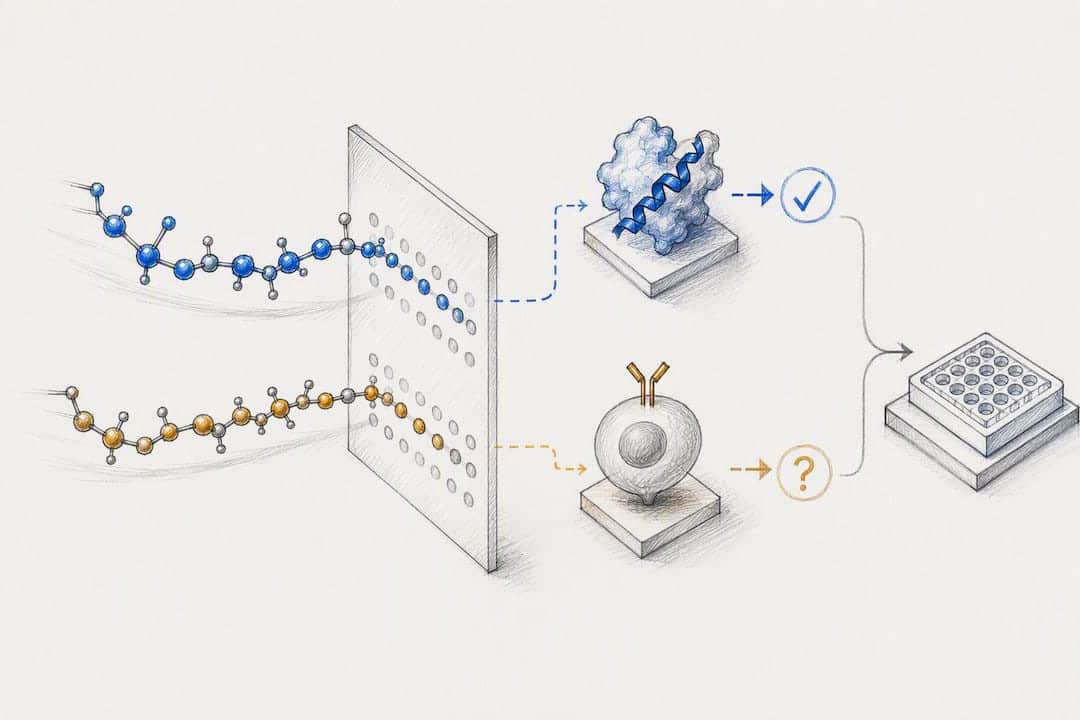
Assay specificity compounds the problem. Because much of the historical detection work relied on radioimmunoassay for “DSIP-like immunoreactivity,” rather than mass spectrometry confirmation of the intact peptide, there’s a real possibility that different labs have measured somewhat different things while calling it the same molecule. Add to that the peptide’s known instability in plasma, where it degrades relatively quickly once administered, and you get a research base where comparing results across studies is harder than it looks on paper.
A few specific methodological pitfalls researchers repeatedly flag:
- BLAST sequence alignment has revealed similarities to bacterial proteins, fueling unresolved questions about whether some reported DSIP activity reflects contamination rather than genuine neuropeptide signaling.
- Radioimmunoassay-based detection measures immunoreactivity, not confirmed intact peptide, which limits confidence in cross-study comparisons.
- DSIP shows a documented U-shaped dose-response curve in some experimental protocols, meaning higher doses don’t reliably produce stronger effects and can sometimes produce weaker ones.
- Timing and infusion rate have repeatedly shown up as variables that shift outcomes independent of total dose administered.
- No confirmed receptor or precursor peptide has been identified, which contemporary reviews specifically flag as a barrier to reconciling conflicting results, per the same review on DSIP mechanism and reproducibility cited above.
Pro Tip: If you’re designing a new DSIP protocol, don’t treat “dose” as a single variable. Infusion rate and total exposure time have independently altered outcomes in prior studies, so a well-designed protocol tests them separately rather than assuming a simple dose-response relationship will hold.
None of this means DSIP research is junk science. It means the peptide sits in a category common to a lot of older neuropeptide discoveries: genuinely interesting biological activity, paired with detection and mechanistic tools that haven’t fully caught up to modern standards. That gap is exactly why DSIP remains an active research subject rather than a settled question.
Pharmacokinetics and Formulation: What Affects DSIP’s Behavior in Studies
DSIP’s short half-life is probably the single most consequential pharmacokinetic fact for anyone designing a study around it. The peptide degrades quickly once administered, which has direct implications for how you dose it, how you administer it, and how you interpret a “failed” result that might actually reflect degradation rather than lack of biological activity.
Route of administration changes outcomes substantially. Intracerebroventricular delivery bypasses peripheral degradation and the blood-brain barrier entirely, which is likely why ICV studies in animals tend to show more consistent central effects than subcutaneous or standard intravenous dosing. Intravenous administration, the route used in most human trials, has to contend with plasma-based enzymatic breakdown before the peptide reaches its site of action, whatever that site turns out to be.
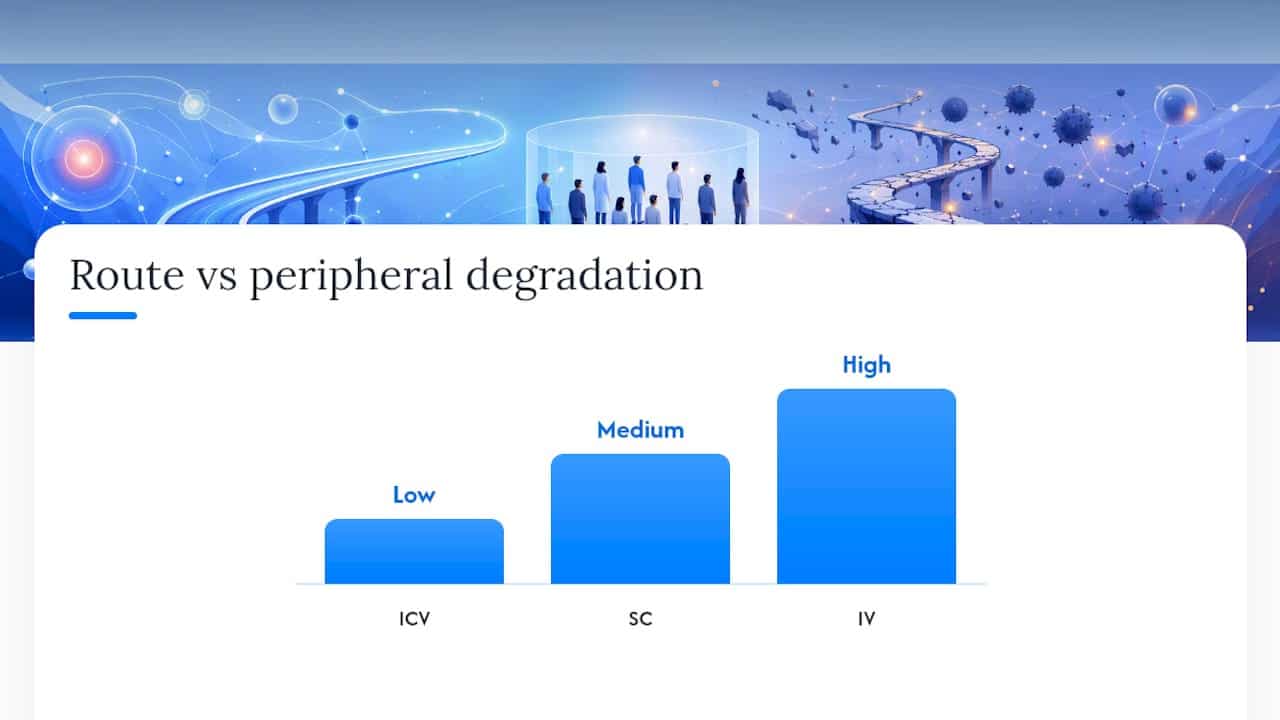
Infusion rate is not a minor detail. It’s arguably the single variable that separates the more encouraging controlled human studies from the disappointing double-blind results. Slow, sustained IV infusion produced the strongest and most tolerable outcomes in controlled human protocols, while faster administration approaches have been associated with weaker or less consistent benefit, a pattern noted repeatedly in the clinical infusion literature.
For researchers setting up new protocols, a few practical steps reduce the risk of degradation artifacts confounding your results:
- Confirm peptide identity and purity before use. HPLC analysis paired with a Certificate of Analysis establishes what you’re actually working with before you attribute any effect, or lack of one, to the molecule itself.
- Minimize freeze-thaw cycles. Prepare single-use aliquots rather than repeatedly thawing and refreezing stock solutions, since repeated cycling accelerates degradation of an already unstable peptide.
- Control infusion rate deliberately as a study variable, not an afterthought, given how strongly it’s influenced outcomes in prior human research.
- Consider stable analogues when native DSIP’s instability threatens to confound dose-response interpretation, a strategy several animal studies have already adopted.
- Validate bioactivity in a pilot model before scaling any protocol, whether that’s a small animal cohort or an early-phase human pilot, to confirm the preparation is behaviorally or electrophysiologically active before committing to a larger sample.
Pro Tip: Treat infusion rate as seriously as you’d treat dose in your study design. The literature suggests it may matter more.
Formulation and handling problems have quietly undermined more than one DSIP protocol over the years, and they’re avoidable with basic laboratory discipline, discussed in more depth in guidance on peptide laboratory standards and handling practices.
Safety Signals and Reported Side Effects in DSIP Studies
DSIP’s tolerability profile, across the human studies that exist, looks reassuring on the surface. Reported adverse events have generally been transient and mild: headache, nausea, and vertigo appear in the literature as occasional side effects, without evidence of serious or lasting harm in the controlled trials conducted so far.
The honest statistical caveat: tolerability data comes from a small number of trials with limited sample sizes, mostly in the dozens of participants rather than hundreds, so “generally well tolerated” describes what’s been observed, not a guarantee that rare adverse effects wouldn’t surface in a larger population.
Beyond simple tolerability, DSIP produces measurable physiological effects that researchers need to account for when designing safety monitoring:
- Modulation of ACTH and cortisol release, meaning HPA axis function is a relevant variable to track in any extended protocol.
- Effects on LH release, which could carry implications for reproductive hormone studies if DSIP is administered alongside other endocrine research.
- Antinociceptive activity, altering pain threshold in animal models, a relevant consideration for any study using pain-related behavioral endpoints.
- Reported thermoregulatory effects in some experimental contexts, worth monitoring in any protocol tracking body temperature as a secondary measure.
What remains genuinely unknown is arguably more important than what’s been documented. There’s no long-term human safety data beyond the short trial windows already discussed. There’s no established data on interactions with peptidase inhibitors, which could theoretically extend the peptide’s half-life and change its effect profile in unpredictable ways. And DSIP carries no established regulatory approval as a therapeutic agent anywhere, a status worth keeping in mind alongside the FDA’s ongoing oversight of peptide-related compounding standards, which reflects the broader regulatory environment peptide research operates within. Any research protocol involving DSIP should be designed and reviewed with those open questions in mind.
Building Reproducible DSIP Studies: What Data Peptides Recommends
Reproducibility problems in DSIP research often start before the experiment does, with uncertainty about what’s actually in the vial. That’s the gap Data Peptides is built to close for researchers running peptide-based protocols. Every batch ships with third-party testing and a Certificate of Analysis confirming identity and purity, which matters enormously for a peptide as prone to degradation and assay confusion as DSIP.
Before any DSIP protocol begins, a basic procurement and QA checklist prevents a lot of downstream confusion:
- Verify peptide identity against the labeled sequence using HPLC or mass spectrometry data provided in the Certificate of Analysis.
- Confirm purity percentage and check for a batch-specific COA rather than a generic product sheet.
- Establish proper storage conditions immediately on arrival, since peptide stability depends heavily on temperature control from the moment it leaves cold-chain shipping.
- Prepare single-use aliquots to avoid repeated freeze-thaw cycling, which accelerates degradation.
- Cross-reference your intended dosing protocol against published infusion-rate and route data before finalizing study design.
On the experimental side, the design choices that separate a clean result from a confounded one are well established even if DSIP’s mechanism isn’t: validated assays over immunoreactivity-only detection where possible, tightly controlled infusion rates rather than variable bolus dosing, blinding wherever a subjective endpoint is involved, and sample sizes large enough to detect a modest effect rather than relying on the underpowered cohorts that have muddied the human literature so far. Data Peptides’ research guides on peptide laboratory standards walk through these handling and validation steps in more detail for researchers setting up new protocols.
Where DSIP Research Should Go Next
The next decade of DSIP research needs to prioritize well-powered, double-blind trials with standardized infusion protocols and pre-registered endpoints, quantitative EEG delta metrics alongside daytime functional outcomes, not just subjective sleep reports. Small, underpowered trials have generated more confusion than clarity.
On the preclinical side, finding the receptor, or ruling one out in favor of a different mechanism entirely, would resolve more open questions than any additional dosing study. Standardizing assay methodology across labs, and systematically comparing native DSIP against its more stable analogues, would also help separate genuine biological signal from artifacts of peptide instability.
Longer term, the field needs longitudinal safety data and a real look at peptidase inhibitor interactions before DSIP moves anywhere near therapeutic territory. That’s the honest, unglamorous work this molecule still needs.
— Data Peptides
Sourcing DSIP for Your Own Research Protocol
Researchers designing DSIP studies need peptide material they can trust before they can trust their results, and that starts with verified sourcing rather than guesswork. Data Peptides supplies lab-grade DSIP and related research peptides with third-party testing and batch-specific Certificates of Analysis, giving researchers a documented purity baseline before a single infusion protocol begins. That documentation matters especially for a peptide with DSIP’s known plasma instability, where uncertainty about starting material can easily masquerade as a “failed” experimental result.
Reliable shipping and customer support services help ensure procurement doesn’t become the bottleneck in your timeline. If you’re ready to source material for a DSIP protocol or a broader sleep-peptide comparison study, start with the guide to ordering research peptides for COA verification steps and product selection guidance, or go directly to the peptide catalog to review current lab-grade DSIP availability.
Sources
The papers cited throughout this article form a reasonable starting reading list for anyone building a serious DSIP protocol. Start with the original animal EEG work documenting delta-wave increases for the preclinical foundation, then read the controlled human infusion study and the double-blind insomnia trial together, since comparing their designs explains most of the field’s inconsistency. The modern review on mechanism and reproducibility is the best single source for understanding the unresolved receptor question, and Data Peptides’ own guide to peptides in sleep research situates DSIP within the broader landscape of sleep-related peptides.
This article is general information, not a substitute for advice from a qualified doctor. Consult a qualified healthcare professional about your own circumstances before acting on anything here.
- PubMed record: effects noted in early animal models (PMID 6145137)
- PubMed: double-blind human study reporting limited/weak results (PMID 1299794)
- PubMed review noting receptor/precursor unknown and cautioning on reproducibility (PMID 16539679)
- PubMed: Effects of DSIP in man — controlled infusion reports (PMID 6689058)
- PubMed: assorted physiologic effects and endocrine interactions (PMID 7777652)
FAQ
Does DSIP peptide really work for sleep?
Animal studies consistently show DSIP increases delta-wave EEG activity, but human trials are inconsistent. A double-blind trial in chronic insomniacs found only slight, statistically shaky improvements, so “works” depends heavily on which study you’re citing and how tightly it was controlled.
How long does it take for DSIP to produce an effect?
In controlled human infusion protocols, sleep latency dropped to about one hour, with some effects reported to last hours to days depending on the protocol. Rapid administration methods have generally produced weaker or less consistent timing effects than slow infusion.
What are the side effects of DSIP?
Reported human side effects have been mild and transient, including occasional headache, nausea, and vertigo, without evidence of serious harm in the trials conducted so far. Long-term safety data beyond short trial windows doesn’t currently exist.
How much does DSIP peptide cost for research purposes?
Pricing varies by supplier, purity grade, and quantity ordered. Current pricing and available quantities for lab-grade DSIP are listed on the Data Peptides shop.
Why is there no identified receptor for DSIP?
Despite decades of research, no gene, precursor, or specific receptor has been confirmed for DSIP, which contemporary reviews flag as a central obstacle to resolving how the peptide actually works. That gap is part of why mechanistic hypotheses (neurotransmitter, endocrine, chronobiologic) remain competing theories rather than settled science.