

MOTS-c is a 16-amino-acid mitochondrial-derived peptide encoded within the MT-RNR1 gene region typically annotated as 12S rRNA, and it activates AMPK through a folate cycle/AICAR mechanism that triggers nuclear translocation under metabolic stress. The rodent pharmacology is genuinely strong: exogenous administration prevents diet-induced obesity and improves insulin sensitivity in mice. Human evidence remains observational only. No published randomized controlled trial of native MOTS-c exists as of mid-2026, which means every therapeutic claim beyond mechanism and animal data is still, strictly speaking, a hypothesis.
TL;DR:
- Human evidence remains observational, with circulating MOTS-c levels higher in obesity but not decreasing after weight loss, suggesting a compensatory response rather than deficiency.
- Rodent studies show MOTS-c prevents diet-induced obesity, improves insulin sensitivity, and mimics exercise effects through AMPK activation and nuclear gene regulation, but human safety data is lacking.
- Measurement challenges include assay variability and rapid peptide degradation, making standardized, well-documented sourcing essential for reproducible research.
- No published human clinical trial of native MOTS-c exists yet, although a Phase 2a trial in prediabetes is recruiting, emphasizing the need for thorough pharmacokinetic and safety studies first.
- Researchers should verify peptide identity, purity, and endotoxin status with detailed Certificates of Analysis before experimental use to ensure validity and reproducibility.
Table of Contents
- MOTS-c Research: Molecular Identity and Cellular Mechanism
- Preclinical Pharmacology: What Animal Models Actually Show
- Human Studies: What Observational Data Actually Tells Us
- Exercise, Aging, and Tissue Specificity in MOTS-c Regulation
- Therapeutic Development, Clinical Trials, and Regulatory Status
- Pharmacokinetics, Stability, and Delivery Challenges
- Research Methods and Experimental Best Practices for MOTS-c
- Gaps, Unanswered Questions, and a Research Agenda
- Signaling Beyond AMPK: Downstream Targets and Cross-Talk
- MOTS-c Among Mitochondrial-Derived Peptides: What’s Shared, What’s Different
- Off-Target Effects and Safety Signals in Preclinical Work
- Quantification Challenges: Assay Sensitivity and Specificity
- Patent Landscape and Intellectual Property Considerations
- Ethical Considerations in First-in-Human MOTS-c Research
- The Gap Between Mechanism and Medicine
- Sourcing MOTS-c for Reproducible Research
- Sources
- FAQ
MOTS-c Research: Molecular Identity and Cellular Mechanism
MOTS-c belongs to a small but growing class of signaling molecules called mitochondrial-derived peptides (MDPs), which are encoded not in nuclear DNA but within mitochondrial DNA open reading frames once dismissed as noncoding. Its exact sequence is MRWQEMGYIFYPRKLR, hidden in an alternative reading frame of the 12S rRNA region of MT-RNR1. That location matters for research design: primer sets and expression assays built around canonical mitochondrial genes will miss it entirely if they aren’t specifically tuned to this reading frame.
The mechanism runs through one-carbon metabolism, not a conventional membrane receptor cascade. MOTS-c interferes with the folate cycle, which drives accumulation of AICAR (5-aminoimidazole-4-carboxamide ribonucleotide), a well-known endogenous AMPK activator. That AMPK activation then cascades into the effects researchers actually measure: increased glucose uptake in skeletal muscle, enhanced fatty-acid oxidation, and shifts in cellular energy sensing that mimic what happens during caloric restriction or exercise.
What sets MOTS-c apart from a typical peptide hormone is what happens next. Under metabolic stress conditions like glucose restriction or oxidative challenge, MOTS-c translocates to the nucleus rather than staying confined to cytoplasmic signaling. There, it interacts with stress-response transcription factors, including NRF2, and appears to help regulate expression of antioxidant and metabolic genes directly. Recent work on lung ischemia-reperfusion injury models found this nuclear translocation depends on the protein MYH9, and that once inside the nucleus, MOTS-c binds near the promoter regions of genes like HMOX1 and NQO1 to help drive their transcription, which is a mechanism most classic peptide hormones simply don’t have available to them.
Key mechanistic features that distinguish MOTS-c:
- Encoded in mitochondrial DNA rather than produced through the standard nuclear gene, peptide precursor, and secretory pathway.
- Activates AMPK indirectly through folate cycle disruption and AICAR accumulation, not through a surface receptor.
- Translocates to the nucleus under stress, functioning partly as a transcriptional regulator.
- Concentrates primarily in skeletal muscle, though it circulates systemically and has been detected in cardiac and lung tissue in preclinical models.
MOTS-c Research Snapshot: Circulating MOTS-c has been measured in the 200 to 300 picogram-per-milliliter range in human obesity cohorts, with obese adults showing meaningfully higher levels than lean controls in at least one peer-reviewed cohort study. That’s a biomarker signal worth understanding before assuming it means what it sounds like it means, a point covered further in the human studies section below.
For researchers used to thinking in terms of ligand-receptor pairs, MOTS-c requires a mental model shift. It behaves more like a metabolic sensor that reports mitochondrial stress to both cytoplasmic energy pathways and the nuclear genome simultaneously. That dual action, energy sensing plus gene regulation, is why some investigators categorize MDPs as a distinct signaling class rather than lumping them in with adipokines or myokines, even though skeletal muscle is their dominant tissue of origin.
Preclinical Pharmacology: What Animal Models Actually Show
The foundational data set for MOTS-c research comes from Lee and colleagues’ 2015 Cell Metabolism paper, which remains the most cited primary source in the field. In mice fed a high-fat diet, exogenous MOTS-c administration prevented the expected weight gain, improved glucose tolerance, and restored insulin sensitivity, with effects that depended on AMPK activity. When researchers blocked AMPK pharmacologically, the metabolic protection largely disappeared, which is about as clean a mechanistic confirmation as preclinical pharmacology gets.
Subsequent work extended these findings into exercise physiology. Later studies, including the exercise-induction physiology described by Reynolds and colleagues, showed that muscle MOTS-c expression responds dramatically to physical activity, and that the peptide behaves like an exercise mimetic in some rodent protocols, improving endurance capacity and muscle power output. The distinction between acute and chronic dosing matters here. Acute administration tends to produce transient metabolic shifts tied to the specific stress event, while chronic dosing regimens in obesity models are what produced the durable weight and glucose improvements. Researchers designing new protocols should treat these as genuinely different experimental questions, not interchangeable dosing schedules.
What the rodent literature has demonstrated so far:
- Prevention of high-fat-diet-induced obesity and insulin resistance, with clear AMPK dependence.
- Exercise-mimetic effects on endurance and muscle power in trained and untrained animals.
- Cardioprotective signals in ischemia models, with reduced infarct size and improved functional recovery reported in several rodent studies.
- Attenuation of lung ischemia-reperfusion injury through the MYH9-dependent nuclear pathway described above, with reduced oxidative damage and mortality in treated animals.
- Activation of antioxidant gene transcription (HMOX1, NQO1) via direct promoter interaction, confirmed through RNA-seq and ChIP-seq work.
The organ-protection signal is where MOTS-c research has expanded most aggressively in the past two years. What started as a metabolic story has broadened into cardioprotection and pulmonary protection literature, suggesting the nuclear translocation mechanism may generalize across tissue types facing oxidative or ischemic stress, not just skeletal muscle.
Pro Tip: If you’re designing a rodent MOTS-c study, don’t default to a single dosing regimen borrowed from the 2015 obesity papers. Cardioprotection and lung injury protocols use different administration windows, often a single pre- or peri-injury dose rather than sustained daily dosing, and conflating the two designs is a common source of unreplicable results in this literature.
The limitations are worth stating plainly. Every one of these findings comes from rodent models, mostly mice, with a handful of rat studies in the organ-protection space. Species differences in folate metabolism and AMPK signaling sensitivity mean dose-response curves established in mice cannot be assumed to translate directly to human physiology. Route of administration also varies across studies, some using intraperitoneal injection, others subcutaneous, with no standardized formulation. And critically, there is no published long-term safety data in any species beyond the duration of the specific experimental protocols, which typically run weeks, not months or years. Anyone citing MOTS-c as an established therapeutic candidate is overstating what the preclinical record actually supports.
Human Studies: What Observational Data Actually Tells Us
Human evidence for MOTS-c comes entirely from observational cohorts and small correlational studies, not intervention trials. That distinction shapes how every finding below should be interpreted.
The most detailed cohort data comes from a study measuring circulating MOTS-c in obese versus lean adults, which found obese participants averaged 273 ± 56 pg/mL compared to 223 ± 50 pg/mL in lean controls, a statistically significant difference. Both BMI and HOMA-IR (a standard insulin resistance index) independently predicted elevated MOTS-c levels, but the relationship was nonlinear rather than a simple dose-response curve. Perhaps the most consequential finding in that same cohort: MOTS-c levels remained unchanged six months after bariatric surgery, despite substantial weight loss and metabolic improvement in the same patients.
That’s a genuine puzzle, and it points to a biomarker paradox worth sitting with before drawing therapeutic conclusions. Higher circulating MOTS-c in obese cohorts likely reflects a compensatory stress response rather than a simple deficiency state. If that’s correct, it means elevated levels in metabolically stressed individuals cannot be read as evidence that giving more exogenous MOTS-c would help. The body may already be upregulating it as a countermeasure that isn’t fully effective, which is a very different clinical picture than a straightforward insufficiency.
A second complication is tissue discordance. Muscle expression of MOTS-c and plasma concentration don’t necessarily track together, since the peptide is thought to act partly through local, tissue-confined signaling before any of it reaches systemic circulation. A researcher measuring only serum levels may be missing the biologically active signal happening at the muscle fiber level entirely.
What the small human cohorts have found:
- Circulating MOTS-c correlates positively with lower-body muscle strength and jump power in physically active adults, but shows no correlation with VO2max in the same 20-person study.
- Elevated levels associate with obesity and insulin resistance markers, though the relationship is nonlinear and possibly compensatory rather than causal.
- Preliminary links to coronary artery disease status have appeared in isolated small studies, but sample sizes remain too small for confident conclusions.
- Assay methods vary widely across studies, immunoassay versus mass spectrometry approaches, which likely explains some of the inconsistency in absolute concentration values reported across the literature.
Standardizing measurement protocol is arguably the single biggest unmet need in human MOTS-c research right now. Without a common assay standard, comparing absolute concentrations across studies is close to meaningless, even when the qualitative direction of a finding, higher in obesity, correlated with strength, is likely real.
Exercise, Aging, and Tissue Specificity in MOTS-c Regulation
Exercise is the single most reliable modulator of MOTS-c that human research has identified. Acute bouts of exercise drive dramatic increases in muscle MOTS-c expression, with some reports describing roughly a twelvefold rise in muscle tissue shortly after exertion, alongside a smaller, more transient increase in plasma concentration. That muscle-plasma gap in magnitude is itself informative: it suggests local production and local action dominate the acute response, with only a fraction spilling into systemic circulation.
Chronic training tells a different story. Endurance athletes with sustained training histories tend to show lower resting circulating MOTS-c than untrained individuals, which looks paradoxical until you consider it as an adaptation effect rather than a deficiency. A metabolically efficient, well-trained system may simply need less acute AMPK-mediated rescue signaling at rest. Whether power-focused athletes show the same pattern as endurance athletes isn’t well established yet, and it’s a meaningful gap given that MOTS-c’s muscle power effects in rodent models suggest the two athlete populations might diverge.
Aging adds another layer of complexity. Plasma MOTS-c appears to decline with age in several human studies, while muscle tissue content in some reports actually increases, an inverse pattern that may relate to changes in muscle fiber-type composition, since fiber types differ in mitochondrial density and metabolic demand.
Design implications this raises for researchers:
- Sampling timing relative to an exercise bout changes results dramatically. A post-exercise plasma draw and a resting draw are not comparable data points.
- Tissue choice, muscle biopsy versus plasma, answers fundamentally different biological questions and should be chosen based on the hypothesis, not convenience.
- Training history of study participants needs to be documented and controlled for, given the apparent divergence between trained and untrained baseline levels.
- Age-matched controls are essential given the opposing plasma and muscle trends across the lifespan.
Therapeutic Development, Clinical Trials, and Regulatory Status
No peer-reviewed human randomized controlled trial of native MOTS-c has been published as of mid-2026. That single fact should anchor every conversation about MOTS-c’s therapeutic readiness, regardless of how compelling the rodent data looks.
There is movement toward changing that. A Phase 2a randomized, placebo-controlled trial of subcutaneous MOTS-c in prediabetes has been registered and is recruiting, making it the first controlled human trial of the native peptide. The design reportedly uses an OGTT-derived insulin sensitivity index at week 12 as its primary outcome, a reasonably standard endpoint choice for early metabolic trials. Until results are published, though, this remains a pipeline entry, not evidence.
It’s also essential to distinguish native MOTS-c from engineered analogs like CB4211, which has its own separate development program and safety/pharmacokinetic data set. Public discussion sometimes blurs this line, generalizing analog findings to the native peptide without justification. Any safety or PK signal attributed to an analog compound should not be assumed to apply to native MOTS-c without explicit supporting data.
Regulatory context researchers should understand:
- The FDA has held compounding advisory discussions regarding MOTS-c, and advisory committee activity has flagged the lack of human exposure data for compounded formulations.
- Advisory committee votes are procedural recommendations, not formal regulatory approvals or bans; treating an advisory vote as equivalent to an FDA safety determination is a common and consequential misreading.
- MOTS-c is explicitly categorized as an AMPK activator on athlete-prohibited substance lists maintained by anti-doping authorities, which has direct implications for any research involving competitive athletes as subjects.
- Researchers sourcing MOTS-c for laboratory use should treat it strictly as a research-use compound, not a clinical intervention, given the current absence of human safety data for the native peptide.
MOTS-c Research Status Check: Rodent pharmacology, strong and mechanistically confirmed. Human biomarker data, observational and correlational only. Human interventional data, one Phase 2a trial recruiting, zero published results.
Pharmacokinetics, Stability, and Delivery Challenges
Native MOTS-c faces a stability problem that shapes almost every downstream experimental decision. The literature describes rapid proteolytic degradation of the native peptide in human serum, meaning it likely has a short functional half-life once introduced into circulation. That has direct experimental consequences: a negative pharmacodynamic result in a poorly timed study may reflect the peptide being cleared before it could act, not a genuine absence of biological effect.
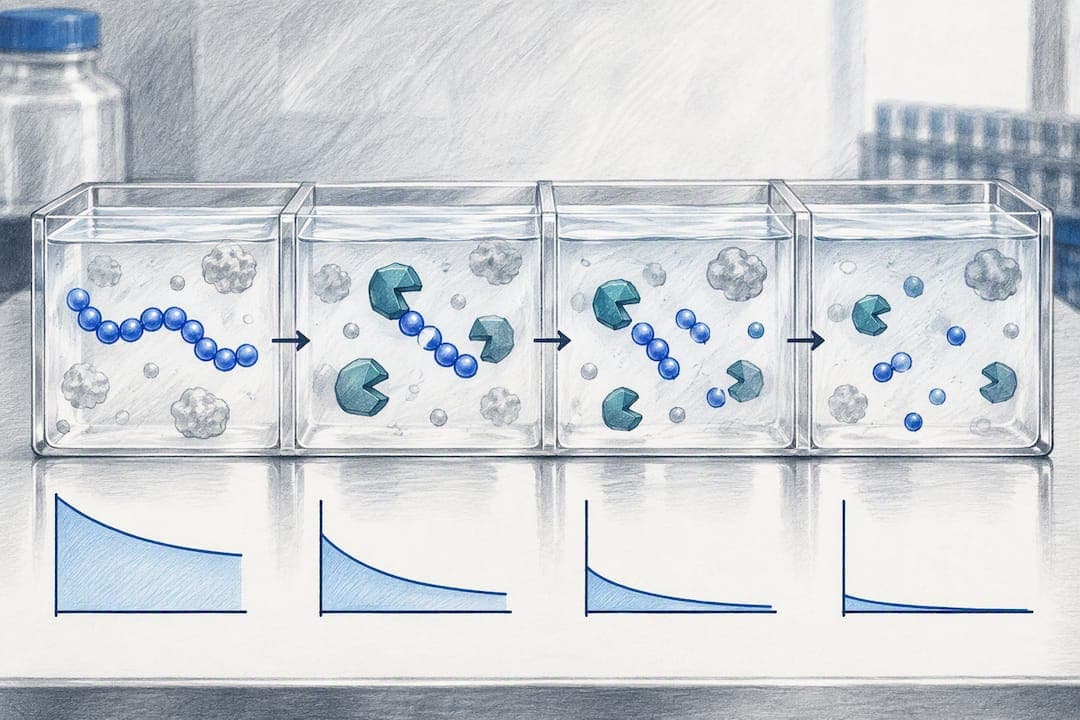
Several delivery strategies have appeared in preclinical work to address this. Sequence modification to resist proteolysis, depot or sustained-release formulations, and structural stabilization approaches have all been explored, each with tradeoffs between preserving the native mechanism and extending functional exposure. None of these modified approaches should be assumed to behave identically to native MOTS-c in terms of either efficacy or safety.
Analytical challenges researchers run into:
- LC-MS methods offer high specificity but require more sophisticated sample preparation and instrumentation access than most labs have on hand.
- Immunoassays are more accessible but carry cross-reactivity risk, particularly given sequence similarity concerns within the broader mitochondrial-derived peptide family.
- Sensitivity thresholds vary enough between methods that comparing absolute picogram-per-milliliter values across studies using different assay platforms is genuinely risky.
- Sample handling, freeze-thaw cycles especially, can degrade peptide integrity before the assay ever runs, confounding results in ways that are easy to miss.
Pro Tip: Before running any pharmacodynamic endpoint, nail down your own pharmacokinetic profile in your specific model and delivery route. Don’t borrow half-life assumptions from a different study using a different formulation. A negative PD result without a confirmed PK curve tells you almost nothing about whether the peptide reached its target intact.
Research Methods and Experimental Best Practices for MOTS-c
Reproducibility problems in peptide research usually trace back to sourcing, not biology. Before any in vivo work, verify the exact amino acid sequence of the compound you’ve received, request a Certificate of Analysis confirming purity, and confirm endotoxin testing has been performed, since endotoxin contamination alone can produce inflammatory confounds that mimic or mask the effects you’re trying to measure. Documentation like a Certificate of Analysis should specify batch-level purity data, not just a general product claim.
A practical framework for MOTS-c experimental design:
- Confirm sequence identity and purity through the supplier’s COA before any dosing begins, and retain that documentation alongside your raw data.
- Match your assay and sampling schedule to your research question: plasma sampling for systemic exposure questions, muscle biopsy for local tissue action, and tight post-dose windows for any PK characterization given the peptide’s apparent rapid clearance.
- Base dose selection on rodent exposure data scaled conservatively for known interspecies differences in folate metabolism, rather than direct weight-based extrapolation, and build in safety monitoring even for research-only protocols.
- Document methods with enough specificity for another lab to replicate exactly: exact peptide sequence used, lot-specific COA reference, and storage and shipping conditions maintained throughout the protocol.
Pro Tip: Cold-chain documentation matters more than most researchers budget for. Peptide degradation during shipping or storage can silently undermine an otherwise well-designed study, and it’s one of the easiest variables to control for if you request shipping and storage records upfront rather than assuming stability.
Gaps, Unanswered Questions, and a Research Agenda
The most consequential gap is simple: nobody has published human PK or safety data for native MOTS-c. Everything downstream, immunogenicity risk, long-term safety signals including any theoretical oncology concern tied to a growth-signaling peptide, and realistic dosing, depends on that foundation existing first.
A pragmatic priority order for the field:
- Nonclinical PK and toxicology packages specifically for native MOTS-c, distinct from any analog compound data already in hand.
- A properly powered Phase 1 human PK and safety study, run before efficacy claims get any further ahead of the safety record.
- Standardized biomarker assay protocols developed and validated before or alongside early human trials, not retrofitted afterward once inconsistent data has already accumulated.
- Trial designs that pair a clear clinical endpoint, like the OGTT-based insulin sensitivity index in the current Phase 2a trial, with a validated biomarker panel, so results are interpretable rather than another isolated data point.
Funders and institutional review boards evaluating first-in-human proposals should treat the current evidence base as exactly what it is: mechanistically excellent, translationally premature.
Signaling Beyond AMPK: Downstream Targets and Cross-Talk
AMPK activation is the entry point into MOTS-c biology, not the whole story. Once AMPK is active, it phosphorylates downstream targets including acetyl-CoA carboxylase, which shifts cellular metabolism toward fatty-acid oxidation over lipogenesis, and it influences mTOR signaling, creating cross-talk between growth and energy-sensing pathways that researchers studying muscle hypertrophy or cancer metabolism should watch closely.
The nuclear translocation pathway adds a second, largely independent arm. Through MYH9-dependent transport, MOTS-c reaches the nucleus and interacts with stress-responsive transcription factors, engaging antioxidant response elements near genes like HMOX1 and NQO1. This connects MOTS-c signaling to the broader NRF2 antioxidant network, a pathway heavily studied in its own right for oxidative stress and inflammation research.
There’s also emerging interest in how MOTS-c’s folate-cycle interference might intersect with one-carbon metabolism more broadly, a pathway central to nucleotide synthesis and methylation reactions throughout the cell. That intersection raises open questions about whether chronic MOTS-c exposure could have downstream epigenetic effects through altered methyl donor availability, an area with essentially no published data yet but real mechanistic plausibility given the folate cycle mechanism already established.
For researchers building signaling pathway diagrams, the practical takeaway is that MOTS-c sits at a genuine intersection point between energy sensing, oxidative stress response, and potentially one-carbon metabolism, not a single linear pathway.
MOTS-c Among Mitochondrial-Derived Peptides: What’s Shared, What’s Different
MOTS-c belongs to a peptide family that also includes Humanin, one of the first mitochondrial-derived peptides characterized and a molecule studied primarily for cytoprotective and anti-apoptotic effects rather than metabolic regulation. Both peptides originate from mitochondrial DNA reading frames once assumed to be noncoding, and both show tissue-protective signals in preclinical injury models, which is where their roles genuinely overlap.
The mechanisms diverge sharply beyond that surface similarity. Humanin acts primarily through interaction with the IGF-binding protein system and direct anti-apoptotic signaling at the mitochondrial membrane, protecting cells from programmed death under stress. MOTS-c, by contrast, works through AMPK activation and nuclear gene regulation, a fundamentally metabolic and transcriptional mechanism rather than a cell-survival one.
Several other small mitochondrial-derived peptides, including SHLPs (small humanin-like peptides), have been characterized with varying degrees of depth, and the family as a whole appears to function as a coordinated internal communication system between mitochondria and the rest of the cell. Researchers working across this peptide class should resist treating findings from one MDP as automatically predictive of another. The shared mitochondrial origin doesn’t imply a shared mechanism, and conflating Humanin’s cytoprotective data with MOTS-c’s metabolic data would be a real error in a literature review or grant proposal.
Off-Target Effects and Safety Signals in Preclinical Work
The preclinical safety record for MOTS-c is thin by design, since most published studies run for weeks and focus on efficacy endpoints rather than dedicated toxicology screening. That’s not the same as a clean safety profile. It simply means the question hasn’t been rigorously asked yet in most existing protocols.
A few specific concerns deserve attention when designing longer studies. Because MOTS-c is an AMPK activator with growth-pathway cross-talk through mTOR, any chronic administration protocol should monitor for unintended effects on cell proliferation pathways, particularly given AMPK’s dual role in both metabolic regulation and cell growth suppression depending on tissue context. The nuclear translocation mechanism, while framed positively as antioxidant gene activation in injury models, also means MOTS-c is directly influencing gene transcription, and any peptide with that capability warrants careful off-target transcriptomic screening before extended dosing regimens.
Route and formulation-specific effects also remain underexplored. Most preclinical studies use intraperitoneal or subcutaneous administration in short-duration protocols, and there’s limited published data on immune response to repeated dosing, injection-site effects over extended timelines, or dose-dependent toxicity thresholds. Given that native MOTS-c appears to degrade rapidly in serum, chronic dosing studies may also need higher or more frequent administration to maintain exposure, which changes the safety calculus compared to the single or short-course protocols most current data comes from.
Researchers planning longer-duration animal studies should budget for dedicated toxicology endpoints rather than relying on the efficacy-focused safety observations already in the literature.
Quantification Challenges: Assay Sensitivity and Specificity
Measuring MOTS-c accurately is harder than the simple picogram-per-milliliter numbers in published papers might suggest. Two dominant methods exist, immunoassay-based detection and LC-MS, and they don’t always agree with each other on absolute values.
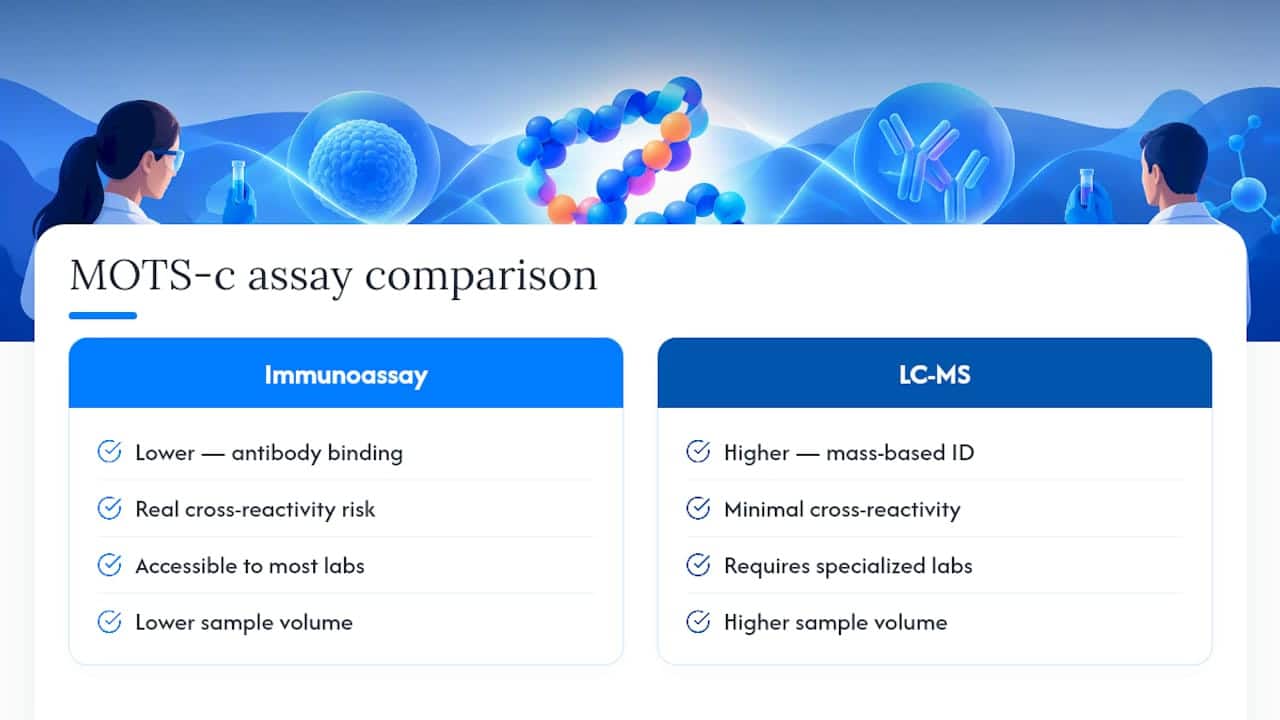
Immunoassays are the more accessible option for most labs, but they carry real cross-reactivity risk. Because MOTS-c shares some structural context with other mitochondrial-derived peptides and because antibody specificity varies by manufacturer and lot, immunoassay results can shift meaningfully depending on which kit was used, even when measuring the same biological sample. LC-MS offers superior specificity since it directly identifies the peptide by mass rather than relying on antibody binding, but it demands more sample volume, more sophisticated instrumentation, and more technical expertise than many labs have readily available.
Sample handling compounds these issues. Freeze-thaw cycles, time between collection and processing, and even the specific anticoagulant used in blood collection tubes can all affect measured peptide concentration. This is part of why absolute values reported across different human cohort studies vary as much as they do. A researcher trying to compare their own findings against the published literature should treat cross-study absolute value comparisons cautiously and focus more on within-study relative differences and directional findings, which tend to hold up better than exact concentration figures.
Standardized reference materials and validated assay protocols remain a genuine unmet need across the MOTS-c literature.
Patent Landscape and Intellectual Property Considerations
The intellectual property picture around MOTS-c reflects its origin story: academic discovery followed by a mix of academic and commercial interest in therapeutic development. Foundational discovery work and early mechanistic characterization emerged from academic research groups, which typically means base composition-of-matter claims around the native sequence face some limits on patentability given prior publication.
Where the IP landscape gets more active is around engineered analogs and formulation approaches. Modified sequences designed for improved stability, extended half-life, or enhanced potency, the kind of work distinguishing something like CB4211 from native MOTS-c, represent more defensible patent territory since they involve genuine novel modifications rather than the naturally occurring sequence itself. Delivery method patents, covering specific depot formulations or stabilization chemistry, follow a similar logic.
This patent structure has a practical effect on translational research funding. Companies pursuing analog development have a clearer path to exclusivity and therefore a stronger commercial incentive to fund the expensive Phase 1 and Phase 2 safety and efficacy work. Native MOTS-c, with more limited composition-of-matter protection available, may see less concentrated commercial investment specifically in native-sequence clinical development, even though it’s the form with the most existing mechanistic and preclinical data behind it. Researchers evaluating why native MOTS-c trials have moved slower than the compelling 2015 rodent data might suggest should factor this commercial incentive gap into that assessment, alongside the genuine scientific PK challenges already discussed.
Ethical Considerations in First-in-Human MOTS-c Research
Moving MOTS-c from rodent models into first-in-human studies raises ethical questions that go beyond standard early-phase trial design. The core issue is the same PK uncertainty already discussed: without established human half-life, clearance, and dose-response data for native MOTS-c, calculating a genuinely safe starting dose for a first-in-human study requires unusually conservative extrapolation from animal data, given how much interspecies variation in folate metabolism and AMPK sensitivity could plausibly exist.
The AMPK activation mechanism itself deserves specific ethical scrutiny given its dual role in both metabolic regulation and cell growth pathways. Institutional review boards evaluating first-in-human proposals should require dedicated preclinical toxicology data addressing that cross-talk, not just efficacy data, before approving dose-escalation designs.
Peptide modification work, the analog development happening alongside native MOTS-c research, introduces a separate ethical thread. Trials using engineered analogs need informed consent language that clearly distinguishes analog-specific risk data from native peptide data, since conflating the two in participant-facing materials would misrepresent what’s actually known about the specific compound being administered. Given that MOTS-c also appears on anti-doping prohibited lists, researchers recruiting athlete populations for any MOTS-c study face an additional layer of ethical consideration around dual-use risk and appropriate consent disclosure regarding that regulatory status.
The registered Phase 2a prediabetes trial will be an important test case for how these considerations get handled in practice, and its design and consent documentation are worth watching closely once details become fully public.
The Gap Between Mechanism and Medicine
The MOTS-c literature is a near-perfect case study in why mechanism and animal efficacy don’t equal clinical readiness, no matter how clean the AMPK dependence data looks. The folate-AICAR-AMPK pathway is well characterized. The rodent metabolic and organ-protection data is genuinely compelling. None of that substitutes for a single published human trial.
Our honest advice to researchers entering this space: resist the pull toward efficacy questions before the pharmacokinetic and safety foundation exists. A negative or inconsistent finding in a poorly characterized PK environment tells you far less than it looks like it does. Standardized assays and rigorous sourcing documentation should come before, not after, the exciting experiments.
Research-grade MOTS-c with batch-specific Certificates of Analysis supports reproducibility by verifying compound identity and purity, addressing common challenges in peptide research.
— Data Peptides
Sourcing MOTS-c for Reproducible Research
Every experimental result in this field depends on knowing exactly what was in the vial. Before ordering MOTS-c for any protocol, verify the batch Certificate of Analysis, confirm endotoxin testing was performed, and check that the sequence has been independently confirmed, not just assumed from the product label. Storage and shipping conditions matter too, since a peptide known to degrade quickly in serum is not one you want arriving improperly cold-chained.
Some suppliers address these concerns with third-party batch testing, transparent COA documentation for every lot, and dedicated support for researchers with sourcing or handling questions. The MOTS-c research product page includes current COA access and ordering details. If your work spans other metabolic or recovery-focused peptides, the full research peptide catalog is worth reviewing before you finalize your next protocol’s sourcing plan.
This article is general information, not a substitute for advice from a qualified doctor. Consult a qualified healthcare professional about your own circumstances before acting on anything here.
Sources
- MOTS-c: A promising mitochondrial-derived peptide for therapeutic exploitation
- The Mitochondrial‑Derived Peptide MOTS‑c Promotes Metabolic Homeostasis and Reduces Obesity and Insulin Resistance (Cell Metabolism, 2015)
FAQ
Is There Published Human Trial Data for MOTS-c?
No peer-reviewed randomized controlled trial of native MOTS-c has been published as of mid-2026. A Phase 2a trial in prediabetes is registered and recruiting, using an OGTT-derived insulin sensitivity index at week 12 as its primary endpoint, but results aren’t available yet.
Does Circulating MOTS-c Increase or Decrease With Obesity?
Circulating MOTS-c tends to be higher in obese adults than in lean controls, averaging 273 pg/mL versus 223 pg/mL in one cohort study. This likely reflects a compensatory metabolic stress response rather than a simple deficiency, and levels didn’t change six months after bariatric surgery in that same cohort.
How Does Exercise Affect MOTS-c Levels?
Acute exercise drives a large increase in muscle MOTS-c expression, with some studies reporting roughly a twelvefold rise, alongside a smaller transient rise in plasma. Chronic endurance training, by contrast, tends to lower resting circulating MOTS-c, likely reflecting a training adaptation rather than depletion.
Why Is MOTS-c on Anti-Doping Prohibited Lists?
MOTS-c is categorized as an AMPK activator by anti-doping authorities because of its metabolic and exercise-mimetic effects observed in preclinical research. This classification has direct implications for any study recruiting competitive athletes and for informed consent language in those protocols.
What Should Researchers Verify Before Sourcing MOTS-c?
Confirm the batch Certificate of Analysis, endotoxin testing results, and independent sequence verification before using any MOTS-c product in a laboratory protocol. Data Peptides provides lot-specific COA documentation for its MOTS-c research product to support exactly this kind of verification.