

The challenge of targeting stubborn abdominal fat has driven considerable research interest into peptide therapeutics and their mechanisms of action. Visceral adipose tissue, commonly known as belly fat, represents a particularly problematic form of fat storage due to its association with metabolic dysfunction and inflammatory processes. Research into peptides for belly fat has revealed multiple biological pathways through which these compounds may influence fat metabolism, energy expenditure, and body composition. Understanding these mechanisms provides valuable context for laboratory research exploring metabolic interventions.
Understanding Visceral Fat and Metabolic Function
Visceral fat differs fundamentally from subcutaneous fat in both location and metabolic activity. This deep abdominal fat surrounds vital organs and demonstrates higher metabolic activity, releasing inflammatory cytokines and hormones that can disrupt normal metabolic function. The accumulation of visceral adipose tissue correlates with insulin resistance, dyslipidemia, and cardiovascular risk factors.
Research has identified several hormonal and signaling pathways that regulate visceral fat accumulation. Growth hormone, insulin-like growth factor-1 (IGF-1), and various metabolic hormones play crucial roles in determining fat distribution patterns. Peptides for belly fat research focuses on compounds that modulate these pathways to potentially shift body composition.
The Role of Growth Hormone in Fat Distribution
Growth hormone (GH) exerts significant influence over lipid metabolism and body composition. Clinical observations have demonstrated that GH deficiency often correlates with increased visceral adiposity, while restoration of physiological GH levels may promote more favorable fat distribution patterns.
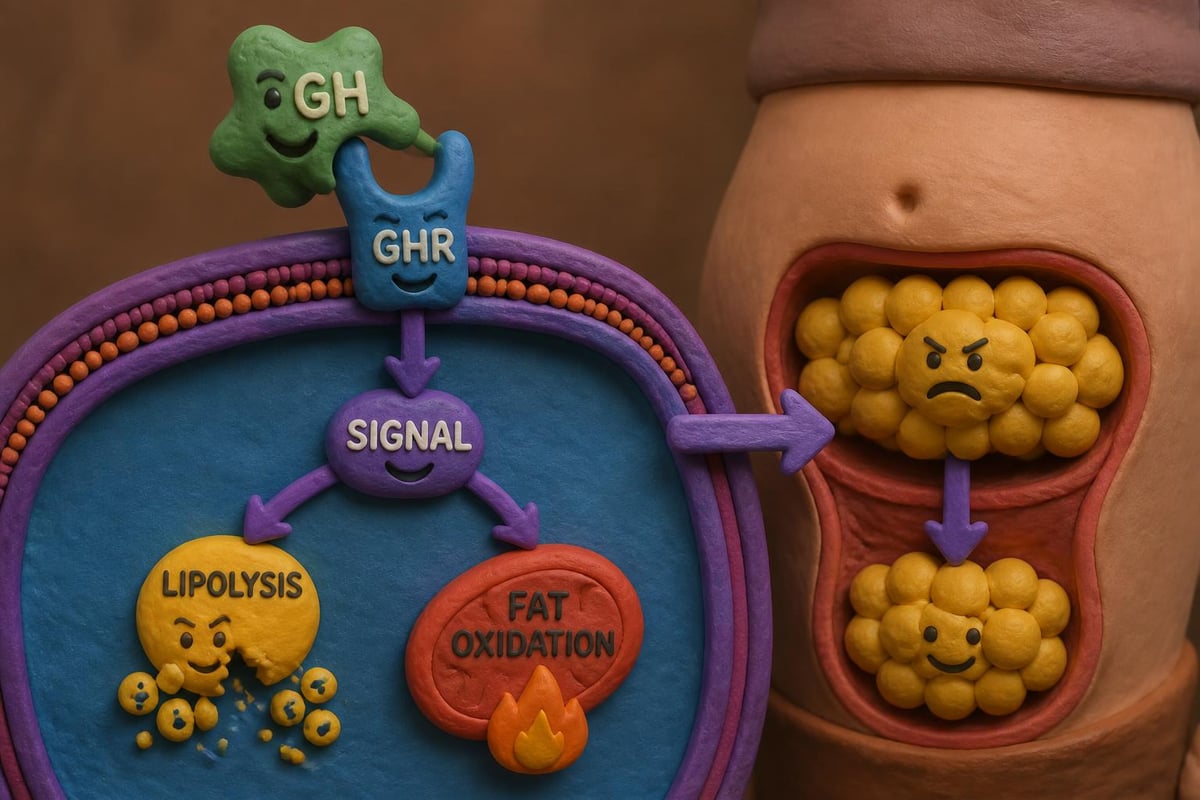
The mechanisms underlying GH's effects on fat tissue include:
- Enhanced lipolysis through hormone-sensitive lipase activation
- Increased fatty acid oxidation in peripheral tissues
- Improved insulin sensitivity in metabolic tissues
- Reduced triglyceride accumulation in adipocytes
These physiological effects have prompted investigation into growth hormone secretagogues and related compounds that may influence similar pathways. Research on growth hormone secretagogues has examined their potential to improve body composition through GH-dependent and independent mechanisms.
Peptide Mechanisms for Metabolic Regulation
Multiple classes of research peptides have demonstrated capacity to influence metabolic function through distinct biological pathways. Understanding these mechanisms provides insight into how different compounds may affect visceral fat accumulation and energy metabolism.
Growth Hormone Releasing Peptides
Growth hormone releasing peptides (GHRPs) and growth hormone releasing hormone (GHRH) analogs represent one category of compounds studied for metabolic effects. These peptides stimulate endogenous GH secretion through specific receptor activation.
CJC-1295, a GHRH analog, demonstrates extended half-life properties that sustain elevated GH levels. When combined with ipamorelin, a selective ghrelin receptor agonist, the compounds may work synergistically to promote pulsatile GH release that more closely mimics physiological patterns.
| Peptide Class | Primary Mechanism | Target Pathway | Duration of Action |
|---|---|---|---|
| GHRH Analogs | Stimulate pituitary GH release | GHRH receptor activation | Extended (modified forms) |
| Ghrelin Mimetics | Selective GH secretion | Ghrelin receptor (GHS-R1a) | Short-acting |
| Somatostatin Antagonists | Remove GH inhibition | Block somatostatin signaling | Variable |
The metabolic effects attributed to these compounds extend beyond simple GH elevation. Research suggests potential direct effects on adipose tissue, muscle tissue, and metabolic rate that may contribute to body composition changes independent of GH stimulation.
Incretin-Based Peptides and Metabolic Function
Another category of peptides for belly fat research involves compounds that modulate incretin hormone pathways. These hormones, particularly glucagon-like peptide-1 (GLP-1) and glucose-dependent insulinotropic polypeptide (GIP), regulate glucose metabolism, appetite, and energy expenditure.
GLP-1 receptor agonists have demonstrated capacity to reduce body weight through multiple mechanisms:
- Delayed gastric emptying and enhanced satiety signaling
- Improved insulin secretion and glucose regulation
- Potential effects on energy expenditure and thermogenesis
- Modulation of central nervous system appetite pathways
Advanced multi-agonist compounds that simultaneously activate GLP-1, GIP, and glucagon receptors have shown enhanced efficacy in preclinical models. These triple agonists appear to produce more substantial reductions in visceral adipose tissue compared to single-receptor compounds.
Mitochondrial Peptides and Energy Metabolism
Emerging research has identified mitochondria-derived peptides that influence cellular energy metabolism and may affect fat accumulation patterns. These peptides appear to optimize mitochondrial function and metabolic efficiency at the cellular level.
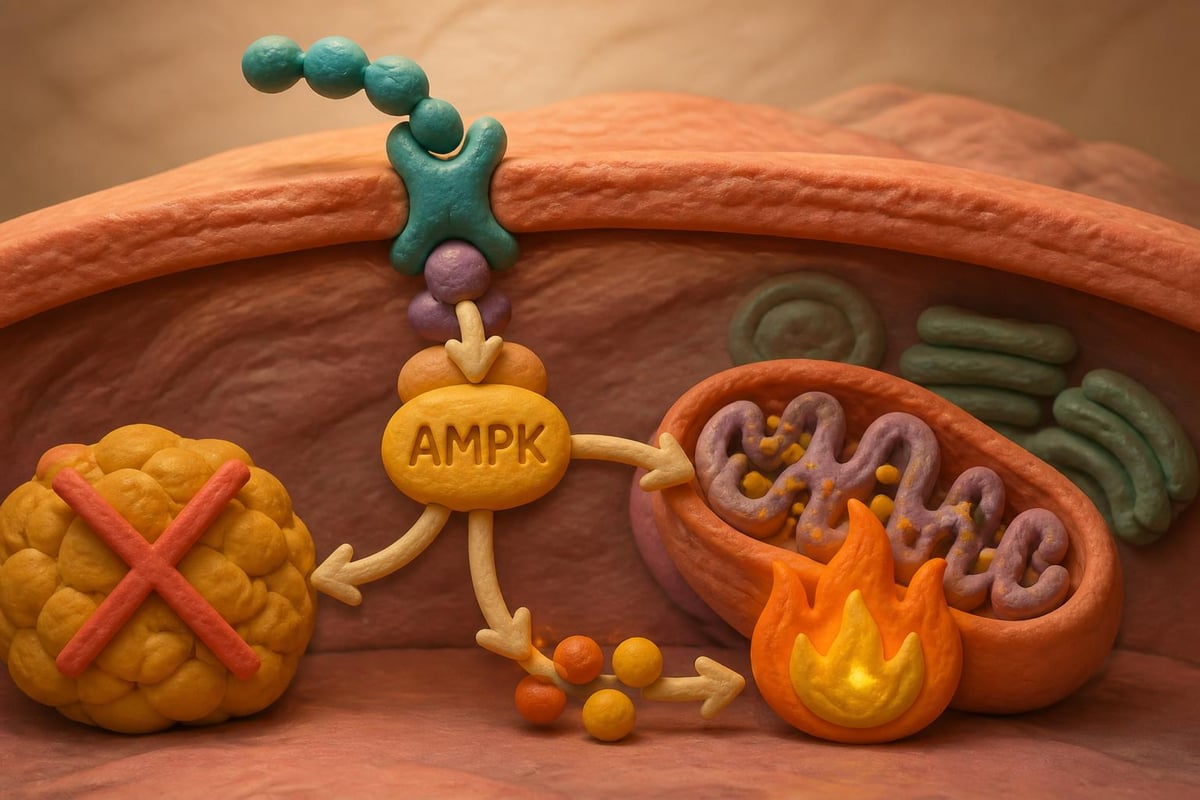
MOTS-c represents one such mitochondrial peptide that has attracted research interest for metabolic applications. This compound influences metabolic gene expression and may enhance insulin sensitivity while affecting glucose and lipid metabolism. MOTS-c appears to activate AMPK (AMP-activated protein kinase), a master regulator of cellular energy status, potentially promoting fat oxidation and metabolic flexibility. Laboratory researchers investigating metabolic pathways often utilize compounds like MOTS-c to explore cellular energy regulation mechanisms.
Metabolic Signaling Pathways
The effectiveness of peptides for belly fat reduction depends largely on their interaction with key metabolic signaling cascades. Several pathways have emerged as particularly relevant:
AMPK Activation: This energy-sensing pathway promotes catabolic processes including fat oxidation while inhibiting anabolic processes like fat synthesis. Peptides that activate AMPK may enhance metabolic rate and shift energy utilization patterns.
mTOR Modulation: The mechanistic target of rapamycin (mTOR) pathway integrates nutrient sensing with growth signals. Appropriate modulation of this pathway may influence fat storage versus utilization decisions at the cellular level.
PPAR Signaling: Peroxisome proliferator-activated receptors regulate genes involved in lipid metabolism and glucose homeostasis. Certain peptides may influence PPAR activity to promote favorable metabolic adaptations.
Peptides Targeting Visceral Adipose Tissue
Specific research compounds have demonstrated particular efficacy in reducing visceral fat accumulation in preclinical and clinical studies. These compounds work through diverse mechanisms but share the common feature of preferentially affecting deep abdominal fat deposits.
Tesamorelin and Visceral Fat Reduction
Tesamorelin, a GHRH analog, has been extensively studied for its effects on visceral adipose tissue. Clinical trials examining tesamorelin’s effects have demonstrated significant reductions in visceral fat volume without equivalent reductions in subcutaneous fat, suggesting preferential action on deep abdominal deposits.
The mechanisms underlying this selective effect appear related to:
- Enhanced lipolysis specifically in visceral adipocytes
- Improved hepatic glucose metabolism and insulin sensitivity
- Increased energy expenditure through GH-mediated pathways
- Potential direct effects on adipocyte differentiation and function
These findings have established tesamorelin as an important reference compound for understanding how peptides for belly fat may selectively target problematic fat deposits.
AOD-9604 and Lipolytic Activity
AOD-9604 represents a modified fragment of human growth hormone designed to retain lipolytic (fat-burning) properties while eliminating effects on glucose metabolism and IGF-1 production. This peptide appears to stimulate lipolysis and inhibit lipogenesis through mechanisms that may not require GH receptor activation.
Research suggests AOD-9604 works by:
- Mimicking the way natural GH regulates fat metabolism
- Stimulating hormone-sensitive lipase without affecting blood sugar
- Potentially increasing metabolic rate and fat oxidation
- Demonstrating preferential effects on abdominal adipose tissue
The selective metabolic effects make this compound particularly interesting for research applications focused specifically on fat metabolism pathways.
Combination Approaches and Synergistic Effects
Contemporary research into peptides for belly fat increasingly explores combination protocols that leverage multiple mechanisms simultaneously. This approach recognizes that metabolic regulation involves complex, interconnected pathways that may respond more effectively to multi-targeted interventions.
Synergistic Peptide Combinations
Certain peptide combinations have demonstrated enhanced efficacy compared to individual compounds:
| Combination | Mechanism 1 | Mechanism 2 | Theoretical Advantage |
|---|---|---|---|
| GHRH + Ghrelin Agonist | Sustained GH release | Pulsatile GH secretion | Physiological GH pattern |
| GLP-1 Agonist + Glucagon Agonist | Satiety and glucose control | Enhanced energy expenditure | Multiple metabolic pathways |
| Mitochondrial Peptide + GH Secretagogue | Cellular metabolism | Systemic hormone regulation | Cellular and systemic effects |
These combinations aim to address multiple aspects of metabolic dysfunction simultaneously, potentially producing more comprehensive effects on body composition and visceral fat reduction.
Metabolic Support Compounds
Beyond direct peptide interventions, research often incorporates metabolic support compounds that may enhance or complement peptide effects. These include molecules that support mitochondrial function, improve insulin sensitivity, or optimize hormonal signaling pathways.
The integration of peptide therapeutics with metabolic cofactors represents an evolving area of investigation. Understanding how these compounds interact provides valuable insights for optimizing research protocols and experimental designs.
Research Considerations and Experimental Design
Proper research into peptides for belly fat requires careful attention to experimental design, measurement protocols, and mechanistic understanding. Laboratory investigations must account for numerous variables that influence outcomes and interpretation.
Measurement and Assessment Protocols
Accurate assessment of visceral adipose tissue requires appropriate imaging and measurement techniques:
- DEXA Scanning: Dual-energy X-ray absorptiometry provides detailed body composition analysis but may not distinguish visceral from subcutaneous abdominal fat
- CT Imaging: Computed tomography offers precise visceral fat quantification through cross-sectional imaging
- MRI Analysis: Magnetic resonance imaging provides detailed fat distribution assessment without radiation exposure
- Bioelectrical Impedance: Less precise but more accessible method for tracking body composition changes
Research protocols should establish baseline measurements and employ consistent assessment methods throughout study periods to ensure reliable data collection. The Journal of Clinical Endocrinology & Metabolism regularly publishes methodological guidelines for metabolic research.

Dosing Protocols and Administration
Research into peptides for metabolic effects typically employs specific dosing strategies based on compound half-life and mechanism of action. Short-acting peptides often require multiple daily administrations to maintain physiological effects, while modified compounds with extended half-lives may permit less frequent dosing.
Considerations for experimental protocols include:
- Timing relative to feeding status (fasted versus fed state)
- Frequency of administration (daily, twice-daily, weekly)
- Route of administration (subcutaneous, intramuscular)
- Dose escalation versus stable dosing strategies
- Duration of intervention required for measurable effects
Proper documentation of these parameters ensures reproducibility and enables meaningful comparison across studies.
Safety Profiles and Research Applications
Understanding the safety characteristics of research peptides remains essential for responsible laboratory investigation. While these compounds are intended exclusively for research purposes, characterizing their biological effects and potential adverse reactions provides important scientific context.
Common Research Observations
Studies examining peptides for belly fat have documented various biological responses that researchers should monitor:
Growth Hormone-Related Effects: Compounds that elevate GH may influence fluid retention, joint comfort, and glucose metabolism. Monitoring these parameters provides insight into compound activity and helps characterize dose-response relationships.
Metabolic Effects: Incretin-based peptides commonly affect gastric motility and appetite regulation. These effects, while often intentional, require monitoring to understand full compound activity profiles.
Injection Site Reactions: Subcutaneous administration may produce local reactions that vary based on compound formulation and concentration. Proper preparation and administration technique minimize these occurrences.
Laboratory Research Standards
Research-grade peptides require rigorous quality control and characterization to ensure experimental validity. Third-party testing for purity, identity, and potency provides essential verification of compound quality. Laboratory researchers should prioritize sourcing from suppliers that provide comprehensive analytical testing documentation.
Data Peptides maintains high standards for laboratory research compounds, with US manufacturing and batch testing to verify purity specifications. This quality assurance supports reliable, reproducible experimental results.
Emerging Research Directions
The field of metabolic peptide research continues evolving as new compounds and mechanisms are identified. Several promising areas warrant attention for understanding how peptides for belly fat research may advance.
Novel Receptor Targets
Recent discoveries have identified additional receptor systems that may influence fat metabolism and distribution:
- Melanocortin receptors beyond traditional targets show metabolic regulatory potential
- Adiponectin receptor agonists may improve metabolic health through adipokine signaling
- FGF21 analogs demonstrate metabolic effects through fibroblast growth factor pathways
These emerging targets expand the toolkit available for investigating metabolic regulation and fat distribution control.
Personalized Metabolic Approaches
Recognition of individual metabolic variation has prompted interest in personalized research approaches. Genetic factors, baseline metabolic status, and hormonal profiles all influence response to metabolic interventions. Understanding these individual differences may enable more targeted investigation of specific metabolic pathways.
Researchers increasingly employ biomarker monitoring to characterize individual metabolic profiles and track responses to experimental interventions. This detailed characterization provides richer data sets for understanding mechanisms and predicting outcomes.
Practical Research Implementation
Implementing effective research protocols for peptides for belly fat investigation requires attention to multiple practical considerations beyond compound selection.
Protocol Development Considerations
Well-designed research protocols incorporate several key elements:
Baseline Assessment: Comprehensive metabolic profiling before intervention provides essential reference data. This should include body composition analysis, metabolic markers, and relevant hormonal parameters.
Standardized Conditions: Controlling variables like diet composition, activity levels, and measurement timing reduces confounding factors and improves data quality.
Regular Monitoring: Scheduled assessments throughout the study period capture temporal dynamics and enable early detection of significant changes.
Data Documentation: Systematic recording of all experimental parameters, observations, and measurements ensures reproducibility and supports thorough analysis.
Integration with Metabolic Research
Investigation of peptide effects on visceral fat often integrates with broader metabolic research examining glucose homeostasis, lipid metabolism, and hormonal regulation. This integrated approach provides more comprehensive understanding of metabolic function and compound effects.
Researchers may combine peptide studies with assessments of:
- Insulin sensitivity and glucose tolerance
- Lipid profiles and fatty acid metabolism
- Inflammatory markers and adipokine levels
- Energy expenditure and substrate utilization
This multidimensional approach yields richer insights into metabolic mechanisms and helps characterize the full spectrum of compound effects.
Research into peptides for belly fat continues expanding our understanding of metabolic regulation and visceral adipose tissue dynamics. The diverse mechanisms through which these compounds influence fat metabolism, energy expenditure, and body composition provide valuable tools for investigating metabolic pathways. Whether exploring growth hormone signaling, incretin pathways, or mitochondrial function, proper experimental design and high-quality research compounds remain essential for meaningful investigation. Data Peptides provides laboratory-grade, US-manufactured research peptides with third-party batch testing to support rigorous scientific investigation into metabolic mechanisms and therapeutic potential.