

Research into sleep optimization has expanded significantly in recent years, with scientists investigating various biochemical pathways that influence circadian rhythms, sleep architecture, and recovery processes. Among the most promising areas of investigation are specific peptide compounds that interact with neuroendocrine systems governing sleep-wake cycles. These short chains of amino acids have demonstrated potential in preclinical models for modulating sleep patterns, enhancing deep sleep phases, and supporting overall sleep quality. Understanding the mechanisms behind peptides for sleep requires examining both their direct effects on sleep centers in the brain and their indirect influence through growth hormone pathways, neurotransmitter systems, and cellular repair mechanisms that operate during rest periods.
Understanding Peptides and Sleep Regulation
Peptides represent a fundamental class of biological signaling molecules composed of amino acid chains typically ranging from two to fifty residues. Within sleep research, these compounds have garnered attention for their ability to interact with specific receptors in the hypothalamus, pituitary gland, and other brain regions critical for sleep homeostasis.
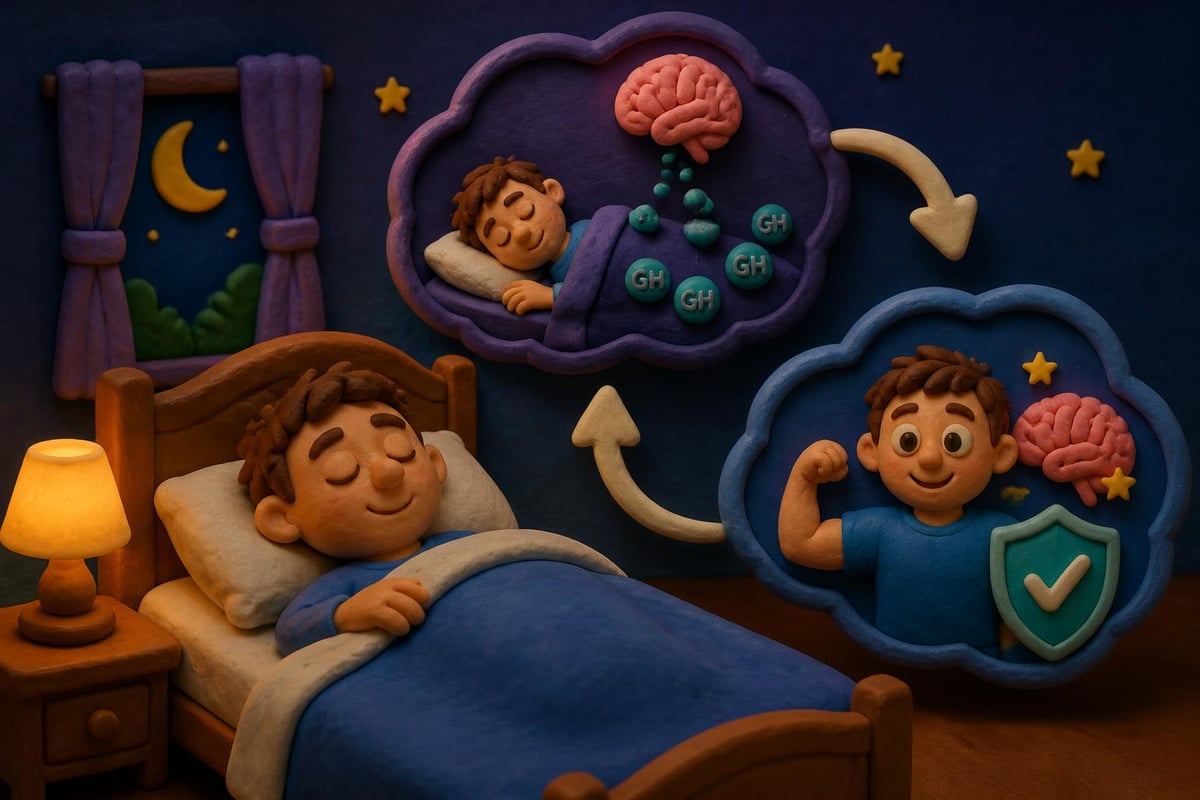
The relationship between peptides and sleep operates through multiple pathways. Some compounds directly influence sleep-promoting neurons, while others work indirectly by modulating growth hormone secretion, which naturally peaks during deep sleep stages. The complex interactions between peptide signaling and sleep architecture have made this a particularly active area of laboratory investigation.
Mechanisms of Action in Sleep Systems
Research peptides studied for sleep applications typically function through one or more of these mechanisms:
- Neurotransmitter modulation: Affecting GABA, serotonin, or other sleep-related neurotransmitter systems
- Growth hormone pathway activation: Enhancing natural GH pulses that occur during deep sleep
- Circadian rhythm regulation: Influencing the suprachiasmatic nucleus and peripheral clock genes
- Cellular restoration processes: Supporting repair mechanisms that operate most efficiently during sleep
- Stress response attenuation: Reducing cortisol and activating parasympathetic nervous system activity
The efficacy of peptides for sleep in laboratory models depends heavily on proper dosing, timing relative to sleep onset, and the specific endpoints being measured in experimental protocols.

Key Peptide Categories in Sleep Research
Delta Sleep-Inducing Peptide (DSIP)
Delta Sleep-Inducing Peptide stands as one of the earliest compounds investigated specifically for sleep applications. This nonapeptide was initially isolated from the cerebral venous blood of rabbits during sleep induction experiments in the 1970s.
Laboratory studies with DSIP have examined its effects on:
- Sleep latency reduction: Time required to transition from wakefulness to sleep
- Delta wave enhancement: Increasing slow-wave sleep (stages 3 and 4)
- Sleep continuity: Reducing nighttime awakenings
- Stress hormone normalization: Modulating cortisol rhythms
- Circadian stabilization: Helping maintain consistent sleep-wake timing
Research protocols typically investigate DSIP administration in the evening hours, with dosing strategies varying based on experimental design. The mechanisms through which DSIP influences sleep architecture remain partially understood, though interactions with GABA systems and endorphin pathways have been documented.
Epitalon and Circadian Regulation
Epitalon, a synthetic tetrapeptide, has demonstrated interesting properties in studies examining circadian rhythm function and melatonin regulation. This compound operates through mechanisms distinct from direct sleep induction.
| Property | Mechanism | Research Focus |
|---|---|---|
| Pineal function | Supports melatonin synthesis | Circadian rhythm studies |
| Telomere activity | Influences cellular aging markers | Longevity research |
| Antioxidant effects | Reduces oxidative stress | Neuroprotection models |
| Circadian gene expression | Affects clock gene transcription | Chronobiology applications |
Epitalon's potential for sleep research lies primarily in its ability to support the pineal gland's natural melatonin production rather than directly sedating sleep centers. This makes it particularly relevant for investigations into age-related sleep disturbances and circadian misalignment.
Growth Hormone Secretagogues
Several peptides for sleep research function primarily as growth hormone secretagogues (GHS), compounds that stimulate GH release. Since natural GH secretion peaks during deep sleep stages, these peptides present an interesting bidirectional relationship with sleep quality.
Ipamorelin represents one of the most selective GHS compounds studied in laboratory settings. Its specificity for growth hormone release without significantly affecting cortisol or prolactin makes it valuable for isolating GH-related effects on sleep architecture.
CJC-1295 operates through a different mechanism, extending the half-life of growth hormone-releasing hormone (GHRH). When examining growth hormone pathways during sleep cycles, researchers often compare pulsatile secretagogues like Ipamorelin with GHRH analogs like CJC-1295.
The sleep-related research applications of GH secretagogues include:
- Investigating the relationship between GH pulses and slow-wave sleep
- Examining how enhanced GH secretion affects sleep quality metrics
- Studying recovery processes that depend on both sleep and GH availability
- Analyzing age-related changes in the GH-sleep relationship
Sleep Architecture and Peptide Research Applications
Understanding how peptides for sleep affect specific sleep stages requires familiarity with sleep architecture itself. Sleep cycles through distinct stages characterized by different brainwave patterns, hormonal environments, and physiological processes.
Non-REM Sleep Stages
Stage 1 (N1): Light sleep transition characterized by theta waves. Peptide research rarely targets this brief stage specifically.
Stage 2 (N2): Represents the majority of total sleep time in healthy subjects. Research examines how certain peptides affect sleep spindles and K-complexes characteristic of this stage.
Stage 3 (N3): Deep slow-wave sleep dominated by delta waves. This stage shows the strongest association with growth hormone release and represents a primary target for many peptides for sleep research. Cellular repair, immune function, and metabolic regulation operate most efficiently during N3 sleep.
REM Sleep Considerations
Rapid eye movement sleep serves critical functions in memory consolidation, emotional processing, and neural development. Some peptide compounds show differential effects on REM versus non-REM sleep, making stage-specific analysis essential in research protocols.
Laboratory investigations using polysomnography and actigraphy have provided detailed data on how various peptides influence sleep stage distribution, total sleep time, and sleep efficiency metrics.
Research Protocol Considerations
Dosing and Timing Variables
Effective research with peptides for sleep requires careful attention to administration protocols. Variables that significantly impact experimental outcomes include:
- Time of administration: Evening versus pre-sleep versus during typical sleep hours
- Dosing frequency: Single administration versus multiple doses
- Route of delivery: Subcutaneous, intranasal, or other methods in animal models
- Dose escalation: Starting doses, incremental increases, maximum tolerated doses
- Duration of treatment: Acute single-dose studies versus chronic administration protocols
| Study Type | Typical Duration | Primary Endpoints | Common Challenges |
|---|---|---|---|
| Acute effects | 1-3 nights | Sleep latency, architecture | Individual variability |
| Short-term | 1-4 weeks | Sleep quality, daytime function | Tolerance development |
| Long-term | 8+ weeks | Circadian stability, adaptation | Compliance, confounding factors |
Measurement and Analysis Methods
Modern sleep research employs sophisticated measurement tools to quantify peptide effects. Polysomnography remains the gold standard, measuring brain waves (EEG), eye movements (EOG), muscle activity (EMG), heart rate, and breathing patterns simultaneously.
Additional metrics relevant to peptides for sleep research include:
- Sleep onset latency: Minutes from lights out to first sleep epoch
- Total sleep time: Cumulative minutes of actual sleep
- Sleep efficiency: Percentage of time in bed spent asleep
- Wake after sleep onset (WASO): Minutes awake after initial sleep onset
- Stage distribution: Percentage of total sleep in each stage
- Sleep fragmentation index: Frequency of arousals and stage transitions
Advanced analysis may incorporate machine learning approaches to sleep staging and pattern recognition, particularly when examining subtle effects on sleep microarchitecture.
Synergistic Approaches in Sleep Research
Combination Protocols
Research increasingly examines how combining multiple peptides for sleep applications might produce synergistic effects. The rationale stems from the multiple parallel systems governing sleep-wake cycles.
For example, combining a growth hormone secretagogue with a compound affecting GABA systems could theoretically address both the restorative deep sleep component and the sleep initiation component simultaneously. Laboratory protocols exploring such combinations require careful design to isolate individual versus combined effects.
When researchers investigate blended approaches, they must consider:
- Pharmacokinetic interactions between compounds
- Receptor competition or complementarity
- Temporal coordination of peak effects
- Potential for enhanced or diminished responses
- Dose adjustments needed in combination versus monotherapy
Integration with Other Interventions
Sleep research often examines peptide interventions alongside other experimental variables. This contextual approach recognizes that sleep quality depends on multiple factors beyond biochemical signaling.
Environmental modifications studied in conjunction with peptides for sleep include light exposure timing, temperature regulation, and noise reduction strategies. The interaction between exogenous peptide administration and environmental sleep hygiene factors provides valuable data on optimal conditions for peptide efficacy.
Behavioral interventions such as scheduled sleep-wake times, pre-sleep routines, and daytime activity patterns interact with peptide effects through entrainment of circadian systems and homeostatic sleep pressure accumulation.

Age-Related Sleep Research
Sleep architecture undergoes significant changes across the lifespan, with older subjects typically experiencing reduced slow-wave sleep, increased sleep fragmentation, and altered circadian timing. These age-related changes have made peptides for sleep particularly relevant in gerontology research.
Aging and Sleep Disruption
Several mechanisms contribute to age-related sleep deterioration:
- Decreased growth hormone secretion: Natural GH production declines with age, correlating with reduced slow-wave sleep
- Pineal gland calcification: Progressive reduction in melatonin synthesis capacity
- Circadian rhythm weakening: Diminished amplitude of biological rhythms
- Increased inflammation: Elevated cytokines interfering with sleep-promoting systems
- Neurotransmitter changes: Alterations in GABA, serotonin, and other sleep-related systems
Research examining peptides for sleep in aging models investigates whether targeted interventions can partially restore youthful sleep patterns or at least mitigate age-related deterioration.
Methodological Challenges and Considerations
Individual Variability
One significant challenge in peptides for sleep research involves substantial individual differences in response. Factors contributing to this variability include:
- Genetic polymorphisms affecting receptor sensitivity
- Baseline sleep quality and existing sleep disorders
- Chronotype (natural tendency toward morningness or eveningness)
- Stress levels and hypothalamic-pituitary-adrenal axis function
- Prior sleep debt and homeostatic sleep pressure
Experimental design strategies to address this variability include crossover designs where subjects serve as their own controls, stratification by baseline sleep parameters, and larger sample sizes to detect effects amid noise.
Placebo Effects and Expectancy
Sleep represents a particularly challenging research domain regarding placebo responses. Expectations about sleep quality can significantly influence both subjective reports and objective measurements. The sophisticated experimental protocols required for sleep research typically incorporate double-blind designs and include both subjective sleep quality assessments and objective polysomnographic data.
Translation from Animal Models
Much fundamental research on peptides for sleep utilizes rodent models, which present both advantages and limitations. While mice and rats offer controlled experimental conditions and well-characterized sleep systems, their polyphasic sleep patterns differ substantially from consolidated human sleep.
Key differences researchers must consider:
| Aspect | Rodent Models | Human Sleep | Research Implications |
|---|---|---|---|
| Sleep pattern | Polyphasic (multiple bouts) | Monophasic/biphasic | Duration and timing effects differ |
| Sleep stage ratio | Higher REM percentage | More NREM sleep | Stage-specific effects may not translate |
| Circadian timing | Nocturnal | Diurnal | Opposite active phases |
| Sleep pressure | Accumulates rapidly | Builds over ~16 hours | Different dosing considerations |
Quality Control in Peptide Sleep Research
Researchers working with peptides for sleep must maintain rigorous quality standards for the compounds themselves. Peptide stability, purity, and accurate dosing critically affect experimental reproducibility and validity.
Laboratory-grade peptides require verification through multiple analytical methods. Third-party testing provides independent confirmation of purity levels, proper peptide sequence, and absence of contaminants that could confound research results. Researchers examining peptides for sleep applications should prioritize sourcing from suppliers that provide comprehensive certificates of analysis.
When evaluating peptide quality for research applications, key specifications include:
- Purity percentage: Typically ≥98% for research-grade materials
- Peptide content: Actual peptide mass versus total product mass
- Molecular weight confirmation: Mass spectrometry verification
- Sequence accuracy: Amino acid analysis confirming proper synthesis
- Sterility testing: Essential for any injectable research compounds
- Endotoxin levels: Particularly important for compounds affecting immune function
For researchers establishing protocols with peptides for sleep, working with US-manufactured compounds that undergo rigorous testing ensures consistency across experimental batches. Data Peptides supplies laboratory-grade research peptides that meet these stringent quality requirements, with third-party batch testing confirming purity for reliable research applications.
Emerging Research Directions
Personalized Sleep Medicine Models
Future research directions include developing more personalized approaches to sleep optimization. Genetic markers, metabolic profiles, and individual chronotype characteristics may help predict which peptides for sleep will prove most effective for specific phenotypes.
Pharmacogenomic considerations examine how genetic variations in peptide receptors, metabolizing enzymes, and circadian clock genes influence response to different compounds. This precision medicine approach could eventually enable targeted selection of optimal peptides based on individual biological profiles.
Mitochondrial Function and Sleep Quality
Recent investigations have begun exploring connections between mitochondrial health, cellular energy status, and sleep quality. Some peptides demonstrate effects on mitochondrial function that may indirectly support sleep through improved cellular energy management and reduced oxidative stress.
Research in this area examines:
- How mitochondrial efficiency affects sleep pressure accumulation
- Whether improving cellular energetics supports more restorative sleep
- The relationship between mitochondrial peptides and circadian clock function
- Connections between cellular repair during sleep and mitochondrial biogenesis
Computational Approaches
Advanced neural network models for sleep analysis enable more sophisticated examination of how peptides for sleep affect subtle aspects of sleep architecture. Machine learning approaches can identify patterns in sleep data that traditional analysis methods might miss, potentially revealing previously unrecognized effects of peptide interventions.
Practical Laboratory Implementation
Establishing Baseline Protocols
Researchers new to peptides for sleep investigations should establish robust baseline protocols before introducing experimental variables. This includes:
- Habituation periods: Allowing subjects to acclimate to sleep monitoring equipment
- Baseline sleep recording: Multiple nights of measurement to establish individual sleep patterns
- Standardization procedures: Consistent pre-sleep routines, timing, and environmental conditions
- Control conditions: Appropriate vehicle or placebo administration periods
Documentation and Data Management
Comprehensive record-keeping proves essential for peptide sleep research. Variables to document systematically include:
- Precise peptide dosing (calculated based on confirmed purity)
- Administration timing relative to sleep onset
- Environmental conditions (temperature, light levels, noise)
- Subject-reported factors (stress levels, daytime activities, caffeine intake)
- Complete sleep architecture data from each recording session
- Any adverse observations or protocol deviations
Proper documentation enables retrospective analysis, supports publication of findings, and facilitates replication studies by other research groups.
Research Applications Beyond Primary Sleep Disorders
While much research on peptides for sleep focuses on addressing sleep difficulties directly, several secondary applications warrant investigation:
Recovery and Athletic Performance Models
The relationship between sleep quality and physical recovery has made peptides for sleep relevant in sports science research. Enhanced slow-wave sleep correlates with improved muscle recovery, tissue repair, and performance metrics.
Research questions in this domain include:
- Whether optimizing sleep through peptide interventions enhances recovery from physical stress
- How sleep quality affects adaptation to training stimuli
- The interaction between growth hormone pulses during sleep and muscle protein synthesis
- Connections between sleep architecture and injury recovery timelines
Cognitive Function and Learning Models
Sleep plays critical roles in memory consolidation and cognitive performance. Research examining peptides for sleep often includes cognitive endpoints alongside sleep measurements.
Memory consolidation studies investigate whether enhanced sleep quality through peptide interventions improves retention of learned material. Both declarative memory (facts and events) and procedural memory (skills and habits) depend on specific sleep stages for optimal consolidation.
Neuroplasticity research examines how sleep quality affects synaptic remodeling and long-term potentiation mechanisms underlying learning and adaptation.
Metabolic Research Applications
The bidirectional relationship between sleep and metabolism creates opportunities for integrated research protocols. Poor sleep affects glucose regulation, insulin sensitivity, and appetite hormones, while metabolic dysfunction disrupts sleep quality.
Some peptides for sleep research also demonstrate metabolic effects, enabling investigation of whether improving sleep produces downstream metabolic benefits or whether metabolic improvements secondarily enhance sleep quality. For broader perspectives on laboratory research applications, researchers can explore various options through specialized peptide suppliers that provide educational resources alongside research compounds.
Safety Considerations in Research Protocols
Laboratory research with peptides for sleep must incorporate appropriate safety protocols, both for the compounds themselves and for the sleep monitoring procedures.
Compound Handling
Research-grade peptides require proper storage, handling, and disposal procedures:
- Storage conditions: Most peptides require refrigeration or freezing
- Reconstitution protocols: Using appropriate solvents and sterile technique
- Stability monitoring: Tracking reconstituted peptide viability over time
- Waste disposal: Following institutional and regulatory requirements for biological materials
Research Subject Monitoring
Even in laboratory research not involving human subjects, careful monitoring during sleep studies helps ensure data quality and identify potential issues. Parameters to track include:
- Baseline vital signs and health status
- Sleep environment safety (temperature extremes, equipment malfunction)
- Signs of adverse responses to test compounds
- Deviations from expected sleep patterns that might indicate problems
Institutional review boards or animal care committees provide oversight for research protocols, ensuring ethical treatment and appropriate safety measures.
Research into peptides for sleep continues to evolve, revealing complex interactions between peptide signaling pathways and the multiple systems governing sleep-wake cycles. Understanding mechanisms, optimizing protocols, and maintaining rigorous experimental standards remain essential for advancing this field. For researchers seeking laboratory-grade compounds to support their investigations, Data Peptides offers US-manufactured research peptides with third-party batch testing, ensuring the purity and consistency necessary for reliable scientific inquiry. All products are intended solely for laboratory research applications, supporting the advancement of peptide science through quality materials and comprehensive documentation.