

The intersection of peptide research and hair regeneration has gained substantial momentum in recent years, with TB-500 emerging as a compound of particular interest. This synthetic peptide fragment, derived from the naturally occurring protein Thymosin Beta-4, has captured the attention of researchers investigating tissue repair mechanisms and their potential applications in hair follicle regeneration. As laboratories continue to explore tb 500 hair growth pathways, understanding the fundamental mechanisms, current research landscape, and experimental protocols becomes essential for advancing scientific knowledge in this domain.
Understanding TB-500 Peptide Structure and Function
TB-500 represents a synthetic version of a specific active region within Thymosin Beta-4, consisting of 43 amino acids. This peptide sequence contains the critical actin-binding domain responsible for many of the compound's biological activities. The structural composition enables TB-500 to interact with cellular machinery in ways that may influence tissue regeneration processes.
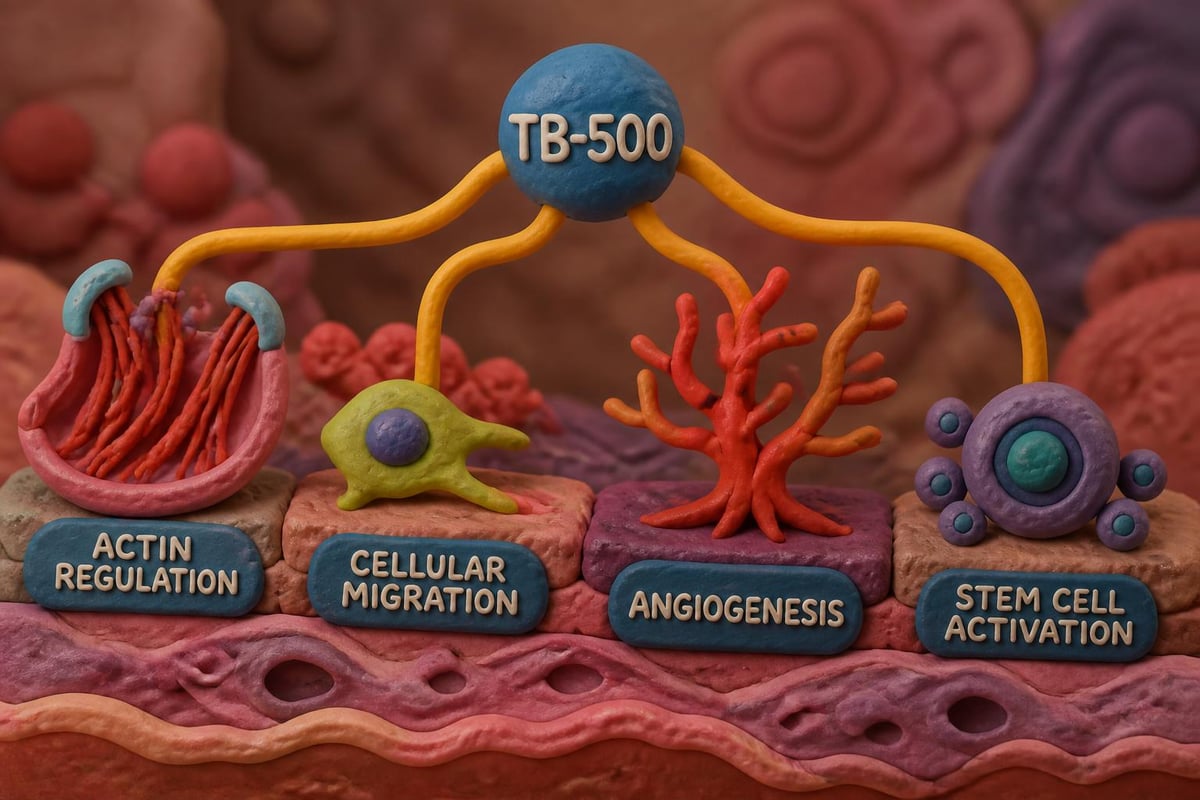
The peptide's primary mechanism involves upregulation of actin, a protein fundamental to cell structure and movement. This interaction facilitates cellular migration, a process essential for tissue repair and regeneration. When cells can move more efficiently, they can reach damaged areas more quickly and participate in healing responses.
Molecular Pathways in Tissue Repair
Research has identified several molecular pathways through which TB-500 may exert its effects. The peptide appears to influence:
- Cell migration and motility through actin polymerization
- Angiogenesis or the formation of new blood vessels
- Inflammatory response modulation in tissue environments
- Extracellular matrix remodeling for structural support
- Stem cell differentiation in various tissue types
These mechanisms work synergistically to create an environment potentially conducive to tissue regeneration. The molecular evidence suggests that TB-500's influence on cellular processes extends beyond simple wound healing to include more complex regenerative functions.
TB 500 Hair Growth Research Landscape
The exploration of tb 500 hair growth applications stems from broader tissue regeneration research. Hair follicles represent complex mini-organs that undergo continuous cycles of growth, regression, and rest. Understanding how peptides like TB-500 might influence these cycles requires examination of follicular biology and regenerative mechanisms.
Hair follicles contain multiple stem cell populations residing in specialized niches. These stem cells play crucial roles in generating new hair shafts during the growth phase. Any compound that influences stem cell behavior, cellular migration, or tissue regeneration could theoretically impact hair follicle function.
Current Research Findings
Laboratory investigations into tb 500 hair growth mechanisms have yielded several interesting observations. Studies examining tissue repair have noted that TB-500 may influence follicular stem cell activity and dermal papilla cell function. The dermal papilla, located at the base of hair follicles, serves as a critical signaling center that regulates follicle cycling.
| Research Area | Observed Effects | Mechanisms Involved |
|---|---|---|
| Stem Cell Activation | Enhanced proliferation | Actin-mediated migration |
| Blood Vessel Formation | Increased angiogenesis | Vascular growth factors |
| Inflammatory Response | Modulated inflammation | Cytokine regulation |
| Cell Survival | Improved viability | Anti-apoptotic pathways |
Current research on TB-500’s mechanisms indicates that the peptide may support cellular environments favorable for follicle function. However, the translation of these laboratory observations to practical applications requires careful interpretation and further investigation.
The relationship between tissue repair capabilities and hair follicle regeneration represents a logical but complex connection. While TB-500 demonstrates tissue repair properties in various experimental models, hair follicle biology involves highly specific signaling pathways and cycling mechanisms.
Mechanisms Relevant to Follicular Biology
Understanding how tb 500 hair growth effects might occur requires examining the peptide's actions within the context of follicle biology. Hair growth depends on coordinated interactions between multiple cell types, signaling molecules, and structural components.
Actin Dynamics in Follicle Cells
Actin serves critical functions in hair follicle cells, from structural support to facilitating cellular shape changes during growth phases. TB-500's influence on actin polymerization could theoretically affect:
- Follicle stem cell migration to growth zones
- Keratinocyte movement during hair shaft formation
- Dermal papilla cell positioning and signaling
- Matrix cell proliferation and differentiation
The actin cytoskeleton undergoes dynamic changes throughout the hair growth cycle. Enhanced actin regulation might support more efficient cellular processes during the active growth phase.
Angiogenesis and Follicle Nutrition
Hair follicles require robust blood supply to support the rapid cell division occurring during growth phases. TB-500's documented angiogenic properties present potential relevance for follicular health. New blood vessel formation around follicles could theoretically improve nutrient delivery and waste removal.
Research examining TB-500 and tissue regeneration has documented increased vascular density in various tissue models. Whether similar effects occur specifically in follicular microenvironments remains an active area of investigation.

Laboratory Research Protocols and Considerations
For researchers investigating tb 500 hair growth mechanisms, establishing appropriate experimental protocols is essential. Laboratory studies require careful attention to dosing parameters, administration methods, and measurement techniques to generate meaningful data.
Experimental Design Elements
Well-structured research protocols typically incorporate several key elements:
- Baseline characterization of follicle health and cycling status
- Controlled dosing schedules with appropriate frequency
- Multiple measurement timepoints to track progression
- Histological analysis of follicle structure and cell populations
- Molecular marker assessment for pathway activation
- Statistical analysis with adequate sample sizes
Researchers must account for the natural hair growth cycle when designing studies. Follicles spend varying periods in growth, regression, and resting phases, which can affect experimental outcomes and interpretation.
Dosing Considerations in Research Models
Laboratory investigations have employed various dosing strategies for TB-500 research. Typical research protocols examine dose ranges and administration frequencies to identify optimal parameters. The synthetic peptide's stability and bioavailability influence how researchers structure their experiments.
Subcutaneous administration represents the most common route in tissue repair research, though localized injection approaches have been explored for specific applications. The choice of administration method can impact systemic versus local effects.
Integration with Other Research Peptides
The tb 500 hair growth research landscape increasingly examines combination approaches. Many laboratories investigate how TB-500 might work synergistically with other peptides that influence tissue regeneration or cellular function.
For researchers exploring comprehensive approaches to follicle regeneration studies, peptide combinations offer interesting possibilities. The GLOW Blend combines GHK-Cu, TB-500, and BPC-157 to support regeneration across multiple pathways, making it relevant for laboratories investigating how different peptides interact in tissue repair models.

Synergistic Mechanisms
Combination approaches may address multiple aspects of follicle biology simultaneously:
| Peptide Class | Primary Mechanism | Follicle Relevance |
|---|---|---|
| TB-500 | Actin regulation, cell migration | Stem cell mobilization |
| Copper Peptides | Collagen synthesis, remodeling | Follicle structure support |
| BPC-157 | Healing promotion, growth factors | Tissue regeneration |
| Growth Hormone Secretagogues | IGF-1 pathway activation | Cell proliferation signals |
Researchers designing multi-peptide protocols must consider potential interactions, optimal timing, and measurement strategies that capture effects across different mechanisms. Understanding peptide mechanisms helps laboratories design more sophisticated experimental approaches.
Current Limitations and Research Gaps
The tb 500 hair growth research field faces several important limitations that researchers must acknowledge. While laboratory studies have demonstrated tissue repair capabilities, translating these findings to follicle-specific applications requires bridging significant knowledge gaps.
Challenges in Current Evidence
The most significant limitation involves the scarcity of controlled studies specifically examining follicular outcomes. Much of the existing research on TB-500 focuses on general tissue repair rather than hair-specific applications. This creates interpretive challenges when attempting to extrapolate findings.
Additional limitations include:
- Limited follicle-specific investigations in research literature
- Variability in experimental protocols across studies
- Differences in measurement techniques and outcome definitions
- Gaps in understanding long-term effects on follicle cycling
- Insufficient data on optimal dosing for follicular applications
These gaps represent opportunities for future research rather than insurmountable obstacles. As research methodologies advance and more laboratories focus on follicular biology, the evidence base will continue to evolve.
Future Research Directions
The field of tb 500 hair growth research continues to develop as new technologies and methodologies emerge. Several promising directions may yield valuable insights in coming years.
Advanced Analytical Techniques
Modern research tools enable more sophisticated investigation of peptide effects on follicular biology. Techniques such as single-cell RNA sequencing can reveal how TB-500 influences gene expression in specific follicle cell populations. Imaging technologies allow real-time observation of cellular processes within intact follicles.
Advanced analytical approaches may help researchers:
- Identify specific cell populations most responsive to TB-500
- Map signaling pathway activation in follicular environments
- Determine optimal timing relative to follicle cycling phases
- Assess long-term effects on follicle structure and function
- Characterize molecular markers predictive of treatment response
Comprehensive research examining TB-500’s mechanisms will benefit from these technological advances, potentially accelerating understanding of follicular regeneration processes.
Comparative Studies and Benchmarking
Future research may benefit from systematic comparisons between TB-500 and other compounds investigated for follicle regeneration. Benchmarking studies help establish relative efficacy and identify unique mechanisms that might be leveraged in combination protocols.

Quality Considerations for Research Applications
For laboratories conducting tb 500 hair growth investigations, peptide quality represents a critical variable that can significantly impact experimental outcomes and reproducibility. Research-grade peptides must meet stringent purity standards to ensure valid results.
Purity and Authentication Standards
High-quality research peptides typically undergo:
- Third-party testing to verify amino acid sequence and purity levels
- Mass spectrometry analysis for molecular weight confirmation
- HPLC testing to quantify purity percentages
- Bacterial endotoxin testing to ensure safety in research applications
- Certificate of Analysis (COA) provision documenting test results
Researchers should prioritize peptide suppliers that provide transparent documentation of purity testing for each batch. Variability in peptide quality can introduce confounding variables that complicate data interpretation.
Storage and Handling Protocols
Proper peptide handling preserves compound integrity throughout research studies. TB-500 requires specific storage conditions to maintain stability. Lyophilized peptides generally require refrigeration or freezing, while reconstituted solutions demand careful temperature control and timely use.
Research protocols should document:
- Storage temperatures for both lyophilized and reconstituted forms
- Reconstitution procedures including solvent selection
- Aliquoting strategies to minimize freeze-thaw cycles
- Expiration timeframes for reconstituted solutions
- Handling procedures to prevent contamination
Standardized handling procedures support reproducibility across experiments and between research groups.
Regulatory and Safety Considerations
Research involving peptides like TB-500 occurs within specific regulatory frameworks. Laboratories must understand the distinction between research applications and other uses, ensuring compliance with applicable guidelines.
Research-Only Applications
TB-500 and similar peptides are intended exclusively for laboratory research purposes. Research-grade peptides from reputable suppliers carry clear labeling indicating they are not intended for human or animal consumption. This distinction is fundamental to ethical research practice and regulatory compliance.
Researchers working with peptides should:
- Maintain proper documentation of research objectives and protocols
- Follow institutional review procedures for peptide research
- Implement appropriate safety procedures for laboratory personnel
- Store peptides securely with access limited to authorized researchers
- Dispose of materials according to institutional and regulatory guidelines
Interpreting Research Outcomes
As laboratories conduct tb 500 hair growth studies, careful interpretation of results becomes essential. The complexity of follicular biology means that observed effects may reflect multiple mechanisms operating simultaneously.
Distinguishing Direct and Indirect Effects
TB-500's influence on follicles may occur through direct cellular interactions or indirect systemic effects. For example, improved angiogenesis could support follicle health indirectly by enhancing overall tissue perfusion. Alternatively, direct effects on follicle stem cells might drive changes in cycling behavior.
Researchers benefit from experimental designs that help differentiate these pathways. Research examining TB-500’s various mechanisms can inform interpretive frameworks that account for multiple potential pathways of action.
Temporal Considerations
Hair follicle cycling occurs over extended timeframes, with complete cycles taking months in many species. Research protocols must account for these temporal dynamics when measuring outcomes. Effects observed at early timepoints may differ substantially from longer-term results as follicles progress through different phases.
Short-term markers might include changes in cellular proliferation, stem cell activation, or molecular signaling. Longer-term outcomes could involve shifts in follicle cycling patterns, hair shaft characteristics, or follicle density measurements.
Experimental Variables and Controls
Rigorous tb 500 hair growth research requires attention to numerous experimental variables that can influence outcomes. Controlling these variables enhances data quality and supports valid conclusions.
Key Variables to Control
| Variable Category | Specific Factors | Impact on Results |
|---|---|---|
| Biological | Age, genetic background, baseline follicle status | Affects response magnitude |
| Technical | Peptide concentration, injection technique, timing | Influences bioavailability |
| Environmental | Temperature, lighting cycles, stress factors | Modulates systemic responses |
| Measurement | Assessment methods, observer consistency, timing | Determines outcome reliability |
Appropriate control groups remain essential for distinguishing peptide-specific effects from spontaneous changes or experimental artifacts. Vehicle-only controls, untreated controls, and positive controls with known active compounds all serve valuable roles in experimental design.
Documentation and Data Management
Comprehensive documentation supports reproducibility and enables meaningful comparison across studies. Research organizations examining peptides benefit from standardized data collection and management practices.
Essential Documentation Elements
Complete research records should capture:
- Detailed peptide information including lot numbers and purity data
- Precise dosing protocols with timing and administration methods
- Baseline measurements and sequential assessment data
- Environmental conditions and any deviations from protocol
- Analytical methods and equipment specifications
- Statistical analysis approaches and software used
Digital data management systems with version control and backup procedures protect valuable research data while facilitating collaboration and data sharing among research teams.
Translation from Laboratory Research
While tb 500 hair growth research continues to expand, translating laboratory findings to practical applications remains a complex process requiring extensive additional investigation. The gap between demonstrating tissue repair capabilities in controlled models and achieving specific follicular outcomes in varied contexts involves numerous steps.
Validation Requirements
Moving from preliminary laboratory observations to validated applications typically requires:
- Replication across multiple independent research groups
- Investigation in diverse experimental models
- Dose-response characterization with clear efficacy windows
- Long-term safety and tolerance assessment
- Mechanistic confirmation through multiple experimental approaches
Current evaluations of TB-500 data acknowledge both the promise suggested by tissue repair research and the substantial validation work remaining. Researchers must balance optimism about potential applications with scientific rigor in interpreting existing evidence.
Collaborative Research Opportunities
The complexity of tb 500 hair growth mechanisms suggests that collaborative approaches may accelerate progress. Laboratories with expertise in different areas, such as peptide chemistry, follicle biology, molecular imaging, or data analytics, can contribute unique perspectives to comprehensive research programs.
Cross-disciplinary collaboration enables:
- Integration of chemical analysis with biological outcome measurement
- Application of advanced imaging to visualize peptide distribution
- Correlation of molecular markers with functional outcomes
- Development of predictive models based on multi-parameter data
- Validation of findings across different experimental systems
Research exploring TB-500 applications increasingly recognizes the value of team-based approaches that combine complementary expertise and resources.
Standardization in Research Protocols
As the tb 500 hair growth research field matures, establishing standardized protocols becomes increasingly important for comparing results across studies and building a coherent evidence base. Standardization efforts might address dosing ranges, administration methods, measurement techniques, and reporting standards.
Protocol Harmonization Benefits
Adopting common standards across research groups provides several advantages:
- Enhanced ability to compare findings between studies
- Improved reproducibility of key observations
- More efficient meta-analyses combining data from multiple sources
- Clearer identification of variables that genuinely influence outcomes
- Faster translation of promising findings to advanced research stages
Research organizations and institutions can contribute to standardization efforts by sharing detailed protocols, participating in inter-laboratory validation studies, and supporting development of consensus guidelines for experimental approaches.
The investigation of TB-500's potential influence on hair follicle regeneration represents an active and evolving research area that intersects peptide science with follicular biology. While current evidence demonstrates tissue repair capabilities and suggests plausible mechanisms for follicular applications, substantial research remains necessary to fully characterize tb 500 hair growth pathways and validate specific applications. For laboratories pursuing cutting-edge peptide research with the highest quality standards, Data Peptides provides third-party tested, laboratory-grade peptides manufactured in the United States, supporting rigorous scientific investigation with documented purity and consistency.