
Thymalin is a calf-thymus polypeptide extract with suggestive human immunomodulatory signals, including lymphocyte increases and IL-6 reductions, but its evidence base is limited by a heterogeneous manufacturing process and a body of research concentrated in non-blinded studies from Russian clinical practice. Reported effects span improved immune cell counts and lower respiratory infection rates in cohort data, but no large blinded trial has replicated these findings outside that research tradition. Anyone evaluating thymalin research needs to separate the biochemical signal from the study quality behind it.
TL;DR:
- Thymalin is a crude calf-thymus extract with batch variability, containing peptides EW, KE, and EDP, which influence gene expression and immune signaling in vitro.
- Human studies show promising effects like reduced respiratory infections and decreased IL-6 levels, but these are mostly observational or small, non-blinded trials limited by methodological weaknesses.
- It is not FDA-approved, and safety concerns include batch inconsistency, endotoxin risk, and contamination, making standardized manufacturing and regulation essential for further research.
- Large, well-designed, multicenter, blinded randomized controlled trials with standardized peptides are needed to substantiate thymalin’s proposed immune benefits.
- Researchers should require detailed lot-specific quality controls, including certificates of analysis and endotoxin testing, before considering thymalin for clinical studies or therapeutic exploration.
Table of Contents
- What thymalin is: composition and how it differs from defined thymic peptides
- Mechanisms of action: how EW, KE, and EDP are thought to work
- Human clinical evidence: what the cohort and trial data show
- Safety profile and regulatory status
- Where the evidence falls short and what better research would look like
- Designing a thymalin research protocol: practical steps
- Where this research needs to go next
- How Data Peptides supports rigorous thymic peptide research
- Selected primary sources and further reading
- Sources
- FAQ
What thymalin is: composition and how it differs from defined thymic peptides
Thymalin is not a single molecule. It is a polypeptide complex extracted from calf thymus tissue, containing a mixture of short peptides rather than one characterized active ingredient. The best-studied constituents are three short peptides identified within the extract: EW (a dipeptide), KE (also called vilon in some preparations), and EDP, a tripeptide sometimes referenced as crystagen. These fractions have been linked to modulation of gene expression and immune cell differentiation, according to the molecular aspects of thymalin’s biological activity.
Preparations sold or studied under related names include Thymalin itself and Vladonix, while thymogen refers specifically to a preparation built around the EW dipeptide. These are related but distinct products, and study results for one do not automatically transfer to another.
This matters because thymalin is frequently confused with thymosin alpha-1 (Ta1), a chemically defined synthetic peptide with its own separate regulatory and mechanistic literature. Ta1 is a single, sequenced compound; thymalin is a crude extract whose exact peptide ratios can vary by batch. Our overview of thymosin-class peptides and our dedicated Ta1 resource lay out that distinction in more depth for readers comparing the two research lines.
The extraction process itself creates a reproducibility problem for anyone trying to compare studies:
- Thymalin batches can vary in the relative concentration of EW, KE, and EDP depending on extraction method and source tissue.
- Studies rarely report which specific fraction ratio was used, making cross-study comparison difficult.
- Without a defined reference standard, dose comparisons across papers are approximate at best.
Mechanisms of action: how EW, KE, and EDP are thought to work
The mechanistic case for thymalin rests on the idea that its short peptides interact directly with DNA and chromatin rather than acting through a conventional receptor pathway. Molecular docking and promoter-search work has proposed that EW and KE dipeptides can bind specific promoter sequences and influence transcription of genes tied to immune signaling, according to research on gene expression and protein synthesis published in the International Journal of Molecular Sciences.
- EW and KE dipeptides have been modeled binding promoter regions linked to inflammatory gene expression.
- In LPS-stimulated PBMC models, these dipeptides were associated with reduced production of IL-1β, IL-6, and TNF-α.
- Bioinformatic analysis identified COVID-19-associated gene promoters as potential targets for these peptides.
- EDP (crystagen) has been described primarily through its reported effects on immune cell differentiation in older clinical literature, with less recent molecular characterization than EW or KE.
Cytokine reductions ranging from moderate to strong effects were reported across in vitro PBMC models exposed to EW and KE dipeptides under LPS stimulation, based on the IJMS 2023 study. That range signals a real biological effect in cell culture, but it does not establish the same magnitude of effect in a living patient, where absorption, distribution, and immune context all change the picture.
Human sample data adds another layer: some studies report increases in CD3+ and CD4+ T-cell counts and shifts in T-cell differentiation in treated patients, distinct from the cell-culture cytokine work. The gap between these two evidence types matters. A docking model or an LPS-stimulated PBMC assay tells you a peptide can influence a target in isolation; it does not tell you the extract reliably produces that effect once injected into a person with an active infection or age-related immune decline. Closing that gap would require dose-ranging pharmacokinetic work in humans, something the current literature does not yet provide.
Human clinical evidence: what the cohort and trial data show
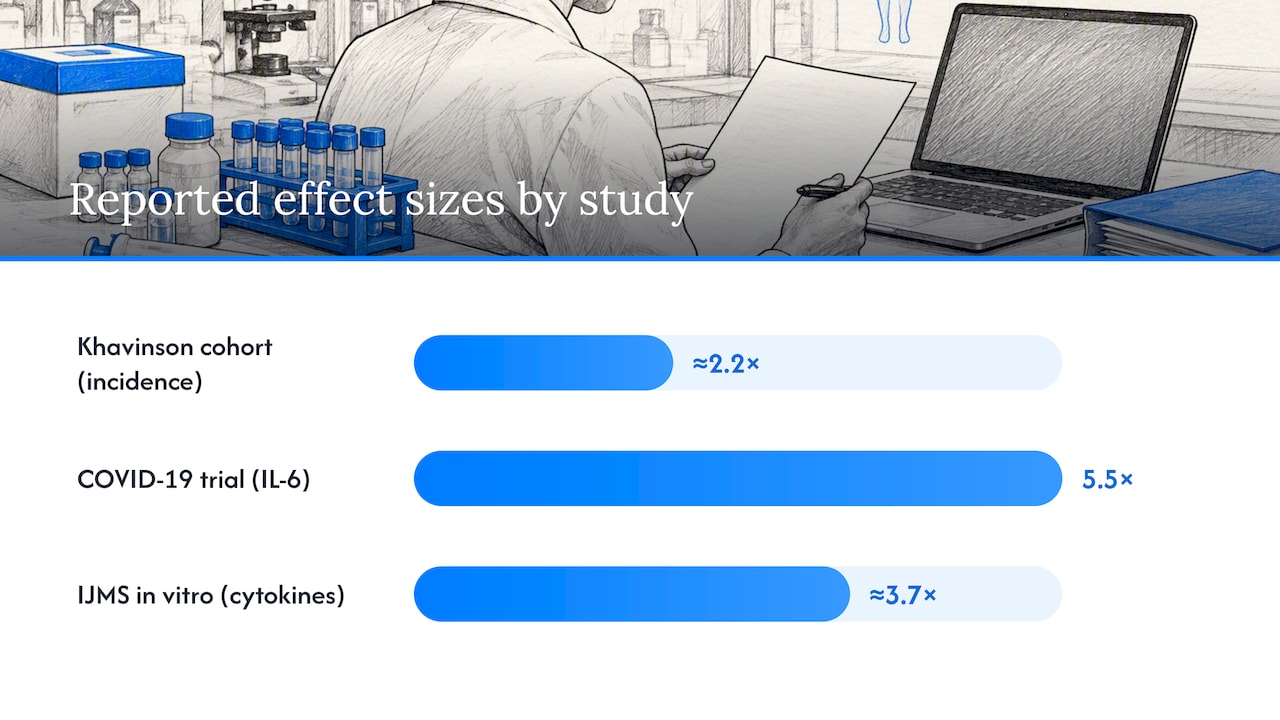
The strongest numeric signals for thymalin come from two very different study types: a multi-year observational cohort in elderly subjects and a small trial in hospitalized COVID-19 patients. Both report meaningful effect sizes, and both carry real methodological limits that shape how much weight the numbers should carry.
| Study | Population | Key reported outcome | Design limitation |
|---|---|---|---|
| COVID-19 trial (PMC8654498) | Hospitalized older COVID-19 patients | 5.5x IL-6 decrease, 55% lymphocyte increase, 88.9% CD4+ increase | Small, open-label reporting of biomarker change |
Beyond these two anchor studies, other clinical series in the Russian literature report additional endpoints tied to acute respiratory disease incidence and hemostasis markers, but these come from the same concentrated group of research teams and rarely include independent replication.
A fair methodological read of this evidence base includes several caveats:
- Neither the elderly cohort nor most clinical-series reports used randomization or blinding in the way a modern Western trial would require.
- Sample sizes in individual arms are often small, and the COVID-19 biomarker data reflects pre- versus post-treatment comparison rather than a placebo-controlled design in every report.
- Much of the published clinical work traces back to a small number of research groups, which concentrates both the expertise and the potential for shared methodological blind spots.
- A related systematic review of thymic peptide extracts and synthetic thymic peptides in oncology found mixed results, with some reduction in infectious complications but no consistent survival benefit, illustrating how thymic peptide claims broadly require cautious interpretation (Cochrane-style review).
Safety profile and regulatory status
Tolerability reported across the Russian clinical literature has generally been favorable, with few adverse events described in the papers covering thymalin’s use in respiratory infection, post-chemotherapy immune support, and neuroprotective regimens, per the molecular aspects review. That said, favorable tolerability in a specific set of published reports is not the same as a fully characterized safety profile across doses, populations, and manufacturing batches.
Because thymalin is derived from animal tissue, it carries the same theoretical risks common to any extract of this kind: batch-to-batch variability, endotoxin contamination, sterility failures, and a theoretical (unquantified) prion-related concern tied to bovine-sourced material. None of these risks are unique to thymalin, but they are magnified by the lack of a single defined reference compound to test against.
Thymalin is not FDA-approved, and no equivalent extract-based product holds that status in the American regulatory system. Thymosin alpha-1, by contrast, has its own separate approval history in other markets and its own CMC scrutiny in the United States. An FDA review document addressing thymosin alpha-1-related bulk drug substances raises exactly this kind of concern, noting that peptides used in compounding require careful characterization and present sterility, endotoxin, and aggregation risks that regulators weigh closely, according to the FDA’s review of thymosin alpha-1 bulk substances.
For researchers working within a US institutional setting, a basic sourcing checklist matters before any protocol design begins:
- Confirm a lot-specific Certificate of Analysis for identity and purity.
- Require endotoxin testing results tied to that same batch.
- Document sterility and aseptic handling procedures from the supplier.
- Loop in your IRB early, and treat any therapeutic-intent claim as a trigger for IND consideration.
Pro Tip: Treat every thymalin batch as its own variable in your statistical plan rather than assuming interchangeability across lots.
Where the evidence falls short and what better research would look like
The central limitation across thymalin research is structural: a heterogeneous extract studied mostly through open-label or observational designs, concentrated within a small circle of research groups. That combination makes it hard to separate a true biological effect from cohort selection, reporting practices, or batch-specific variation.
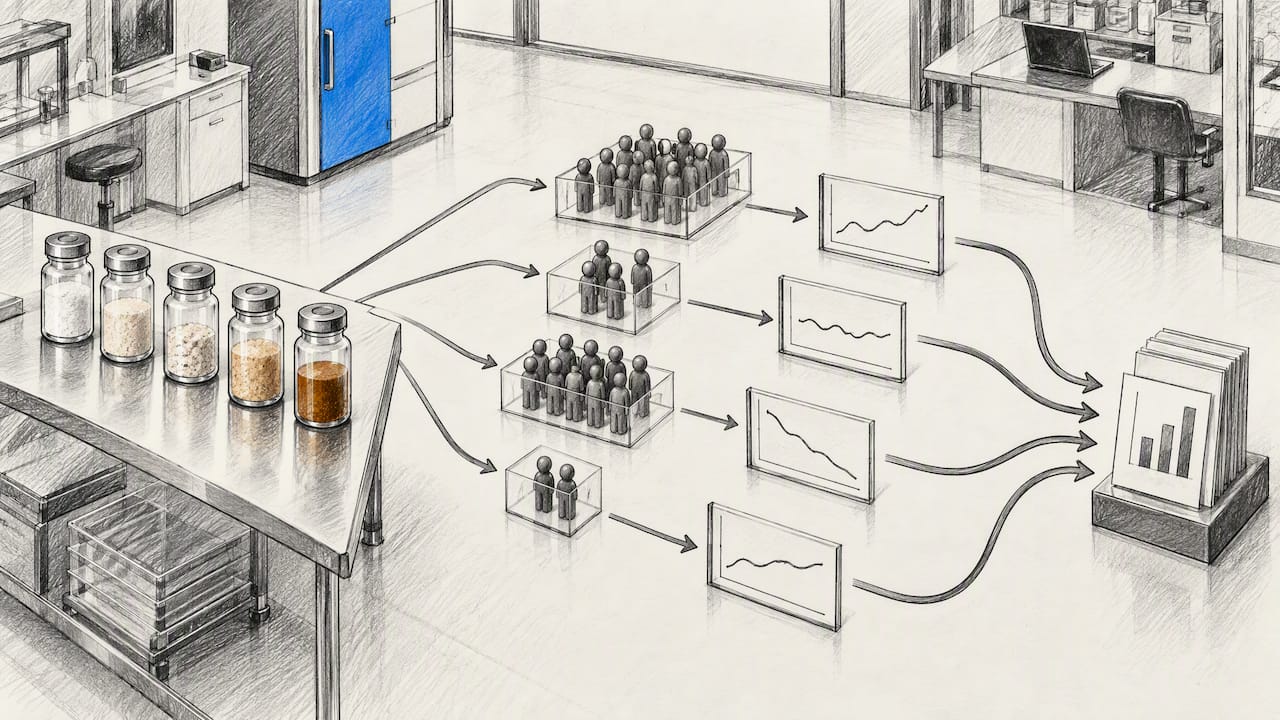
Specific gaps stand out. There is no published pharmacokinetic or pharmacodynamic profile establishing how thymalin’s peptide fractions behave after administration. Manufacturing is not standardized against a public reference material, so a milligram dose in one paper may not match a milligram dose in another. Independent replication outside the original research tradition is essentially absent, and no large blinded randomized controlled trial has tested the extract against placebo with pre-registered endpoints. Long-term safety registries tracking adverse events across broader populations also do not exist yet.
A credible next phase of research would need to:
- Characterize and standardize the active fractions, or shift toward the defined peptides (EW, KE, EDP) individually rather than the crude extract.
- Register trials prospectively on ClinicalTrials.gov with pre-specified primary endpoints.
- Include pharmacokinetic sampling tied to specific, COA-verified batches.
- Recruit multicenter, blinded cohorts outside the current concentration of research groups.
Until those steps happen, the honest reading of thymalin research is promising signal, insufficient proof.
Designing a thymalin research protocol: practical steps
Researchers building a protocol around thymalin can draw on published dosing patterns, though every figure below reflects a specific study’s extract batch and should not be treated as a universal reference dose.
- Review published dosing patterns. The COVID-19 trial used 10 mg intramuscularly daily for 5 days, while the long-term elderly cohort used annual short courses rather than continuous dosing.
- Select endpoints before enrollment. Prioritize lymphocyte subset counts (CD3, CD4, CD8), IL-6 and CRP, coagulation markers like D-dimer, and clinical respiratory outcomes, measured at baseline and at consistent follow-up intervals.
- Lock in quality controls up front. Require a Certificate of Analysis, endotoxin and sterility testing, and full batch traceability for every unit used in the study; our COA documentation page explains what that level of testing typically covers.
- Build in blinding wherever feasible. A randomized, double-blind, placebo-controlled arm addresses the single largest weakness in the existing literature.
- Clear the regulatory path early. Work with your IRB on informed consent language that reflects research-only intent, document supply chain transparency, and evaluate whether any therapeutic framing in your protocol triggers IND requirements.
Pro Tip: Log the exact lot number for every dose administered. Without that, you cannot later trace an unexpected outcome back to a specific batch.
Where this research needs to go next
Thymalin sits in a genuinely interesting position: real biochemical mechanisms, real biomarker movement in small human studies, and a mortality signal in one long-term cohort that would be hard to ignore if it replicated cleanly. But the evidence has not yet cleared the bar that would justify treating it as established. The field’s biggest need is not more observational data from the same handful of groups. It is one well-designed, blinded, multicenter trial with a standardized batch and pre-registered endpoints. Supplying research-grade, well-documented peptide material for that kind of work is where Data Peptides sees its role in this line of research.
— Data Peptides
How Data Peptides supports rigorous thymic peptide research
Reproducible results start with knowing exactly what is in the vial. Every peptide Data Peptides sells is third-party tested for purity and identity, with a Certificate of Analysis and endotoxin data available at the lot level, the same documentation a CMC-conscious protocol or an IRB submission needs to see.
- Lot-specific Certificates of Analysis so batch variability can be tracked as a study variable rather than an unknown.
- Endotoxin testing data to support sterility documentation in research protocols.
- A research-grade peptide shop covering weight loss, muscle growth, recovery, anti-aging, libido, and ancillary categories for laboratory use.
Researchers building out a thymic peptide study, or any protocol that depends on verified lot data, can review documentation and available inventory directly on the Data Peptides shop.
Selected primary sources and further reading
For readers who want to inspect the primary data directly: the COVID-19 immune status trial, the molecular aspects and immunocorrection review, the Khavinson and Morozov long-term cohort, the FDA’s bulk drug substance review, and the IJMS gene expression study. For broader context on peptide translational challenges, see this clinical guide to peptides in anti-aging.
This article is general information, not a substitute for advice from a qualified doctor. Consult a qualified healthcare professional about your own circumstances before acting on anything here.
Sources
- Peptide Drug Thymalin Regulates Immune Status in Severe COVID-19 Older Patients
- The Use of Thymalin for Immunocorrection and Molecular Aspects of Biological Activity
- Khavinson & Morozov long-term cohort (Neuroendocrinology Letters 2003)
- The Influence of KE and EW Dipeptides in the Composition of the Thymalin Drug on Gene Expression and Protein Synthesis Involved in the Pathogenesis of COVID-19 (IJMS 2023)
- FDA review document on thymosin alpha-1-related bulk drug substances
FAQ
What are the benefits of taking thymalin?
Published research associates thymalin with increases in lymphocyte and CD4+ T-cell counts and reductions in IL-6, reported in a COVID-19 patient trial, along with lower rates of acute respiratory disease and mortality in a long-term elderly cohort. These findings come from research-context studies rather than approved clinical use, and the extract is not FDA-approved for any indication.
What are the side effects of thymalin?
Russian clinical literature reports generally good tolerability with few adverse events across use in respiratory infection and post-chemotherapy immune support, according to the molecular aspects review. Because thymalin is an animal-tissue extract, researchers should still weigh theoretical risks like batch variability, endotoxin contamination, and sterility failures.
What peptides repair myelin?
The thymalin research reviewed here does not address myelin repair, and no source in this evidence base makes that claim for thymalin or its constituent peptides (EW, KE, EDP). Readers interested in myelin-related peptide research should look to literature specific to that mechanism rather than extrapolate from thymic immune studies.
What is the best peptide for treating autoimmune inflammation?
No single peptide has established, approved status as a treatment for autoimmune inflammation, and the evidence covered here, including in vitro cytokine reductions from EW and KE dipeptides, comes from research settings rather than clinical approval. Anyone considering peptide research for autoimmune applications should work from primary trial data for the specific condition and consult a qualified professional rather than a general peptide comparison.
Is thymalin approved for medical use?
Thymalin is not FDA-approved, and its research base rests mainly on studies from Russian clinical practice rather than the larger blinded trials regulators typically require. Thymosin alpha-1, a distinct defined peptide, has a separate approval history and its own CMC review noted in FDA documentation, and the two should not be treated as interchangeable evidence bases.