

The scientific community has increasingly focused attention on ultra peptides, a specialized category of bioactive compounds distinguished by their remarkably short amino acid sequences and potent biological effects. These compounds, typically consisting of two to seven amino acids, have emerged as valuable tools in laboratory research settings, where their unique structural properties and mechanism of action enable researchers to investigate specific cellular pathways with exceptional precision. Understanding the characteristics that define ultra peptides and differentiate them from longer peptide chains has become essential for researchers working to advance peptide science and explore novel applications across multiple research domains.
Defining Ultra Peptides and Their Structural Characteristics
Ultra peptides represent the shortest functional peptide sequences, typically classified as dipeptides, tripeptides, tetrapeptides, and occasionally extending to heptapeptides. The defining characteristic that sets these compounds apart centers on their compact molecular architecture, which confers distinct advantages in cellular permeability and metabolic stability compared to their longer counterparts.
The abbreviated amino acid sequence of ultra peptides creates several notable properties. Their smaller molecular weight facilitates enhanced membrane penetration, allowing these compounds to access intracellular targets more efficiently than larger peptides. Additionally, the reduced structural complexity often correlates with improved resistance to proteolytic degradation, extending their functional half-life within experimental systems.
Molecular Properties and Stability Profiles
Research examining ultra peptides has revealed that their abbreviated structure influences both pharmacokinetic and pharmacodynamic characteristics. These compounds demonstrate unique absorption, distribution, metabolism, and excretion patterns that differ substantially from conventional peptide therapeutics.
Key molecular advantages include:
- Enhanced cellular uptake through passive diffusion mechanisms
- Reduced susceptibility to peptidase cleavage at specific sites
- Improved thermal and pH stability profiles
- Lower immunogenic potential due to minimal epitope formation
- Simplified synthesis and quality control protocols
The stability characteristics of ultra peptides make them particularly suitable for laboratory applications where compound integrity must be maintained across varying experimental conditions. Third-party testing protocols can verify these stability parameters through rigorous analytical methodologies including high-performance liquid chromatography and mass spectrometry.

Research Applications Across Biological Systems
Investigators have identified numerous experimental contexts where ultra peptides serve as valuable research tools. Their applications span cellular biology, metabolic research, tissue engineering, and molecular pathway investigation, with each domain leveraging the unique properties these compounds provide.
Metabolic and Cellular Energy Research
Ultra peptides have demonstrated particular utility in studies examining cellular energy metabolism and mitochondrial function. Compounds like MOTS-c, a mitochondria-derived peptide, exemplify how short peptide sequences can influence fundamental metabolic processes. These research applications investigate how specific amino acid sequences modulate energy utilization, glucose handling, and cellular stress responses.
Researchers conducting metabolic studies often employ ultra peptides to:
- Investigate mitochondrial signaling pathways
- Examine cellular adaptation to metabolic stress
- Study glucose and lipid metabolism regulation
- Assess cellular energy production mechanisms
- Explore age-related metabolic changes
The concentrated focus on metabolic peptide research has expanded substantially as investigators seek to understand the precise mechanisms through which these short sequences influence systemic metabolic homeostasis.
Tissue Repair and Regeneration Studies
Another prominent research domain centers on tissue repair mechanisms and cellular regeneration processes. Ultra peptides with specific amino acid compositions have been investigated for their potential to modulate healing pathways, inflammatory responses, and cellular proliferation. Laboratory studies examining these properties utilize controlled experimental models to isolate specific effects and identify underlying molecular mechanisms.
| Research Domain | Ultra Peptide Examples | Primary Investigation Focus |
|---|---|---|
| Wound Healing | Copper-binding tripeptides | Collagen synthesis and matrix remodeling |
| Vascular Function | Short bioactive sequences | Endothelial cell signaling and vessel formation |
| Neural Tissue | Neuroprotective dipeptides | Neuronal survival and synaptic plasticity |
| Connective Tissue | ECM-modulating peptides | Fibroblast activity and structural protein production |
These investigations require high-purity compounds to ensure experimental validity and reproducible results. Researchers working with laboratory-grade peptides prioritize product quality and batch consistency to maintain experimental integrity across longitudinal studies.

Synthesis Methods and Quality Considerations
The production of ultra peptides for research purposes employs solid-phase peptide synthesis (SPPS) as the primary manufacturing methodology. This approach enables precise sequence control and high-yield production, essential factors when generating compounds for rigorous scientific investigation. The abbreviated sequence length of ultra peptides simplifies synthesis protocols compared to longer peptides, reducing potential for sequence errors and improving overall production efficiency.
Manufacturing Standards and Purity Verification
Quality assurance protocols for research-grade ultra peptides involve multiple analytical verification steps. Each production batch undergoes comprehensive testing to confirm sequence accuracy, assess purity levels, and quantify any potential contaminants or synthesis byproducts.
Standard quality control measures include:
- Amino acid composition analysis via hydrolysis and chromatography
- Mass spectrometry confirmation of molecular weight
- High-performance liquid chromatography for purity assessment
- Peptide content determination through quantitative analysis
- Endotoxin testing for biological research applications
Third-party batch testing provides independent verification of these quality parameters, offering researchers confidence in the compounds they utilize for experimental work. US-manufactured peptides benefit from adherence to stringent production standards and regulatory oversight, further ensuring product consistency and reliability.
Recent investigations have explored novel approaches to extending the functional characteristics of ultra peptides. Studies examining albumin-binding acylated heptapeptides demonstrate how chemical modifications can enhance pharmacokinetic properties while maintaining the core structural advantages of short peptide sequences.
Mechanism of Action and Cellular Interactions
Understanding how ultra peptides exert their biological effects requires examination of their interaction patterns with cellular receptors, signaling molecules, and intracellular targets. The compact structure of these compounds enables specific binding interactions while minimizing off-target effects, a characteristic that proves valuable in research settings focused on pathway-specific investigations.
Receptor Binding and Signal Transduction
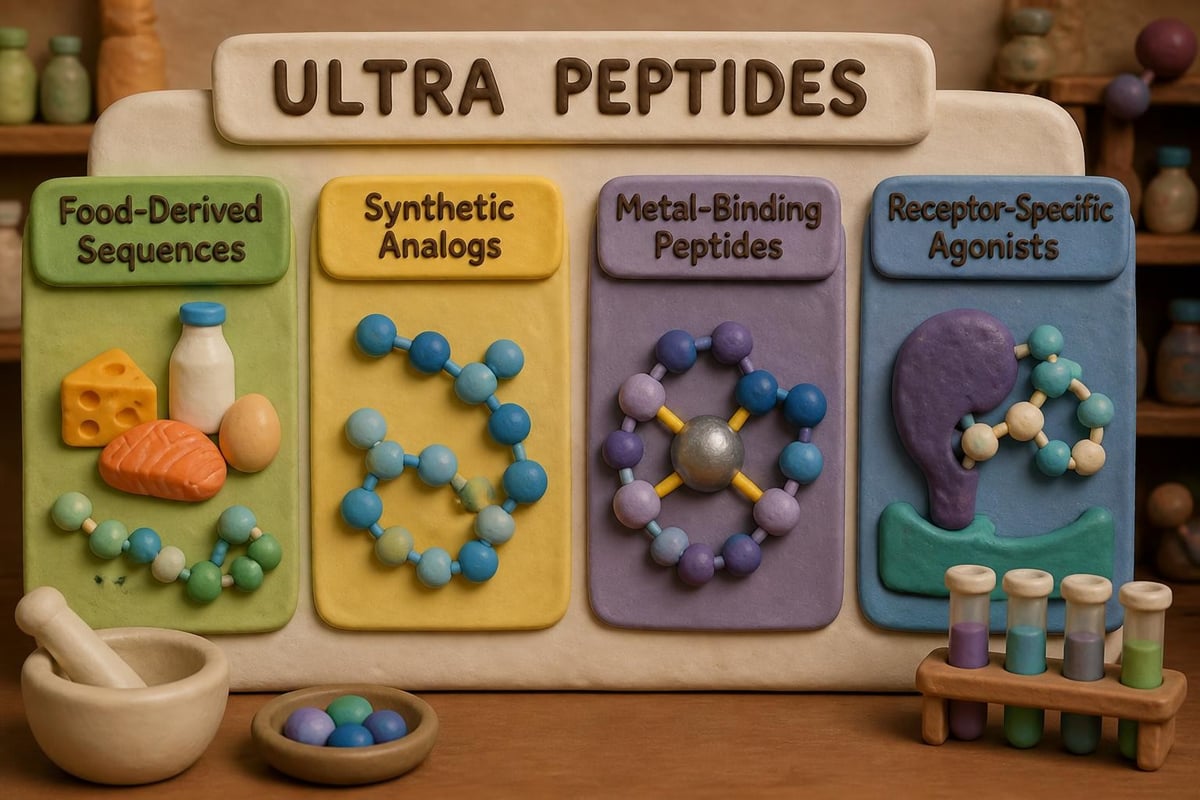
Many ultra peptides function through direct interaction with cell surface receptors or membrane-bound proteins. The specificity of these interactions depends on the precise amino acid sequence and three-dimensional conformation adopted by the peptide in physiological conditions. Short peptide sequences can serve as selective agonists or antagonists for particular receptor subtypes, enabling researchers to dissect complex signaling cascades.
For instance, certain tripeptides demonstrate high-affinity binding to specific melanocortin receptors, while others preferentially interact with growth factor receptors or integrin proteins. This selectivity profile allows investigators to isolate individual pathway components and assess their functional contributions within larger biological systems.
The comprehensive peptide database maintained by research-focused organizations provides detailed mechanism information for numerous ultra peptides, supporting investigators as they design experimental protocols and interpret research findings.
Intracellular Targets and Pathway Modulation
Beyond receptor-mediated mechanisms, some ultra peptides exert effects through direct interaction with intracellular proteins, enzymes, or nucleic acids. Their small molecular size facilitates cytoplasmic and nuclear entry, where they can modulate transcription factors, metabolic enzymes, or structural proteins.
Research examining these intracellular mechanisms often employs:
- Fluorescently labeled peptides to track cellular distribution
- Co-immunoprecipitation studies to identify binding partners
- Gene expression analysis to assess transcriptional effects
- Proteomic approaches to characterize protein interaction networks
- Metabolomic profiling to quantify downstream metabolic changes
The integration of these methodological approaches provides comprehensive insight into the multifaceted effects ultra peptides can produce within cellular systems.
Specialized Ultra Peptide Categories
Within the broader classification of ultra peptides, several distinct subcategories have emerged based on structural features, biological sources, or functional properties. Understanding these classifications helps researchers select appropriate compounds for specific experimental objectives.
Bioactive Food-Derived Peptides
One particularly interesting category encompasses ultra-short peptides derived from dietary protein sources. Recent studies have investigated therapeutic effects of ultra-short peptides from edible plant proteins, examining their potential to influence vascular function and immune homeostasis in experimental models. These naturally occurring sequences demonstrate how evolution has optimized short peptide structures for specific biological functions.
Food-derived ultra peptides offer several research advantages:
- Well-characterized safety profiles from dietary exposure
- Diverse structural templates from varied protein sources
- Potential synergistic effects when combined with nutritional interventions
- Established extraction and purification methodologies
- Opportunities for structure-activity relationship studies
Investigators studying these compounds often compare their properties against synthetic ultra peptides to identify structural features that confer enhanced stability or potency.
Copper-Binding Peptides
Tripeptides containing specific amino acid sequences demonstrate high-affinity copper binding, creating metal-peptide complexes with distinct biological properties. The most extensively studied example, GHK-Cu, consists of glycine-histidine-lysine coordinated with a copper ion. This complex has been investigated for its potential to modulate collagen synthesis, antioxidant enzyme activity, and cellular remodeling processes.
Research applications examining copper-binding ultra peptides focus on mechanisms including:
- Metal ion transport and cellular copper homeostasis
- Redox signaling and oxidative stress modulation
- Matrix metalloproteinase regulation
- Growth factor expression and activity
- Cellular differentiation and tissue remodeling
The GHK-Cu research compound exemplifies how ultra peptides can serve as delivery vehicles for bioactive metal ions while simultaneously exerting peptide-specific effects through their amino acid sequence.
Experimental Design Considerations
Researchers incorporating ultra peptides into experimental protocols must address several methodological considerations to ensure valid results and appropriate interpretation. The unique properties of these compounds necessitate specific approaches to dosing, delivery, storage, and analytical assessment.
Dosing and Concentration Optimization
The potent biological activity of many ultra peptides requires careful dose-response characterization. Researchers typically employ systematic titration studies to identify concentration ranges that produce measurable effects without saturating response mechanisms or inducing non-specific toxicity. The enhanced cellular penetration of ultra peptides often means effective concentrations fall below those required for longer peptide sequences.
| Experimental Parameter | Consideration for Ultra Peptides | Recommended Approach |
|---|---|---|
| Starting Concentration | Lower than conventional peptides | Begin at nanomolar range |
| Dose Escalation | Logarithmic increments | 10-fold concentration steps |
| Incubation Duration | Faster cellular uptake | Shorter exposure periods initially |
| Vehicle Selection | Maintain peptide stability | pH-buffered saline solutions |
| Storage Conditions | Prevent degradation | Frozen aliquots at -20°C or below |
Pilot studies establishing optimal parameters for specific ultra peptides ensure subsequent experiments generate reliable, reproducible data. Documentation of these optimization efforts provides valuable context when comparing results across different research groups or experimental systems.
Quality Verification and Handling Protocols
Maintaining ultra peptide integrity throughout experimental procedures requires adherence to proper handling protocols. Researchers should verify compound identity and purity upon receipt, then implement storage and preparation procedures that preserve these characteristics. Frequent freeze-thaw cycles can compromise peptide stability, making aliquot preparation essential for compounds used across multiple experiments.
Analytical verification methods appropriate for ultra peptides include spectroscopic techniques, chromatographic analysis, and biological activity assays. Regular quality checks ensure that experimental observations reflect true compound effects rather than degradation artifacts or contamination issues. Research facilities often maintain detailed records of peptide lot numbers, storage conditions, and usage dates to support experimental reproducibility and troubleshooting efforts.
For investigators seeking additional guidance on proper peptide handling and experimental design, comprehensive peptide research FAQs provide valuable technical information covering storage, reconstitution, and quality assessment protocols.
Advanced Research Applications and Emerging Directions
The field of ultra peptide research continues expanding as investigators identify novel sequences, elucidate additional mechanisms, and develop innovative experimental applications. Several emerging research directions demonstrate particular promise for advancing scientific understanding and expanding the utility of these compounds.
Combination Approaches and Synergistic Studies
Recent research has explored how combining multiple ultra peptides with complementary mechanisms might produce enhanced or synergistic effects. These studies investigate whether short peptide sequences targeting different cellular pathways can work cooperatively to produce outcomes exceeding those achieved by individual compounds. The BPC-157 and TB-500 combination represents one example where researchers examine potential synergistic interactions between peptides affecting tissue repair through distinct molecular mechanisms.
Experimental designs investigating synergy typically employ:
- Factorial experimental designs testing multiple dose combinations
- Isobologram analysis to quantify synergistic versus additive effects
- Temporal studies examining optimal administration sequences
- Mechanistic investigations identifying convergent pathway interactions
- Comparative studies against individual compounds at equivalent doses
These sophisticated experimental approaches require careful statistical analysis and appropriate controls to distinguish true synergistic interactions from simple additive effects.
Modified Ultra Peptides and Peptidomimetics
Chemical modification strategies offer opportunities to enhance the already favorable properties of ultra peptides. Researchers have investigated acetylation, pegylation, cyclization, and incorporation of non-natural amino acids as approaches to further improve stability, selectivity, or potency. These modifications must be balanced against potential alterations in mechanism of action or cellular uptake characteristics.
Peptidomimetic approaches utilize the ultra peptide sequence as a structural template while incorporating chemical modifications that enhance drug-like properties. These strategies have produced compounds with improved oral bioavailability, extended circulation times, and enhanced resistance to enzymatic degradation while retaining the biological activity of the parent peptide sequence.
Quality Standards and Regulatory Considerations
Research involving ultra peptides demands rigorous attention to compound quality and appropriate regulatory compliance. The laboratory research community has established standards ensuring that peptides used in scientific investigations meet appropriate purity and characterization criteria.
Purity Standards and Analytical Methods
High-quality research-grade ultra peptides typically achieve purity levels exceeding 98% as determined by analytical high-performance liquid chromatography. This stringent threshold ensures that experimental observations reflect the intended compound rather than synthesis byproducts or degradation products. Additional analytical techniques verify sequence accuracy and detect potential contaminants including residual solvents, trifluoroacetic acid, or bacterial endotoxins.
US-manufactured peptides benefit from production facilities adhering to current good manufacturing practices and utilizing validated analytical methodologies. Third-party verification through independent testing laboratories provides additional confidence in reported purity specifications and lot-to-lot consistency.
Intended Use and Regulatory Compliance
Ultra peptides supplied for laboratory research purposes are explicitly intended for in vitro and in vivo research applications only, not for human or animal consumption outside controlled research settings. This distinction carries important regulatory implications and establishes clear boundaries for appropriate compound utilization.
Researchers working with these compounds must:
- Maintain proper laboratory documentation and inventory controls
- Follow institutional biosafety and chemical safety protocols
- Store compounds in secure, access-controlled locations
- Dispose of unused material according to institutional guidelines
- Ensure all personnel handling peptides receive appropriate training
Compliance with these standards protects both research integrity and laboratory personnel while supporting the advancement of peptide science through rigorous, well-controlled investigations.
Comparative Analysis: Ultra Peptides Versus Longer Sequences
Understanding the relative advantages and limitations of ultra peptides compared to longer peptide sequences helps researchers make informed decisions about which compounds best suit specific experimental objectives. This comparative framework considers factors including cellular penetration, stability, specificity, and synthetic complexity.
Property Comparison:
| Characteristic | Ultra Peptides (2-7 amino acids) | Longer Peptides (>7 amino acids) |
|---|---|---|
| Cellular Uptake | Enhanced passive diffusion | Often requires active transport |
| Proteolytic Stability | Generally more resistant | More susceptible to degradation |
| Receptor Specificity | Can be highly selective | Often broader target engagement |
| Synthesis Complexity | Simplified protocols | More complex, error-prone |
| Cost Efficiency | Lower per-unit cost | Higher production expenses |
| Conformational Flexibility | Limited structural variation | Greater three-dimensional diversity |
This comparative analysis reveals that ultra peptides excel in applications requiring efficient cellular delivery, high stability, and cost-effective production. Longer peptides may prove advantageous when complex three-dimensional structures or multiple binding domains are necessary for biological activity.
The selection between ultra peptides and longer sequences ultimately depends on specific research objectives, target pathways, and experimental constraints. Many research programs employ both categories strategically, utilizing ultra peptides for initial pathway validation and mechanistic studies while exploring longer sequences for applications requiring enhanced selectivity or multivalent binding interactions.
Emerging Technologies and Future Research Directions
The ultra peptide research landscape continues evolving as new technologies enable more sophisticated investigations and novel applications emerge across multiple scientific disciplines. Several technological advances promise to accelerate discovery and expand the utility of these compounds.
High-Throughput Screening and Computational Design
Advanced screening technologies now enable rapid assessment of ultra peptide libraries containing thousands of sequence variations. These high-throughput approaches identify novel sequences with desired properties more efficiently than traditional hypothesis-driven methods. Computational modeling techniques complement experimental screening by predicting peptide-protein interactions, estimating binding affinities, and optimizing sequences for specific targets before synthesis.
Machine learning algorithms trained on existing peptide activity data can now propose novel ultra peptide sequences with predicted properties, accelerating the discovery pipeline and reducing experimental resource requirements. These computational tools consider factors including amino acid composition, charge distribution, hydrophobicity patterns, and predicted secondary structure propensities.
Advanced Delivery Systems
Researchers are developing innovative delivery technologies that further enhance the already favorable cellular uptake characteristics of ultra peptides. Nanoparticle encapsulation, cell-penetrating peptide conjugation, and targeted delivery systems represent approaches that could expand the experimental utility of these compounds. These technologies aim to achieve tissue-specific delivery, controlled release kinetics, or enhanced subcellular localization.
The integration of ultra peptides with advanced biomaterials creates opportunities for applications in tissue engineering, controlled-release formulations, and surface modification strategies. These hybrid approaches leverage the biological activity of ultra peptides while incorporating the structural and mechanical properties of synthetic or natural polymers.
The expanding field of ultra peptide research offers investigators powerful tools for probing biological systems and advancing scientific understanding across numerous disciplines. As analytical technologies improve and synthesis methods become more refined, these compact bioactive compounds will continue serving essential roles in laboratory research exploring cellular mechanisms, metabolic pathways, and tissue responses. For researchers seeking high-quality, US-manufactured research peptides with verified purity and consistent performance, Data Peptides provides laboratory-grade compounds specifically intended for rigorous scientific investigation, with each batch undergoing third-party testing to ensure the quality standards that sophisticated research demands.