

LL-37 is the 37-residue human cathelicidin peptide, generated by proteolytic cleavage of the CAMP gene product hCAP18, and it combines broad-spectrum antimicrobial activity with potent immune signaling functions. It is the only cathelicidin-derived antimicrobial peptide humans produce. Research on LL-37 spans direct pathogen killing, immune cell recruitment, wound repair, and disease associations ranging from psoriasis to cardiovascular pathology, which is why it remains one of the most heavily studied host-defense peptides in the literature.
TL;DR:
- Peptide aggregation influences antimicrobial potency, with self-assembly at membranes being a key factor for specific fragments like LL37(17–29).
- Low-salt conditions can falsely enhance LL-37’s antimicrobial activity, making assay details crucial for accurate MIC comparisons.
- Truncated fragments such as KR-12 and GF-17 offer better stability, lower toxicity, and reduced cost while preserving vital bioactivity for research.
- Peptide quality, verified through detailed Certificates of Analysis, is essential for reproducibility and should include purity, identity, and endotoxin levels.
- Future research priorities include standardizing experimental conditions, mapping dose-response effects, and developing delivery systems to extend peptide stability in vivo.
Table of Contents
- What Is LL-37? Sequence, Structure, and Active Fragments
- LL-37 Antimicrobial Properties: MIC Data, Spectrum, and Mechanism
- How LL-37 Shapes Immunity: Receptors, Signaling, and Cellular Effects
- LL-37 in Disease: Wound Healing, Antiviral Activity, and Chronic Illness Links
- Overcoming LL-37’s Translational Limits: Stability, Toxicity, and Cost
- Designing Reproducible LL-37 Experiments: Assays and Reporting Standards
- Choosing Research-Grade LL-37: What a Certificate of Analysis Should Show
- Where LL-37 Research Should Go Next
- Sourcing LL-37 for Your Next Study
- Key Literature for LL-37 Research
- Sources
- FAQ
What Is LL-37? Sequence, Structure, and Active Fragments
LL-37 gets its name from the two leucine residues that open its sequence and the 37 amino acids that follow: LLGDFFRKSKEKIGKEFKRIVQRIKDFLRNLVPRTES. It carries no disulfide bonds, unlike defensins, which makes it structurally simpler but also more conformationally flexible depending on its environment.
The peptide does not exist as a finished product from the start. It is synthesized as part of a larger precursor, hCAP18 (human cationic antimicrobial protein of 18 kDa), stored in the secondary granules of neutrophils and produced by epithelial cells, monocytes, and mast cells. Proteinase 3 cleaves hCAP18 extracellularly to release the mature LL-37 peptide, a step confirmed across multiple tissue and cell-based studies and reviewed in detail in a comprehensive 2024 structural and functional review covering LL-37’s biochemistry and disease associations.
Folding is context-dependent. In aqueous solution, LL-37 behaves largely as a disordered, extended peptide. Circular dichroism and NMR studies show it adopts an amphipathic α-helical conformation only upon contact with membrane-mimetic environments such as anionic phospholipid vesicles, detergent micelles, or trifluoroethanol-water mixtures. This environment-triggered folding is a defining trait of cathelicidin peptides and it directly explains why LL-37’s antimicrobial activity depends so heavily on the local lipid and ionic environment during an assay.
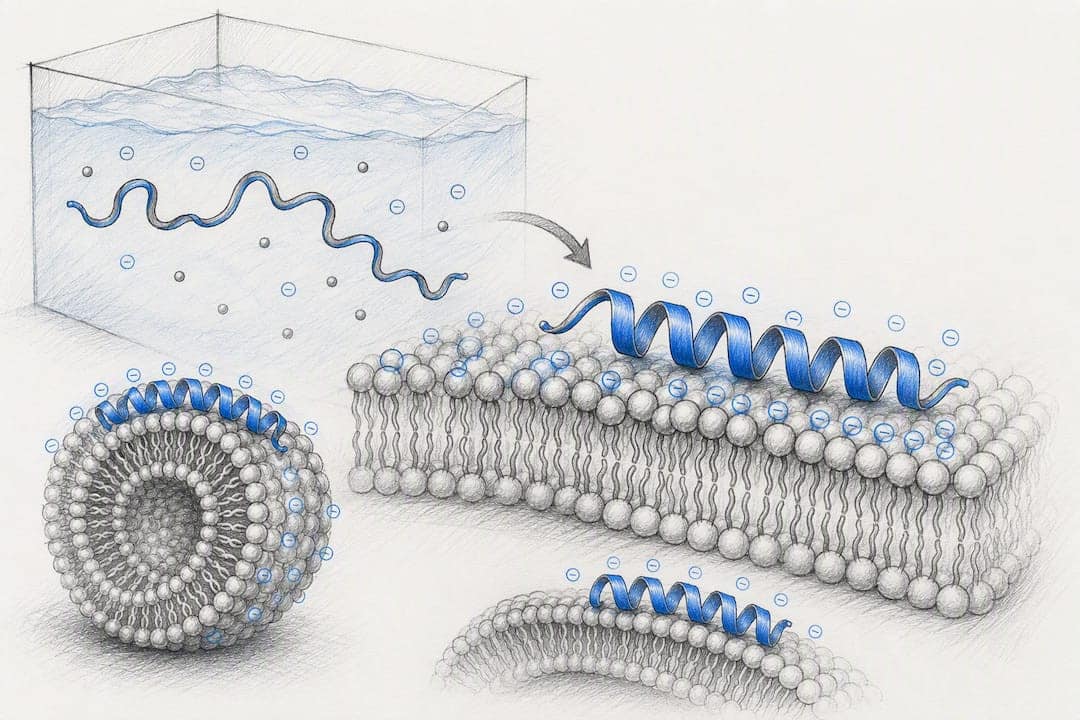
Aggregation behavior adds another layer of complexity. LL-37 and its truncated fragments do not always act as simple monomers. Recent molecular dynamics work combined with experimental binding data shows that the peptide can self-associate into oligomers, and this aggregation state correlates directly with antimicrobial potency for certain fragments. A 2026 study using discrete molecular dynamics simulations on the active core fragment LL37(17–29) found that specific point mutations disrupt the peptide’s ability to aggregate, and that loss of aggregation tracked closely with a loss of antimicrobial function. That finding matters for anyone designing analogs: potency is not solely a function of net charge or hydrophobicity, it is also a function of how readily the peptide self-assembles at a membrane surface.
Several truncated fragments of the full-length peptide have become standard tools in LL-37 research because they retain useful bioactivity while trimming production cost and, in some cases, reducing toxicity:
- KR-12 (residues 18–29): the shortest fragment reported retaining selective antimicrobial activity with reduced toxicity to mammalian cells, making it a popular scaffold for engineered analogs.
- GF-17 (residues 17–32): a longer fragment retaining strong antimicrobial and immunomodulatory activity, often used to probe structure-function relationships without the full peptide’s manufacturing cost.
- LL37(17–29): the core fragment used in aggregation and molecular dynamics studies, valuable for isolating the biophysical mechanisms that drive membrane interaction.
These fragments are not just cheaper substitutes. Each isolates a different piece of the parent peptide’s activity profile, which is exactly what makes fragment-based research useful for teasing apart which residues drive antimicrobial killing versus immune signaling. Data Peptides covers this fragment logic in more detail in its LL-37 peptide overview for researchers comparing full-length peptide to truncated analogs.
LL-37 Antimicrobial Properties: MIC Data, Spectrum, and Mechanism
LL-37 kills a broad range of bacteria at concentrations typically reported under 10 μg/mL, though the exact minimum inhibitory concentration shifts substantially with assay conditions, particularly salt content.
LL-37 shows measurable activity against organisms spanning both Gram-negative and Gram-positive classes, including some antibiotic-resistant strains. Reported activity extends to Pseudomonas aeruginosa, Escherichia coli, Staphylococcus aureus, and vancomycin-resistant enterococci, based on data compiled across early foundational antimicrobial studies and reinforced by later systematic reviews of LL-37’s activity profile against sensitive and resistant human pathogens. That breadth is unusual for a single peptide. Most conventional antibiotics target a narrower slice of the microbial world, and LL-37’s ability to hit both membrane classes reflects its mechanism rather than any single molecular target.
MIC snapshot: Representative studies report LL-37 MIC values frequently below 10 μg/mL against common Gram-negative and Gram-positive pathogens under low-salt, serum-free conditions, but potency drops measurably as physiological salt concentrations rise, a pattern documented across multiple independent studies.
That salt sensitivity is not a minor footnote. It is one of the most consistently reproduced findings in LL-37 literature and one of the most common sources of confusion when researchers try to compare MIC values across papers. A result generated in low-ionic-strength buffer will almost always look far more potent than the same peptide tested in a medium approximating physiological saline or serum.
The mechanisms behind this killing activity break down into several overlapping modes:
- Membrane permeabilization: LL-37’s amphipathic helix inserts into bacterial membranes, disrupting lipid packing and creating transient pores or generalized membrane thinning that leads to leakage of cytoplasmic contents.
- Aggregation-driven killing: as described above, the peptide’s tendency to self-associate at the membrane surface appears to be mechanistically linked to its ability to disrupt bilayer integrity, particularly for shorter active fragments.
- Intracellular targeting: beyond membrane damage, LL-37 has been shown in some systems to translocate into bacterial cytoplasm and interfere with nucleic acid or protein synthesis machinery, contributing to killing independent of outright lysis.
- Endotoxin neutralization: LL-37 binds lipopolysaccharide (LPS) directly, sequestering it and blunting the downstream inflammatory cascade that LPS would otherwise trigger through TLR4 signaling.
- Anti-biofilm activity: LL-37 disrupts biofilm formation in several pathogen models, interfering with initial surface attachment and reducing established biofilm biomass at sub-MIC concentrations in some assays.
Assay design determines whether your MIC number means anything to another lab. A handful of variables routinely explain why two papers report wildly different values for the same peptide against the same organism:
Peptide adsorption to polypropylene or polystyrene labware can silently reduce the effective peptide concentration in a well, especially at low micromolar doses, unless low-binding plasticware or pre-blocked surfaces are used. Inoculum size shifts the apparent MIC because a denser starting bacterial population requires more peptide per cell to achieve the same kill fraction. Media composition, particularly the presence of divalent cations, anions, and serum proteins, changes both peptide folding and target accessibility. Researchers reporting LL-37 MIC/MBC data should state peptide source and purity, exact media formulation and salt concentration, inoculum density, incubation time and temperature, and whether readouts came from turbidity, colony counts, or a resazurin-based viability assay. Omitting any of these makes a reported MIC essentially non-comparable to the rest of the literature.
How LL-37 Shapes Immunity: Receptors, Signaling, and Cellular Effects
LL-37 does far more than kill microbes directly. It functions as an alarmin, recruiting and activating immune cells through a set of receptor interactions that researchers are still working to fully map.
The formyl peptide receptor FPRL1 (also called FPR2) is the most consistently cited G-protein-coupled receptor mediating LL-37’s chemotactic effects, drawing neutrophils, monocytes, and T cells toward sites of peptide release. Beyond FPR2, LL-37 interacts with P2X7, a purinergic receptor implicated in inflammasome activation and IL-1β processing, and it modulates signaling through Toll-like receptors, particularly by binding LPS before it can engage TLR4 and by influencing TLR9 responses to self-DNA in certain autoimmune contexts. The peptide’s ability to bind and effectively chaperone extracellular nucleic acids into endosomal TLR pathways is part of why it has been implicated in autoimmune skin conditions like psoriasis, where LL-37-DNA complexes can drive interferon responses from plasmacytoid dendritic cells.
Cellular effects downstream of these receptor interactions include:
- Chemoattraction of neutrophils, monocytes, and mast cells to sites of infection or tissue damage, amplifying the initial innate response.
- Modulation of cytokine output from macrophages and dendritic cells, with effects that shift between proinflammatory and regulatory depending on peptide concentration and the surrounding cytokine milieu.
- Promotion of neutrophil extracellular trap (NET) formation in some experimental systems, linking LL-37 to both pathogen entrapment and, potentially, to autoimmune tissue damage when NET release becomes excessive.
- Crosstalk with adaptive immunity through effects on dendritic cell maturation and antigen presentation, suggesting LL-37 helps bridge innate recognition and adaptive response initiation.
A Frontiers in Immunology analysis proposed that boosting LL-37 expression might dampen severe inflammatory cascades and reduce microthrombosis in acute viral infection, illustrating how the same peptide can be framed as both an inflammatory trigger and a potential inflammatory brake depending on the disease model.
That duality is the single hardest thing to communicate about LL-37 to anyone new to the field: its immune effects are dose- and context-dependent, not fixed. Low concentrations tend to favor chemotaxis and moderate cytokine priming, while higher concentrations can push toward direct cytotoxic or proinflammatory outcomes in some cell types. The same molecule that helps clear an infection can, under different concentration or tissue conditions, contribute to chronic inflammatory pathology.
Pro Tip: When designing chemotaxis assays with LL-37, run a full dose-response curve rather than a single concentration. Many published discrepancies in whether LL-37 is “proinflammatory” or “regulatory” trace back to studies using only one dose that happened to sit on opposite sides of this dose-dependent switch.
Standard experimental approaches for probing these functions include transwell chemotaxis assays with neutrophils or monocytes, receptor-blocking studies using FPR2 antagonists or P2X7 inhibitors to confirm mechanism, cytokine multiplex panels (ELISA or Luminex) on treated macrophage or dendritic cell cultures, and fluorescence-based NET quantification using cell-impermeant DNA dyes on stimulated neutrophils.
LL-37 in Disease: Wound Healing, Antiviral Activity, and Chronic Illness Links
LL-37’s therapeutic relevance extends well beyond killing bacteria in a dish, and much of the current translational interest centers on wound repair, biofilm-associated infection, and a growing list of chronic disease associations.
Wound healing is one of the better-supported translational applications. Preclinical models using topical LL-37 formulations have shown accelerated re-epithelialization and improved healing outcomes, an effect attributed to the peptide’s ability to promote keratinocyte migration and stimulate angiogenesis independent of its direct antimicrobial action. Reduced biofilm burden in chronic wound models is a related and frequently cited benefit, since biofilm formation is one of the primary reasons chronic wounds resist standard antibiotic treatment. Data Peptides discusses this application area in more depth in its overview of peptides used in tissue repair and healing research.
Antiviral activity has drawn increasing attention, with evidence that LL-37 can interfere with viral entry or replication in several respiratory infection models, contributing to the interest in upregulating endogenous cathelicidin expression as a host-directed antiviral strategy rather than a direct-acting one.
Chronic disease associations paint a more complicated picture. LL-37 has been linked to:
- Cardiovascular disease processes, where a 2024 review describes roles in atherosclerosis progression, thrombosis, and cardiac hypertrophy that appear to be both regulatory and, under certain conditions, pathogenic.
- Amyloid-related disease pathways, where LL-37’s own aggregation tendency intersects with amyloidogenic processes, a relationship explored extensively in the Biomolecules structural review.
- Autoimmune skin conditions, particularly psoriasis, where LL-37-nucleic acid complexes drive interferon responses that contribute to disease flares rather than resolution.
- Cancer biology, with reports that are genuinely mixed. Some tumor contexts show LL-37 promoting tumor cell proliferation and angiogenesis, while other models suggest cytotoxic effects against cancer cells, underscoring how tissue microenvironment shapes outcome.
This context dependence is arguably the most important conceptual takeaway for anyone entering LL-37 research. The peptide’s protective role in an acute infection model does not predict its behavior in a chronic inflammatory or tumor microenvironment, and researchers should be cautious about extrapolating findings across disease categories without direct experimental validation.
Where the field still needs data: dose-response relationships in vivo across chronic disease models remain sparse, there is limited longitudinal data tracking endogenous LL-37 levels against disease progression in humans, and mechanistic studies distinguishing LL-37’s direct effects from its role as a carrier for other immunostimulatory molecules (like self-DNA or self-RNA) are still incomplete for most of the chronic disease associations listed above.
Overcoming LL-37’s Translational Limits: Stability, Toxicity, and Cost
Three practical problems stand between LL-37’s compelling laboratory data and any real therapeutic product: the native peptide degrades quickly, it can be toxic to mammalian cells at effective doses, and full-length synthesis is expensive at scale. Each has a documented engineering response.
-
Proteolytic instability. Native LL-37 is rapidly degraded by host and microbial proteases, which limits its functional half-life in serum and at wound sites. The most common fix is truncation to shorter, protease-resistant cores like KR-12 or GF-17, which reduces the number of cleavage sites available to proteases while retaining core antimicrobial activity. A second strategy substitutes L-amino acids with D-amino acids at key positions, since most proteases cannot cleave D-amino acid bonds, extending functional half-life considerably. Retro-inverso analogs, which reverse the peptide backbone while inverting chirality to preserve side-chain topology, represent a third documented approach for building protease resistance without abandoning the parent sequence’s spatial arrangement, as outlined in a 2025 review of cathelicidin modification strategies.
-
Cytotoxicity toward mammalian cells. Full-length LL-37 can damage host cell membranes at concentrations not far above its antimicrobial threshold, which limits the therapeutic window for systemic use. Sequence tuning that reduces net hydrophobicity, particularly trimming or modifying the hydrophobic N-terminal region implicated in mammalian membrane disruption, is a documented approach to widening this window. Truncated fragments like KR-12 are specifically valued in the literature for showing a more favorable selectivity ratio between bacterial and mammalian membrane damage compared to the full-length peptide.
-
Short functional half-life and delivery limitations. Even a protease-resistant analog does little good if it clears the target site within minutes. Nanoparticle encapsulation, hydrogel matrices for topical wound applications, and other sustained-release delivery systems have all been explored to keep local peptide concentrations therapeutic for longer without requiring repeated dosing, a strategy consistently highlighted across recent cathelicidin engineering literature.
-
Production cost at scale. Full-length 37-residue peptides cost meaningfully more to synthesize than 12 to 17-residue fragments, which is part of why so much of the current engineering literature centers on truncated analogs rather than the parent molecule. Researchers designing new studies should weigh whether the specific research question requires the full-length sequence’s complete functional repertoire or whether a validated fragment will answer it at a fraction of the synthesis cost.
Every one of these fixes involves a trade-off. Truncation that improves protease resistance can also strip out immunomodulatory functions that depend on residues outside the antimicrobial core. D-amino acid substitution improves stability but can complicate manufacturing and increase per-batch cost. Researchers designing new analogs should treat these engineering strategies as a portfolio of options to test against the specific functional endpoint they care about, not a one-size-fits-all upgrade path. For related engineering approaches applied to other bioactive peptides, Data Peptides’ overview of Peptide 157 research applications illustrates how similar truncation and stability logic gets applied outside the cathelicidin family.
Designing Reproducible LL-37 Experiments: Assays and Reporting Standards
Reproducibility problems in antimicrobial peptide research rarely trace back to bad biology. They trace back to under-reported methods.
MIC and MBC determination. Broth microdilution remains the standard approach, but peptide-specific variables matter more here than they do for small-molecule antibiotics. Use low-protein-binding polypropylene plates rather than standard polystyrene, since LL-37 adsorbs readily to plastic surfaces and can silently deplete the effective dose in a well. Report exact media composition and ionic strength, since salt concentration measurably affects potency, and always state whether the assay used cation-adjusted Mueller-Hinton broth or a lower-salt alternative. Standardize inoculum density (typically 5 × 10^5 CFU/mL) and report both MIC (growth inhibition) and MBC (99.9% killing) separately, since LL-37 can show bacteriostatic effects at concentrations below its bactericidal threshold.
Cytotoxicity and hemolysis testing. Calculate a therapeutic index by dividing the hemolytic concentration (typically HC50, the concentration causing 50% hemolysis of red blood cells) by the MIC against the target organism. A wide margin between these two numbers is what actually determines whether an analog is worth pursuing further, regardless of how impressive its raw antimicrobial number looks in isolation. Mammalian cytotoxicity assays (MTT or LDH release) on relevant cell lines, such as keratinocytes for wound-healing applications, should run in parallel with any new analog’s antimicrobial characterization, not as an afterthought once potency looks promising.
Immunology assays. NET formation assays require confirmed neutrophil purity and viability controls, since dying or already-activated neutrophils will produce misleading NET readouts. Chemotaxis assays should include a receptor-blocking arm (an FPR2 antagonist, for instance) to confirm that observed migration is receptor-mediated rather than a nonspecific artifact of peptide toxicity at the assay concentration.
Structural and computational methods. Circular dichroism in membrane-mimetic solvents remains the fastest way to confirm helical content before committing to more resource-intensive NMR structural work. Molecular dynamics simulations, as used in recent aggregation studies of LL37(17–29), are increasingly valuable for predicting which sequence changes will disrupt function before synthesizing an entire analog panel.
- Confirm peptide identity and purity via mass spectrometry and HPLC before every experimental series, not just at initial lot receipt.
- Match solvent and vehicle controls exactly between peptide-treated and control conditions, since even trace DMSO or acetonitrile carryover can confound low-concentration results.
- Document lot number and Certificate of Analysis reference for every peptide batch used in a published dataset.
Pro Tip: Keep a running log of which peptide lot generated which dataset. Batch-to-batch purity or endotoxin variation is one of the most common, and most avoidable, causes of failed replication attempts in peptide immunology work.
Choosing Research-Grade LL-37: What a Certificate of Analysis Should Show
Peptide quality is not a cosmetic detail in LL-37 research. It is the variable most likely to silently invalidate an otherwise well-designed experiment.
A usable Certificate of Analysis (CoA) should specify purity by HPLC (ideally 99% or higher for antimicrobial assays where trace contaminants can skew MIC readings), confirmed identity by mass spectrometry matching the expected molecular weight, and endotoxin levels, particularly critical for any immunology assay involving TLR signaling, since even low-level LPS contamination can produce false-positive inflammatory readouts that have nothing to do with the peptide itself.
Storage conditions affect data quality just as much as initial purity. LL-37 and its fragments should be stored lyophilized at negative 20°C or lower for long-term stability, reconstituted in sterile water or a manufacturer-recommended solvent immediately before use, and used within the working-solution stability window rather than freeze-thawed repeatedly, since repeated freeze-thaw cycles promote aggregation that can alter both potency and interpretation of aggregation-dependent mechanistic studies.
Third-party testing and lot traceability solve a specific reproducibility problem: they let two labs running the same nominal peptide confirm they are actually working with equivalent material. Without independent verification, a purity claim is just a manufacturer’s assertion, and cross-lab discrepancies in reported MIC values are sometimes nothing more than undisclosed differences in peptide quality between suppliers.
What to check before ordering:
- HPLC purity percentage and the chromatogram itself, not just a summary number.
- Mass spectrometry confirmation matching the expected molecular weight for the specific fragment or full-length sequence ordered.
- Endotoxin testing results, especially for anything destined for immune cell culture work.
- Lot-specific documentation rather than a generic product-line CoA that does not correspond to the exact batch shipped.
Certificates of Analysis and third-party testing documentation are important for laboratory researchers who need verifiable purity data before committing a peptide to a study series.
Where LL-37 Research Should Go Next
The biggest unmet need in this field is not more MIC data. It is standardization. Too many published potency comparisons are functionally uninterpretable because labs report different salt concentrations, different inoculum sizes, and different peptide sources without flagging the differences clearly enough for readers to correct for them.
If I had to prioritize where the field spends its next round of effort, it would be dose-response mapping across the proinflammatory-to-regulatory immune switch, since that single variable explains a disproportionate share of the contradictory findings in LL-37’s disease literature. Second would be delivery engineering, because stability and half-life, not raw potency, are what actually block translation right now. A peptide that works beautifully in a 30-minute in vitro assay and degrades within an hour in vivo has a delivery problem, not a potency problem.
Data sharing deserves more attention too. Raw MIC datasets, full assay conditions, and peptide lot documentation should accompany publications as a matter of course, not as supplementary material buried behind a paywall. The field would move faster with less redundant, poorly comparable replication and more genuinely additive data.
— Data Peptides
Sourcing LL-37 for Your Next Study
Reliable LL-37 research depends on reliable starting material, and that is where Data Peptides fits into your workflow. Every peptide ships with a Certificate of Analysis documenting HPLC purity, mass spectrometry identity confirmation, and third-party lab verification, so you are not stuck guessing whether a discrepant result reflects your biology or a contaminated lot. Research-grade LL-37, related cathelicidin fragments, and a broader peptide catalog are available with fast, discreet shipping and technical support for lab-specific questions.
Products are sold strictly for laboratory research use and are not intended for human or animal consumption; no clinical or therapeutic claims are made. If you are ready to source verified LL-37 for your next experimental series, review how to order research peptides and required documentation to get started, or browse the current peptide catalog for available fragments and lot-specific CoAs.
Key Literature for LL-37 Research
The following sources provide the primary evidence base for the claims covered above, useful as a starting reading list for anyone new to cathelicidin research.
- LL-37: Structures, Antimicrobial Activity, and Influence on Amyloid-Related Diseases — the most comprehensive recent structural and functional review, covering sequence, folding, and disease links.
- Early foundational LL-37 antimicrobial studies — original quantitative MIC data establishing the peptide’s broad-spectrum profile.
- Cathelicidin family modification strategies — the key reference for truncation, D-amino acid, and delivery engineering approaches.
- LL-37 and cardiovascular disease mechanisms — review connecting LL-37 to atherosclerosis and cardiac pathology.
- Molecular interaction and aggregation study on LL37(17–29) — recent mechanistic work linking peptide aggregation to antimicrobial potency.
This article is general information, not a substitute for advice from a qualified doctor. Consult a qualified healthcare professional about your own circumstances before acting on anything here.
Sources
- LL-37: Structures, Antimicrobial Activity, and Influence on Amyloid-Related Diseases (Biomolecules, 2024)
- PubMed record for early LL-37 antimicrobial studies
- Antimicrobial peptides of the cathelicidin family: Focus on LL-37 and its modifications (MDPI, 2025)
- PubMed entry for Shuo Miao et al. review on LL-37 and heart disease (2024)
- Molecular interaction modes of the host-defense peptide cathelicidin LL-37 and its mutants dictate diverse antimicrobial activities (Nanoscale, 2026)
FAQ
What Is LL-37 and Where Does It Come From?
LL-37 is a 37-residue antimicrobial peptide produced when proteinase 3 cleaves the precursor protein hCAP18, itself the product of the human CAMP gene, and it is released mainly from neutrophil granules and epithelial cells.
What Is a Typical LL-37 MIC Value?
Reported minimum inhibitory concentrations for LL-37 frequently fall below 10 μg/mL against common Gram-negative and Gram-positive pathogens, though values rise substantially in high-salt or serum-containing media.
Why Does LL-37 Lose Potency in Physiological Salt Conditions?
Higher ionic strength interferes with the electrostatic interactions between LL-37’s cationic residues and negatively charged bacterial membrane components, weakening the initial binding step that precedes membrane disruption.
What Are KR-12 and GF-17, and Why Are They Used Instead of Full-Length LL-37?
KR-12 and GF-17 are truncated fragments of LL-37 that retain meaningful antimicrobial activity while offering improved selectivity, lower synthesis cost, and in some cases greater protease resistance compared to the full-length peptide.
How Should Researchers Verify LL-37 Peptide Quality Before an Experiment?
Check the Certificate of Analysis for HPLC purity, mass spectrometry identity confirmation, and endotoxin testing results, since suppliers like Data Peptides provide lot-specific documentation to support reproducible experimental results.