
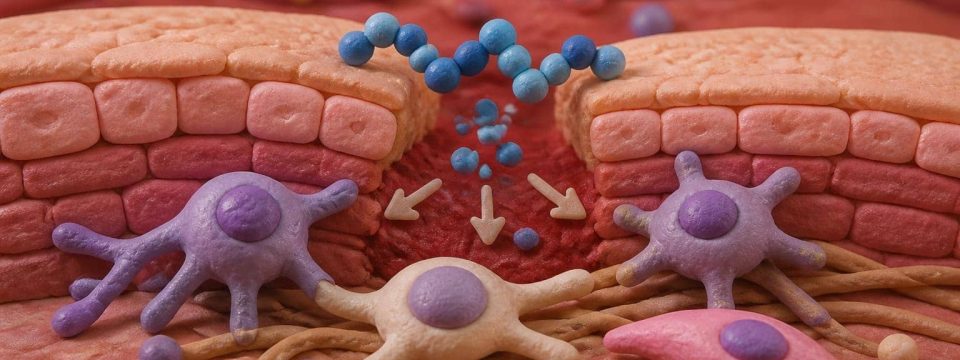
Research into peptides for healing has expanded significantly over the past decade, revealing complex mechanisms through which these compounds may influence tissue repair, regeneration, and recovery. These short chains of amino acids function as signaling molecules that interact with cellular pathways involved in wound closure, inflammation modulation, and structural protein synthesis. For laboratories conducting research in regenerative medicine, understanding the molecular foundations of peptide-based healing offers insights into potential therapeutic development and biological process optimization.
Understanding the Biological Basis of Peptides for Healing
Peptides represent a unique class of biomolecules positioned between small molecule drugs and large protein therapeutics. Their size, typically ranging from two to fifty amino acids, allows them to interact with specific cellular receptors while maintaining relative stability and bioavailability compared to larger proteins.
The mechanisms through which peptides for healing operate involve multiple interconnected pathways. These compounds can activate growth factor receptors, modulate inflammatory cascades, promote angiogenesis, and stimulate collagen synthesis. Research has demonstrated that certain peptides enhance the migration of fibroblasts, keratinocytes, and endothelial cells to injury sites, accelerating the natural healing timeline.
Cellular Signaling and Receptor Activation
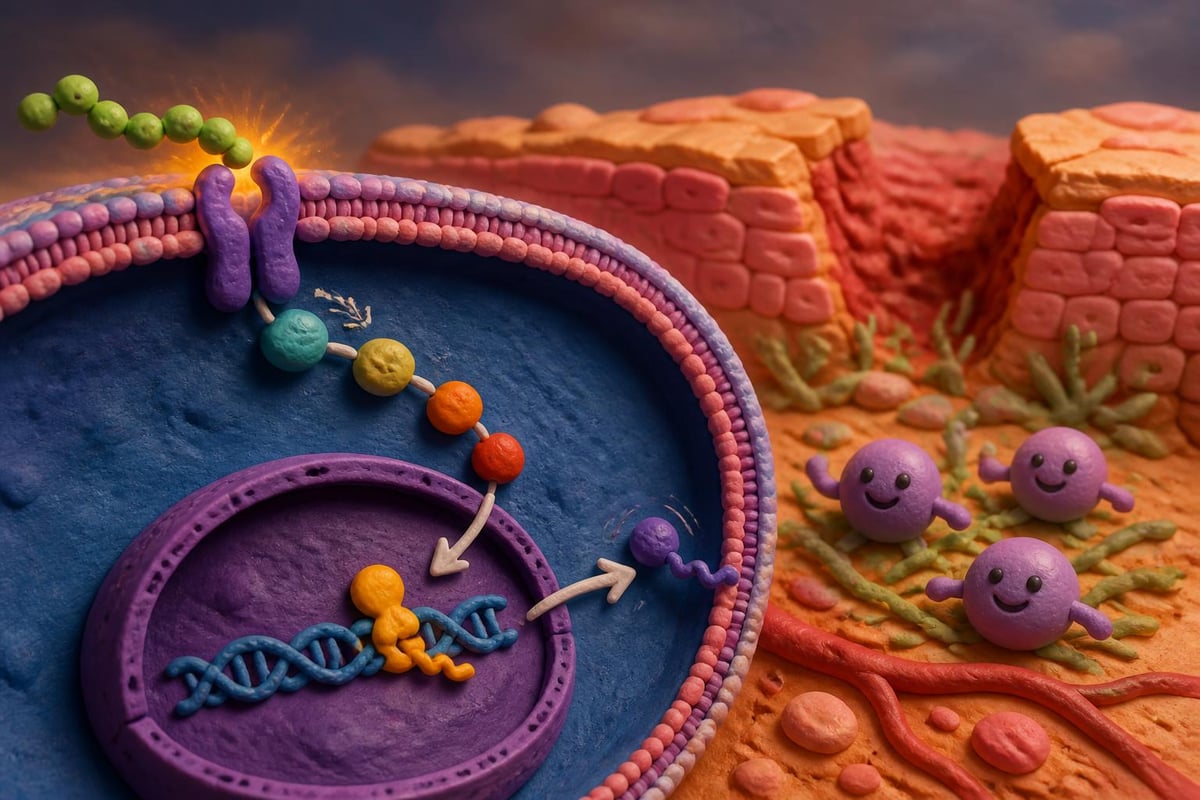
At the molecular level, healing peptides interact with cell surface receptors to initiate intracellular signaling cascades. This interaction triggers the activation of kinases, phosphorylation events, and transcription factor mobilization. The result is altered gene expression patterns that favor tissue repair over degradation.
Studies examining peptides studied for wound healing have identified specific receptor targets and downstream pathways. Different peptides demonstrate selectivity for various receptor types, explaining their distinct effects on different tissue types and healing phases.
Key Peptides Investigated in Healing Research
Laboratory research has focused on several peptides with distinct mechanisms and tissue specificities. Each compound demonstrates unique characteristics that make it suitable for investigating different aspects of the healing process.
BPC-157: Tissue Repair Across Multiple Systems
Body Protection Compound 157 consists of fifteen amino acids and has been extensively studied for its effects on various tissue types. Research indicates this peptide may influence healing in muscles, tendons, ligaments, and gastrointestinal tissues through multiple mechanisms.
The compound appears to work by promoting the formation of new blood vessels, regulating growth factor expression, and modulating inflammatory mediators. Laboratory studies have examined its effects on fibroblast migration, collagen deposition, and the balance between pro-inflammatory and anti-inflammatory cytokines.
For researchers investigating peptides for healing across diverse tissue types, BPC-157 represents a versatile compound with applications in multiple experimental models. Its stability and broad mechanism of action make it a frequent choice for studies examining accelerated recovery timelines.
TB-500: Cellular Migration and Structural Support
Thymosin Beta-4, often administered as the active fragment TB-500, plays a crucial role in regulating actin polymerization. This mechanism directly influences cell motility, making it particularly relevant for research into cell migration during healing processes.
Key research findings on TB-500 include:
- Enhancement of endothelial cell migration for angiogenesis
- Upregulation of matrix metalloproteinases involved in tissue remodeling
- Reduction in inflammatory markers in various tissue models
- Promotion of stem cell differentiation and mobilization
Studies exploring peptides for injury recovery have consistently identified TB-500 as a compound of interest due to its influence on multiple healing phases simultaneously.
GHK-Cu: Copper-Dependent Tissue Remodeling
Glycyl-L-histidyl-L-lysine copper complex represents a tripeptide with unique properties stemming from its copper-binding capacity. This compound has been investigated for its effects on collagen synthesis, wound contraction, and antioxidant enzyme activity.
The copper moiety appears essential for the peptide's biological activity, facilitating electron transfer reactions and metalloproteinase regulation. Research has examined its influence on skin healing, bone regeneration, and inflammatory modulation across various experimental systems.
Mechanisms of Action in the Healing Cascade
The healing process progresses through distinct yet overlapping phases: hemostasis, inflammation, proliferation, and remodeling. Peptides for healing can influence one or multiple phases depending on their specific mechanisms and receptor targets.
Inflammation Modulation
Controlled inflammation represents a necessary component of healing, but excessive or prolonged inflammatory responses can impair tissue repair. Several peptides demonstrate the ability to modulate inflammatory pathways without completely suppressing immune function.
| Peptide Class | Primary Anti-Inflammatory Mechanism | Target Cells |
|---|---|---|
| KPV-type | MSH receptor activation, NF-κB inhibition | Macrophages, epithelial cells |
| BPC-157-type | Cytokine balance regulation | Multiple immune cells |
| Thymosin fragments | Inflammatory mediator expression | T-cells, neutrophils |
Research examining peptides for wound healing emphasizes the importance of temporal inflammation control rather than complete suppression.
Angiogenesis and Vascular Support
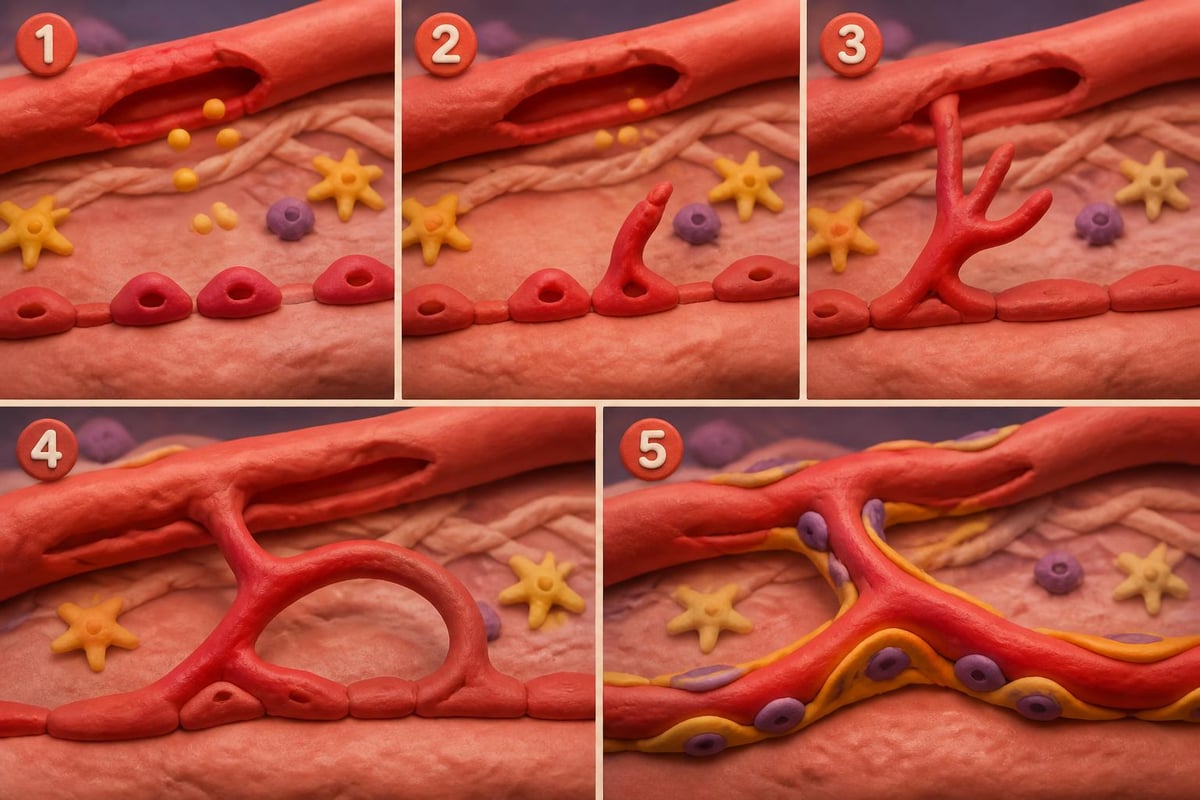
New blood vessel formation provides essential nutrients and oxygen to healing tissues while removing metabolic waste products. Several peptides for healing promote angiogenesis through vascular endothelial growth factor (VEGF) upregulation and endothelial cell activation.
The process involves:
- Endothelial cell activation through receptor binding and signaling
- Basement membrane degradation via metalloproteinase expression
- Endothelial cell migration toward injury sites
- Tube formation and vessel stabilization
- Pericyte recruitment for structural support
This multi-step process can be influenced at various points by different peptides, offering researchers tools to investigate specific aspects of vascular regeneration.
Collagen Synthesis and Matrix Remodeling
Structural proteins form the scaffold upon which new tissue develops. Peptides influence collagen production through multiple pathways, including fibroblast activation, proline hydroxylase activity, and transcription factor regulation.
Beyond synthesis, the remodeling phase determines final tissue quality and mechanical properties. Matrix metalloproteinases and their inhibitors maintain balance between deposition and degradation, with certain peptides modulating this equilibrium toward optimal structural outcomes.
Tissue-Specific Applications in Laboratory Research
Different tissues present unique challenges for healing research due to variations in cellular composition, vascular supply, and mechanical demands. Peptides for healing have been investigated across diverse tissue types with varying degrees of success.
Musculoskeletal Tissue Repair
Muscles, tendons, and ligaments require restoration of both cellular integrity and mechanical function. Laboratory models examining these tissues often focus on peptides that enhance satellite cell activation, tenocyte proliferation, and collagen alignment.
Research into peptides for healing and injury repair highlights the importance of growth factor regulation in musculoskeletal recovery. Compounds that stimulate insulin-like growth factor-1 (IGF-1) and transforming growth factor-beta (TGF-β) pathways demonstrate particular promise in these models.
Musculoskeletal healing considerations:
- Collagen fiber alignment and crosslinking density
- Inflammatory resolution timing
- Vascular network restoration
- Mechanical load tolerance during repair
- Prevention of excessive fibrosis
Bone Healing and Regeneration
Bone tissue presents unique requirements due to its mineralized matrix and specialized cell populations. Peptides studied for bone healing often target osteoblast differentiation, osteoclast regulation, and the complex interplay between these cell types.
Research examining peptides in bone healing demonstrates that certain compounds can accelerate fracture repair by enhancing callus formation and remodeling. The mineral deposition phase requires careful balance between osteoblastic activity and vascular support.
Dermal and Epithelial Healing
Skin healing involves coordinated activity among keratinocytes, fibroblasts, melanocytes, and immune cells. Laboratory studies examining dermal repair often utilize peptides that promote re-epithelialization, granulation tissue formation, and scar minimization.
The complexity of skin structure, with its multiple layers and appendages, makes it an ideal model for studying comprehensive healing responses. Peptides for healing in dermal models can be evaluated for effects on wound closure rate, tensile strength, and cosmetic outcomes.
Experimental Considerations for Laboratory Research
Conducting rigorous research with peptides for healing requires attention to multiple variables that can influence outcomes and reproducibility. Proper experimental design ensures that observed effects can be attributed to the peptide rather than confounding factors.
Peptide Purity and Characterization
Laboratory-grade peptides must meet stringent purity standards to ensure experimental validity. Third-party batch testing verifies peptide identity, purity percentage, and absence of contaminants that could alter biological activity.
Characterization methods include:
- High-performance liquid chromatography (HPLC) for purity assessment
- Mass spectrometry for molecular weight confirmation
- Amino acid analysis for sequence verification
- Endotoxin testing for contamination screening
Researchers utilizing laboratory-grade research peptides should always request certificates of analysis to confirm these specifications.
Dosing and Administration Routes
The optimal dose of peptides for healing varies considerably based on the experimental model, administration route, and specific peptide characteristics. In vitro studies typically use micromolar to nanomolar concentrations, while in vivo models require consideration of bioavailability and clearance rates.
| Administration Route | Typical Use Cases | Considerations |
|---|---|---|
| Topical | Dermal wound models | Penetration depth, vehicle selection |
| Subcutaneous injection | Systemic distribution studies | Absorption kinetics, injection site reactions |
| Intraperitoneal | Metabolic and systemic effects | Rapid absorption, peritoneal irritation potential |
| Local injection | Site-specific healing | Precise targeting, local concentration |
Controls and Standardization
Appropriate controls distinguish peptide-specific effects from general healing processes or experimental artifacts. Negative controls (vehicle only), positive controls (established healing agents), and time-course comparisons provide context for interpreting results.
Standardization of injury models ensures reproducibility across experiments. Whether using excisional wounds, crush injuries, or chemical damage, consistent methodology allows meaningful comparison between different peptides for healing.
Synergistic Combinations and Multi-Peptide Formulations
Recent research has explored whether combining multiple peptides for healing produces additive or synergistic effects. The rationale stems from the complementary mechanisms different peptides employ during various healing phases.
Rationale for Combination Approaches
Individual peptides typically target specific aspects of healing, such as inflammation control, angiogenesis, or collagen synthesis. Combining peptides with distinct mechanisms may simultaneously address multiple rate-limiting steps in tissue repair.
Research examining molecular biology of wound repair suggests that multi-targeted approaches better recapitulate the complexity of natural healing processes. However, potential interactions between peptides must be carefully evaluated to avoid antagonistic effects.
Evidence from Combination Studies
Laboratory studies comparing single peptides versus combinations have produced mixed results. Some combinations demonstrate enhanced healing metrics, while others show no improvement over individual compounds. The outcome appears dependent on the specific peptides combined, their dose ratios, and the tissue model employed.
Factors influencing combination efficacy:
- Temporal coordination of different healing phases
- Receptor interaction and competition
- Metabolic pathway overlap or independence
- Optimal dosing ratios between components
Analytical Methods for Assessing Healing Outcomes
Quantifying the effects of peptides for healing requires objective, reproducible measurement techniques. Multiple assessment methods provide complementary information about different aspects of tissue repair.
Histological and Microscopic Analysis
Tissue architecture, cellular composition, and matrix organization can be evaluated through various staining techniques. Hematoxylin and eosin (H&E) staining reveals general tissue structure, while specialized stains highlight specific components like collagen (Masson's trichrome) or blood vessels (immunohistochemistry for endothelial markers).
Microscopic analysis allows researchers to quantify:
- Inflammatory cell infiltration density and distribution
- Collagen fiber alignment and density
- Vascular density and vessel diameter
- Epithelial thickness and organization
- Presence of specialized structures (hair follicles, glands)
Biomechanical Testing
For musculoskeletal and dermal tissues, mechanical properties represent functional outcomes critical to successful healing. Tensile strength testing, elasticity measurements, and load-to-failure analysis provide quantitative data on tissue integrity.
These measurements complement cellular and molecular assessments by revealing whether structural changes translate into improved mechanical function. Peptides that enhance collagen deposition but compromise fiber alignment may not improve functional outcomes.
Molecular and Biochemical Markers
Gene expression analysis, protein quantification, and metabolite profiling reveal molecular changes induced by peptides for healing. Techniques like quantitative PCR, Western blotting, and enzyme-linked immunosorbent assays (ELISA) measure specific healing-related molecules.
Key molecular markers include:
- Growth factors: VEGF, TGF-β, FGF, PDGF
- Inflammatory mediators: IL-1β, IL-6, IL-10, TNF-α
- Matrix proteins: Collagen types I and III, fibronectin, elastin
- Matrix remodeling enzymes: MMPs and TIMPs
Safety and Specificity Considerations
While laboratory research focuses on efficacy and mechanisms, understanding safety profiles remains relevant for translational potential. Peptides for healing generally demonstrate favorable safety characteristics compared to small molecule drugs due to their specificity and biodegradability.
Receptor Selectivity and Off-Target Effects
Peptides typically exhibit higher receptor selectivity than small molecules, reducing the likelihood of unintended biological effects. However, some receptors exist in multiple tissue types, and peptide effects in non-target tissues warrant investigation.
Comprehensive safety assessment in laboratory models examines:
- Acute toxicity at suprapharmacological doses
- Effects on non-injured tissues
- Immunogenicity and allergic potential
- Impact on normal wound healing when no injury exists
Stability and Degradation
Natural peptides face enzymatic degradation that limits their duration of action. Modified peptides with enhanced stability must be evaluated for altered biological activity and metabolite safety. The balance between sufficient stability for therapeutic effect and appropriate clearance for safety optimization presents ongoing research challenges.
Future Directions in Peptide Healing Research
The field of peptides for healing continues evolving with emerging technologies and deeper mechanistic understanding. Several research frontiers promise to expand the utility and efficacy of peptide-based approaches.
Targeted Delivery Systems
Nanoparticle carriers, hydrogel matrices, and bioresponsive delivery platforms aim to improve peptide stability, control release kinetics, and enhance tissue targeting. These systems may allow lower doses while maintaining efficacy, reducing potential side effects and improving cost-effectiveness.
Peptidomimetics and Modified Sequences
Chemical modifications to natural peptide sequences can enhance stability, receptor selectivity, or membrane permeability. D-amino acid substitution, cyclization, and non-natural amino acid incorporation represent strategies for optimizing peptide properties while maintaining biological activity.
Researchers investigating peptide-assisted healing science continue identifying structure-activity relationships that guide rational design of next-generation compounds with improved characteristics.
Personalized Approaches Based on Healing Phase
Temporal administration of different peptides for healing, matched to specific phases of tissue repair, may optimize outcomes. Sequential treatment strategies would apply inflammation-modulating peptides early, angiogenic factors during proliferation, and remodeling-focused compounds later.

Integration with Regenerative Medicine Technologies
Combining peptides for healing with stem cell therapies, tissue engineering scaffolds, or gene therapy approaches represents a frontier in regenerative medicine research. Peptides may enhance stem cell differentiation, improve scaffold integration, or synergize with gene-delivered growth factors.
Quality Considerations for Research Applications
The integrity of research findings depends fundamentally on the quality of reagents employed. For peptide healing research, this translates to stringent requirements for peptide manufacturing, testing, and storage.
Manufacturing Standards
US-based manufacturing facilities operating under quality management systems provide consistency and traceability essential for reproducible research. Good Manufacturing Practice (GMP) principles, even when not strictly required for research-grade materials, ensure appropriate quality control and documentation.
Third-Party Testing Verification
Independent laboratory analysis of each peptide batch confirms specifications and detects potential issues before experimental use. Certificates of analysis documenting purity, identity, and sterility provide researchers with confidence in their experimental materials.
Proper Storage and Handling
Peptides for healing require appropriate storage conditions to maintain stability and biological activity. Most lyophilized peptides remain stable at temperatures between 2-8°C or lower, protected from light and moisture. Reconstituted solutions typically require refrigeration and use within specified timeframes to prevent degradation.
The expanding research into peptides for healing reveals sophisticated mechanisms through which these compounds influence tissue repair, inflammation, and regeneration across diverse biological systems. As laboratory investigations continue advancing our understanding of peptide-mediated healing processes, researchers require access to high-purity, well-characterized compounds that enable reproducible experimental outcomes. For scientists conducting research in this field, Data Peptides provides laboratory-grade, US-manufactured research peptides with third-party batch testing to support rigorous scientific investigation.