

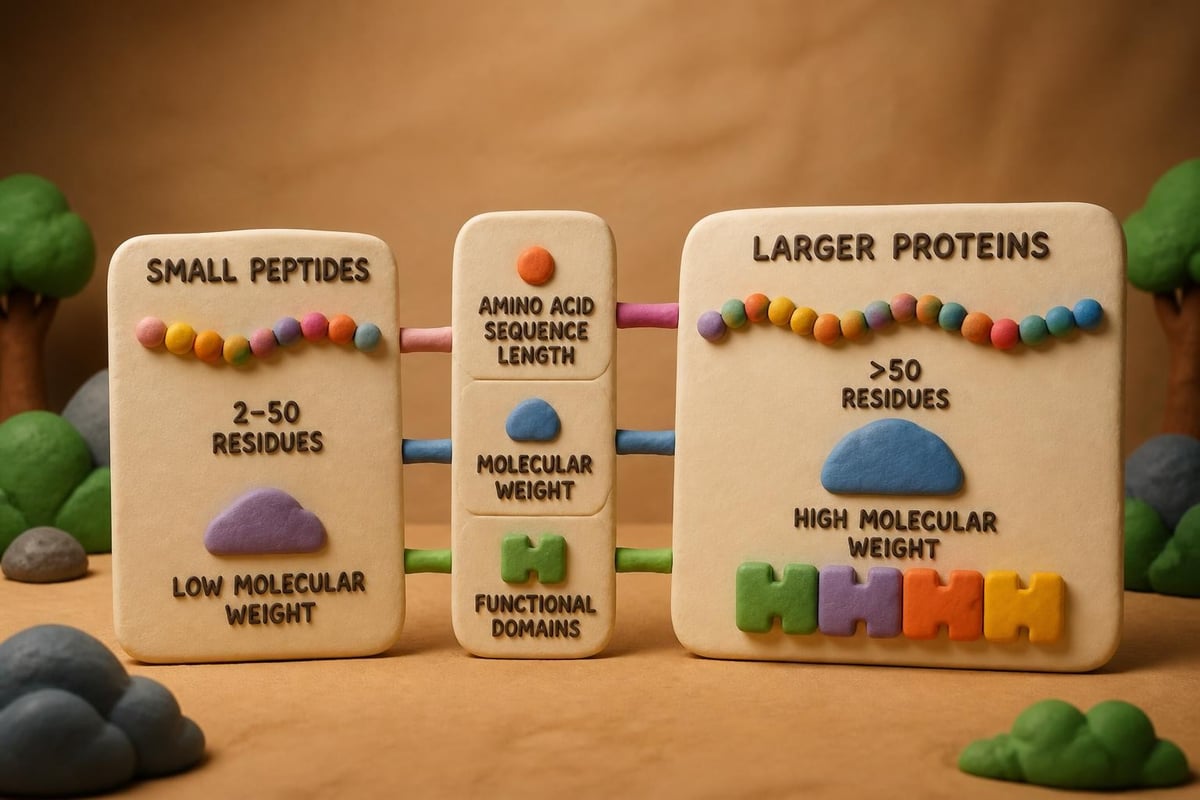
Small peptides represent a critical frontier in laboratory research, bridging the gap between traditional small molecule drugs and larger protein therapeutics. These short amino acid chains, typically containing between 2 and 50 residues, offer unique structural properties that make them valuable tools for investigating biological processes, developing therapeutic candidates, and understanding cellular mechanisms. Their compact size provides advantages in synthesis, modification, and potential bioavailability while maintaining the specificity and potency characteristic of larger proteins.
Defining Characteristics of Small Peptides
The classification of small peptides centers primarily on their amino acid count, though the exact threshold varies across research contexts. Most definitions establish the upper limit between 40 and 50 amino acids, distinguishing these molecules from larger polypeptides and proteins.
Structural Properties and Molecular Weight
Small peptides typically exhibit molecular weights ranging from a few hundred to approximately 6,000 Daltons. This relatively modest size grants them several distinctive characteristics:
- Enhanced synthesis accessibility through solid-phase peptide synthesis (SPPS)
- Greater structural flexibility compared to rigid protein frameworks
- Potential for chemical modifications at multiple sites
- Improved characterization using standard analytical techniques
- Lower immunogenic profiles in many research applications
The compact nature of these molecules allows researchers to employ standard laboratory techniques for purification, quantification, and structural analysis. Mass spectrometry, high-performance liquid chromatography (HPLC), and nuclear magnetic resonance (NMR) spectroscopy provide comprehensive characterization without the complexity associated with larger biomolecules.
Linear Versus Cyclic Architectures
Small peptides can adopt either linear or cyclic conformations, each offering distinct advantages for research applications. Linear peptides maintain open-ended amino acid chains, while cyclic variants form closed-loop structures through backbone or side-chain connections.
Cyclic architectures often demonstrate superior stability against enzymatic degradation and enhanced binding affinity to target receptors. Recent advances have produced small cyclic peptides with oral bioavailability, expanding their potential as therapeutic candidates. The cyclization process constrains conformational flexibility, pre-organizing the peptide into bioactive shapes that can improve target selectivity.
Therapeutic Applications in Research
Laboratory investigations of small peptides span multiple therapeutic domains, from metabolic regulation to antimicrobial activity. Their intermediate size positions them uniquely to address targets that prove challenging for both traditional small molecules and larger biologics.
Metabolic and Hormonal Regulation
Small peptides play crucial roles in metabolic signaling pathways, with several hormone analogs and receptor agonists demonstrating significant research potential. These molecules can activate specific receptors with high selectivity, triggering cascades that influence glucose metabolism, energy expenditure, and body composition.
Research into triple-agonist peptides has revealed promising avenues for metabolic intervention. For instance, Retatrutide activates GLP-1, GIP, and glucagon receptors simultaneously, representing an advanced approach to metabolic research that builds upon earlier single and dual-agonist frameworks.
Investigators also examine small peptides that modulate melanocortin receptors, affecting pigmentation, appetite, and energy homeostasis. These studies illuminate fundamental physiological mechanisms while identifying potential therapeutic frameworks.
Antimicrobial and Immune Modulation
The antimicrobial properties of small peptides have attracted considerable research attention, particularly amid growing concerns about antibiotic resistance. These molecules can disrupt bacterial membranes, interfere with cellular processes, or modulate host immune responses.
Machine-learning approaches now accelerate the identification of potent antimicrobial peptides, screening vast sequence spaces to predict activity profiles. This computational integration marks a significant advancement in peptide discovery, reducing the time and resources required for experimental validation.
| Antimicrobial Mechanism | Target Site | Research Advantages |
|---|---|---|
| Membrane disruption | Bacterial cell wall | Broad-spectrum potential |
| Intracellular targeting | DNA/RNA synthesis | Reduced resistance development |
| Immune enhancement | Host defense systems | Synergistic effects |
| Biofilm penetration | Extracellular matrix | Addresses persistent infections |
Beyond direct antimicrobial effects, small spleen peptides demonstrate anti-inflammatory and tolerogenic properties, offering frameworks for investigating immune regulation and autoimmune conditions.
Synthesis and Manufacturing Considerations
The production of small peptides for laboratory research requires stringent quality controls and sophisticated manufacturing processes. Unlike recombinant protein production in living systems, peptide synthesis typically employs chemical methods that enable precise sequence control and incorporate non-natural amino acids.
Solid-Phase Peptide Synthesis
Solid-phase peptide synthesis (SPPS) remains the dominant methodology for producing research-grade small peptides. This approach builds peptide chains stepwise on an insoluble resin support, adding one amino acid residue at a time through repeated coupling and deprotection cycles.
Key advantages of SPPS include:
- Precise sequence control with single-residue accuracy
- Incorporation of modified amino acids and unnatural residues
- Scalability from milligram to multi-gram quantities
- Automation compatibility for high-throughput production
- Predictable yields based on sequence complexity
The efficiency of SPPS decreases as peptide length increases, with sequences beyond 40-50 residues often requiring segment condensation or recombinant expression. For small peptides within the typical range, modern synthesizers achieve coupling efficiencies exceeding 99% per step, yielding high-purity products after cleavage and purification.
Quality Control and Batch Testing
Laboratory-grade peptides demand rigorous quality assurance to ensure reproducible experimental results. Third-party batch testing provides independent verification of purity, identity, and concentration, establishing confidence in research applications.
Analytical methodologies for small peptide characterization typically include:
- Reversed-phase HPLC for purity assessment (target >95-98%)
- Mass spectrometry for molecular weight confirmation
- Amino acid analysis for composition verification
- Peptide content determination for accurate dosing
- Endotoxin testing for cell culture applications
Manufacturers committed to quality maintain detailed certificates of analysis (COA) for each production batch, documenting analytical results and confirming compliance with specifications. Researchers can access these COA documents to verify the materials they receive match expected parameters.

Stability Challenges and Solutions
Small peptides face inherent stability limitations that complicate their development as therapeutic agents and research tools. Understanding these challenges enables researchers to implement appropriate handling, storage, and experimental protocols.
Enzymatic Degradation Pathways
Proteolytic enzymes rapidly cleave many natural small peptides, limiting their biological half-lives and experimental utility. Peptidases recognize specific amino acid sequences and structural motifs, hydrolyzing peptide bonds to produce inactive fragments.
Several strategies mitigate enzymatic degradation:
- Cyclization to eliminate terminal recognition sites
- D-amino acid substitution at cleavage-prone positions
- N-methylation of backbone amides
- C-terminal amidation to block exopeptidase activity
- Incorporation of non-natural amino acids resistant to proteases
Research on small peptides containing Leu-Val replacements demonstrated enhanced stability as renin inhibitors, illustrating how structural modifications preserve biological activity while improving resistance to degradation.
Storage and Handling Protocols
Proper storage conditions preserve peptide integrity throughout research timelines. Lyophilized small peptides generally exhibit optimal stability when stored at -20°C or -80°C in sealed containers with desiccants to minimize moisture exposure.
| Storage Condition | Stability Duration | Considerations |
|---|---|---|
| -80°C, lyophilized | 2-3 years | Optimal long-term storage |
| -20°C, lyophilized | 1-2 years | Standard freezer adequate |
| 4°C, lyophilized | 3-6 months | Short-term stability |
| Room temperature, reconstituted | 1-7 days | Sequence-dependent |
| -20°C, aliquoted solution | 1-3 months | Freeze-thaw cycles degrade |
Reconstituted peptide solutions present greater stability challenges due to increased molecular mobility and hydrolytic susceptibility. Researchers should prepare working solutions in appropriate buffers at neutral pH, aliquot to avoid repeated freeze-thaw cycles, and use within recommended timeframes based on specific peptide characteristics.
Discovery and Development Pipelines
The identification of biologically active small peptides has evolved from serendipitous discovery to systematic computational and experimental screening. Modern approaches integrate multiple technologies to accelerate the path from initial concept to validated research tool.
Computational Design and Prediction
Machine learning and artificial intelligence now play central roles in peptide discovery, analyzing vast sequence spaces to predict properties such as binding affinity, stability, and bioactivity. These computational frameworks dramatically reduce the experimental burden of screening millions of potential candidates.
Advanced models like PepDoRA represent unified peptide language models that predict properties of both modified and unmodified peptides, facilitating therapeutic development by identifying promising candidates before synthesis. These algorithms learn from existing experimental data, recognizing patterns that correlate sequence features with desired outcomes.
Computational approaches excel at:
- Generating novel sequences with predicted target activities
- Optimizing existing peptides for enhanced properties
- Predicting modifications that improve stability or selectivity
- Identifying cross-reactive patterns that inform specificity
- Reducing experimental screening requirements
Experimental Validation and Optimization
Computational predictions require experimental confirmation to establish genuine biological activity and physicochemical properties. High-throughput screening platforms enable rapid testing of peptide libraries against target receptors, enzymes, or cellular systems.
Iterative optimization cycles refine initial hits through systematic modifications:
- Alanine scanning to identify critical residues
- Truncation studies to determine minimal active sequences
- Substitution with natural and non-natural amino acids
- Conformational constraint through cyclization or stapling
- Conjugation with cell-penetrating sequences or targeting moieties
These refinement processes transform initial lead peptides into optimized research tools with improved potency, selectivity, and stability profiles. The iterative nature allows researchers to systematically explore structure-activity relationships, building comprehensive understanding of functional requirements.
Mechanisms of Cellular Interaction
Small peptides engage biological targets through diverse mechanisms, from direct receptor binding to intracellular pathway modulation. Understanding these interaction modes informs experimental design and interpretation.
Receptor-Mediated Signaling
Many small peptides function as receptor agonists or antagonists, mimicking or blocking endogenous signaling molecules. The compact size allows precise complementarity with receptor binding pockets while maintaining specificity that discriminates between closely related targets.
Peptides that mimic substance P (1-7) exemplify this approach, where short sequences reproduce key binding interactions of the natural ligand. Researchers can systematically modify these mimetics to tune receptor selectivity, efficacy, and signaling bias.
Advantages of peptide-based receptor modulators:
- High target specificity reduces off-target effects
- Tunable pharmacology through sequence modifications
- Potential for biased signaling toward specific pathways
- Lower toxicity profiles compared to many small molecules
- Structural similarity to endogenous ligands
Intracellular and Membrane-Active Mechanisms
Beyond receptor engagement, certain small peptides penetrate cellular membranes or act directly on intracellular targets. Cell-penetrating peptides (CPPs) facilitate the delivery of cargo molecules across lipid bilayers, while membrane-active antimicrobial peptides disrupt bacterial membranes through physical interactions.
The amphipathic nature of many bioactive small peptides enables membrane association, with hydrophobic residues inserting into lipid environments while charged residues maintain aqueous interactions. This dual character underpins diverse biological activities from pore formation to lipid trafficking modulation.
Research Applications Across Disciplines
The versatility of small peptides positions them as valuable research tools across multiple scientific domains. Their applications extend from fundamental biology to translational medicine, each leveraging unique peptide properties.
Cellular and Molecular Biology
In cellular research contexts, small peptides serve as probes to dissect signaling pathways, protein-protein interactions, and cellular processes. Fluorescently labeled peptides enable real-time visualization of receptor trafficking and ligand binding, while biotinylated variants facilitate pull-down experiments and affinity purification.
Researchers studying tissue repair and regeneration frequently employ small peptides that modulate growth factor signaling or extracellular matrix interactions. The relationship between BPC-157 and TB-500 illustrates how different peptide mechanisms can complement each other in supporting cellular repair processes.
Drug Discovery and Development
Small peptides occupy a strategic position in drug discovery, addressing targets that prove intractable for traditional small molecules. Their larger binding surfaces enable inhibition of protein-protein interactions, while their synthetic accessibility allows rapid analog generation for structure-activity relationship studies.
The peptide therapeutics market has expanded significantly, with numerous approved drugs and extensive clinical pipelines. Research-grade peptides enable academic and industrial laboratories to investigate novel therapeutic concepts, validate biological targets, and optimize lead candidates before advancing to development stages.
Emerging Trends and Future Directions
The field of small peptide research continues evolving through technological advances and conceptual innovations. Several trends are reshaping how researchers discover, optimize, and apply these molecules.
Stapled and Constrained Peptides
Peptide stapling introduces chemical crosslinks between amino acid side chains, constraining peptide conformation into alpha-helical or other stable structures. These constraints enhance protease resistance, improve target binding affinity, and can facilitate cellular uptake.
Stapled peptides represent a growing research area, particularly for targeting intracellular protein-protein interactions previously considered undruggable. The conformational constraint pre-organizes the peptide into its bioactive shape, reducing entropic penalties upon target binding.
Peptide-Drug Conjugates
Conjugating small peptides with other therapeutic modalities creates hybrid molecules that combine peptide targeting specificity with drug payload potency. These conjugates deliver cytotoxic agents, imaging probes, or therapeutic oligonucleotides to specific cell types or tissues.
Research into peptide-drug conjugates explores various linker chemistries, payload types, and targeting peptides. The modular nature allows systematic optimization of each component independently before assembling final constructs.
Integration with Omics Technologies
High-throughput omics approaches increasingly incorporate small peptides as both tools and subjects of study. Peptidomics identifies endogenous peptides in biological samples, revealing signaling networks and biomarker candidates. Proteomics experiments use small peptides as standards and calibrants, while genomics informs peptide design through evolutionary conservation analysis.
The convergence of computational methods with peptide research accelerates discovery timelines and expands the accessible chemical space beyond natural amino acid sequences.
Regulatory and Safety Considerations
Small peptides intended for laboratory research operate under different regulatory frameworks than those destined for therapeutic use. Understanding these distinctions ensures appropriate handling and application.
Research-Grade Versus Therapeutic-Grade Standards
Laboratory-grade peptides meet specifications suitable for in vitro and preclinical research but are not manufactured under Good Manufacturing Practice (GMP) conditions required for clinical applications. These materials support fundamental research, assay development, and proof-of-concept studies without the extensive documentation and validation necessary for human use.
Research-grade peptides are explicitly labeled for laboratory investigation only, not for human or animal consumption. This designation reflects their intended purpose and manufacturing standards, ensuring researchers apply them in appropriate contexts.
Handling and Disposal Protocols
Proper laboratory practices govern small peptide handling to ensure researcher safety and experimental integrity. Standard biosafety guidelines apply, with particular attention to:
- Avoiding direct skin contact through glove use
- Preventing aerosolization during weighing and reconstitution
- Maintaining clean workspaces to prevent cross-contamination
- Following institutional chemical waste disposal procedures
- Documenting usage for inventory and compliance purposes
These protocols protect both researchers and experimental integrity, preventing inadvertent exposures and ensuring reproducible results across studies.
Sourcing and Supplier Considerations
Selecting appropriate peptide suppliers significantly impacts research quality and reproducibility. Several factors distinguish reliable providers from marginal sources.
Manufacturing Location and Quality Assurance
The geographic origin of peptide synthesis influences regulatory oversight, quality standards, and supply chain reliability. US-manufactured peptides often provide greater traceability and quality assurance, with domestic facilities subject to comprehensive regulatory frameworks.
Third-party batch testing by independent analytical laboratories offers objective verification of peptide purity and identity. These external validations supplement manufacturer internal quality controls, providing additional confidence in material specifications.
Technical Support and Documentation
Reputable peptide suppliers provide comprehensive technical resources, including handling recommendations, storage guidelines, and reconstitution protocols. Detailed certificates of analysis document each batch's characteristics, enabling researchers to verify materials meet experimental requirements.
Access to technical support helps researchers troubleshoot experimental challenges, optimize protocols, and select appropriate peptide modifications for specific applications. The Data Peptides shop exemplifies comprehensive product offerings with supporting documentation and resources.
Small peptides occupy an increasingly important position in laboratory research, offering unique advantages for investigating biological mechanisms and developing therapeutic concepts. Their intermediate molecular size, synthetic accessibility, and functional versatility make them invaluable tools across multiple research domains. Whether exploring metabolic signaling, antimicrobial mechanisms, or cellular repair processes, researchers benefit from high-quality, well-characterized peptide materials that enable reproducible, meaningful results. Data Peptides provides laboratory-grade, US-manufactured research peptides with third-party batch testing for purity, supporting rigorous scientific investigation across diverse research applications.