

AOD-9604 carried a strong preclinical signal and an early 12-week human trial suggesting modest weight loss, but the pivotal 24-week Phase IIb study failed to beat placebo on its primary endpoint. Pooled safety data across six trials and roughly 893 participants found a tolerability profile largely indistinguishable from placebo, with no measured IGF-1 or glycemic disruption. No regulatory body has approved AOD-9604 for any indication, and compounding restrictions have shaped its availability for research purposes since.
TL;DR:
- The significant efficacy seen in early 12-week trials at 1 mg per day was not replicated in the larger, longer Phase IIb study, which failed to show a clear weight-loss benefit over placebo.
- Preclinical studies in rodents demonstrated fat reduction and lipolysis without affecting food intake or glucose levels, supporting a GHR-independent mechanism involving beta-3 adrenergic receptors.
- The safety profile across nearly 900 participants was consistently comparable to placebo, with no notable changes in IGF-1 or glucose metabolism, but long-term safety beyond 24 weeks remains unestablished.
- Manufacturing verification for research should include batch-specific purity and identity confirmation via mass spectrometry, with careful distinction between AOD-9604 and unmodified HGH fragment 176-191.
- AOD-9604’s regulatory status limits its availability for human use, with no FDA-approved indications; sourcing high-quality, verified research material is essential for reproducibility.
Table of Contents
- What Is AOD-9604 and How Does It Work?
- What Does the Preclinical Evidence Show?
- How Effective Was AOD-9604 in Human Clinical Trials?
- Is AOD-9604 Safe? What the Safety Data Show
- What Is the Regulatory Status of AOD-9604?
- What Research Gaps Remain in AOD-9604 Studies?
- How Should Investigators Source AOD-9604 for Research?
- Primary Sources and Further Reading
- An Honest Read on Where the AOD-9604 Evidence Stands
- Get Verified Research-Grade AOD-9604 for Your Study
- Sources
- FAQ
What Is AOD-9604 and How Does It Work?
AOD-9604 is a synthetic 16-amino-acid peptide built from the C-terminal fragment of human growth hormone, spanning residues 176 to 191, with one deliberate change: an N-terminal tyrosine substitution. That single substitution, paired with a stabilizing intramolecular disulfide bridge, distinguishes AOD-9604 from the unmodified HGH fragment 176-191 that circulates widely in research supply chains. The sequence runs Tyr-Leu-Arg-Ile-Val-Gln-Cys-Arg-Ser-Val-Glu-Gly-Ser-Cys-Gly-Phe, with a molecular weight near 1,815 daltons and CAS number 221231-10-3.
Pro Tip: If you’re sourcing peptide for a comparative study, confirm the exact sequence and disulfide status via mass spectrometry rather than trusting a vendor label. “HGH fragment 176-191” and “AOD-9604” are not interchangeable terms in the literature, even though sellers sometimes use them that way.
The tyrosine addition and disulfide loop do more than tweak the molecule cosmetically. They change how the peptide folds and how long it survives in circulation, which matters because the unmodified fragment degrades quickly and was never carried through the same human trial program. Researchers proposing AOD-9604 as a proxy for “the GH fragment” in older animal literature need to check which construct was actually used, since the two molecules are chemically and functionally distinct.
Mechanistically, AOD-9604 is thought to act on adipocytes without engaging the growth hormone receptor (GHR) the way full-length GH does. This matters because GHR activation is what drives GH’s effects on IGF-1 and glucose metabolism. The hypothesis behind AOD-9604’s design was straightforward: isolate the lipolytic, fat-mobilizing region of the GH molecule and strip away the GHR-binding domain responsible for growth-promoting and metabolic side effects.
The dominant mechanistic theory implicates beta-3 adrenergic receptor (β3-AR) signaling in adipose tissue, stimulating lipolysis and fat oxidation independent of the GH/IGF-1 axis. That theory rests mainly on animal knockout work rather than direct human receptor-binding studies, which is an important caveat for anyone treating the mechanism as settled.
Key features researchers should track when evaluating AOD-9604 mechanistically:
- N-terminal tyrosine substitution absent from unmodified fragment 176-191
- Disulfide-stabilized loop structure affecting folding and stability
- Proposed GHR-independent action, avoiding IGF-1 and glucose pathway engagement
- β3-adrenergic receptor involvement inferred from rodent knockout models, not direct human receptor assays
- No confirmed appetite-suppression mechanism in preclinical work
For metabolic endpoint design, this mechanism predicts a specific experimental signature: fat oxidation and lipolysis markers should move while IGF-1, fasting glucose, and insulin stay flat. That is exactly the pattern later reported in the human safety data, which lends some circumstantial support to the mechanistic hypothesis even though direct receptor-binding confirmation in humans remains thin. Anyone designing an assay around AOD-9604 should include glycerol release and free fatty acid measures alongside standard metabolic panels, since those are the markers most likely to distinguish a real effect from noise.
What Does the Preclinical Evidence Show?
The human trial program didn’t happen in a vacuum. It followed a body of rodent work that showed AOD-9604 reducing weight gain and fat mass without the glucose-elevating side effects associated with full-length growth hormone.
The foundational study here, published by Ng and colleagues in the International Journal of Obesity, reported more than a 50% reduction in weight gain relative to controls in obese rodent models, alongside smaller adipocyte size and increased fat oxidation and plasma glycerol, a marker consistent with active lipolysis. Critically, treated animals didn’t show suppressed food intake, meaning the weight effect wasn’t simply appetite-driven. That distinction shaped how the peptide was later marketed and tested: as a metabolic agent rather than an appetite suppressant.
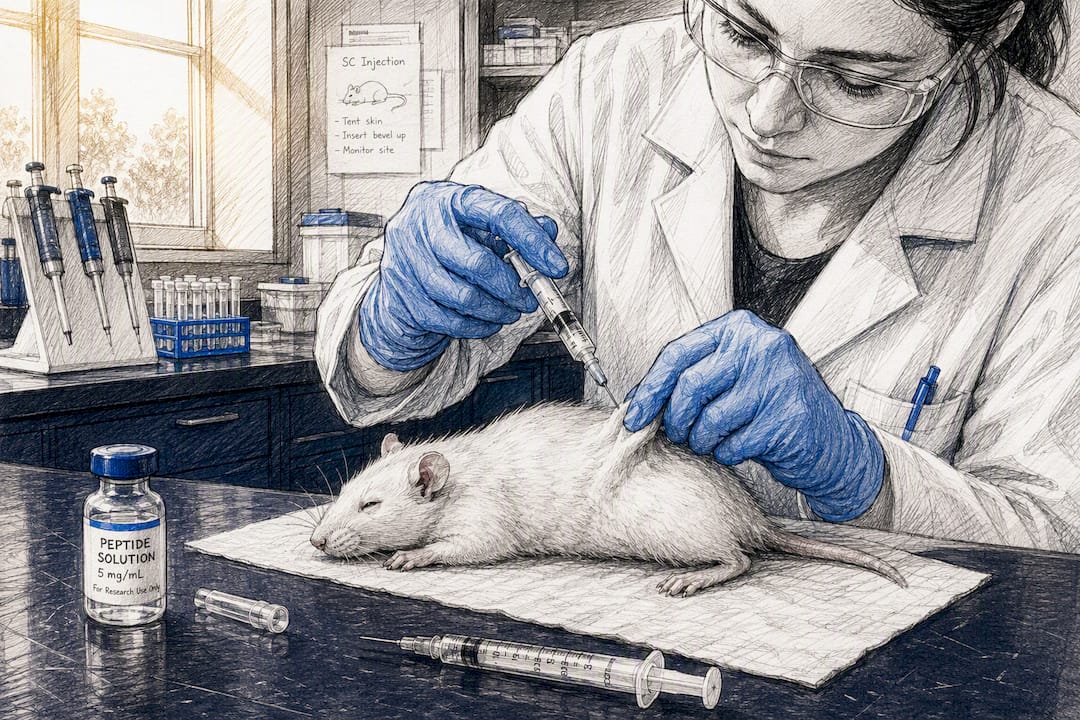
Follow-up work using β3-adrenergic receptor knockout rodents found that AOD-9604’s fat-reducing effect was blunted or lost in animals lacking functional β3-AR, supporting the mechanistic theory that this receptor pathway mediates much of the peptide’s activity. That’s useful corroborating evidence, but it’s still one receptor knockout model, not a full pharmacological dissection with receptor antagonists across multiple species.
A separate and more recent research thread moved away from metabolism entirely and into joint biology. In a rabbit model of collagenase-induced osteoarthritis, intra-articular AOD-9604 combined with hyaluronic acid produced better histological cartilage outcomes than either agent alone. This cartilage-repair angle emerged largely after the obesity program stalled, and it represents a genuinely separate translational pathway rather than an extension of the metabolic hypothesis.
A few things worth noting about the preclinical package as a whole:
- Rodent dosing and human dosing don’t scale linearly; body-surface-area conversions are a starting estimate, not a guarantee of equivalent exposure
- Zucker rats and diet-induced obesity models capture different physiology than the OPTIONS trial population of overweight and obese adults
- The cartilage findings come from a single rabbit study; no published human intra-articular OA trial for AOD-9604 currently exists
- Preclinical fat-oxidation data doesn’t automatically predict clinical weight-loss magnitude, as the human trials later demonstrated
Pro Tip: If you’re designing a follow-up preclinical study, don’t default to the obesity model just because that’s what’s published. The cartilage work is arguably the more promising open lane right now, precisely because it hasn’t been tested to failure in a large human trial the way the metabolic indication has.
Species differences matter more than they often get credit for in early-stage peptide research. Rodent adipose tissue has a different β3-AR density and distribution than human adipose tissue, and that alone could account for part of the gap between the strong rodent signal and the underwhelming pivotal human result.
How Effective Was AOD-9604 in Human Clinical Trials?
AOD-9604’s clinical program included six trials and approximately 893 participants across Phase I, Phase IIa, and the pivotal Phase IIb study, testing multiple doses and delivery routes including oral and subcutaneous administration.
The trajectory of that program is the clearest way to understand where the evidence actually stands:
-
Phase I trials established a preliminary safety and tolerability profile in healthy volunteers, without a formal efficacy endpoint. These early studies supported moving to dose-ranging efficacy work rather than establishing weight-loss data themselves.
-
Phase IIa (12-week study) delivered the most-cited positive signal in the entire program. At a dose of 1 mg per day, participants lost a mean of roughly 2.6 to 2.8 kilograms, compared with about 0.8 kilograms in the placebo group. That’s a meaningful separation for a 12-week window, and it’s the number most secondary sources cite when describing AOD-9604’s efficacy. What gets left out of most summaries is that the dose-response curve across the tested range wasn’t clean. Higher doses did not produce proportionally greater weight loss, which raised early questions about whether 1 mg/day happened to land on a favorable point in a non-linear response curve rather than confirming a dose-dependent mechanism.
-
Phase IIb, the OPTIONS study over several months with a larger participant group, was designed as the pivotal trial to confirm the Phase IIa signal at scale and over a longer duration. It failed to demonstrate clear weight loss compared with placebo, with treated groups trending only modestly above the roughly 0.8-kilogram placebo response seen in earlier work. This result led directly to the discontinuation of the obesity development program.
The gap between Phase IIa and Phase IIb is the single most important data point in the entire AOD-9604 literature, and it’s worth sitting with rather than glossing over. A 12-week study with a smaller sample showed a real, if modest, effect. A 24-week study with a much larger sample, designed specifically to confirm that effect, didn’t. That pattern (a promising early trial that doesn’t replicate at pivotal scale) is common enough in metabolic drug development that it has its own informal name among trial statisticians: regression to the mean combined with underpowered early signals.
Several caveats deserve attention when weighing this evidence. Full trial documentation for some of the six studies was never published in peer-reviewed journals, meaning researchers evaluating the totality of the program are working partly from sponsor summaries and secondary reviews rather than complete original datasets. The oral versus subcutaneous route comparisons also weren’t uniformly reported across studies, which limits any conclusion about which delivery method performed better.
The insight worth flagging here is that oral bioavailability and pharmacokinetics were likely unresolved variables throughout the program. A peptide with inconsistent absorption characteristics between formulations makes any single dose-response conclusion shakier than it looks on a results table.
For researchers evaluating AOD-9604 weight loss claims circulating outside the peer-reviewed literature, the honest summary is this: one well-designed 12-week trial showed a real if modest effect at 1 mg/day, and the confirmatory 24-week trial at nearly triple the sample size did not replicate it. Both facts belong in any fair accounting.
Is AOD-9604 Safe? What the Safety Data Show
The safety picture for AOD-9604 is more consistent than the efficacy picture, and that consistency is arguably the most underappreciated part of the entire research record.
Across the program’s six human trials and roughly many participants, a pooled safety review concluded that AOD-9604’s tolerability profile was indistinguishable from placebo. No clinically meaningful changes in IGF-1, fasting glucose, insulin, or HbA1c were reported, which is the specific pattern the GHR-independent mechanism would predict if it holds up. No anti-AOD9604 antibodies were detected in the patients assessed for immunogenicity, an important finding for a synthetic peptide administered repeatedly over weeks.
That said, “safe in six sponsor-run trials” and “safe” are not identical claims, and researchers should hold them apart. A few specific gaps are worth naming directly:
- FDA reviewers examining compounded peptide submissions have flagged limited reporting depth for some serious adverse events across the historical trial record, not just for AOD-9604 specifically
- Peptide purity and manufacturing consistency, not the molecule’s intrinsic pharmacology, has been the more frequent target of regulatory scrutiny in compounding contexts
- Long-term safety data beyond 24 weeks doesn’t exist in the published record, since the program was discontinued before any extension studies were run
- Immunogenicity testing in the six trials, while reassuring, was conducted using the sponsor’s own reference material, and there’s no independent replication using material from a different manufacturing source
That last point connects directly to a broader concern in the current research environment: regulatory attention around peptide compounding tends to center on impurity and identity verification rather than on the peptide’s pharmacology itself. A peptide can have a clean mechanistic and safety story in its original trials and still pose risk if a downstream manufacturer introduces contamination or degradation products that were never part of the tested formulation.
For anyone designing a future AOD-9604 study, or evaluating one, three monitoring practices would meaningfully strengthen the evidence base beyond where it currently sits: independent mass spectrometry verification of test material identity and purity before dosing, systematic immunogenicity screening using multiple assay platforms rather than one, and adverse event reporting that explicitly separates serious events from mild, self-limiting ones rather than aggregating them into a single tolerability score.
What Is the Regulatory Status of AOD-9604?
AOD-9604 was originally developed by Metabolic Pharmaceuticals, an Australian biotech that ran the peptide through its full clinical program before discontinuing the obesity indication after the OPTIONS trial’s primary endpoint failure.
The chronology matters for anyone trying to understand why AOD-9604’s availability looks the way it does today:
- Metabolic Pharmaceuticals developed and clinically tested AOD-9604 through Phase IIb before halting the obesity program following the pivotal trial’s failure to meet its primary endpoint
- Intellectual property associated with the compound later transferred to other entities, including Calzada and PolyNovo, which redirected research interest toward cartilage and tissue-repair applications
- AOD-9604 gained a self-affirmed GRAS (Generally Recognized as Safe) designation for certain non-drug contexts, a classification distinct from FDA drug approval and one that does not authorize therapeutic marketing claims
- FDA compounding advisory activity, including interim Category 2 bulk substance listing and Pharmacy Compounding Advisory Committee (PCAC) deliberations, has raised impurity and long-term-safety concerns that continue to shape compounding access
The practical upshot for investigators is that AOD-9604 carries no FDA-approved indication for weight loss, cartilage repair, or any other use. Its compounding status has moved through interim regulatory categories that restrict how it can be prepared and distributed for human administration, which is a separate question entirely from its status as a research compound for laboratory use. Researchers working within institutional review board (IRB) protocols need to track this distinction carefully, since sourcing a peptide for bench research and sourcing it for any compounded human application sit under entirely different regulatory frameworks.
This history is also why supply-chain verification matters more for AOD-9604 than for many peptides with cleaner regulatory paths. When a compound’s IP has changed hands multiple times and its primary indication was discontinued, the documentation trail connecting current commercial material back to the original clinical-grade specification gets thinner with each transfer.
What Research Gaps Remain in AOD-9604 Studies?
The honest state of the AOD-9604 literature is a strong preclinical foundation, one moderately encouraging early human trial, and one large pivotal trial that didn’t confirm it, sitting on top of incomplete public documentation for parts of the six-trial program.
Several specific gaps limit what current AOD-9604 research studies can definitively tell us. Full data sets for all six trials have never been consolidated in a single peer-reviewed publication, forcing researchers to reconstruct the program from sponsor summaries and secondary review articles. Pharmacokinetic and pharmacodynamic (PK/PD) characterization, especially for oral formulations, was never published in enough depth to explain the non-linear dose-response pattern observed between Phase IIa doses. And the cartilage-repair research direction has essentially no human trial data at all, resting entirely on a rabbit model.
Addressing these gaps would require a specific, prioritized research agenda rather than another repeat of the obesity trial design:
- Robust PK/PD characterization, comparing oral and subcutaneous routes head-to-head with frequent sampling, to resolve whether the Phase IIa dose-response irregularity was a formulation artifact or a genuine pharmacological ceiling effect.
- Validated biomarker panels measured alongside body weight, including free fatty acids, glycerol, and direct β3-AR pathway markers, so future trials can distinguish a real metabolic effect from a placebo response even if body weight alone shows only modest separation.
- A dedicated intra-articular osteoarthritis trial in humans, translating the rabbit hyaluronic acid combination data with synovial fluid biomarkers and imaging-based cartilage endpoints rather than relying on symptom scores alone.
- Longer follow-up windows, extending well past the 24-week OPTIONS timeline, since no published data currently describes what happens with continued dosing beyond six months.
- Independent replication of the immunogenicity findings using test material from multiple manufacturing sources, not just the original sponsor’s reference standard.
Pro Tip: If your lab is considering an AOD-9604 protocol, build in third-party identity and purity verification as a standing line item in the study budget, not an afterthought. Given the compound’s regulatory history and multiple IP transfers, verifying that your test material actually matches the clinically studied sequence, tyrosine substitution and disulfide bridge included, is a reproducibility safeguard, not an optional extra.
Ethics and sourcing considerations run through all of this. Any protocol involving AOD-9604 should document the exact peptide source, batch-level Certificate of Analysis, and identity confirmation method in the methods section, both for reproducibility and for IRB review purposes. Given the historical confusion between AOD-9604 and unmodified HGH fragment 176-191, methods sections that simply state “AOD-9604” without confirming sequence identity leave a meaningful gap for anyone trying to replicate the work.
How Should Investigators Source AOD-9604 for Research?
Sourcing decisions shape everything downstream in a research protocol, and AOD-9604’s regulatory and IP history makes verification a bigger priority than it would be for a compound with a cleaner development record.
Data Peptides positions its research-grade peptides around third-party testing and documented Certificates of Analysis (CoAs) for exactly this reason: a peptide’s clinical literature only applies to your experiment if the material you’re using actually matches the tested construct. That means confirming the tyrosine substitution and disulfide-bridge structure, not just a molecular weight that happens to be in the right range.
A practical verification checklist for any lab evaluating a peptide source:
- Request a batch-specific Certificate of Analysis showing purity by HPLC and identity confirmation by mass spectrometry
- Run an independent identity and purity assay on at least one batch rather than relying solely on vendor documentation
- Confirm stability data and storage conditions match what the batch was actually tested under
- Ask explicitly whether the product is the tyrosine-substituted, disulfide-stabilized AOD-9604 construct or the unmodified 176-191 fragment, since the two are not interchangeable for any comparison to the clinical literature
- Document the supplier’s testing methodology in your own methods section for reproducibility
Researchers citing historical AOD-9604 trials should also be precise about which molecule those trials tested. Conflating AOD-9604 with generic “HGH fragment” products in a discussion section is a common and avoidable error that undermines the credibility of an otherwise solid study design. Data Peptides maintains research-use-only positioning across its peptide catalog specifically to keep that boundary clear for laboratory customers.
Primary Sources and Further Reading
Investigators working directly with the AOD-9604 literature should start with the following primary and review sources:
- Obesity Pharmacotherapy: Current Perspectives and Future Directions, a review summarizing the Phase IIa and Phase IIb OPTIONS trial data
- Safety and Tolerability of the Hexadecapeptide AOD9604 in Humans (Stier et al.), the pooled safety review covering all six human trials
- Ng et al., International Journal of Obesity, 2001, the foundational rodent efficacy study
- PubMed record detailing AOD-9604 sequence and molecular characteristics
- PubChem entry for AOD-9604, for molecular identifiers and registry data
- Rabbit osteoarthritis model study on intra-articular AOD-9604 with hyaluronic acid
An Honest Read on Where the AOD-9604 Evidence Stands
The conventional shorthand on AOD-9604 (a fat-burning peptide backed by solid science) overstates the case. The evidence that actually holds up is narrower and more interesting: a mechanistically plausible, GHR-independent lipolytic pathway with real rodent data, a safety profile that has been consistently clean across nearly 900 human exposures, and an efficacy signal that collapsed at the exact moment it was supposed to be confirmed at scale.
That gap between Phase IIa and Phase IIb deserves more attention than it gets. Too many secondary sources still quote the 12-week, 1 mg/day result as if it stands unchallenged, without mentioning that the larger, longer trial designed specifically to confirm it did not. If you’re evaluating AOD-9604 for a new study, the safety data is the part worth trusting most; the weight-loss efficacy data is the part that needs the most caution.
Where researchers should focus next isn’t another obesity trial repeating a design that already failed at pivotal scale. It’s the cartilage-repair pathway, where the preclinical data is real but entirely untested in humans, and it’s basic identity verification, since the field still hasn’t fully separated AOD-9604 from unmodified HGH fragment products in casual discussion.
— Data Peptides
Get Verified Research-Grade AOD-9604 for Your Study
Reading the trial history is one thing. Getting a peptide that actually matches what those trials tested is another problem entirely, and it’s the one most researchers underestimate until a result won’t replicate.
That matters most for a compound like AOD-9604, where confusing the tyrosine-substituted clinical construct with unmodified fragment 176-191 can quietly invalidate a comparison to the published literature before the experiment even starts. Every order ships fast and discreetly within the US, backed by 24/7 support if you have questions about a CoA or batch record. Browse the current peptide catalog or check the HGH Frag research guide to confirm sequence and sourcing details before placing your next order.
This article is general information, not a substitute for advice from a qualified doctor. Consult a qualified healthcare professional about your own circumstances before acting on anything here.
Sources
- Obesity Pharmacotherapy: Current Perspectives and Future Directions (review)
- Safety and Tolerability of the Hexadecapeptide AOD9604 in Humans (Stier et al.)
- Ng et al., International Journal of Obesity, 2001
- PubChem entry for AOD-9604
- Preclinical cartilage study (rabbit OA model)
FAQ
How Long Does It Take for AOD-9604 to Work?
The clearest human data comes from the 12-week Phase IIa trial, where measurable weight separation from placebo appeared within that window at 1 mg/day. The larger 24-week Phase IIb OPTIONS study, however, did not reproduce a statistically significant effect even with double the exposure time.
Which Is Better, AOD-9604 or Tesamorelin?
The two peptides work through different mechanisms and have different regulatory histories. Tesamorelin is FDA-approved for a specific clinical indication (HIV-associated lipodystrophy), while AOD-9604 has no approved indication and its pivotal obesity trial failed to meet its primary endpoint, making direct comparison for weight-loss purposes scientifically incomplete.
How Much Weight Can You Lose on AOD-9604?
The 12-week Phase IIa trial reported a mean loss of roughly 2.6 to 2.8 kilograms at 1 mg/day versus 0.8 kilograms with placebo, but the pivotal 24-week Phase IIb study involving 536 participants failed to confirm a statistically significant weight-loss effect at scale.
How Often Should AOD-9604 Be Injected in Research Protocols?
Published trials tested both oral and subcutaneous daily dosing schedules, with 1 mg/day representing the dose associated with the strongest Phase IIa signal. Dosing frequency and route in any research protocol should follow the specific trial design being replicated, since oral and subcutaneous pharmacokinetics were not uniformly characterized across the program.
Is AOD-9604 Safe Based on the Clinical Trial Data?
Pooled safety data across six trials and roughly 893 participants found a tolerability profile indistinguishable from placebo, with no measured changes in IGF-1, glucose, or insulin. That safety record applies specifically to the tested clinical formulation and does not extend to unverified compounded or unregulated research material.