

Ipamorelin is a selective ghrelin receptor agonist that reliably raises pulsatile growth hormone in animals and humans, but robust clinical outcome data remain limited. Human trials focus mostly on postoperative GI recovery and biomarker endpoints, not the muscle-growth or anti-aging claims that circulate in commercial marketing.
The pentapeptide binds GHS-R1a and triggers GH release in a pattern that mimics natural pulsatility, and the original 1998 characterization found this happens without meaningfully raising cortisol, ACTH, or prolactin, a selectivity profile that distinguishes it from older growth hormone releasing peptides. The strongest human evidence sits in a narrower lane: a Phase II randomized trial registered as NCT01280344 tested ipamorelin for postoperative ileus, and pharmacokinetic/pharmacodynamic volunteer studies have mapped dose response curves for GH release. What’s missing is large-scale, long-term data on body composition, aging, or muscle outcomes in humans.
Ipamorelin is not FDA-approved for any therapeutic indication. Researchers should treat it as an investigational compound restricted to laboratory use, which makes sourcing and documentation as important as study design itself.
- Selective GHS-R1a agonism drives GH release with a favorable cortisol/prolactin/ACTH profile compared to first-generation GHRPs.
- Human evidence is concentrated in PK/PD biomarker studies and a Phase II postoperative ileus trial, not broad therapeutic RCTs.
- Regulatory status remains investigational; research use demands verified purity, documented sourcing, and careful monitoring protocols.
Key Takeaways
Ipamorelin’s selectivity for GH release over cortisol, ACTH, and prolactin is well established mechanistically, but human clinical evidence remains confined to biomarker studies and a single Phase II surgical trial.
| Point | Details |
|---|---|
| Mechanism is well characterized | GHS-R1a agonism drives pulsatile GH release with minimal cortisol/prolactin/ACTH elevation. |
| Human efficacy data are narrow | Evidence centers on PK/PD biomarker studies and the NCT01280344 postoperative ileus trial. |
| Safety signals need active monitoring | Hypokalemia, insomnia, and glucose shifts appeared more often in active arms than placebo. |
| Body composition claims outpace data | Preclinical models show mixed, sometimes contradictory, fat-mass effects, not confirmed human fat loss. |
| Sourcing quality shapes results | Data Peptides supplies lot-level Certificates of Analysis to support reproducible research protocols. |
Table of Contents
- How Ipamorelin Research Explains Its Selective Mechanism
- Pharmacokinetics and Dosing Patterns Used in Ipamorelin Studies
- What Preclinical Ipamorelin Studies Show in Animal Models
- What Human Clinical Trials Reveal About Ipamorelin’s Effects
- Safety Signals and Adverse Events Reported in Clinical Trials
- Regulatory Status and Verifying Research-Grade Ipamorelin Supply
- Open Questions Guiding the Next Wave of Ipamorelin Research
- Why Sourcing Quality Determines Reproducibility in Ipamorelin Studies
- Primary Sources for Ipamorelin Research
- A Researcher-First Take on Ipamorelin Research
- Get Research-Grade Ipamorelin From Data Peptides
- Sources
- FAQ
How Ipamorelin Research Explains Its Selective Mechanism
The word “selective” gets thrown around loosely in peptide marketing, but in ipamorelin research it has a specific, testable meaning. Ipamorelin is Aib-His-D-2-Nal-D-Phe-Lys-NH2, a synthetic pentapeptide built to activate the growth hormone secretagogue receptor, GHS-R1a, the same receptor that endogenous ghrelin activates in the hypothalamus and pituitary. Binding at GHS-R1a triggers a signaling cascade that stimulates somatotroph cells to release growth hormone in discrete bursts rather than a steady drip, which matters because the body’s own GH secretion is naturally pulsatile, tied to sleep architecture and circadian rhythm.
What sets ipamorelin apart from earlier growth hormone releasing peptides like GHRP-6 or GHRP-2 is what it does not do. The 1998 paper that first characterized the compound reported that ipamorelin stimulates GH release in vitro and in vivo while leaving cortisol, ACTH, and prolactin largely unchanged. Older GHRPs tend to nudge those hormones upward alongside GH, which muddies interpretation in any study trying to isolate a pure GH-axis effect. That distinction is why ipamorelin functions as a cleaner mechanistic probe: a researcher measuring GH-axis activity doesn’t have to subtract out a cortisol confound before drawing conclusions.
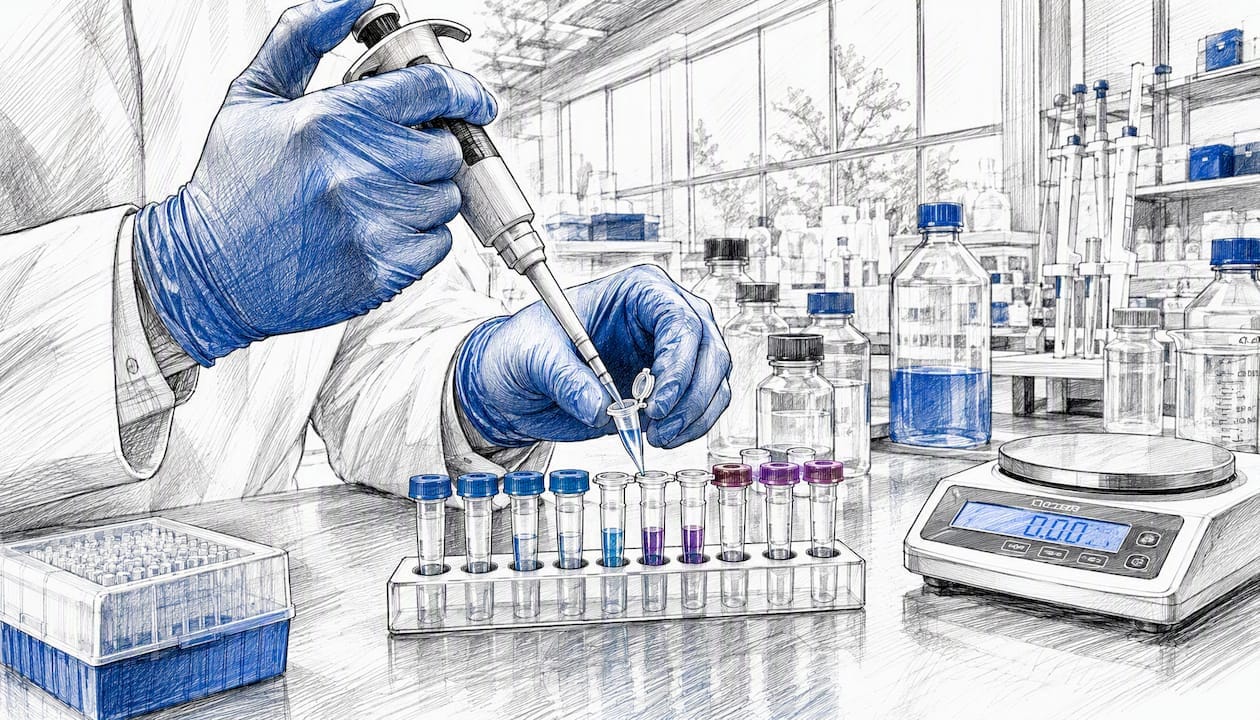
Pulsatile GH release also behaves differently in the body than continuous exposure. Continuous GH infusion tends to downregulate receptor sensitivity over time, while pulsatile release preserves signaling fidelity at the growth hormone receptor and downstream IGF-1 production in the liver. This is part of the rationale for combining ipamorelin with a GHRH analog such as CJC-1295, since GHRH analogs work through a separate receptor pathway upstream of somatotroph GH synthesis. Pairing a GHRH agonist with a ghrelin-receptor agonist targets two distinct control points in the same axis, which several protocols use to produce a larger, still-pulsatile GH response than either compound alone.
If your study aims to demonstrate selectivity rather than assume it, the biomarker panel matters more than the dose:
- Growth hormone (serial sampling, not single time point)
- IGF-1 (a downstream integrator of GH exposure over days)
- ACTH and cortisol (to rule out HPA-axis activation)
- Prolactin (a common confound with older secretagogues)
Pro Tip: Don’t rely on a single post-dose GH measurement to claim a selective effect. Pair GH sampling with simultaneous cortisol and prolactin draws at the same time points, because selectivity is a comparative claim, not an absolute one — it only holds up when the confounding hormones are measured in the same animal or volunteer, not inferred from a separate study.
Pharmacokinetics and Dosing Patterns Used in Ipamorelin Studies
Volunteer studies modeling ipamorelin’s pharmacokinetics generally use short intravenous infusions dosed by body weight, with responses tracked across a multi-hour sampling window rather than a single draw. Doses in the nmol/kg range have been used to build dose response curves, and GH output tends to rise with dose up to a point before the curve flattens, consistent with receptor saturation kinetics rather than a simple linear relationship.
Half-life estimates for ipamorelin fall in a short range, which has direct consequences for study design: a peptide cleared within roughly two hours can’t be dosed once and assumed to cover an entire GH pulse window. Peak plasma concentration typically arrives within the first half hour after subcutaneous or IV administration, and GH response peaks shortly after, then decays alongside the parent compound. That kinetic profile is why researchers modeling natural GH rhythms often time dosing around known pulsatile windows, particularly the large nocturnal GH surge that occurs during slow-wave sleep, rather than dosing on a fixed clock schedule disconnected from circadian biology.
Route of administration changes the shape of the curve more than it changes the total exposure. A short IV infusion produces a sharper, faster peak useful for isolating acute receptor-level pharmacodynamics in a controlled clinical setting. Subcutaneous bolus dosing, more common in outpatient research contexts, produces a slower rise and broader peak, which better approximates how the compound would be used in a longer-duration protocol but complicates precise PK modeling.
- Establish baseline circadian control before dosing. GH secretion varies enormously by time of day, so a pre-dose sample taken at the wrong hour will bias every downstream comparison.
- Sample frequently, not just before and after. Capturing a pulsatile hormone with two time points is close to guessing. Serial draws every ten to twenty minutes across the expected response window are standard in the PK/PD literature characterizing ipamorelin.
- Match the assay to the question. Immunoassays for GH and IGF-1 vary in sensitivity and cross-reactivity, and switching assay platforms mid-study will introduce noise that looks like a treatment effect.
- Track route as a variable, not a footnote. IV and subcutaneous data are not directly interchangeable when modeling exposure or effect duration.
The pulsatile GH response documented in early PK/PD work is one of the more reproducible findings in ipamorelin, the first selective growth hormone secretagogue, which is exactly why sampling design deserves more attention than dose selection in most protocol reviews.
What Preclinical Ipamorelin Studies Show in Animal Models
Rodent studies remain the backbone of ipamorelin’s mechanistic evidence base, and the results are more nuanced than the “GH secretagogue equals anabolic compound” shorthand that shows up in consumer-facing marketing. Bone studies are the clearest positive signal: longitudinal bone growth in juvenile rat models has held up even under glucocorticoid exposure, a condition that normally suppresses bone formation through GH-axis interference. That preservation effect is one reason ipamorelin drew early interest as a counter-agent to steroid-induced growth suppression, a translational hypothesis that still lacks confirmatory human pediatric data.
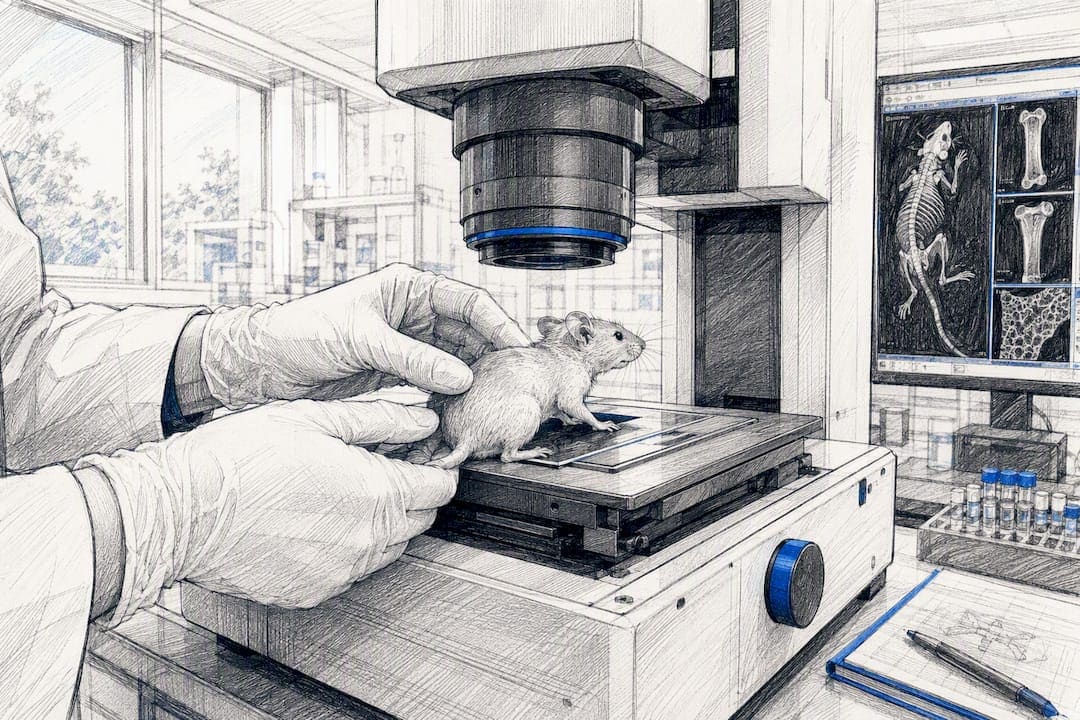
Gastric motility work in animal models supplied the mechanistic rationale that eventually justified the human postoperative ileus trials. Ghrelin receptor agonism has a documented prokinetic effect on gut motility independent of the GH axis, which is why ipamorelin’s clinical development path went toward gastrointestinal recovery rather than straight into a muscle-growth indication.
Body composition data are where the picture gets genuinely contradictory. Some animal models attribute a lipolytic effect to GH secretagogues broadly, but a 2020 review of growth hormone secretagogues in body composition management notes that certain models actually show increased fat pad weight with ipamorelin exposure, even in GH-intact animals. That’s a direct contradiction of the simple “GH secretagogue burns fat” narrative, and it’s a finding that deserves more attention than it gets in commercial peptide literature.
The metabolic picture gets more complicated still at the pancreatic level. A 2004 study on rat pancreatic tissue found that ipamorelin stimulates insulin secretion through calcium-channel and adrenergic mechanisms, a pathway distinct from the GH axis entirely. That’s a signal worth building into any study measuring glucose handling, since it suggests ipamorelin’s metabolic footprint isn’t limited to whatever downstream effect GH and IGF-1 produce.
| Preclinical finding | Model | Direction of effect |
|---|---|---|
| Longitudinal bone growth | Juvenile rat, including glucocorticoid exposure | Preserved bone formation |
| Gastric motility | Rodent GI motility models | Prokinetic, supports ileus rationale |
| Body fat pad weight | Some rodent models | Increased in certain studies, not decreased |
| Pancreatic insulin secretion | Isolated rat pancreatic tissue | Stimulated via calcium-channel/adrenergic pathways |
Three points stand out when weighing this body of preclinical evidence for translational relevance:
- Bone effects are among the most consistently reproduced findings across rodent literature.
- Fat-mass outcomes are not uniformly favorable, and any study proposal assuming automatic lipolysis is working from an incomplete picture.
- The pancreatic insulin finding means glucose and metabolic panels belong in any protocol testing chronic exposure, not just GH and IGF-1.
What Human Clinical Trials Reveal About Ipamorelin’s Effects
Human data on ipamorelin split into two distinct categories, and conflating them is one of the most common errors in secondary literature. The first category is PK/PD volunteer work measuring biomarker response, generally short-duration studies where healthy or specific patient populations receive a single dose or short dosing series and researchers track GH, IGF-1, and safety labs across a defined window. These studies consistently confirm dose-dependent GH release with the selectivity profile described in the mechanism research, but they were never designed to answer questions about muscle mass, fat loss, or long-term outcomes, and citing them as evidence for those claims overstates what they measured.
The second category, and the more clinically substantial one, is the Phase II randomized postoperative ileus trial registered under NCT01280344. This multicenter, randomized, quadruply masked trial enrolled several hundred patients recovering from bowel resection surgery and tested multiple ipamorelin dosing arms, including low- and mid-range mg/kg doses administered twice daily, against placebo. The primary endpoint centered on time to tolerance of a standardized solid meal, a clinically meaningful marker of return of GI function (sometimes referenced as GI-2 recovery) after major abdominal surgery.
The trial’s design reflects real translational logic: ghrelin receptor agonism has documented prokinetic effects, postoperative ileus is a genuine unmet need with real cost and morbidity implications, and a peptide that speeds GI recovery has a plausible, mechanistically grounded path to clinical value. That said, the efficacy signal reported across dosing arms did not produce the kind of unequivocal, large-magnitude benefit that would support broad regulatory claims. Some endpoints trended favorably without reaching the kind of consistent statistical separation from placebo that changes standard-of-care practice on its own.
A prospective randomized proof-of-concept study of ipamorelin for postoperative ileus reported treatment-emergent adverse events at rates that were broadly comparable to placebo in aggregate, though specific signals, discussed further below, appeared more frequently in active treatment arms.
Here’s the honest interpretation researchers should carry forward: human data support that ipamorelin reliably activates the GH axis with the selectivity profile predicted from receptor pharmacology, and there’s a genuine, if modest, efficacy signal in postoperative GI recovery. What the data do not support:
- Muscle mass or lean-tissue gains in humans, which have not been measured in a validated RCT
- Fat-loss claims, which remain extrapolated from biomarker changes rather than DEXA or MRI-confirmed outcomes
- Anti-aging outcomes of any kind, which have no dedicated human trial base at all
Anyone designing a follow-up study or evaluating a therapeutic claim should treat the postoperative ileus trial as the evidentiary ceiling for what’s currently proven in humans, not a floor to build speculative claims on top of.
Safety Signals and Adverse Events Reported in Clinical Trials
The adverse event profile from ipamorelin’s clinical trials reads like most GI-surgery-population studies: a background rate of nausea, vomiting, and abdominal distension that reflects the surgical population as much as the drug itself. The postoperative ileus proof-of-concept trial reported these as the most common treatment-emergent adverse events, at frequencies that generally tracked close to placebo rates given the underlying surgical context.
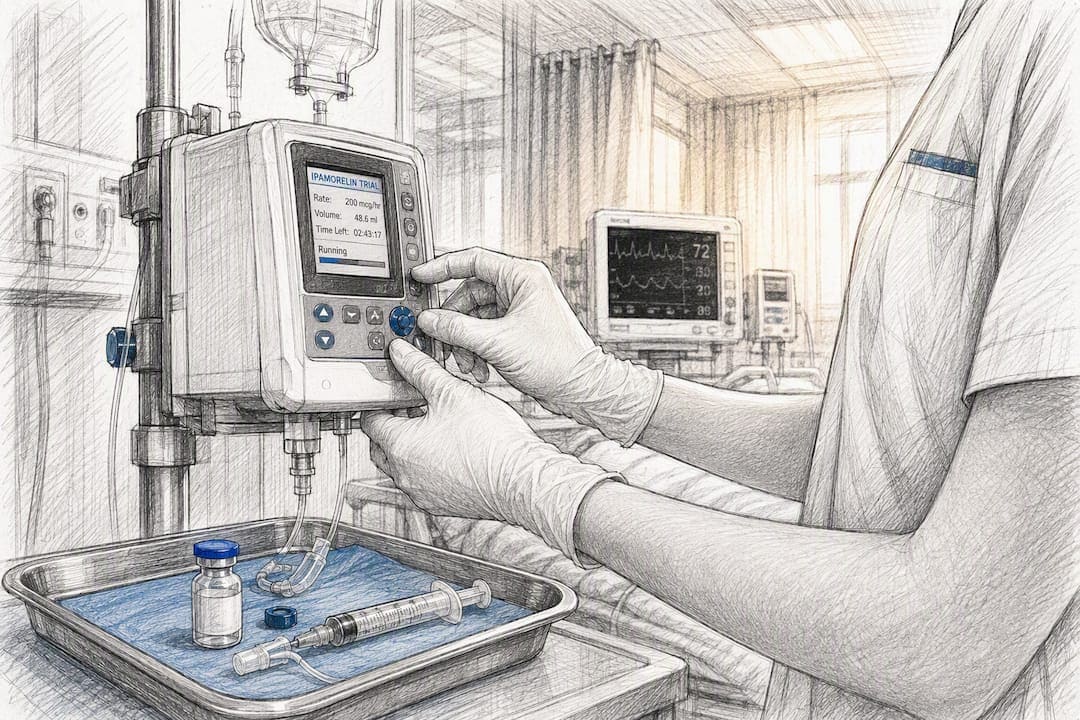
Two signals stood out as more frequent in active treatment arms than in placebo: hypokalemia and insomnia. Neither is surprising mechanistically. GH secretagogues can shift potassium handling through downstream metabolic effects, and GH pulses themselves can disrupt sleep architecture, particularly when dosing timing overlaps with the sleep window researchers are often trying to exploit for maximal pulsatile response. Some trial reports also noted glucose shifts around the time of hospital discharge, a finding that lines up with the pancreatic insulin secretion signal from the 2004 rat tissue study and reinforces that glucose monitoring isn’t optional in ipamorelin protocols.
Serious adverse events were reported in the trial population, but interpreting them requires context: postoperative bowel resection patients carry a baseline risk of complications independent of study drug, and distinguishing surgical complications from drug-attributable SAEs requires careful case-by-case adjudication rather than a simple frequency count.
For researchers building a monitoring protocol, a practical checklist:
- Baseline labs before first dose, including a complete metabolic panel, fasting glucose, and electrolytes, not just GH and IGF-1.
- Periodic potassium and glucose recheck during any multi-day dosing protocol, given the signals from both the pancreatic mechanism data and the surgical trial reports.
- Sleep quality tracking if the study extends beyond a single dose, since insomnia showed up as a differentiating adverse event versus placebo.
- ECG monitoring where clinically warranted, particularly in populations with existing electrolyte sensitivity.
- Clear exclusion criteria, including active malignancy (given theoretical concerns about growth-factor pathway stimulation) and pregnancy, which is standard for any investigational GH-axis compound.
Pro Tip: If your protocol includes multi-day dosing, don’t wait for symptoms to check potassium. Hypokalemia in trial populations showed up as a lab finding before it showed up clinically, which means a fixed-interval blood draw will catch it earlier than an as-needed approach.
Regulatory Status and Verifying Research-Grade Ipamorelin Supply
Ipamorelin holds no FDA approval for any human therapeutic indication, and that status shapes how it should be sourced, handled, and reported in any research setting. The compound sits in the same regulatory gray zone that has drawn scrutiny toward compounded peptides generally, where the FDA has flagged concerns about bulk drug substances lacking an approved application and the quality-control gaps that can appear in poorly regulated compounding supply chains. For research purposes, that means the compound should be treated strictly as an investigational tool for laboratory use, not sourced or administered as a therapeutic product.
Quality risks in this category are not hypothetical. Reviewers and regulators have flagged impurity profiles, peptide aggregation, and immunogenicity risk as recurring issues in poorly characterized peptide supply, any one of which can quietly distort a study’s results without ever showing up as an obvious confound. A batch with 85% purity instead of 99% doesn’t just weaken your dose, it introduces unknown related substances into every downstream measurement.
A peptide’s Certificate of Analysis is only as good as the chromatogram behind it. Lot-level HPLC/MS data, documented endotoxin testing, and verified stability data under stated storage conditions are what separate a reproducible study from one that can’t be replicated by the next lab.
A practical vendor checklist for anyone sourcing ipamorelin for research use:
- Certificate of Analysis specific to the lot received, not a generic template
- HPLC or mass spectrometry chromatograms showing purity percentage
- Endotoxin testing results, particularly for any in vivo work
- Documented storage and stability data
- Clear chain-of-custody and a stated research-use-only policy
Data Peptides documents each of these points at the lot level, giving researchers the chromatogram and purity data needed to defend a methods section during peer review rather than taking a purity claim on faith.
Open Questions Guiding the Next Wave of Ipamorelin Research
The gap between what’s mechanistically plausible and what’s clinically proven is exactly where the next generation of ipamorelin studies needs to focus. Four priorities stand out as the most consequential for moving the field forward:
- Randomized controlled trials targeting body composition directly, using DEXA or MRI-confirmed lean mass and visceral fat measurements rather than inferring outcomes from GH and IGF-1 biomarkers alone.
- Long-term safety cohorts extending well beyond the short postoperative window studied so far, since chronic dosing safety data in humans is essentially absent.
- Outpatient subcutaneous dose-finding studies designed around circadian pulsatility rather than the acute IV infusion protocols that dominate current PK/PD literature.
- Immunogenicity assessments across repeated dosing cycles, an area barely touched in the published record despite being a known risk category for peptide therapeutics generally.
Endpoint selection matters as much as trial design. Studies should pair GH pulsatility metrics and IGF-1 area-under-curve with DEXA-confirmed lean mass, nitrogen balance measurements, and a full metabolic panel, rather than leaning on a single biomarker as a stand-in for a clinical outcome. Combining ipamorelin with a GHRH analog in a factorial design, testing each agent alone and in combination against placebo, would also finally clarify how much of the reported clinical benefit comes from receptor synergy versus either compound independently.
None of this works without proper sampling density for pulsatile hormones and power calculations that account for the high variance inherent in GH secretion. Any protocol moving forward should also build in transparent immunogenicity reporting and standard exclusion criteria for pregnancy and active oncologic disease, given the theoretical concerns around growth-factor pathway stimulation that remain unresolved in the literature.
Why Sourcing Quality Determines Reproducibility in Ipamorelin Studies
A study’s conclusions are only as trustworthy as the material batch behind them, and that’s the argument for treating vendor selection as part of the scientific method rather than a procurement afterthought. Data Peptides provides lot-specific Certificates of Analysis alongside third-party purity verification, giving researchers documentation they can cite directly in a methods section rather than a generic purity claim with no chromatogram behind it.
Stability data matters just as much as day-one purity. A peptide that degrades under improper storage between shipment and use introduces variability that looks like biological noise but is really a handling artifact, which is why documented storage conditions and validated stability windows matter for anyone trying to replicate a finding across labs.
What’s still missing from any single source, including this article, are the specifics that only come from the researcher’s own work: your institution’s credentials, any proprietary assay data your lab has generated, and case-specific findings from your own protocols. Those details belong in your methods section, not in a general reference article, but the underlying reagent quality is something every study can control for before the first sample is ever drawn.
- Lot-level Certificates of Analysis matched to the exact batch shipped, not a template
- Third-party purity and identity verification for reproducible methods reporting
- Documented stability data supporting multi-site replication
Primary Sources for Ipamorelin Research
- Ipamorelin, the first selective growth hormone secretagogue — the foundational 1998 characterization paper
- Safety and Efficacy of Ipamorelin Compared to Placebo for the Recovery of Gastrointestinal Function (NCT01280344) — Phase II trial registry entry
- Beyond the androgen receptor: growth hormone secretagogues in body composition management — PMC review of translational GHS literature
- Ipamorelin | PubChem — compound identifiers and structural data
A Researcher-First Take on Ipamorelin Research
The evidence actually supports a narrower story than most peptide marketing suggests: ipamorelin is a genuinely selective mechanistic tool, useful precisely because it isolates GH-axis activity from the cortisol and prolactin noise that muddies older secretagogues. That’s worth something real to anyone designing GH-axis research.
Where conventional peptide-forum wisdom falls apart is the leap from “selective GH release confirmed” to “muscle growth and fat loss confirmed.” Those are different claims requiring different endpoints, and the current human trial record, centered on postoperative ileus recovery, simply doesn’t reach the second claim. The PMC review’s note about contradictory fat-mass findings in animal models should be a bigger warning sign in this field than it currently is.
If you’re planning ipamorelin work, prioritize sampling density and biomarker panels over dose escalation. The mechanism is reproducible. The clinical outcome data is still being built, one well-designed trial at a time.
— Data Peptides
Get Research-Grade Ipamorelin From Data Peptides
Sourcing decisions shape your results as much as your protocol does, which is exactly where Data Peptides fits into your next study. Every batch ships with a lot-specific Certificate of Analysis and third-party purity verification, so you’re citing documented chromatogram data in your methods section instead of a vendor’s unverified purity claim. Researchers studying GH-axis pharmacology, gut motility, or metabolic endpoints get the same 99%+ purity standard across the catalog, including complementary compounds like CJC-1295 NO DAC for factorial-design studies pairing GHRH and ghrelin receptor agonists. Shipping is fast and discreet, and support is available around the clock for procurement or documentation questions. Browse the current ipamorelin research listing to check lot availability and pull the Certificate of Analysis before your next order.
This article is general information, not a substitute for advice from a qualified doctor. Consult a qualified healthcare professional about your own circumstances before acting on anything here.
Sources
- Ipamorelin, the first selective growth hormone secretagogue
- Safety and Efficacy of Ipamorelin Compared to Placebo for the Recovery of Gastrointestinal Function
- Ipamorelin stimulates insulin secretion in rat pancreatic tissues (2004)
- Beyond the androgen receptor: the role of growth hormone secretagogues in the modern management of body composition in hypogonadal males
- Ipamorelin | PubChem
FAQ
Does Ipamorelin Really Work?
It reliably stimulates pulsatile GH release through GHS-R1a agonism, a mechanism confirmed in both preclinical and human PK/PD studies. Whether it “works” for a specific outcome depends entirely on the outcome. GH-axis activation is well documented; muscle growth or fat loss in humans is not.
Does Ipamorelin Mess With Testosterone?
Ipamorelin’s characterized selectivity profile centers on avoiding cortisol, ACTH, and prolactin elevation rather than directly affecting testosterone, and no trial in the current record has established a testosterone-specific effect. Any interaction with the gonadal axis would need dedicated study, since it hasn’t been a primary endpoint in published work.
Is Ipamorelin Safer Than HGH?
Direct head-to-head safety comparisons against recombinant HGH in matched human trials haven’t been published, so a blanket “safer” claim isn’t supportable from current data.
What Research Supports the Use of Ipamorelin?
The core evidence base includes the 1998 receptor characterization study, preclinical work on bone growth and gastric motility, and the Phase II postoperative ileus trial that tested it in a surgical human population. Broader therapeutic claims beyond these areas currently rest on biomarker extrapolation rather than dedicated outcome trials.