

Follistatin 344 represents one of the most extensively studied myostatin-blocking peptides in contemporary muscle biology research. As a naturally occurring glycoprotein isoform, it has captured significant attention from research institutions examining muscle development, therapeutic interventions for muscle-wasting conditions, and cellular signaling pathways. This peptide's ability to bind and neutralize myostatin, a negative regulator of muscle growth, positions it as a critical tool in understanding muscle hypertrophy mechanisms and potential applications across multiple research domains.
Understanding Follistatin 344 Structure and Biology
Follistatin exists in multiple isoform variants, with follistatin 344 being one of the primary forms studied in laboratory settings. This particular isoform consists of 344 amino acids and differs structurally from its shorter counterpart, follistatin 315, primarily through the presence of an acidic C-terminal tail. The structural variation between these isoforms significantly impacts their biological distribution, binding affinity, and functional characteristics.
Molecular Characteristics
The follistatin 344 molecule features several distinct domains that contribute to its biological activity. These include an N-terminal domain followed by three follistatin domains, each containing specific binding sites. The additional tail region in follistatin 344, compared to the 315 variant, influences its interaction with heparan sulfate proteoglycans on cell surfaces and in the extracellular matrix.
Key structural features include:
- A molecular weight of approximately 37-39 kDa when fully glycosylated
- Multiple follistatin domains that facilitate protein-protein interactions
- N-linked glycosylation sites that affect stability and bioavailability
- An acidic C-terminal extension unique to the 344 isoform
Research has demonstrated that the C-terminal domain present in follistatin 344 allows for enhanced tissue localization and prolonged activity compared to shorter variants. This structural characteristic makes it particularly valuable for research examining sustained myostatin inhibition in various tissue environments.
Mechanism of Action in Myostatin Regulation
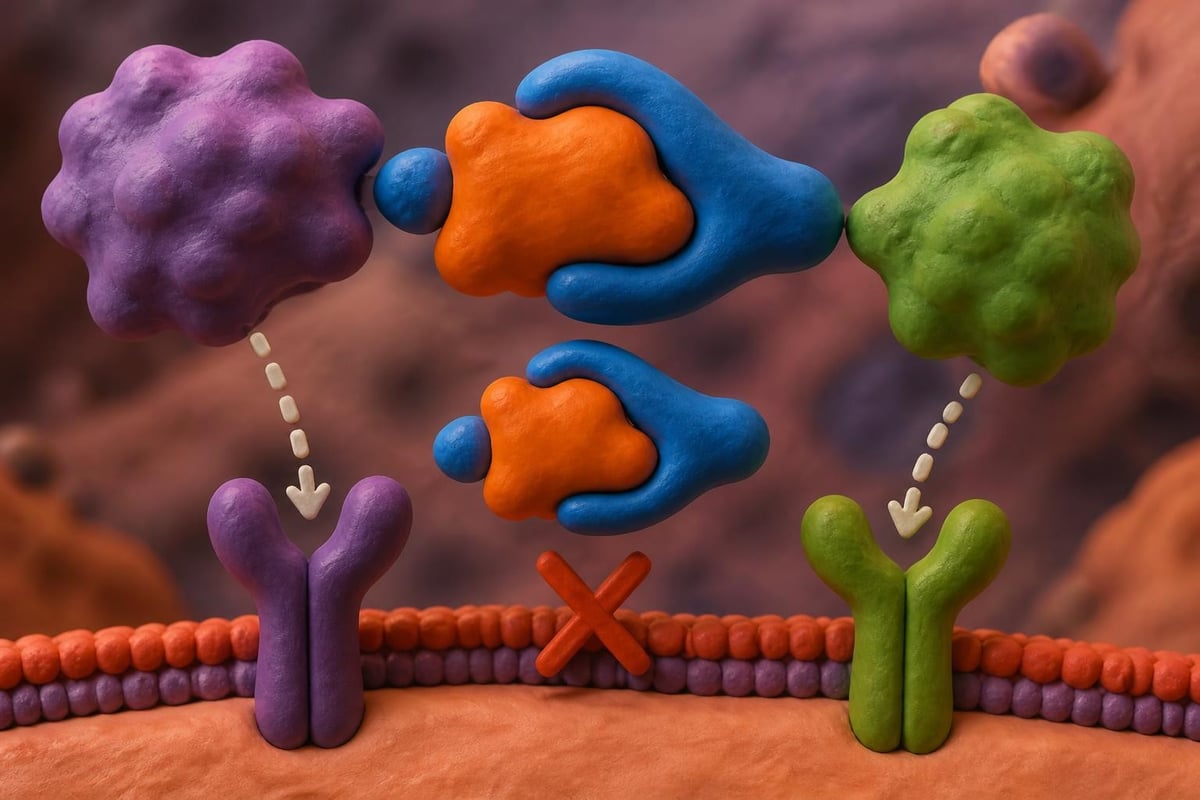
The primary mechanism through which follistatin 344 exerts its effects involves high-affinity binding to members of the TGF-beta superfamily, most notably myostatin and activin A. Myostatin, also known as GDF-8 (growth differentiation factor 8), functions as a negative regulator of skeletal muscle mass by limiting satellite cell activation and protein synthesis pathways.
Protein-Protein Interaction Dynamics
When follistatin 344 binds to myostatin, it prevents the growth factor from interacting with its cellular receptors, specifically the activin type II receptors (ActRIIB). This binding relationship effectively neutralizes myostatin's growth-inhibiting signals, potentially allowing muscle tissue to develop beyond normal physiological limits.
The binding affinity between follistatin 344 and myostatin has been characterized extensively through biochemical studies. The dissociation constant (Kd) typically falls in the picomolar range, indicating an exceptionally strong and stable interaction. This high-affinity binding creates what researchers refer to as an "inactive complex," sequestering myostatin from its normal signaling pathway.
| Target Protein | Binding Affinity | Primary Effect | Research Focus |
|---|---|---|---|
| Myostatin | High (pM range) | Growth inhibition blockade | Muscle hypertrophy |
| Activin A | High (pM range) | Signaling modulation | Reproductive biology |
| GDF-11 | Moderate | Growth factor regulation | Aging research |
| BMP proteins | Variable | Context-dependent | Developmental biology |
Beyond myostatin, follistatin 344 demonstrates regulatory activity toward other TGF-beta superfamily members, creating a complex network of effects that extend beyond simple muscle regulation. These interactions have implications for bone metabolism, reproductive physiology, and inflammatory responses.
Research Applications in Muscle Biology
Laboratory investigations have extensively explored follistatin 344's potential to promote muscle hypertrophy in various experimental models. Animal studies, particularly in mice and larger mammals, have consistently demonstrated significant increases in muscle mass when follistatin expression is enhanced through genetic modification or exogenous administration.
Gene Therapy Investigations
Several pioneering studies have utilized adeno-associated viral (AAV) vectors to deliver follistatin genes directly into muscle tissue. These gene-therapy approaches resulted in sustained local expression of follistatin 344, producing measurable increases in muscle fiber cross-sectional area and overall muscle mass. Research conducted in non-human primates showed increases in muscle volume ranging from 15% to 30% in targeted muscle groups.
Notable research outcomes include:
- Enhanced satellite cell proliferation and differentiation
- Increased protein synthesis rates in treated muscle tissue
- Reduced muscle atrophy in disuse and disease models
- Improved muscle regeneration following injury
The comprehensive mechanism of action involves multiple downstream pathways beyond simple myostatin inhibition. Follistatin 344 influences the SMAD2/3 signaling cascade, which regulates gene transcription related to muscle protein balance, and may affect mTOR pathway activation, a critical regulator of cellular growth and metabolism.

Dosing Protocols and Administration in Research Settings
Laboratory protocols for follistatin 344 vary considerably depending on the research model, objectives, and delivery method employed. Researchers have utilized both local and systemic administration routes, each presenting distinct pharmacokinetic profiles and experimental outcomes.
Reconstitution and Storage Parameters
Lyophilized follistatin 344 requires careful reconstitution to maintain structural integrity and biological activity. Standard protocols typically involve reconstitution in bacteriostatic water or sterile saline to achieve concentrations ranging from 0.1 mg/mL to 1.0 mg/mL. Once reconstituted, the peptide exhibits stability for approximately 7-14 days when stored at 2-8°C, though degradation rates can vary based on buffer composition and pH.
Research institutions examining muscle hypertrophy typically employ dosing ranges between 10 mcg/kg and 100 mcg/kg body weight in animal models, administered either as single injections or through repeated dosing schedules. Gene therapy approaches bypass traditional dosing considerations by establishing continuous endogenous production through viral vector integration.
The safety profile and dosing context remain areas of active investigation, particularly regarding long-term exposure and potential off-target effects. While animal studies have generally reported favorable safety margins, human data remains limited to small-scale clinical investigations.
Comparative Analysis with Other Myostatin Inhibitors
The landscape of myostatin inhibition research includes several distinct approaches beyond follistatin 344, each with unique characteristics and experimental applications. Understanding these alternatives provides context for follistatin 344's position within the broader research framework.
Alternative Myostatin-Blocking Strategies
Antibody-based myostatin inhibitors represent another major research avenue, utilizing engineered immunoglobulins designed to specifically bind and neutralize myostatin. These monoclonal antibodies offer the advantage of high specificity and extended half-lives in circulation, though they typically require more complex manufacturing processes and may elicit immune responses.
| Approach | Mechanism | Advantages | Research Limitations |
|---|---|---|---|
| Follistatin 344 | Protein binding/sequestration | Multi-target activity, natural protein | Shorter half-life, broad effects |
| Monoclonal antibodies | Myostatin-specific binding | High specificity, long duration | Production complexity, immunogenicity |
| Propeptide administration | Prevents myostatin activation | Endogenous mechanism | Requires repeated dosing |
| Gene editing (CRISPR) | Myostatin gene knockout | Permanent modification | Irreversible, technical challenges |
Several research peptides work through complementary mechanisms that may synergize with myostatin inhibition. For instance, BPC-157 and TB-500 have been investigated for their roles in tissue repair and recovery, potentially complementing the growth-promoting effects of follistatin through distinct cellular pathways.
Clinical Research and Human Studies
While animal research on follistatin 344 has produced extensive data, human clinical investigations remain comparatively limited. The existing human studies primarily involve gene therapy trials for specific muscle-wasting conditions, with a focus on safety, tolerability, and preliminary efficacy signals.
Gene Therapy Trial Outcomes
Early-phase clinical trials have explored intramuscular injection of AAV vectors encoding follistatin 344 in patients with conditions such as sporadic inclusion body myositis and Becker muscular dystrophy. These investigations demonstrated the feasibility of local gene transfer and reported measurable increases in muscle volume at injection sites, though clinical functional improvements showed variable results.
Key findings from human investigations include:
- Successful transgene expression lasting 12+ months post-injection
- Local muscle hypertrophy at injection sites averaging 10-20% volume increase
- Generally favorable safety profiles with minimal adverse events
- Limited functional improvement in severely affected muscles
The clinical trial landscape continues to evolve, with ongoing investigations examining dose optimization, combination therapies, and patient selection criteria. Regulatory considerations remain significant, as follistatin-based interventions navigate complex approval pathways for genetic therapies.

Isoform Variations and Functional Differences
Understanding the distinctions between follistatin isoforms proves essential for selecting appropriate variants for specific research applications. The two primary variants, follistatin 344 and follistatin 315, arise from alternative splicing of the same gene transcript, resulting in proteins with different characteristics.
Tissue Distribution and Pharmacokinetics
Follistatin 315 lacks the acidic C-terminal tail present in follistatin 344, reducing its affinity for heparan sulfate proteoglycans. This structural difference significantly impacts tissue localization, with follistatin 315 showing greater propensity for systemic circulation while follistatin 344 tends to remain more tissue-associated following administration.
Research comparing these isoforms has revealed that follistatin 344 demonstrates superior local activity when administered directly into muscle tissue, maintaining higher concentrations at the injection site for extended periods. Conversely, follistatin 315 may prove more suitable for applications requiring broader systemic distribution.
The comprehensive comparison of these isoforms highlights their respective advantages in different experimental contexts. Researchers must consider factors including desired duration of action, target tissue specificity, and administration route when selecting between variants.
Broader Applications Beyond Muscle Research
While muscle hypertrophy represents the most extensively studied application of follistatin 344, research has expanded into numerous other biological domains where activin and TGF-beta superfamily members play regulatory roles.
Metabolic and Reproductive Research
Activin signaling contributes significantly to glucose homeostasis and metabolic regulation. Laboratory investigations have examined whether follistatin 344 administration influences insulin sensitivity, glucose tolerance, and metabolic parameters in various disease models. Some studies have reported improved metabolic profiles, though mechanisms remain incompletely understood and may involve complex interactions between muscle mass changes and direct metabolic effects.
In reproductive biology research, follistatin's ability to modulate activin and inhibin signaling has implications for follicle development, hormone production, and fertility parameters. These applications remain largely confined to basic research settings, exploring fundamental biological processes rather than therapeutic interventions.
Additional research domains include:
- Bone metabolism and mineralization studies
- Wound healing and tissue regeneration investigations
- Fibrosis research in various organ systems
- Inflammatory response modulation experiments
- Aging and sarcopenia research models
The diverse research applications reflect follistatin 344's broad biological significance, extending well beyond its initial characterization as a muscle growth regulator. This versatility makes it a valuable tool for investigating multiple physiological systems and disease processes.
Laboratory Handling and Experimental Considerations
Proper handling protocols prove critical for maintaining follistatin 344 integrity and ensuring reproducible research outcomes. The peptide's susceptibility to degradation through enzymatic activity, temperature fluctuations, and pH variations necessitates careful attention to storage and preparation procedures.
Quality Control and Purity Assessment
Research-grade follistatin 344 should undergo rigorous purity analysis through techniques such as high-performance liquid chromatography (HPLC), mass spectrometry, and bioactivity assays. Third-party batch testing provides independent verification of peptide identity, purity levels, and potential contaminants that might confound experimental results.
Lyophilized peptide should be stored at temperatures below -20°C to maintain long-term stability, with some protocols recommending -80°C for extended storage periods exceeding six months. Reconstituted solutions require refrigeration and should be used within recommended timeframes to prevent degradation.
| Storage Condition | Temperature | Expected Stability | Recommended Use |
|---|---|---|---|
| Lyophilized powder | -20°C to -80°C | 12-24 months | Long-term storage |
| Reconstituted solution | 2-8°C | 7-14 days | Short-term use |
| Working aliquots | -20°C | 30 days | Repeated experiments |
| Thawed samples | 2-8°C | 24-48 hours | Immediate use |
Researchers should avoid repeated freeze-thaw cycles, which accelerate peptide degradation and may reduce biological activity. Preparing single-use aliquots immediately after reconstitution represents the optimal approach for maintaining peptide integrity across multiple experimental sessions.
Current Research Frontiers and Future Directions
The evolving understanding of follistatin 344 biology continues to open new research avenues and experimental applications. Contemporary investigations explore combination approaches, tissue-specific targeting strategies, and novel delivery systems designed to enhance efficacy while minimizing potential off-target effects.
Combination Therapy Investigations
Recent research has examined whether follistatin 344 synergizes with other interventions to produce enhanced outcomes. Studies combining myostatin inhibition with exercise protocols, nutritional interventions, or complementary peptides have revealed complex interactions that may amplify beneficial effects or reveal unexpected limitations.
The investigation of follistatin’s role as a myostatin antagonist has expanded to include examination of resistance exercise adaptations, recovery from muscle injury, and age-related muscle loss. These studies provide insights into how myostatin inhibition interacts with natural physiological processes and environmental factors.
Emerging research directions include:
- Nanoparticle delivery systems for improved bioavailability
- Tissue-specific promoters for targeted gene therapy
- Combination with rehabilitation protocols in injury models
- Age-related muscle loss prevention strategies
- Metabolic disease intervention investigations
Advanced delivery technologies under investigation aim to overcome current limitations of follistatin 344 administration, including short circulating half-life and limited systemic distribution. Pegylation, fusion protein constructs, and encapsulation strategies represent potential solutions being explored in preclinical research.
Regulatory Status and Research Guidelines
Follistatin 344 occupies a unique position in the regulatory landscape, classified as an investigational compound not approved for human therapeutic use outside supervised clinical trials. Research institutions utilizing this peptide must adhere to strict protocols governing its handling, documentation, and intended applications.
Laboratory Research Standards
All follistatin 344 research applications should comply with institutional biosafety protocols, proper documentation procedures, and ethical guidelines appropriate to the experimental model employed. Animal research requires institutional animal care and use committee (IACUC) approval, while any human investigations necessitate institutional review board (IRB) oversight and informed consent procedures.
The compound's classification as a research peptide specifically excludes use for human consumption, athletic enhancement, or veterinary applications outside approved research contexts. Reputable suppliers emphasize these restrictions and provide products intended solely for laboratory investigation.
Quality suppliers like Data Peptides maintain rigorous manufacturing standards, providing third-party batch testing results that verify peptide purity and identity. This quality assurance proves essential for producing reliable, reproducible research outcomes and maintaining scientific integrity.
Data Interpretation and Experimental Design
Designing rigorous experiments with follistatin 344 requires careful consideration of multiple variables, appropriate controls, and validated measurement techniques. The complexity of its biological effects necessitates comprehensive experimental approaches that account for both intended outcomes and potential confounding factors.
Measurement Parameters and Endpoints
Research protocols should establish clear primary and secondary endpoints appropriate to the investigation's objectives. For muscle hypertrophy studies, these typically include muscle fiber cross-sectional area measurements, total muscle mass or volume assessments, contractile force production, and molecular markers of protein synthesis and degradation.
Critical experimental design elements include:
- Appropriate control groups (vehicle-treated, untreated)
- Sufficient sample sizes for statistical power
- Validated measurement techniques with established reliability
- Consideration of sex differences in experimental models
- Time-course studies to characterize onset and duration of effects
Histological analysis provides detailed information about muscle fiber composition, satellite cell populations, and structural changes following follistatin 344 exposure. Immunohistochemistry techniques can identify specific protein expression patterns, while molecular biology approaches quantify gene expression changes in relevant pathways.
The interpretation of follistatin 344 research data requires acknowledgment of its multi-target activity profile. Effects attributed to myostatin inhibition may involve contributions from activin modulation or other TGF-beta superfamily interactions, necessitating careful experimental design to isolate specific mechanisms.
Follistatin 344 continues to serve as a valuable research tool for investigating muscle biology, growth factor signaling, and therapeutic strategies for muscle-wasting conditions. Its well-characterized mechanism and robust experimental evidence make it an essential component of contemporary myostatin research programs. For researchers seeking high-quality, verified research peptides manufactured to exacting standards, Data Peptides provides laboratory-grade compounds with comprehensive third-party testing, ensuring the reliability and reproducibility essential for advancing scientific understanding in this dynamic field.