
Thymosin beta-4 (Tβ4) is a 43-amino-acid protein that cells release after injury. Lab work shows it helping cells migrate, new vessels form and inflammation settle. Human trials exist for the eye, skin wounds and the heart. Evidence for muscle, tendon, performance or weight loss in people is thin. This guide covers the mechanism, the trials, the TB-500 question, the limits of animal data and the US rules, so you can plan laboratory work on firm ground.
TL;DR
- Tβ4 is a 43-amino-acid protein and the main actin-sequestering peptide in cells. Its best-documented roles are cell migration, angiogenesis and anti-inflammatory signaling.
- Registered human trials focus on dry eye, corneal wounds, skin ulcers, epidermolysis bullosa and heart attack, not on muscle or tendon injury.
- TB-500 is generally described as a short fragment of Tβ4 (residues 17 to 23), so the two should not be treated as the same material in a protocol.
- Animal results are strong, but they do not reliably predict human outcomes.
- Our peptides are sold for laboratory research use only, with batch-level Certificates of Analysis.
Table of Contents
- What thymosin beta-4 is
- How it is thought to work
- What human studies have looked at
- Safety data in the literature
- TB-500 and thymosin beta-4: same or different?
- Why animal findings may not predict human results
- The US regulatory picture and sport
- A short checklist for sourcing Tβ4 or TB-500 for the lab
- Browse our research peptides
- FAQ
- Sources
What thymosin beta-4 is
Tβ4 is a 4.9 kDa protein first isolated from bovine thymus. It is the major monomeric actin-sequestering peptide in cells, and it promotes cell migration and wound healing, has anti-inflammatory properties and suppresses apoptosis.
It is not a thymus-only hormone. Levels are highest in platelets and neutrophils, among the first cells to enter a wound, and human wound fluid contains it at 13 μg/ml. That pattern is why researchers read it as part of the body’s own repair response.
Tβ4 is released by platelets, macrophages and many other cell types after injury. Researchers describe it as protecting tissue from further damage and binding actin to support migration, including the mobilization of stem and progenitor cells that build new vessels.
How it is thought to work
One protein does several jobs, and different parts of the sequence appear to carry different activities. A 2021 review by Xing and colleagues lays out the map:
| Region of the sequence | Reported activity |
|---|---|
| First four amino acids | Anti-inflammatory and antifibrotic effects |
| Amino acids 1 to 15 | Inhibition of apoptosis |
| Amino acids 17 to 23 | Angiogenesis and hair follicle growth |
The same review reports that Tβ4 affects the secretion of many cytokines and several signaling pathways, including NF-κB, Toll-like receptor, PI3K/Akt/eNOS, Notch, angiopoietin-1/Tie2, TGF-β and Wnt. These pathways are the proposed basis for its anti-inflammatory, anti-apoptotic, pro-angiogenic and anti-fibrotic effects.
For a lab, the practical takeaway is that “Tβ4 research” covers a family of endpoints: cell migration assays, tube formation, scratch-wound models, cytokine panels and fibrosis markers. Choose the endpoint first, then the material. Our TB4 peptide research overview goes further into applications and mechanisms.
What human studies have looked at
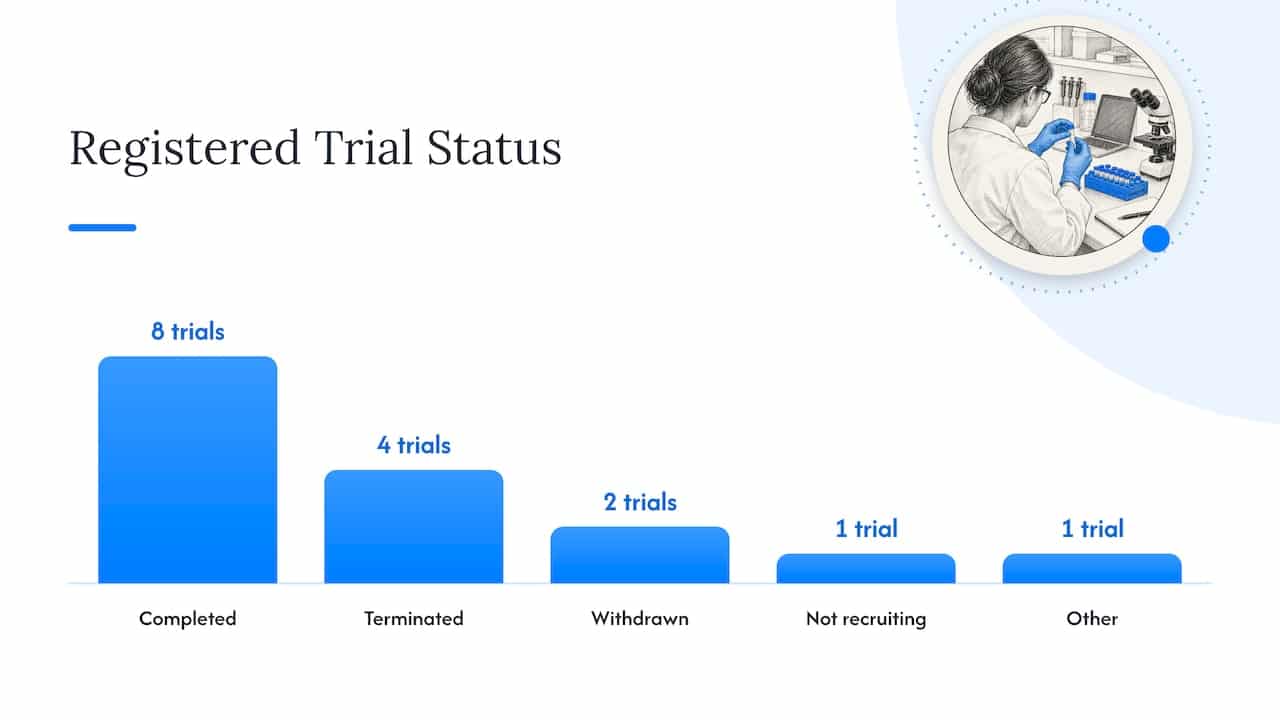
Human work is real but narrow. ClinicalTrials.gov lists 16 registered human Tβ4 trials, 9 with posted results. Eight are completed, four terminated, two withdrawn, one not yet recruiting and one other. Conditions include dry eye, neurotrophic keratopathy, epidermolysis bullosa, venous stasis ulcers, pressure ulcers, corneal wounds and myocardial infarction.
Skin wounds and ulcers
Kleinman and Sosne report that Tβ4 accelerated repair in phase 2 trials in patients with pressure ulcers, stasis ulcers and epidermolysis bullosa wounds, and that it was safe and well tolerated.
A 2023 professional evidence monograph reads the same body of work more cautiously. Phase 2 trials in dry-eye disease, epidermolysis bullosa and venous stasis ulcers showed signals on some secondary endpoints without consistently meeting primary endpoints, and there is no confirmatory result or marketing authorization.
Eye and cornea
The corneal literature is among the most developed. Sosne and colleagues describe Tβ4 as a novel corneal wound-healing agent, and dry eye and neurotrophic keratopathy both appear in the trial registry.
Heart
Preclinical cardiac-repair findings generated a lot of interest. The same evidence monograph notes that, for atherosclerotic cardiovascular disease, a Phase 1 safety study was completed with no efficacy conclusion, and the cardiac findings were not confirmed clinically.
Muscle, tendon, performance, weight loss, anti-aging
This is where searchers often expect answers and where the literature is quietest. A 2026 scoping review in Applied Sciences mapped 80 studies from 1,772 records through March 2026. Human evidence clustered in ocular and wound or skin settings, with limited evidence relevant to musculoskeletal use. The evidence base leaned toward mixed and in vitro designs.
A 2026 sports-injury review makes the same point: no randomized controlled trial of Tβ4 or TB-500 for tendon, muscle or ligament injury has been published. Sports interest rests on extrapolation from wound-healing studies, cardiac models and veterinary use. Nothing in the registry supports weight loss or anti-aging claims for Tβ4 in people, so a well-designed protocol treats those as open hypotheses.
Safety data in the literature
The cleanest safety data come from Phase 1 studies in healthy volunteers.
- In a randomized, placebo-controlled intravenous study, volunteers received ascending doses of 42, 140, 420 or 1260 mg over 14 days. Adverse events were infrequent and mild to moderate, with no dose-limiting toxicities or serious adverse events.
- A first-in-human study of recombinant human Tβ4 in healthy Chinese volunteers used single doses of 0.05 to 25.0 μg/kg and multiple doses up to 5.0 μg/kg daily for 10 days. Adverse events were mild to moderate, and the authors concluded it was well tolerated.
These were clinical-grade, pharmaceutically manufactured materials given under medical supervision. They describe those products in those settings. They are not a dosing guide for research chemicals, and our products are not for human or animal consumption.
TB-500 and thymosin beta-4: same or different?
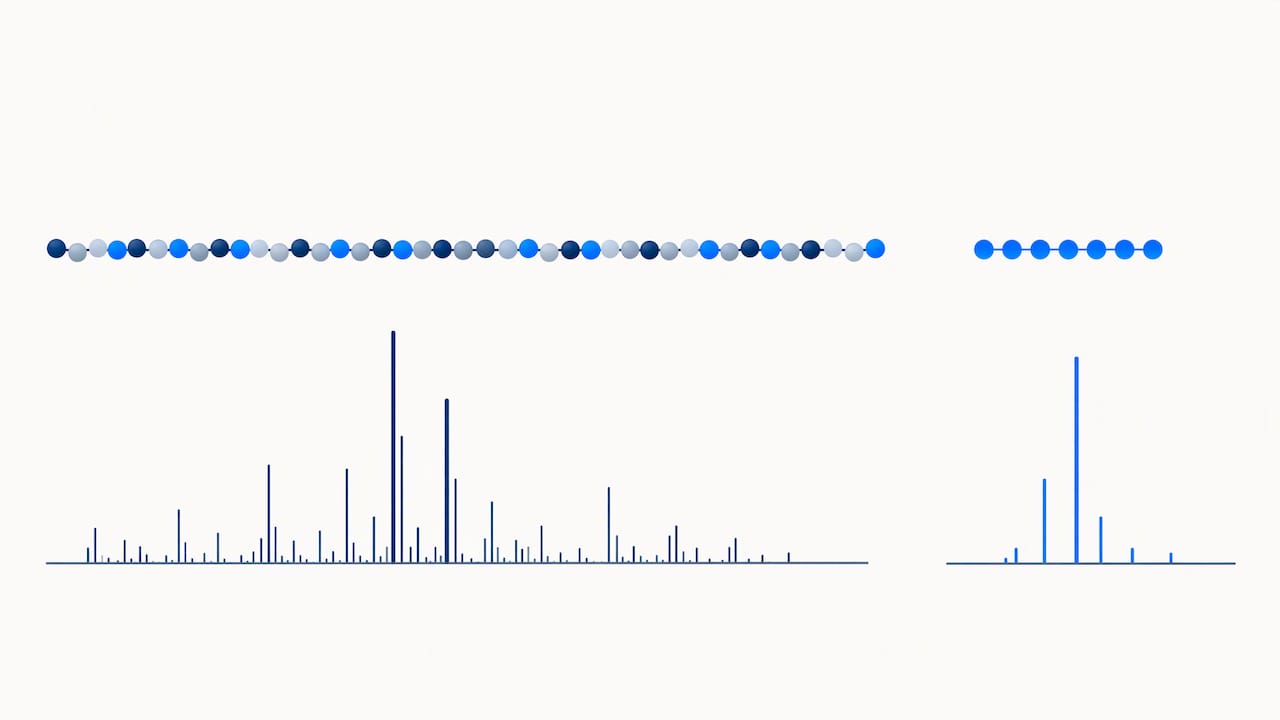
They are related, not interchangeable. The Xing review places the angiogenic active region at amino acids 17 to 23, and TB-500 is commonly described as a synthetic fragment built around that stretch. Full-length Tβ4 is 43 amino acids. A short fragment will not reproduce every activity of the whole protein, and the two give different mass-spec fingerprints.
The literature mirrors this. In the scoping review, most included studies evaluated Tβ4 rather than TB-500, and direct TB-500 evidence was limited to a single study. If a paper says Tβ4, do not assume its findings transfer to a TB-500 vial.
The “TB Frag” label people search for usually refers to the same short-fragment idea. Whatever the name on the label, identity should be confirmed by the batch’s analytical data. Independent peptide lab records show how purity and identity results are laid out for TB-500 products. Our own write-ups cover the TB-500 research review and the TB-500 and BPC-157 comparison.
Why animal findings may not predict human results
Most Tβ4 data come from cell cultures and animal models, and the dermal, corneal, cardiac and neurological injury models are consistent. Translation is still uncertain, for reasons that apply across preclinical work:
- Injury models are controlled. A scalpel wound in a healthy rodent is not a chronic ulcer in an older patient with poor circulation.
- Species differ. Anatomy, metabolism, immune response and healing speed vary, and the same dose in mg/kg does not mean the same exposure.
- Cardiac findings show the gap. Promising preclinical cardiac repair was not confirmed clinically.
- Veterinary use is not human evidence. Sports interest draws partly on racehorse use, which the sports-injury review describes as extrapolation.
For researchers, this is a design point. Pre-register the model, state the species and injury type in your methods, and keep conclusions inside what the model can support.
The US regulatory picture and sport
No Tβ4 product holds a marketing authorization, according to the evidence monograph. In the US, material of this kind is sold for laboratory research only. Confirm your institution’s purchasing and compliance rules, and check the FDA’s current pages for any change in status, as positions on peptide compounding have shifted during 2026.
Athletes need a separate warning. WADA prohibits Tβ4 and its derivatives, including TB-500, at all times, in and out of competition, under peptide hormones, growth factors, related substances and mimetics. A substance can be listed without proof of enhanced performance. If you compete under an anti-doping code, talk to your sport’s anti-doping organization before any exposure.
A short checklist for sourcing Tβ4 or TB-500 for the lab
- Define the target. Full-length Tβ4 and the 17 to 23 fragment answer different questions.
- Read the batch COA. Look for identity by mass spectrometry, purity by HPLC, and the lot number matching your vial.
- Check endotoxin data for cell-based work, where endotoxin can confound migration and inflammation readouts.
- Record storage and handling in your methods, since lyophilized peptides and reconstituted solutions behave differently.
- Document the use case. Keep it laboratory-only and in line with your institution’s policies.
Our guidance on what to verify first for recovery peptides expands on these checks.
Our perspective
Thymosin beta-4 is a good example of why documentation matters more than marketing. The biology is interesting: migration, angiogenesis, inflammation control. The human data are narrow. The gap between those two facts is where careless sourcing causes the most damage, because a mislabeled fragment or an unverified lot can ruin a study before it begins.
That is why every product we sell is third-party batch tested for purity and identity, with a Certificate of Analysis and endotoxin data for each lot. We design our catalog for laboratory research use only, and we say so plainly. Our aim is for a researcher to open a COA, match it to the vial and trust what the data say.
We also keep support available around the clock and ship discreetly and quickly from our US facility, so a protocol does not stall waiting on a lot. Careful science and reliable supply belong together.
Data Peptides
Browse our research peptides
If your protocol involves tissue-repair models, our Recovery peptides for research category lists the materials we carry, each with batch documentation. You can see the full range, including muscle growth, anti-aging and ancillary supplies, in our research shop. All products are for laboratory research use only.
FAQ
Is TB-500 the same as thymosin beta-4?
No. Tβ4 is the full 43-amino-acid protein, while TB-500 is described as a short synthetic fragment based on the 17 to 23 region. Most published work studies full-length Tβ4, and direct TB-500 evidence is limited to a single study in the 2026 scoping review.
Has thymosin beta-4 been proven to heal muscle or tendon injuries in people?
No. Human trials have centered on eye, skin and heart conditions. A 2026 review found no randomized controlled trial for tendon, muscle or ligament injury, so sports use rests on extrapolation.
Is thymosin beta-4 safe?
In Phase 1 studies of clinical-grade material in healthy volunteers, adverse events were infrequent and mild to moderate, with no serious adverse events. Those findings do not apply to research chemicals, which are not for human or animal use.
Is thymosin beta-4 banned in sport?
Yes. WADA lists Tβ4 and derivatives such as TB-500 as prohibited at all times. Athletes should consult their anti-doping organization.
Sources
- Thymosin beta 4: a novel corneal wound healing and anti-inflammatory agent (Sosne et al.)
- Progress on the Function and Application of Thymosin β4 (Xing et al., 2021)
- Thymosin β4: a multi-functional regenerative peptide (Goldstein and Kleinman)
- Thymosin β4 Promotes Dermal Healing (Kleinman and Sosne)
- Thymosin beta-4: Human Trials and Published Studies
- Thymosin beta-4 clinical evidence monograph (2023)
- Thymosin Beta-4 and TB-500 in Tissue Healing, Regeneration (2026 scoping review)
- Peptide Research in Sports Injury Rehabilitation
- Why WADA Bans Peptides: The Full Rationale
- Phase 1 intravenous thymosin beta-4 study (Ruff et al.)
- First-in-human study of recombinant human thymosin beta-4 (Wang et al., 2021)